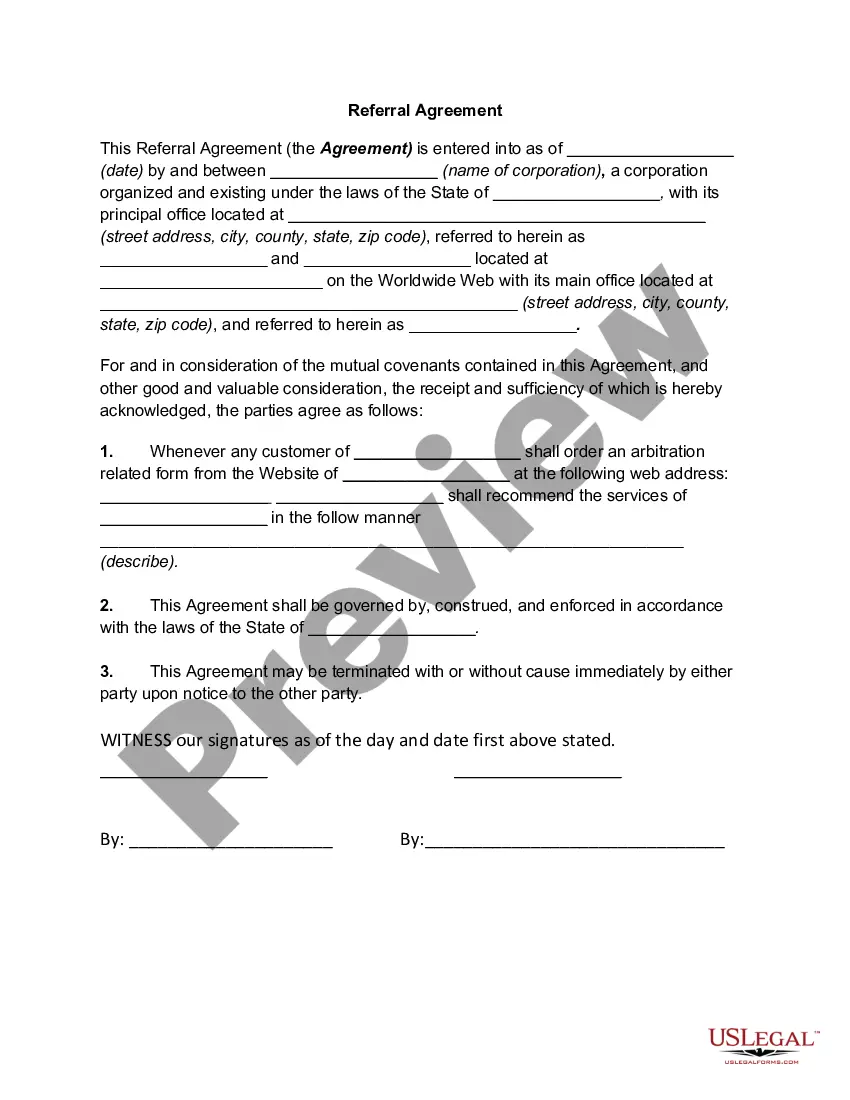
Client Referral Agreement For Services In Oakland
Description
Get your form ready online
Our built-in tools help you complete, sign, share, and store your documents in one place.
Make edits, fill in missing information, and update formatting in US Legal Forms—just like you would in MS Word.
Download a copy, print it, send it by email, or mail it via USPS—whatever works best for your next step.
Sign and collect signatures with our SignNow integration. Send to multiple recipients, set reminders, and more. Go Premium to unlock E-Sign.
If this form requires notarization, complete it online through a secure video call—no need to meet a notary in person or wait for an appointment.
We protect your documents and personal data by following strict security and privacy standards.

Make edits, fill in missing information, and update formatting in US Legal Forms—just like you would in MS Word.

Download a copy, print it, send it by email, or mail it via USPS—whatever works best for your next step.

Sign and collect signatures with our SignNow integration. Send to multiple recipients, set reminders, and more. Go Premium to unlock E-Sign.

If this form requires notarization, complete it online through a secure video call—no need to meet a notary in person or wait for an appointment.

We protect your documents and personal data by following strict security and privacy standards.
Looking for another form?









Form popularity
FAQ
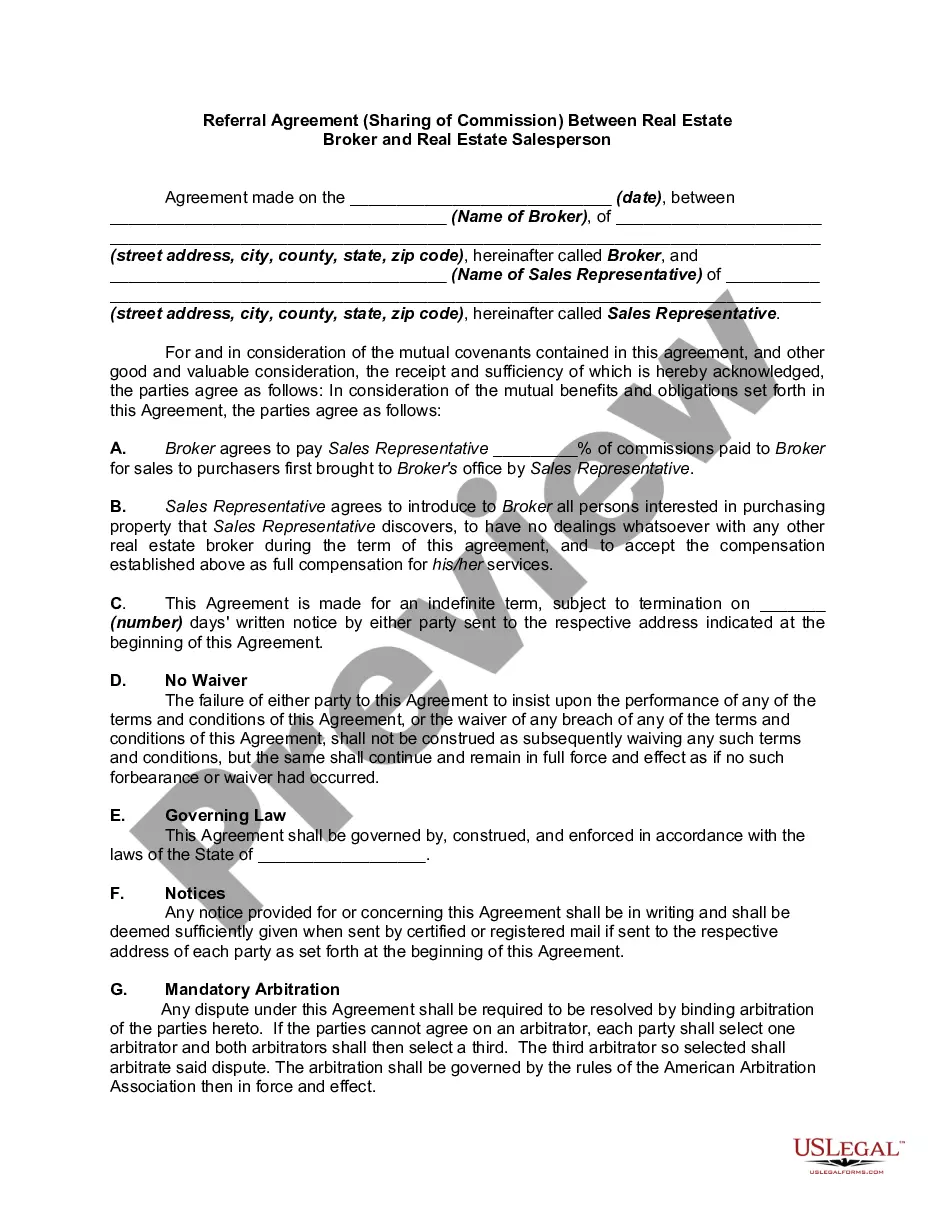
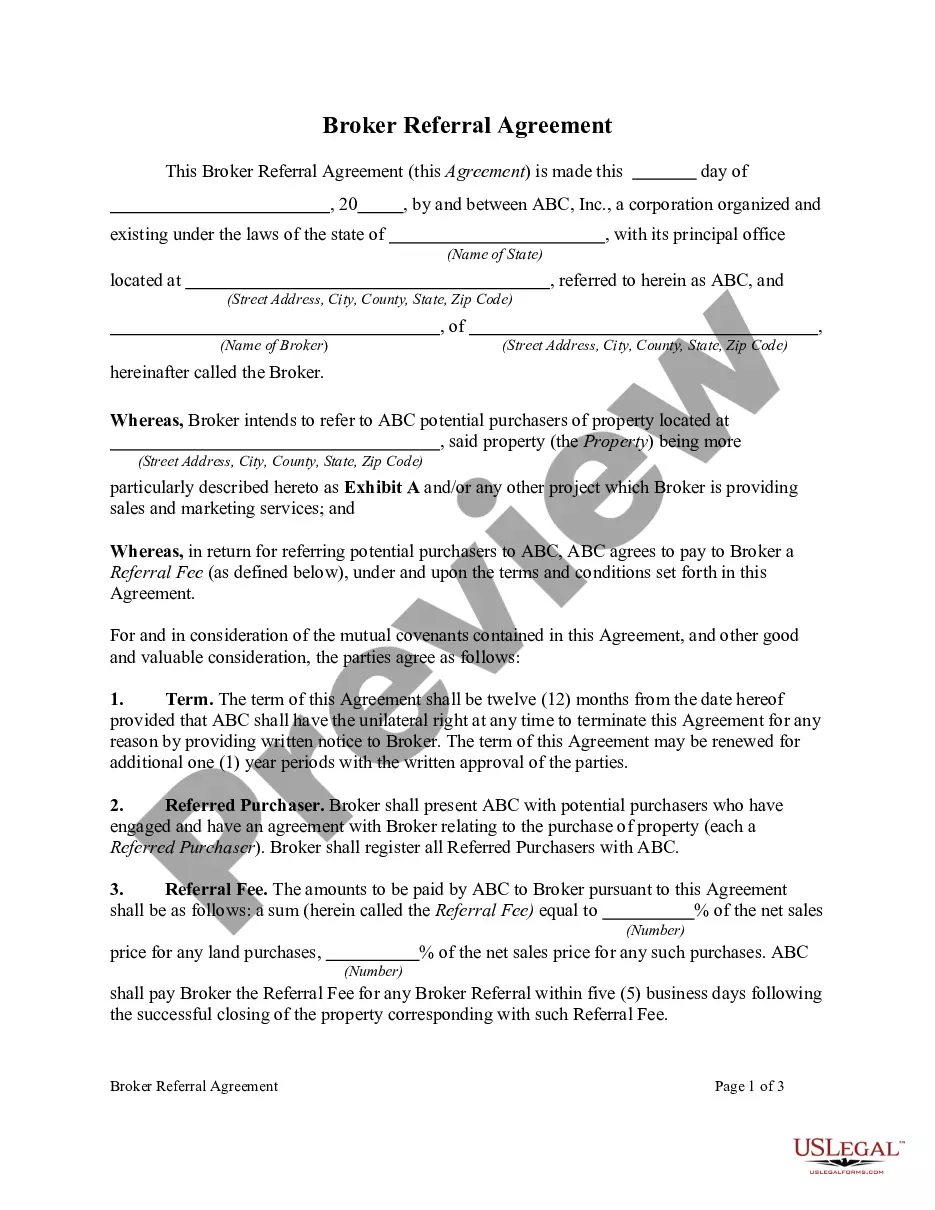
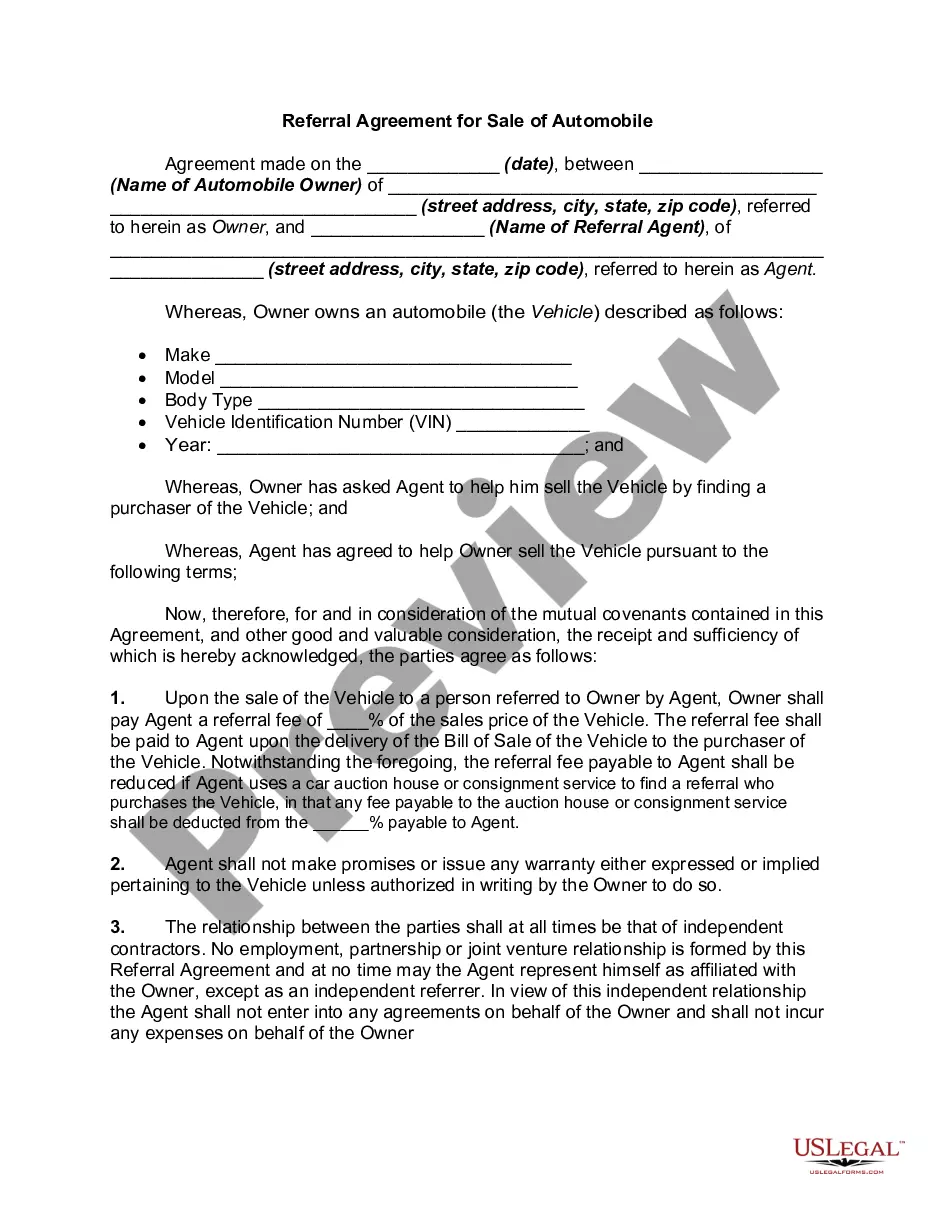
Parts of a referral agreement Date. The date should appear at the beginning and end of the contract. Names and roles of the parties involved. Identify the parties to the agreement. Duration of the agreement. State how long the agreement will last. Consideration. Acceptance.
Colleague's Name and I have known each other for length of time and I have been impressed with their skills and work ethic and believe they would be a great fit at Company Name. Colleague's Name has relevant skills and experience that make them an ideal candidate for the role.
What Information Should a Referral Letter Have? Your contact information. The recipient's name, title, and address in an appropriate format. A specific salutation. A brief introduction. A discussion of the applicant's work or performance. An explanation of how the candidate is a standout.
1 Identify the need for a referral. 2 Research and select potential referrals. 3 Discuss and obtain consent from your client. 4 Make the referral and document the process. 5 Support your client during the transition. 6 Evaluate and adjust the referral as needed. 7 Here's what else to consider.
A referral form should include the name and contact information of the person making the referral, the name and contact information of the person or business being referred, and any relevant details about the referral.
Referrer details: Include information about the person or organization making the referral, including their name, title, organization, contact information, and relationship to the referred person. Referee details: Include the name, contact information, and any pertinent demographic data of the person being referred.
Parts of a referral agreement Date. The date should appear at the beginning and end of the contract. Names and roles of the parties involved. Identify the parties to the agreement. Duration of the agreement. State how long the agreement will last. Consideration. Acceptance.
How to Start a Referral Business Program for Your Business Step 1: Create a strong foundation. Step 2: Consider design and messaging. Step 3: Make it functional (and shareable) ... Step 4: Give the right reward. Step 5: Automate and scale. Step 6: Go in for the Ask.
Your initial step is to determine your target audience. While some brands might successfully implement a referral program that caters to all their customers, for the majority, customizing creative assets for specific personas or even developing entirely distinct referral programs for customer segments may be necessary.
Here are six simple steps to get started: Start with a great product. Understand your customers. Determine the incentives. Choose a referral marketing tool. Invite previous customers to join the program. Make it easy for people to refer you.