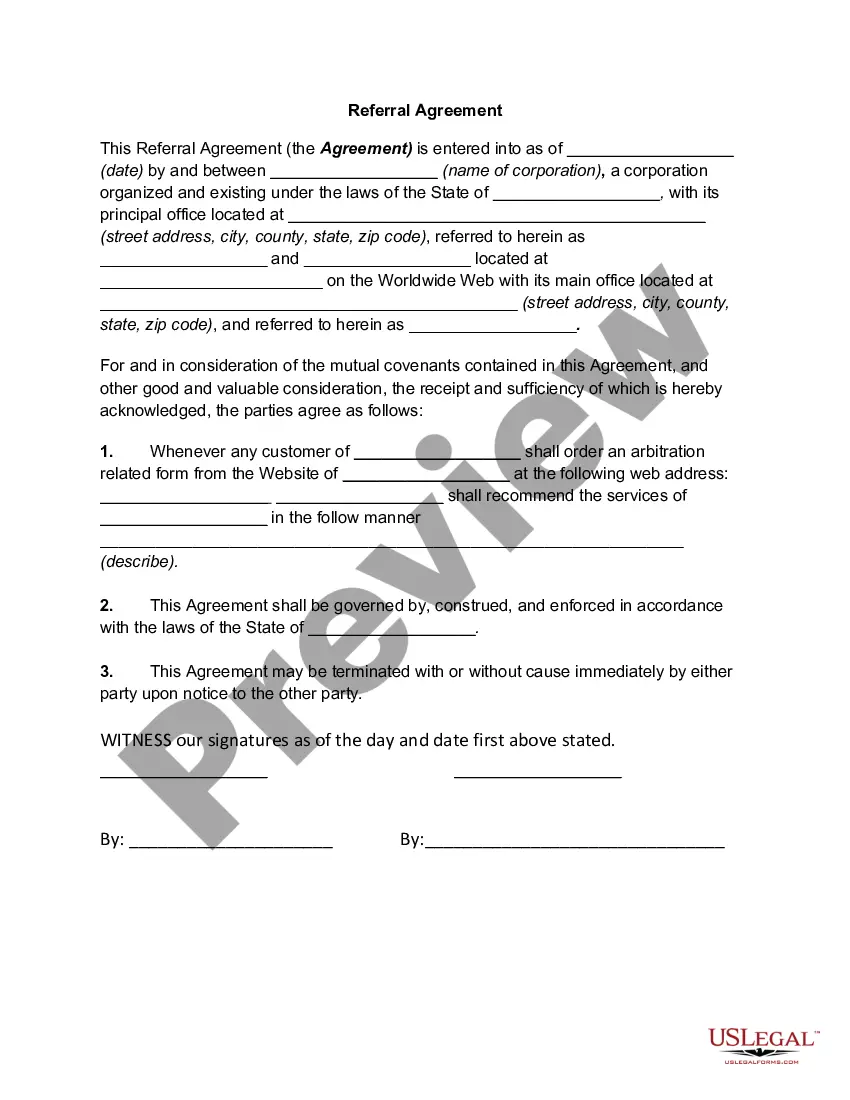
Client Referral Agreement For Labour Market Information In Fairfax
Description
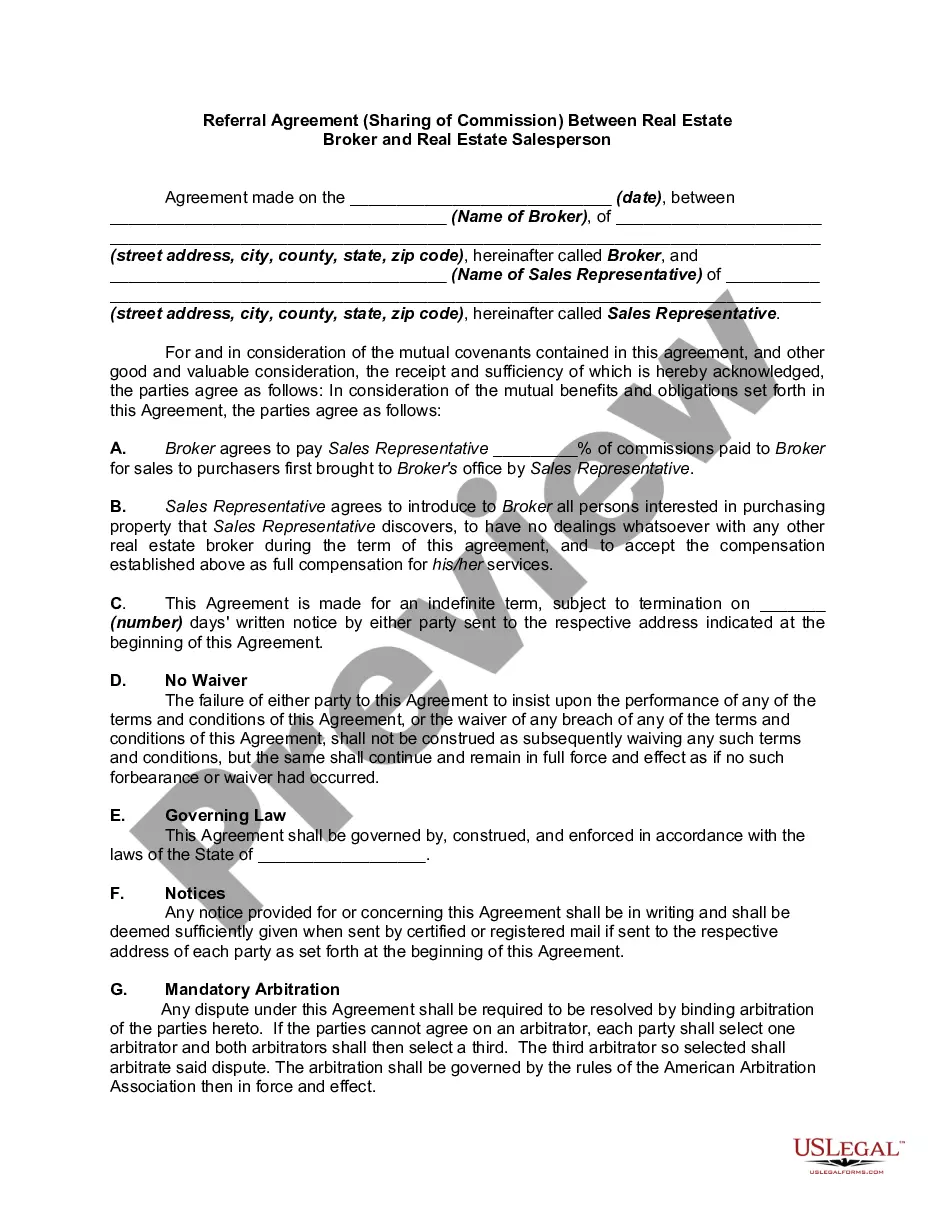
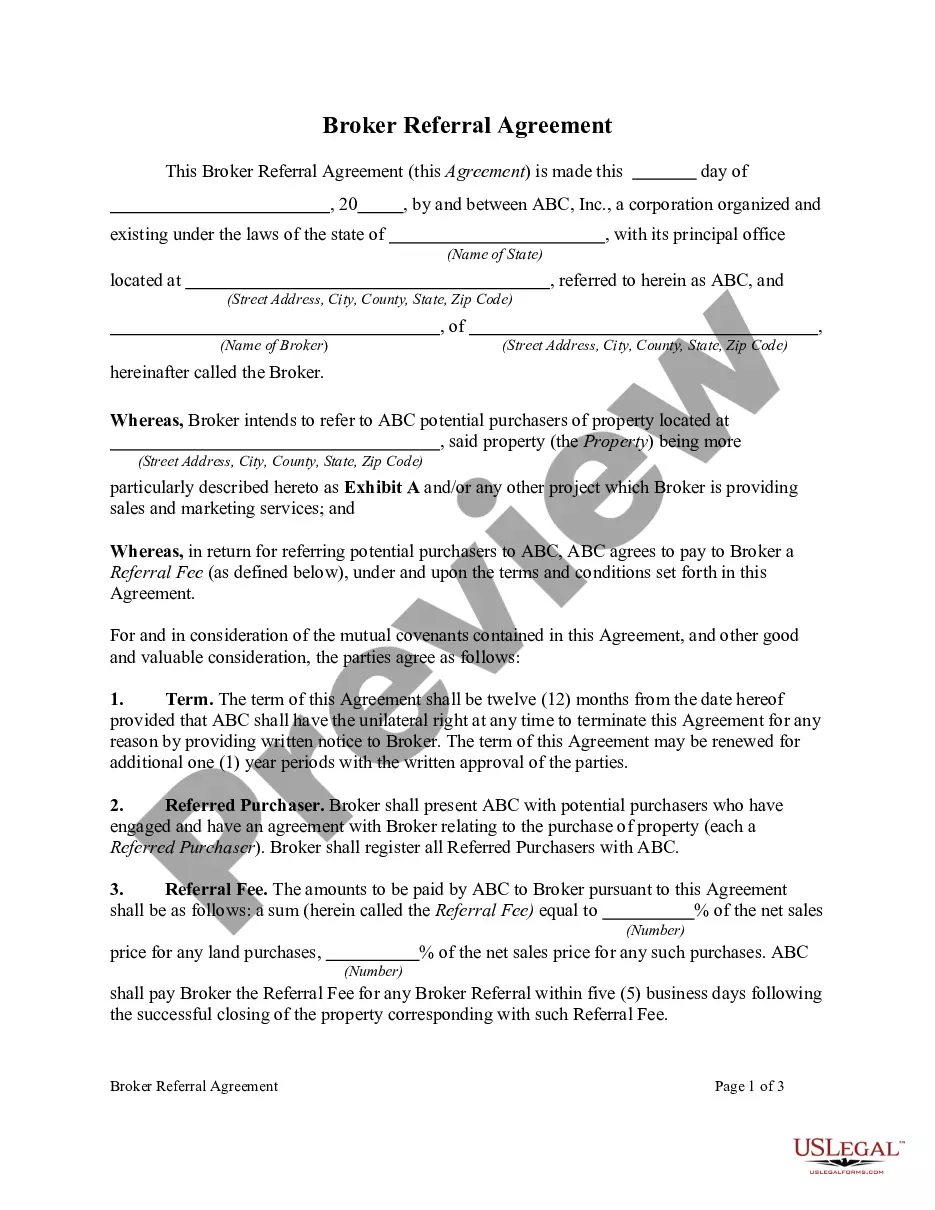
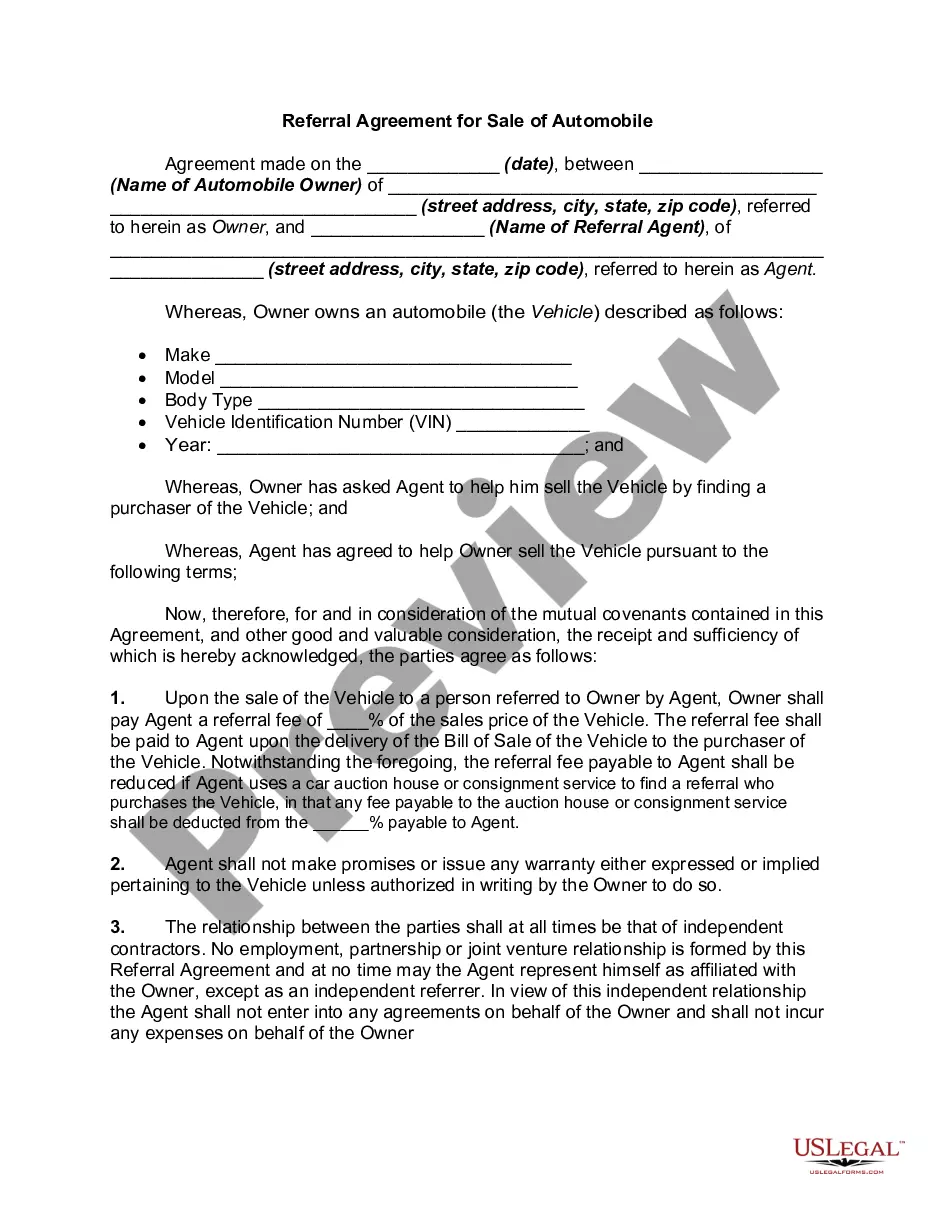
Get your form ready online
Our built-in tools help you complete, sign, share, and store your documents in one place.
Make edits, fill in missing information, and update formatting in US Legal Forms—just like you would in MS Word.
Download a copy, print it, send it by email, or mail it via USPS—whatever works best for your next step.
Sign and collect signatures with our SignNow integration. Send to multiple recipients, set reminders, and more. Go Premium to unlock E-Sign.
If this form requires notarization, complete it online through a secure video call—no need to meet a notary in person or wait for an appointment.
We protect your documents and personal data by following strict security and privacy standards.

Make edits, fill in missing information, and update formatting in US Legal Forms—just like you would in MS Word.

Download a copy, print it, send it by email, or mail it via USPS—whatever works best for your next step.

Sign and collect signatures with our SignNow integration. Send to multiple recipients, set reminders, and more. Go Premium to unlock E-Sign.

If this form requires notarization, complete it online through a secure video call—no need to meet a notary in person or wait for an appointment.

We protect your documents and personal data by following strict security and privacy standards.
Looking for another form?


Form popularity
FAQ
A referral form should include the name and contact information of the person making the referral, the name and contact information of the person or business being referred, and any relevant details about the referral.
Parts of a referral agreement Date. The date should appear at the beginning and end of the contract. Names and roles of the parties involved. Identify the parties to the agreement. Duration of the agreement. State how long the agreement will last. Consideration. Acceptance.
Referral code best practices Keep the code easy to read and case insensitive. Try not to use O's, zeros, ones, capital I's, or lower case L's. Personalize the referral code for the customer, not the brand. Keep the referral code short enough to be memorable, but long enough to be unique.
How do I create a referral program? Get clear about your goals. Make a list of your existing customer referral sources. Make an outreach plan. Determine the referral incentives you'll offer. Tell your customers about it. Track the referrals and rewards.
1 Identify the need for a referral. 2 Research and select potential referrals. 3 Discuss and obtain consent from your client. 4 Make the referral and document the process. 5 Support your client during the transition. 6 Evaluate and adjust the referral as needed. 7 Here's what else to consider.
A description of the reason for the referral; include the questions or concerns you and your patient are looking to have managed (clear and concise) significant medical history and relevant family history. current medication and medication previously tried relevant to the referral. any drug or other allergies.
An employee referral form should include the referrer's name and contact information, details about the candidate (such as name, contact details, and resume), the relationship between the referrer and the candidate, and specifics about the job position for which the candidate is being referred.
A client referral form is an ideal way to capture this information, so you can track where new business came from, and reward customers for making referrals. Depending on your business and sales approach, you can embed the form in campaign emails, or embed it directly into your website.
An Introduction Agency Agreement, also known as a referral agreement, is a contract between two parties: one who introduces or refers potential clients and the company receiving the new clients.