Annual Board Directors Template With Multiple Directors In King
Description



Get your form ready online
Our built-in tools help you complete, sign, share, and store your documents in one place.
Make edits, fill in missing information, and update formatting in US Legal Forms—just like you would in MS Word.
Download a copy, print it, send it by email, or mail it via USPS—whatever works best for your next step.
Sign and collect signatures with our SignNow integration. Send to multiple recipients, set reminders, and more. Go Premium to unlock E-Sign.
If this form requires notarization, complete it online through a secure video call—no need to meet a notary in person or wait for an appointment.
We protect your documents and personal data by following strict security and privacy standards.

Make edits, fill in missing information, and update formatting in US Legal Forms—just like you would in MS Word.

Download a copy, print it, send it by email, or mail it via USPS—whatever works best for your next step.

Sign and collect signatures with our SignNow integration. Send to multiple recipients, set reminders, and more. Go Premium to unlock E-Sign.

If this form requires notarization, complete it online through a secure video call—no need to meet a notary in person or wait for an appointment.

We protect your documents and personal data by following strict security and privacy standards.
Looking for another form?








Form popularity
FAQ
There is no statutory limit to the number of directors that can be appointed at any one time or throughout the life of a company unless certain restrictions are stated in the articles of association.
Interestingly, the Corporations Act does not prescribe a maximum number of directors.
The annual board of directors meeting is held to go over the details of the past year and decide on actions and strategies for the corporation for the next year. Keeping meeting minutes helps to ensure all these actions are documented in the corporate record.
Board meeting agenda format example Call to order & roll call: A brief welcome and confirmation of quorum. Approval of previous meeting minutes: Review and approve the minutes from the last meeting. Reports: Financial reports, committee updates, and presentations from the executive director.
It's a legal requirement for a private company to have at least one director whereas a public limited company must have at least two directors, and these must be separate to the company secretary. The company secretary of a public limited company must be suitably qualified before accepting the role.
With more than one director, decision-making becomes a collaborative effort, allowing for a wider range of perspectives, expertise, and ideas to be considered. This shared responsibility fosters a sense of collective ownership and ensures that no single person bears the entire burden of making crucial decisions.
And sitting on multiple boards is long-time industry practice, so if you did it, you wouldn't be the first. Ultimately though, the answer can only be 'yes' as long as you don't risk your own well-being or that of the company.
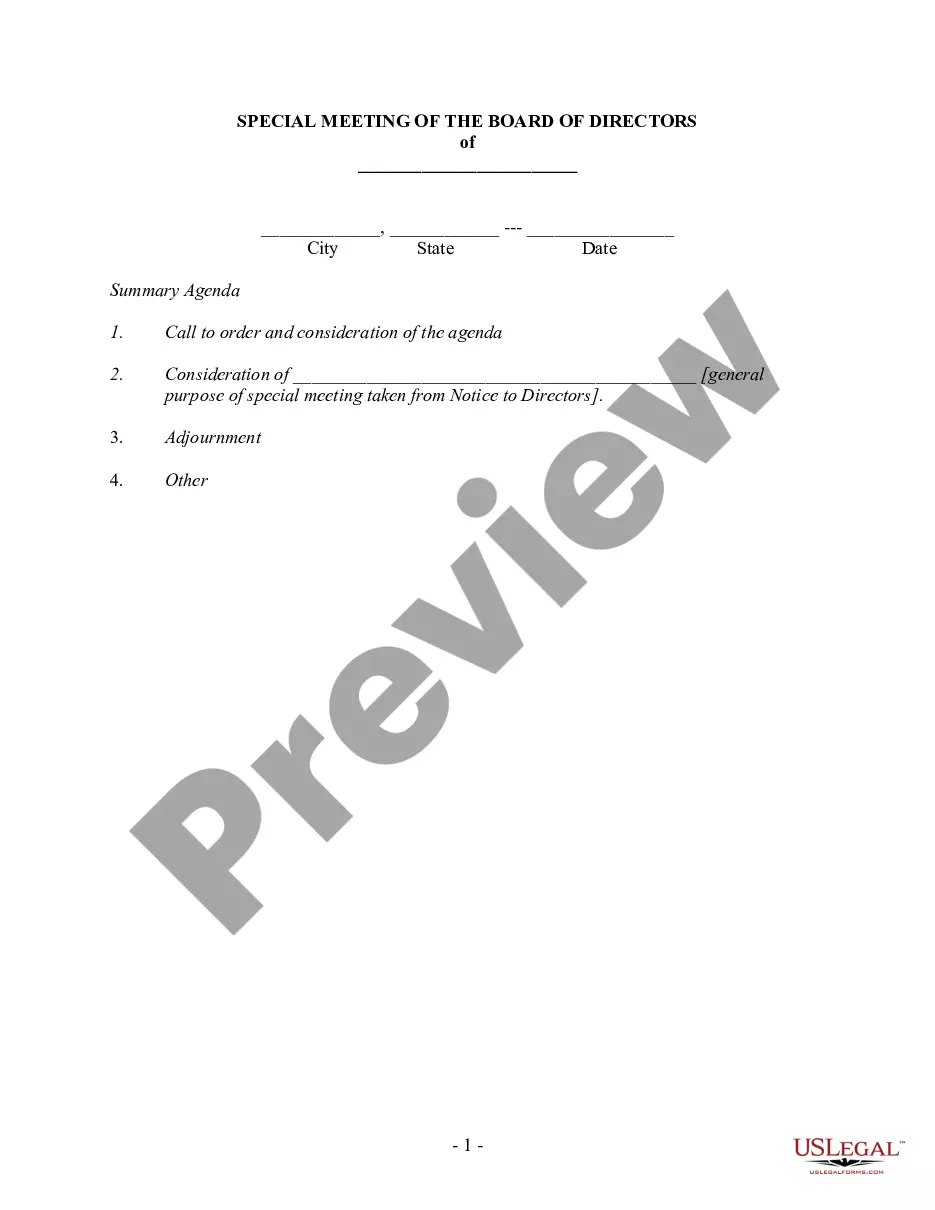
Most board meeting agendas follow a classic meeting structure: Calling meeting to order – ensure you have quorum. Approve the agenda and prior board meeting minutes. Executive and committee reports – allow 25% of time here for key topic discussion. Old/new/other business. Close the meeting and adjourn.
Many have established policies to limit how many boards a director may sit on before they vote against their appointment. This number varies between each institution but tends to be around three or four board seats.
The maximum recommended number of boards a director should sit on is four to six. Sitting on more than two boards outside your full-time position may lead to ineffectiveness and feeling overwhelmed. Consulting outside your board work may lead to conflicts of interest.

