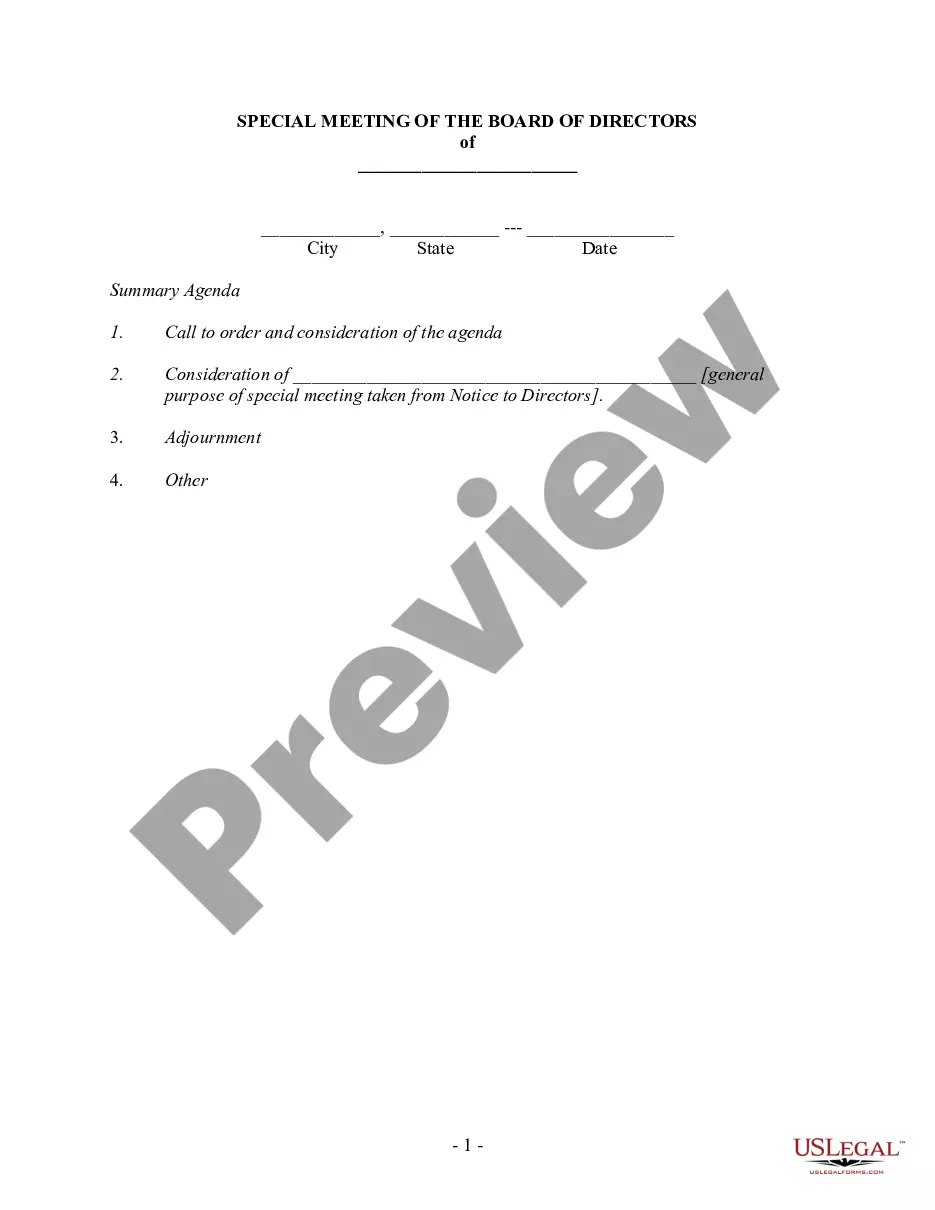
Board Meeting Format Minutes In Franklin
Description



Get your form ready online
Our built-in tools help you complete, sign, share, and store your documents in one place.
Make edits, fill in missing information, and update formatting in US Legal Forms—just like you would in MS Word.
Download a copy, print it, send it by email, or mail it via USPS—whatever works best for your next step.
Sign and collect signatures with our SignNow integration. Send to multiple recipients, set reminders, and more. Go Premium to unlock E-Sign.
If this form requires notarization, complete it online through a secure video call—no need to meet a notary in person or wait for an appointment.
We protect your documents and personal data by following strict security and privacy standards.

Make edits, fill in missing information, and update formatting in US Legal Forms—just like you would in MS Word.

Download a copy, print it, send it by email, or mail it via USPS—whatever works best for your next step.

Sign and collect signatures with our SignNow integration. Send to multiple recipients, set reminders, and more. Go Premium to unlock E-Sign.

If this form requires notarization, complete it online through a secure video call—no need to meet a notary in person or wait for an appointment.

We protect your documents and personal data by following strict security and privacy standards.
Looking for another form?





Form popularity
FAQ
Document decisions and votes The minutes should contain a comprehensive record of the decisions that the participants make during the meeting. This means listing who proposed the motion and who seconded it. List the outcome of the vote, including who voted either way, and state clearly the decision made.
Minutes of meeting Author (individual or group if identified). Year of meeting (in round brackets). Item of meeting being referenced (in single quotation marks). Title and date of meeting (in italics). Organisation. Location of meeting.
They are legally required to include these details: Date, time, and location of the meeting. Record of notice of board meeting provision and acknowledgment. Names of attendees and absentees, including guests. Approval of previous meeting minutes.
What information do board meeting minutes contain? Meeting date, time and location. Type of meeting. Names and titles of attendees and guests. Any absent board directors. Quorum. Notes about directors who left early or re-entered the meeting. Board approvals, resolutions and acceptance of reports. Overview of discussions.
What Should Not be Included in Meeting Minutes? Personal opinions and comments. Excessive detail. Tangential conversations. Verbal exchanges or arguments. Unconfirmed information. Confidential or sensitive information. Off-the-record remarks. Meeting details.
Robert's Rules (Section -16) state that “the minutes should contain mainly a record of what was done at the meeting, not what was said by the members.” Minutes are not transcripts of meetings; rather, the document contains a record of actions taken by the body, organized by the meeting's order of business (agenda).
Following are 10 steps that can help you compose an effective meeting minutes report: Make an outline. Prior to the meeting, create an outline by picking or designing a template. Include factual information. Add factual details, such as where and when the meeting takes place. Write down the purpose. Record decisions made.
At a minimum, minutes should include: Name and kind of meeting. Date, place, and time that the meeting began and ended. Names of the chair and secretary or their substitute. Names of voting members attending and whether a quorum was present. Names of guests and their subject matter.
What Should Be Included in Meeting Minutes? Date and time of the meeting. Names of the meeting participants and those unable to attend (e.g., “regrets”) Acceptance or corrections/amendments to previous meeting minutes. Decisions made about each agenda item, for example: Actions taken or agreed to be taken. Next steps.

