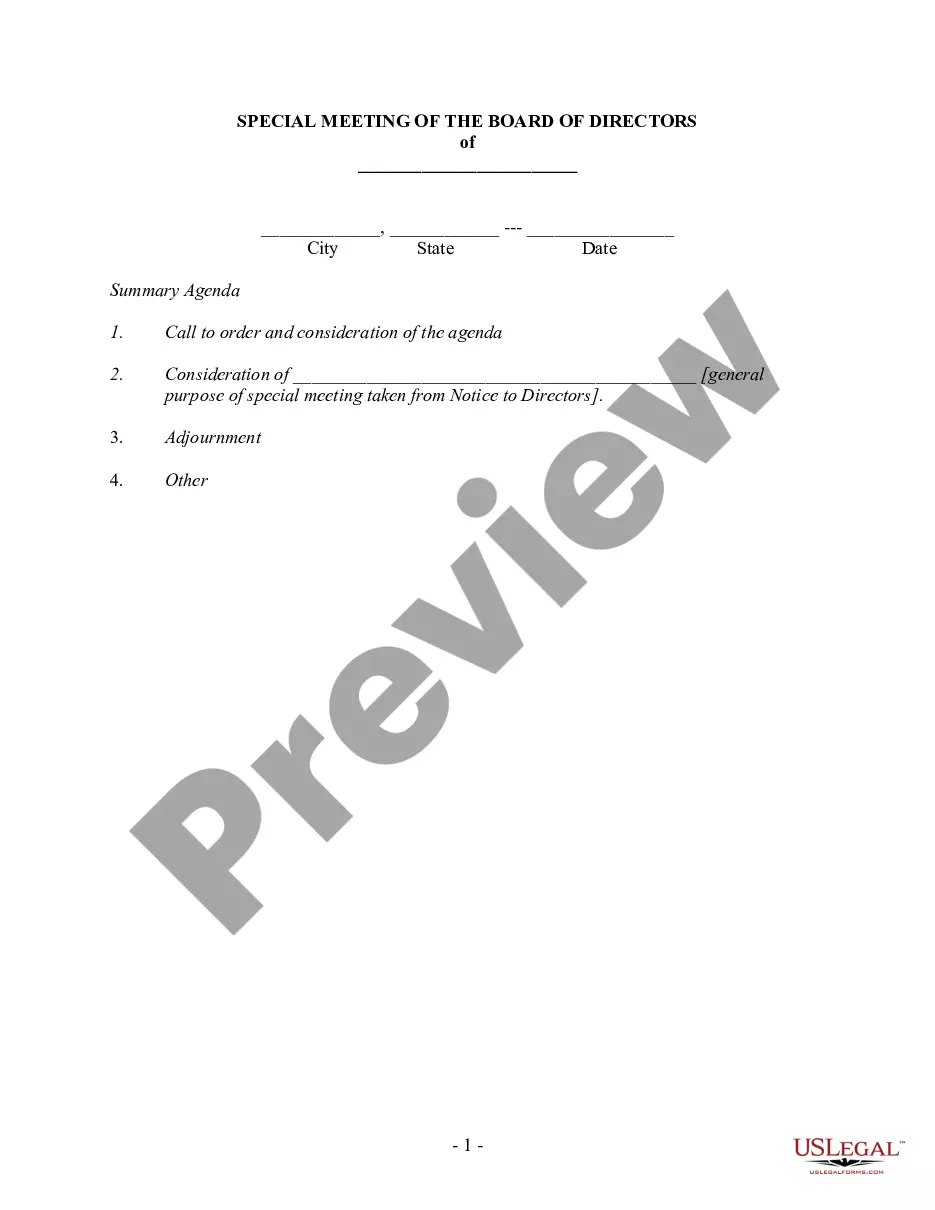
Annual Board Directors Sample With Replacement In Cook
Description



Get your form ready online
Our built-in tools help you complete, sign, share, and store your documents in one place.
Make edits, fill in missing information, and update formatting in US Legal Forms—just like you would in MS Word.
Download a copy, print it, send it by email, or mail it via USPS—whatever works best for your next step.
Sign and collect signatures with our SignNow integration. Send to multiple recipients, set reminders, and more. Go Premium to unlock E-Sign.
If this form requires notarization, complete it online through a secure video call—no need to meet a notary in person or wait for an appointment.
We protect your documents and personal data by following strict security and privacy standards.

Make edits, fill in missing information, and update formatting in US Legal Forms—just like you would in MS Word.

Download a copy, print it, send it by email, or mail it via USPS—whatever works best for your next step.

Sign and collect signatures with our SignNow integration. Send to multiple recipients, set reminders, and more. Go Premium to unlock E-Sign.

If this form requires notarization, complete it online through a secure video call—no need to meet a notary in person or wait for an appointment.

We protect your documents and personal data by following strict security and privacy standards.
Looking for another form?







Form popularity
FAQ
You need to announce the new board members on two levels: externally and internally. The public announcement is generally a press release that highlights the value the new director is bringing to the board and includes quotes from the chairman or other key executive and from the joining director.
The most common policy for member organizations is to call a meeting of members and notify the board member in writing that they will be voted upon during said meeting. From there, bylaws can require the majority of (or sometimes more) members to vote to remove the board member.
Easiest: Action by Unanimous Written Consent The Board shall prepare, and ALL Directors shall sign, an “Action by Unanimous Written Consent” document, specifying the changes to the Board of Directors.
How To Remove An Entire Board Of Directors? Hold a shareholder meeting. Give notice to the current board of directors. Prepare replacement candidates. Elect the new board of directors.
Easiest: Action by Unanimous Written Consent The Board shall prepare, and ALL Directors shall sign, an “Action by Unanimous Written Consent” document, specifying the changes to the Board of Directors.
What Goes Into a Report for the Board of Directors? Date. Name of committee. Name of committee chair. Names of committee members. The objective of the committee. Summary of recent accomplishments and current activities. List of activities in progress and upcoming events. Financial impact.
A board of directors is a group of people who represent the interests of a company's shareholders. It also provides guidance and advice to an organization's CEO and executive team. A board provides general oversight of operations without getting involved in day-to-day operations.
Typical inside directors are: A chief executive officer (CEO) who may also be chair of the board. Other executives of the organization, such as its chief financial officer (CFO) or executive vice president. Large shareholders (who may or may not also be employees or officers)
Boards may include the CEO and sometimes also the chief financial officer, as well as nonexecutive and independent directors. It's the job of the lead singer—or CEO—to make sure the strategy is executed.
Board “terms” refer to the designated period of service for members of an organization's board of directors, typically specified in the organization's bylaws. Board member terms usually range from two to six years, with three years being a common average.
