Annual Board Directors Sample With No Experience In California
Description



Get your form ready online
Our built-in tools help you complete, sign, share, and store your documents in one place.
Make edits, fill in missing information, and update formatting in US Legal Forms—just like you would in MS Word.
Download a copy, print it, send it by email, or mail it via USPS—whatever works best for your next step.
Sign and collect signatures with our SignNow integration. Send to multiple recipients, set reminders, and more. Go Premium to unlock E-Sign.
If this form requires notarization, complete it online through a secure video call—no need to meet a notary in person or wait for an appointment.
We protect your documents and personal data by following strict security and privacy standards.

Make edits, fill in missing information, and update formatting in US Legal Forms—just like you would in MS Word.

Download a copy, print it, send it by email, or mail it via USPS—whatever works best for your next step.

Sign and collect signatures with our SignNow integration. Send to multiple recipients, set reminders, and more. Go Premium to unlock E-Sign.

If this form requires notarization, complete it online through a secure video call—no need to meet a notary in person or wait for an appointment.

We protect your documents and personal data by following strict security and privacy standards.
Looking for another form?







Form popularity
FAQ
California corporations must file a California Statement of Information every year. California LLCs and nonprofits will file every two years.
California corporations must file a California Statement of Information every year. California LLCs and nonprofits will file every two years.
The annual meeting should be held on the date and time designated in the bylaws. All shareholders who are entitled to vote are entitled to written notice of the annual meeting as well as any special meeting. Notice must include the date, time and place of the meeting and how shareholders may attend.
If you fail to file a required annual or biennial report, you can face stiff penalties. These can range from fines imposed by the state to the state administratively dissolving or revoking your entity. Administrative dissolution means that you can no longer legally conduct business in a state.
Every California and registered foreign limited liability company must file a Statement of Information with the California Secretary of State, within 90 days of registering with the California Secretary of State, and every two years thereafter during a specific 6-month filing period based on the original registration ...
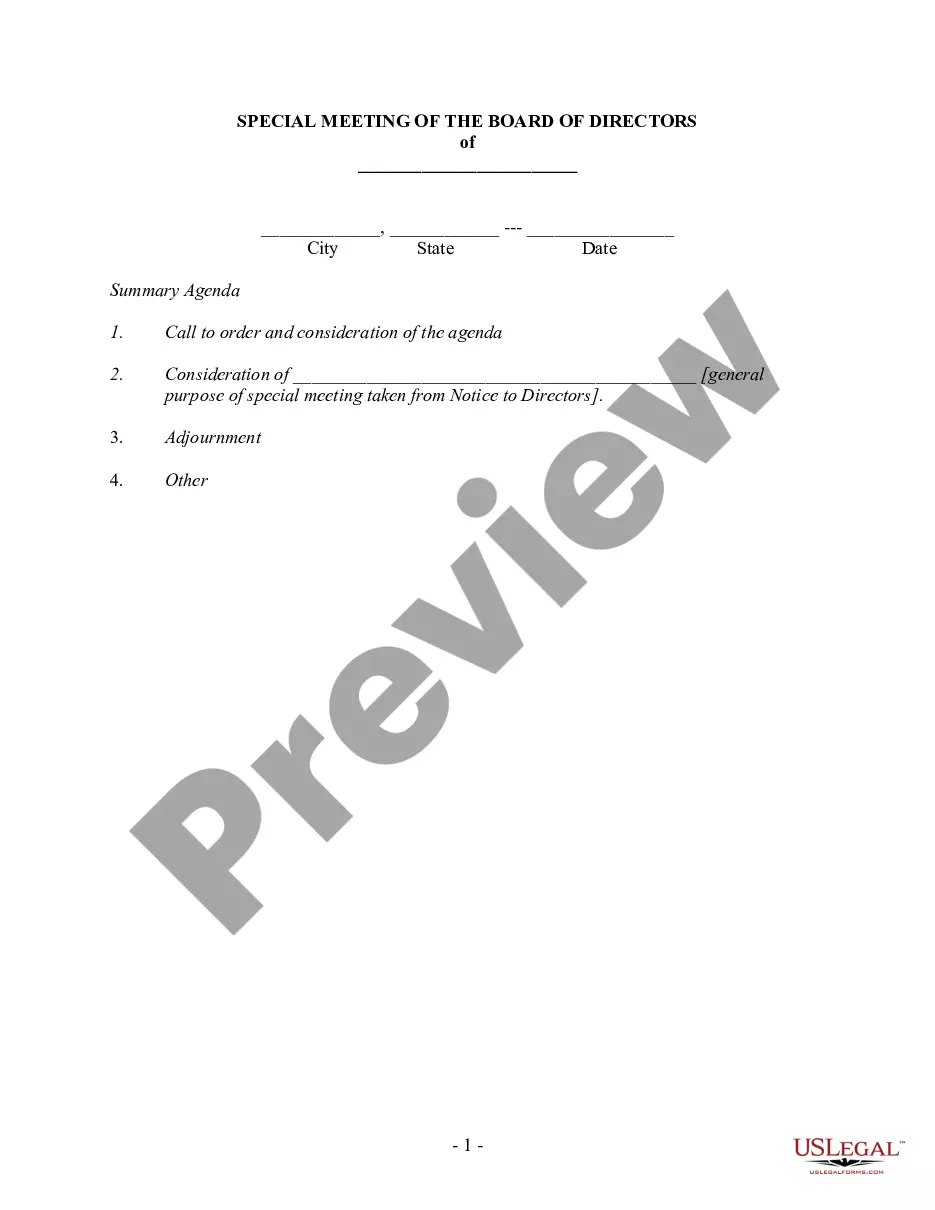
A board meeting agenda should begin with a call to order, welcoming remarks, and the gathering's objectives. The chairperson covers basic information (date, time, location), introduces the board, and calls the meeting to order—or to start.
A FIRST Board of Directors member is responsible for voting on motions raised by members of the Board of Directors. A FIRST Board of Directors member shall liaise with the FIRST membership, and represent their views and desires to the Board of Directors.
Most board meeting agendas follow a classic meeting structure: Calling meeting to order – ensure you have quorum. Approve the agenda and prior board meeting minutes. Executive and committee reports – allow 25% of time here for key topic discussion. Old/new/other business. Close the meeting and adjourn.
Usually, a meeting will consist of more than one person. There is however legal precedent regarding the ability of sole directors to have a meeting of one. Sole directors will, however, usually record their decisions as resolutions in writing which they will then sign.
The first committee meeting is like the first day of class. Setting the goals, rules, timetable and expectations is critical. Make sure committee members understand that their input, participation and attendance at meetings is important to the success of the search.

