Listing Agreement Form For Land In Virginia
Description

Get your form ready online
Our built-in tools help you complete, sign, share, and store your documents in one place.
Make edits, fill in missing information, and update formatting in US Legal Forms—just like you would in MS Word.
Download a copy, print it, send it by email, or mail it via USPS—whatever works best for your next step.
Sign and collect signatures with our SignNow integration. Send to multiple recipients, set reminders, and more. Go Premium to unlock E-Sign.
If this form requires notarization, complete it online through a secure video call—no need to meet a notary in person or wait for an appointment.
We protect your documents and personal data by following strict security and privacy standards.

Make edits, fill in missing information, and update formatting in US Legal Forms—just like you would in MS Word.

Download a copy, print it, send it by email, or mail it via USPS—whatever works best for your next step.

Sign and collect signatures with our SignNow integration. Send to multiple recipients, set reminders, and more. Go Premium to unlock E-Sign.

If this form requires notarization, complete it online through a secure video call—no need to meet a notary in person or wait for an appointment.

We protect your documents and personal data by following strict security and privacy standards.
Looking for another form?



Form popularity
FAQ
A Land Contract includes information about the: Purchaser. State the property is located in. Legal property description (typically found in the title or deed to the property) Monthly payment amount, the date that the purchaser should start monthly payments, and the interest rate.
How to draft a contract in 13 simple steps Start with a contract template. Understand the purpose and requirements. Identify all parties involved. Outline key terms and conditions. Define deliverables and milestones. Establish payment terms. Add termination conditions. Incorporate dispute resolution.
Writing your own contracts is perfectly possible, and legal. But it's also an incredibly bad idea. There's two reasons for this: Property law is complicated. Because it's such a fundamental part of legislation, it's often lots and lots of different laws layered on top of each other.
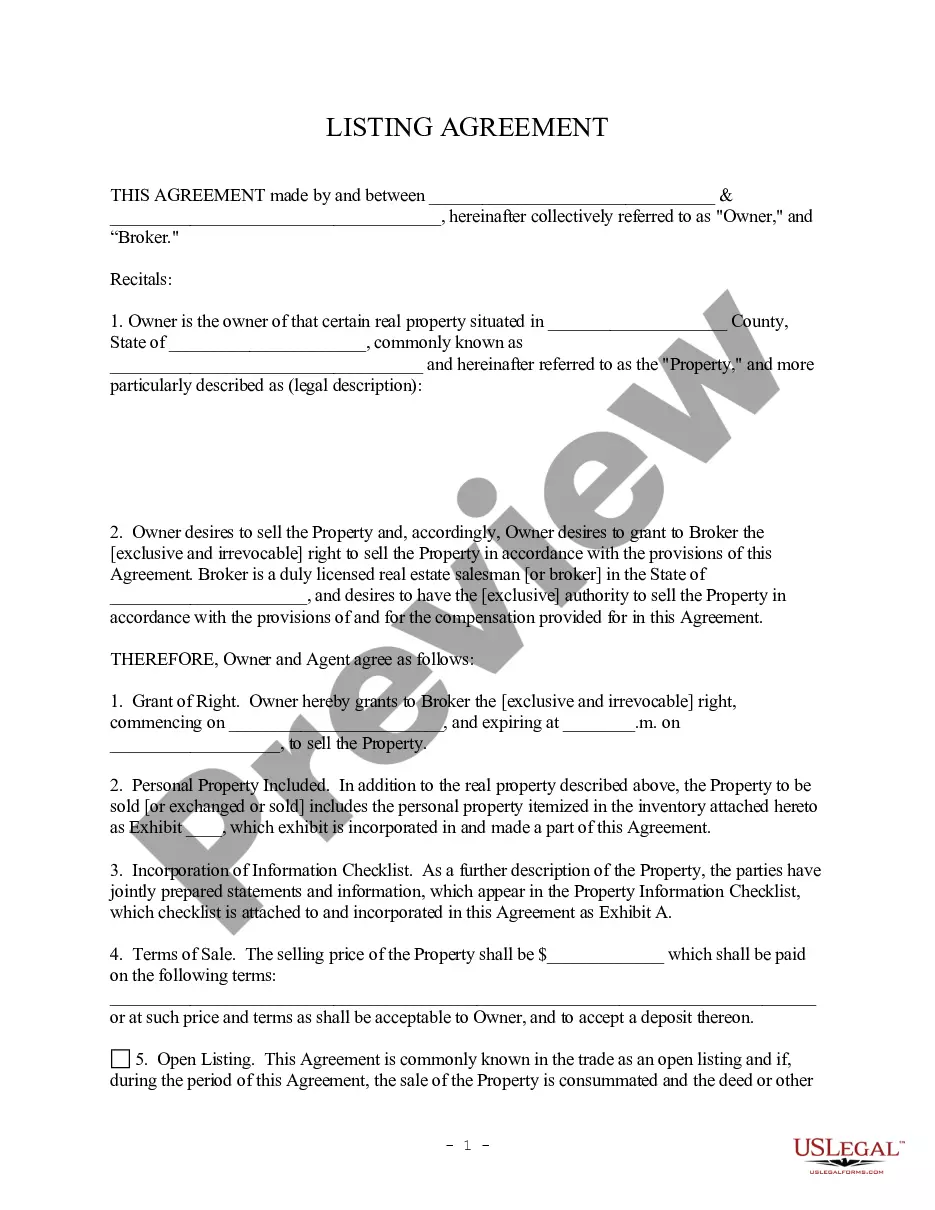
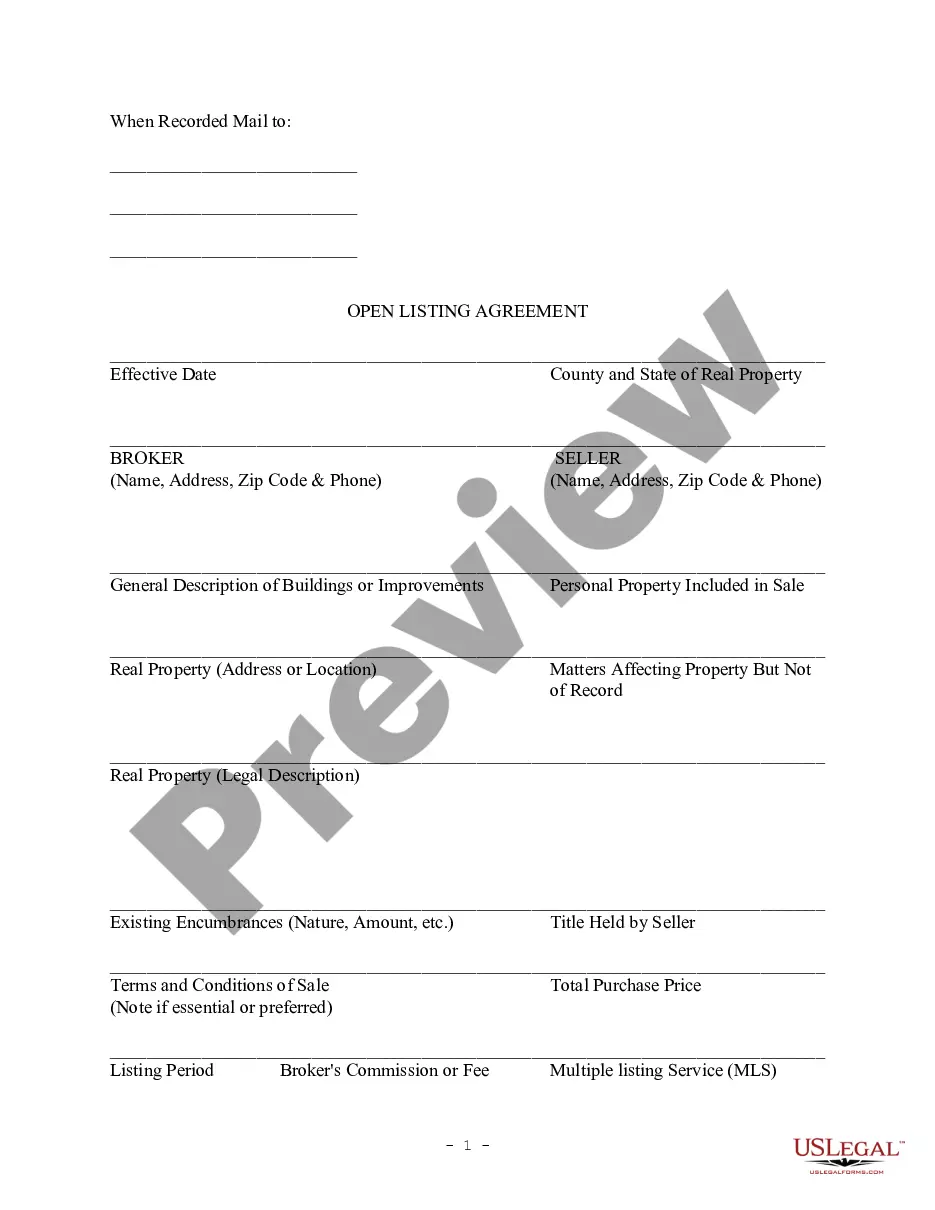
Open listing: Definition An open listing enables multiple real estate agents to try to sell your home. This setup gives the seller the ability to work with multiple agents at once. This differs from an exclusive listing, in which the seller works exclusively with one listing agent to find a buyer.
An exclusive license is a type of license where the copyright holder grants permission for only one party to use or reproduce the work. This means that the copyright holder cannot use or license the work to anyone else without the exclusive license holder's permission.
The exclusive right to sell was intended to provide compensation to the listing firm if "anyone" produces a ready, willing, and able buyer. This anyone could include the seller finding his own buyer for the property.
Known under a variety of names, a common element of these product listing agreements (PLAs) is the negotiation of confidential prices that are typically achieved through rebates that may or may not be tied to drug expenditures, utilization patterns or health outcomes.
"Exclusive right to sell" is a type of listing contract you enter into with a real estate agent. Put simply, it says that the signing agent is the only person allowed to market and sell your property for a certain amount of time. Generally, these agreements last anywhere from one to six months.
In an open listing, the person who takes the biggest risk is the seller. This is because in an open listing, the seller is not working exclusively with one agent, and therefore, has to rely on multiple agents to sell their property.
Open listing: Definition An open listing enables multiple real estate agents to try to sell your home. This setup gives the seller the ability to work with multiple agents at once. This differs from an exclusive listing, in which the seller works exclusively with one listing agent to find a buyer.

