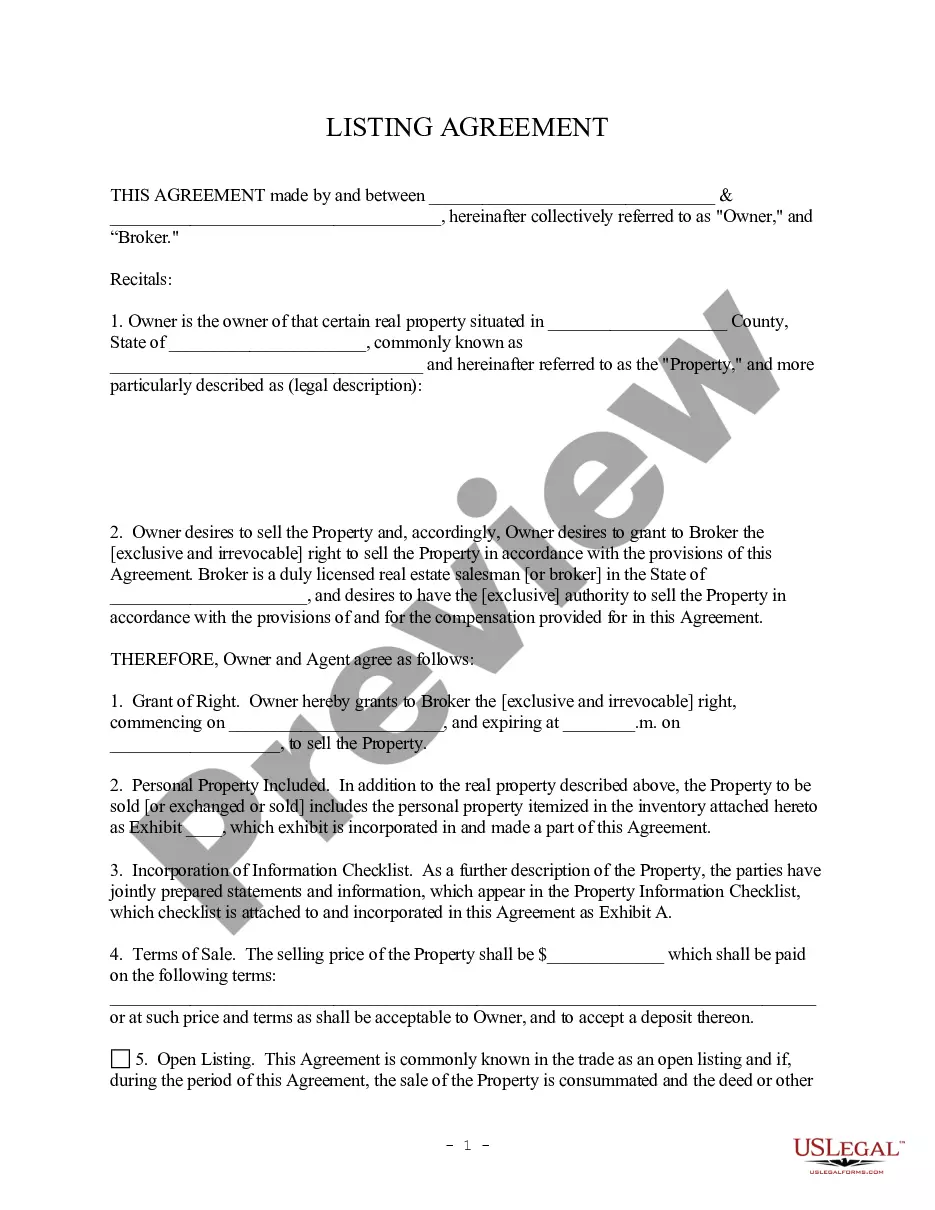
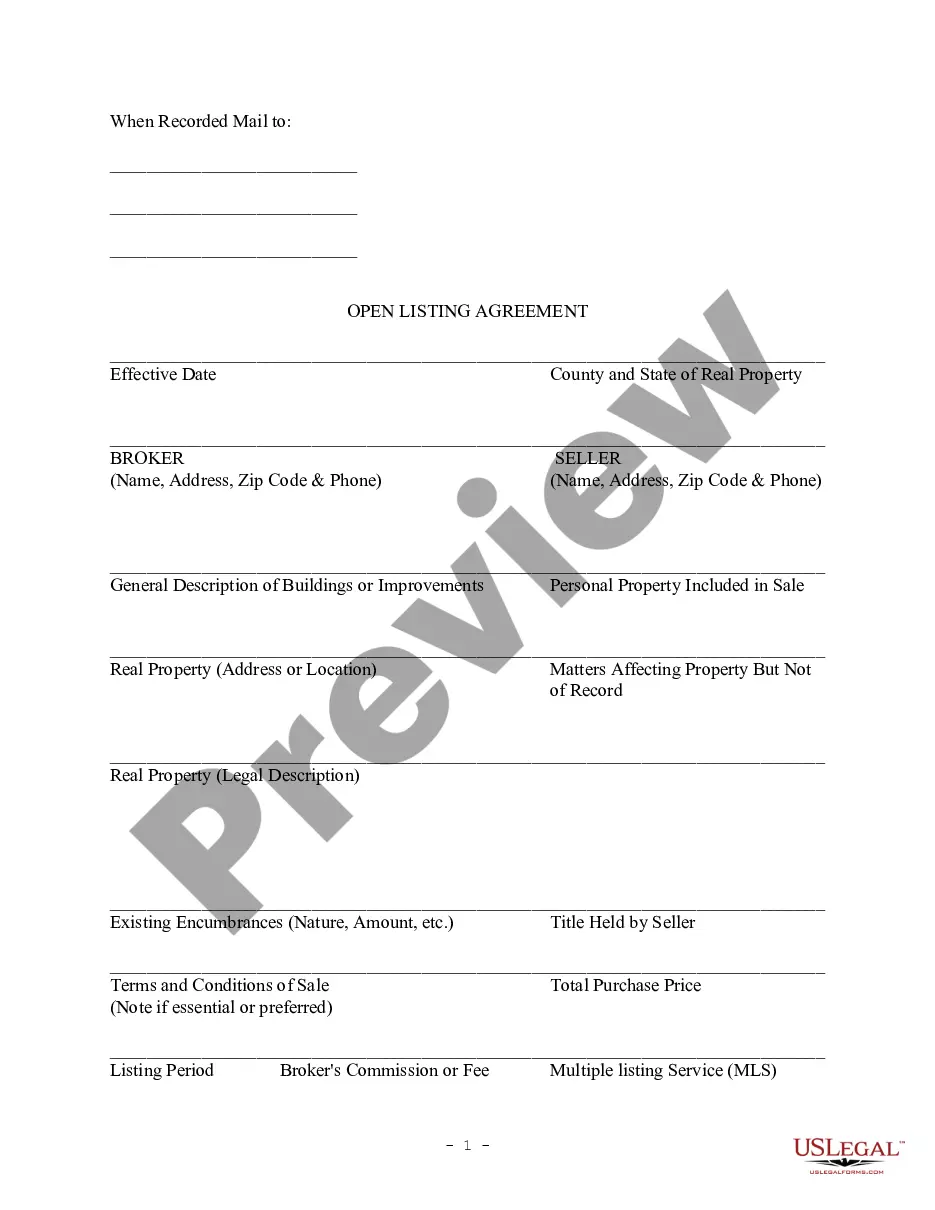
Listing Agreement Form For Land In Suffolk
Description

Get your form ready online
Our built-in tools help you complete, sign, share, and store your documents in one place.
Make edits, fill in missing information, and update formatting in US Legal Forms—just like you would in MS Word.
Download a copy, print it, send it by email, or mail it via USPS—whatever works best for your next step.
Sign and collect signatures with our SignNow integration. Send to multiple recipients, set reminders, and more. Go Premium to unlock E-Sign.
If this form requires notarization, complete it online through a secure video call—no need to meet a notary in person or wait for an appointment.
We protect your documents and personal data by following strict security and privacy standards.

Make edits, fill in missing information, and update formatting in US Legal Forms—just like you would in MS Word.

Download a copy, print it, send it by email, or mail it via USPS—whatever works best for your next step.

Sign and collect signatures with our SignNow integration. Send to multiple recipients, set reminders, and more. Go Premium to unlock E-Sign.

If this form requires notarization, complete it online through a secure video call—no need to meet a notary in person or wait for an appointment.

We protect your documents and personal data by following strict security and privacy standards.
Looking for another form?








Form popularity
FAQ
To be enforceable, a land sale contract must satisfy the Statute of Frauds, which generally requires that these contracts be in writing and signed by the parties. Note that this writing is apart from the instrument under which the actual transfer takes place, which is known as the “deed.”
The Five Elements of a Contract Offer. Acceptance. Consideration. Capacity. Lawful Purpose.
The basic elements required for the agreement to be a legally enforceable contract are: mutual assent, expressed by a valid offer and acceptance; adequate consideration; capacity; and legality. In some states, elements of consideration can be satisfied by a valid substitute.
To be enforceable, a land sale contract must satisfy the Statute of Frauds, which generally requires that these contracts be in writing and signed by the parties. Note that this writing is apart from the instrument under which the actual transfer takes place, which is known as the “deed.”
In Suffolk County, NY, property records like deeds, mortgages, liens, judgments, and other instruments about real estate transactions and ownership can be accessed at the Suffolk County Clerk's Office. Individuals can access property records by requesting them by mail or through the Clerk's Office online portal.
Documents. Once registered log in and enter the search criteria. You can refine your search by dateMoreDocuments. Once registered log in and enter the search criteria. You can refine your search by date range or document type to narrow down the results. If you prefer an in-person.
Property deeds are recorded in the Suffolk County Clerk's Office in Riverhead, NY. The direct phone number is (631) 852-2000.
Property records are public. People may use these records for background information on purchases, mortgages, asset searches, and other legal and financial transactions. Reviewing these documents is not necessarily the same as a title search.
You can search for property records and property ownership information online, in person, or over the phone with a 311 representative. Property owners of all boroughs except Staten Island can visit ACRIS. To search documents for Staten Island property, visit the Richmond County Clerk's website.
Documents. Once registered log in and enter the search criteria. You can refine your search by dateMoreDocuments. Once registered log in and enter the search criteria. You can refine your search by date range or document type to narrow down the results. If you prefer an in-person.

