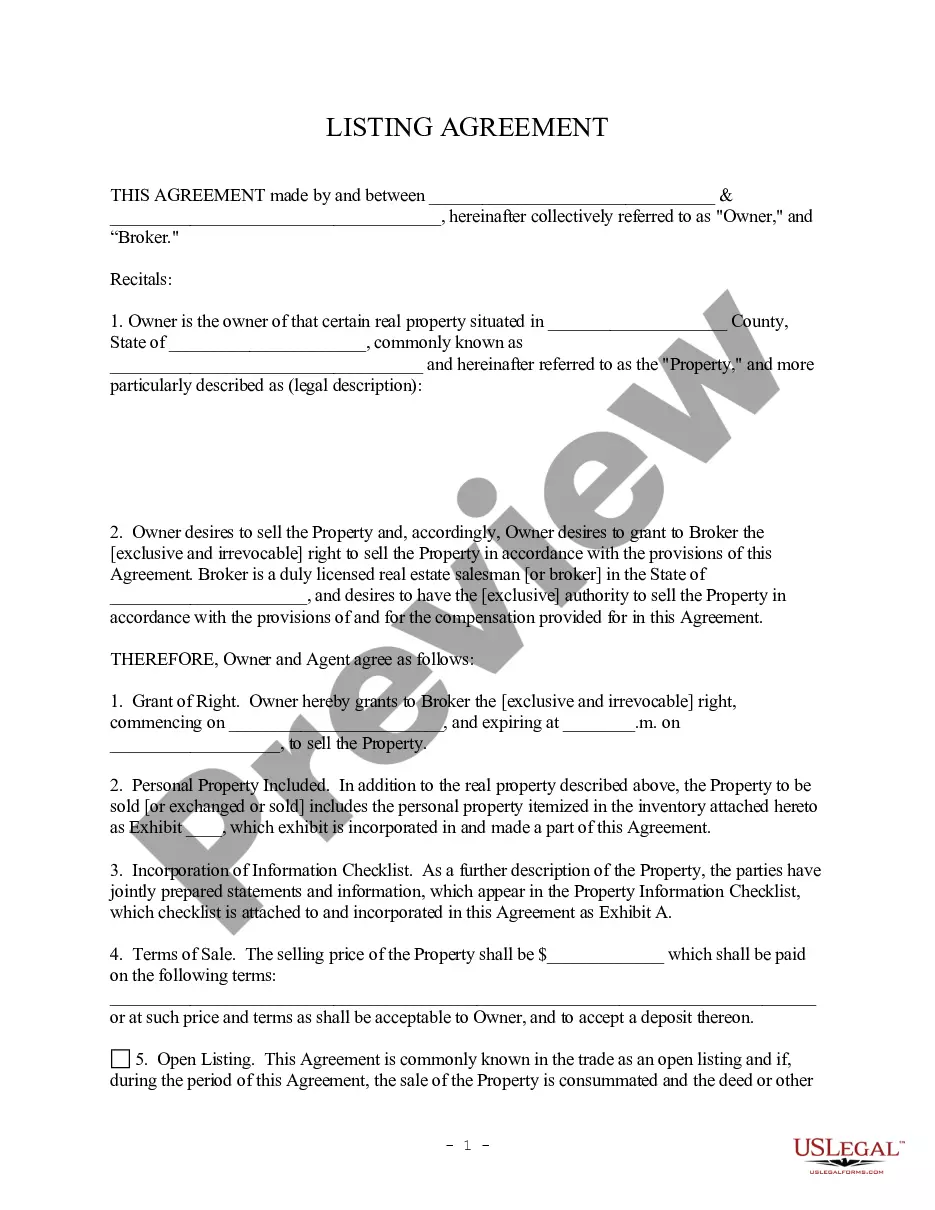
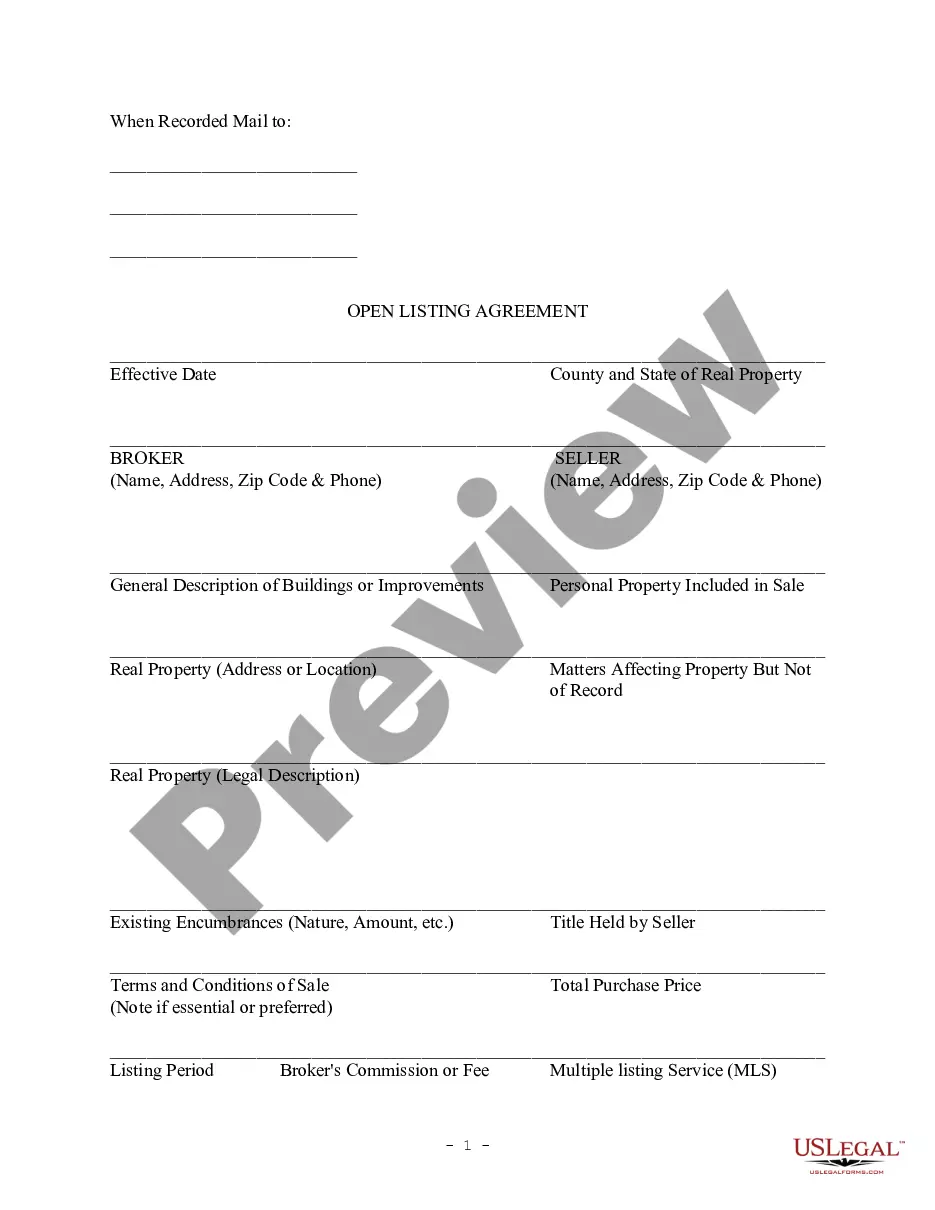
Listing Agreement Document For Lease In Queens
Description

Get your form ready online
Our built-in tools help you complete, sign, share, and store your documents in one place.
Make edits, fill in missing information, and update formatting in US Legal Forms—just like you would in MS Word.
Download a copy, print it, send it by email, or mail it via USPS—whatever works best for your next step.
Sign and collect signatures with our SignNow integration. Send to multiple recipients, set reminders, and more. Go Premium to unlock E-Sign.
If this form requires notarization, complete it online through a secure video call—no need to meet a notary in person or wait for an appointment.
We protect your documents and personal data by following strict security and privacy standards.

Make edits, fill in missing information, and update formatting in US Legal Forms—just like you would in MS Word.

Download a copy, print it, send it by email, or mail it via USPS—whatever works best for your next step.

Sign and collect signatures with our SignNow integration. Send to multiple recipients, set reminders, and more. Go Premium to unlock E-Sign.

If this form requires notarization, complete it online through a secure video call—no need to meet a notary in person or wait for an appointment.

We protect your documents and personal data by following strict security and privacy standards.
Looking for another form?
Form popularity
FAQ
A residential lease is a contract between a landlord and a tenant - or a lessor and a lessee. It will outline and detail the terms under which the tenant can occupy the landlord's property.
Here's a list of standard fields that you should include in your lease agreement: Tenant information. Include each tenant's full name and contact information. Rental property description. Security deposit. Monthly rent amount. Utilities. Lease term. Policies. Late fees.
What to include in an apartment lease agreement. Tenant information. Include each tenant's full name and contact information. Rental property description. List the apartment's location, all common areas, parking spaces, and included facilities. Security deposit. Monthly rent amount. Utilities. Lease term. Policies. Late fees.
It is possible to draft your own lease agreement, but you are leaving yourself open to issues.
No, lease agreements do not need to be notarized in New York. As leases are considered similar to standard contracts valid in the state, notarization is not required.
A New York standard residential lease agreement is a form that allows a landlord and tenant to enter into a legally binding arrangement for leasing residential space. The term "standard" means a fixed term that usually lasts one year.
Through 2023, the average length of lease terms in Manhattan stood at 88 months for new leases/relocations and 72 months for renewals. The influence of sublease space and the growing demand for flexibility has led to term lengths falling below historical averages.
State laws on leases and rental agreements can vary, but a landlord or property management company should provide you with a copy of your signed lease upon request. You should make your request in writing, so you have proof if there is a dispute later.
At this point, your REALTOR will take the final steps necessary for selling your home, including the preparation and staging of your home before it's officially listed in the Multiple Listing Service (MLS) databases. This includes: Making an extra key for the lockbox. Arrange for the installation of the yard sign.
A listing agreement authorizes the broker to represent the seller and their property to third parties. The listing agreement is an employment contract rather than a real estate contract: The broker is hired to represent the seller, but no property is transferred between the two.

