Listing Agreement Contract With Agent In King
Description
Get your form ready online
Our built-in tools help you complete, sign, share, and store your documents in one place.
Make edits, fill in missing information, and update formatting in US Legal Forms—just like you would in MS Word.
Download a copy, print it, send it by email, or mail it via USPS—whatever works best for your next step.
Sign and collect signatures with our SignNow integration. Send to multiple recipients, set reminders, and more. Go Premium to unlock E-Sign.
If this form requires notarization, complete it online through a secure video call—no need to meet a notary in person or wait for an appointment.
We protect your documents and personal data by following strict security and privacy standards.

Make edits, fill in missing information, and update formatting in US Legal Forms—just like you would in MS Word.

Download a copy, print it, send it by email, or mail it via USPS—whatever works best for your next step.

Sign and collect signatures with our SignNow integration. Send to multiple recipients, set reminders, and more. Go Premium to unlock E-Sign.

If this form requires notarization, complete it online through a secure video call—no need to meet a notary in person or wait for an appointment.

We protect your documents and personal data by following strict security and privacy standards.
Looking for another form?








Form popularity
FAQ
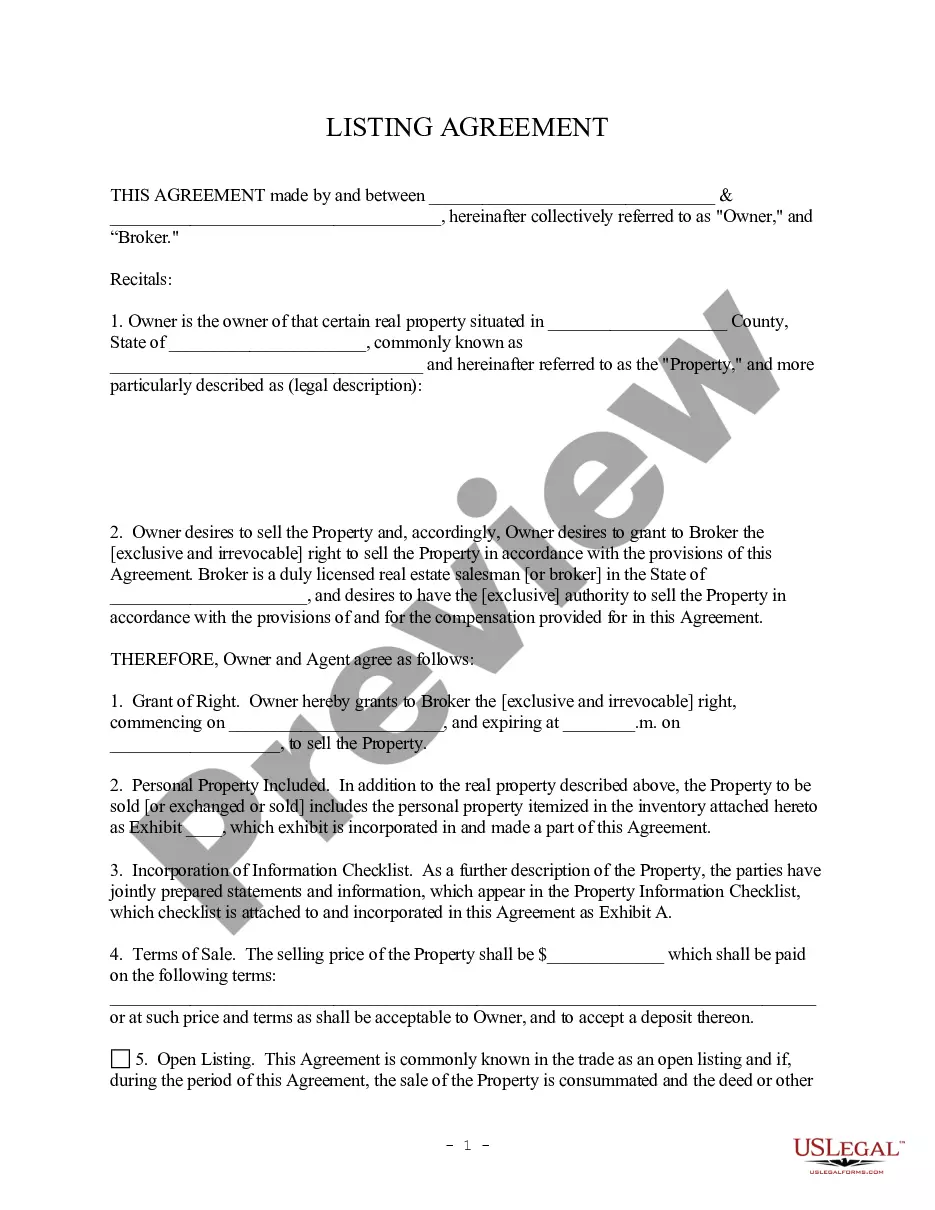
A listing agreement is a type of real estate contract in which a property owner gives a real estate agent or broker the authority to find a buyer for their property. If you decide to sell your home using a realtor, you will likely be asked to sign a listing agreement.
A listing agreement is “a legally binding contract that creates an agency relationship authorizing a broker to serve as the agent for a principal in a real estate transaction.” In other words, a listing agreement is an employment contract between a client and a broker that spells out what the broker is responsible for ...
Can (and should) buyers contact a listing agent directly? Technically—yes. The only people who may frown upon contacting a listing agent are buyer's agents, who make their commissions based on representing buyers. But there is no law or rule saying a buyer cannot contact a listing agent.
There are times you may help a buyer or seller without being their authorized representative. In this case you have a non-agency relationship, a situation where you have no binding or legal responsibility to the other party.
A listing agreement is “a legally binding contract that creates an agency relationship authorizing a broker to serve as the agent for a principal in a real estate transaction.” In other words, a listing agreement is an employment contract between a client and a broker that spells out what the broker is responsible for ...
A listing agreement is between the parties that own a property and the agents or brokers who will find a buyer for it. Typically, a real estate listing agreement involves the property owner and a real estate agent. The property owner, or seller, grants the agent the right to market and sell the property.
Exclusive right to sell listing An exclusive right to sell grants a single real estate agency exclusive authority to market and sell a property, ensuring the listing agent earns a commission regardless of who finds the buyer. While this agreement is active, the property owner cannot use another agent.
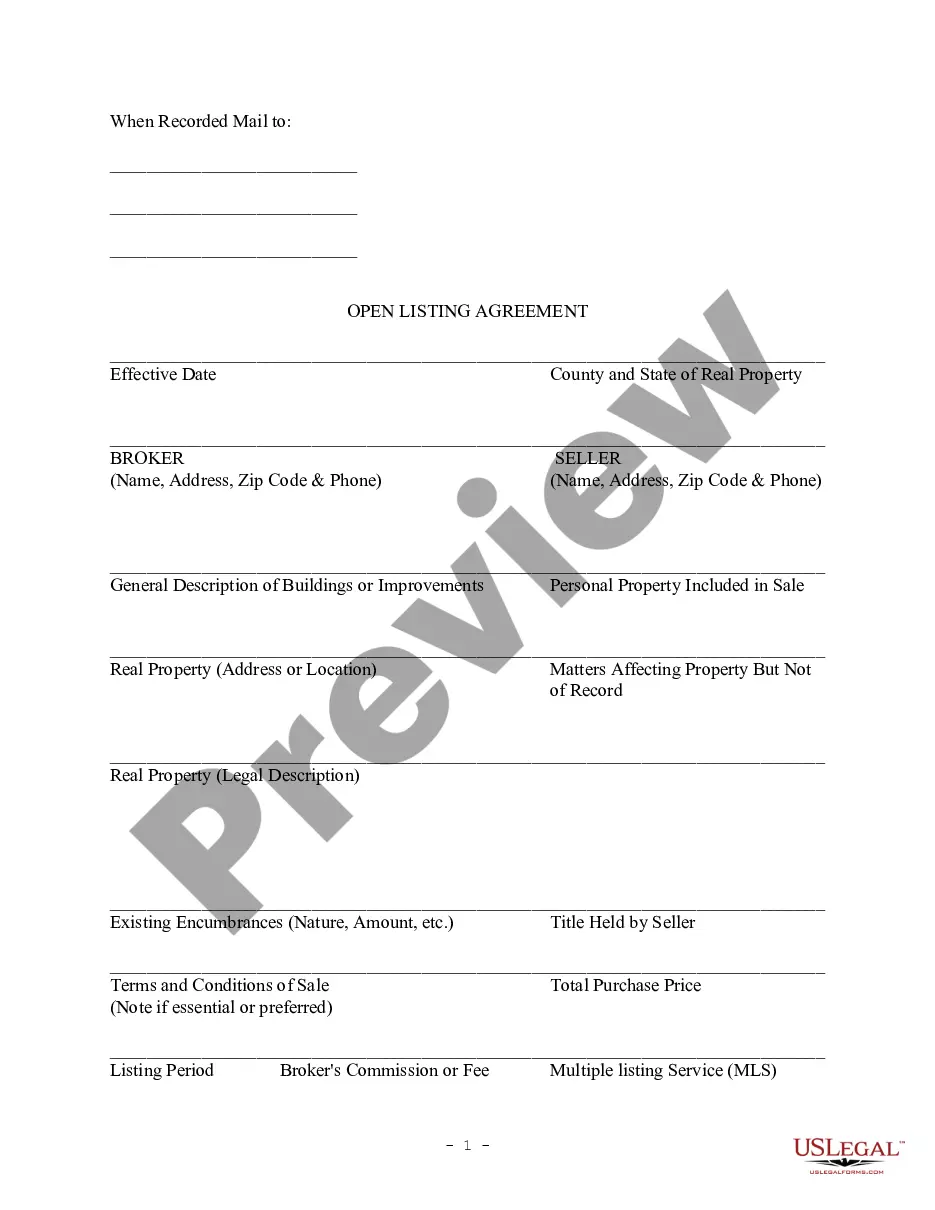
In an exclusive agency listing, the seller retains the right to sell the property, with no obligation to the broker. With exclusive right-to-sell listings, the broker receives a commission regardless of who sells the property.
The Exclusive Listing Agreement establishes a ground for honesty, trust, and confidence between the seller and broker. Such a relationship is important during the marketing process and through the closing of the sale or lease.
Both involve the meeting of minds and exchange of promises, but a contract typically entails a more formalized arrangement, often documented in writing, and carries legal enforceability. Conversely, an agreement can be informal and may not always be legally binding.

