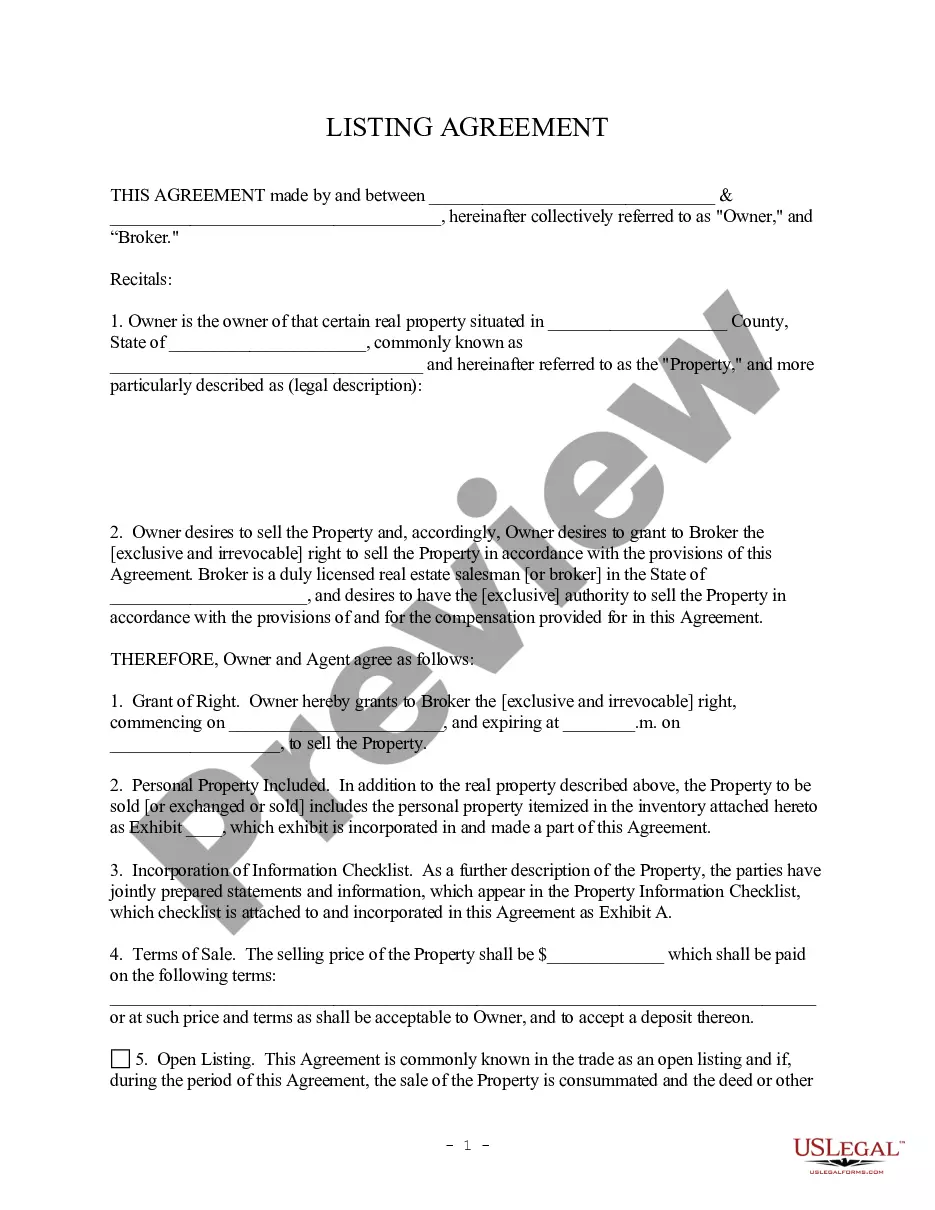
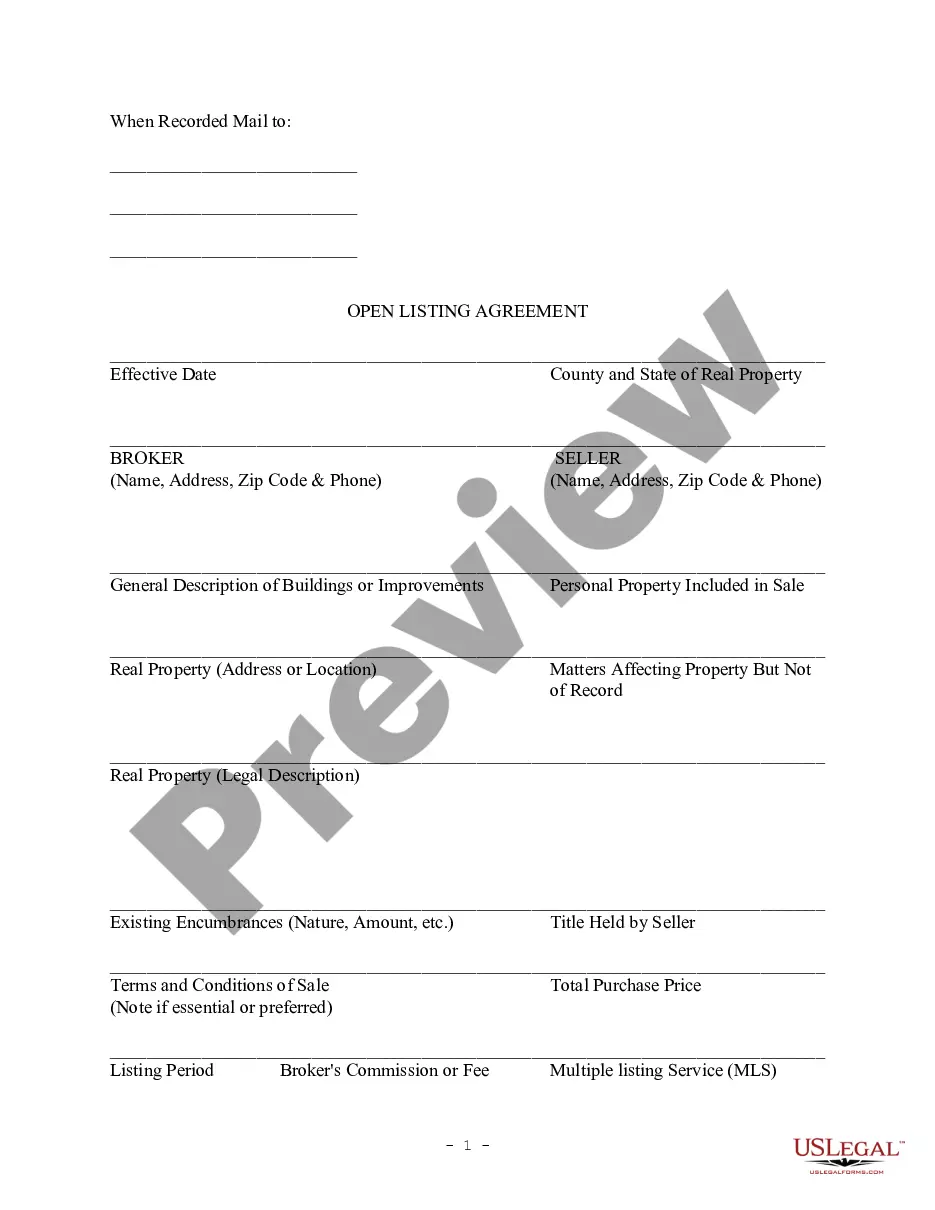
Listing Agreement Document Without Comments In Bexar
Description

Get your form ready online
Our built-in tools help you complete, sign, share, and store your documents in one place.
Make edits, fill in missing information, and update formatting in US Legal Forms—just like you would in MS Word.
Download a copy, print it, send it by email, or mail it via USPS—whatever works best for your next step.
Sign and collect signatures with our SignNow integration. Send to multiple recipients, set reminders, and more. Go Premium to unlock E-Sign.
If this form requires notarization, complete it online through a secure video call—no need to meet a notary in person or wait for an appointment.
We protect your documents and personal data by following strict security and privacy standards.

Make edits, fill in missing information, and update formatting in US Legal Forms—just like you would in MS Word.

Download a copy, print it, send it by email, or mail it via USPS—whatever works best for your next step.

Sign and collect signatures with our SignNow integration. Send to multiple recipients, set reminders, and more. Go Premium to unlock E-Sign.

If this form requires notarization, complete it online through a secure video call—no need to meet a notary in person or wait for an appointment.

We protect your documents and personal data by following strict security and privacy standards.
Looking for another form?


Form popularity
FAQ
Why can you terminate a listing agreement? Poor communication: You may cancel a listing agreement due to an agent's poor performance. Bad marketing: Real estate is competitive, even in a seller's market. Unethical behavior: Agents have a fiduciary duty to serve a home seller honestly and ethically.
Final answer: The component that is not required in most listing agreements is the naming of an escrow company. Most listing agreements typically include identification of the property, compensation details and signatures, although the escrow company is usually determined later in the selling process.
The three types of real estate listing agreements are open listing, exclusive agency listing, and exclusive right-to-sell listing.
Listing agreements often include clauses regarding confidentiality, emphasizing that sensitive information about your property or personal circumstances should be handled discreetly.
A listing agreement is “a legally binding contract that creates an agency relationship authorizing a broker to serve as the agent for a principal in a real estate transaction.” In other words, a listing agreement is an employment contract between a client and a broker that spells out what the broker is responsible for ...
Many contracts contain a confidentiality clause - by which I mean a provision which prevents the parties to the contract from publicising, or otherwise disclosing to others, certain information.
Whether you change your mind about selling, have ethical or performance concerns about the agent, or you just don't find a buyer, you can get out of a listing agreement. But before you sign one, you should understand your options for terminating a listing agreement so you don't feel stuck in a bad situation.
Understanding Confidentiality in Real Estate Real estate licensees have a duty to keep certain information confidential. Things such as a client's personal and contact information or details relating to real estate transactions (including bank details or financial records) should not be disclosed to third parties.
In most listing agreements, the component that is NOT required is Consent to dual agency. The listing agreement is a contract between a real estate agent and a property owner, outlining the terms and conditions of the agent's representation.
The answer is the age of the seller. Information needed for the listing agreement includes lot size, possibility of seller financing, and the property taxes. The age of the seller is not needed.
