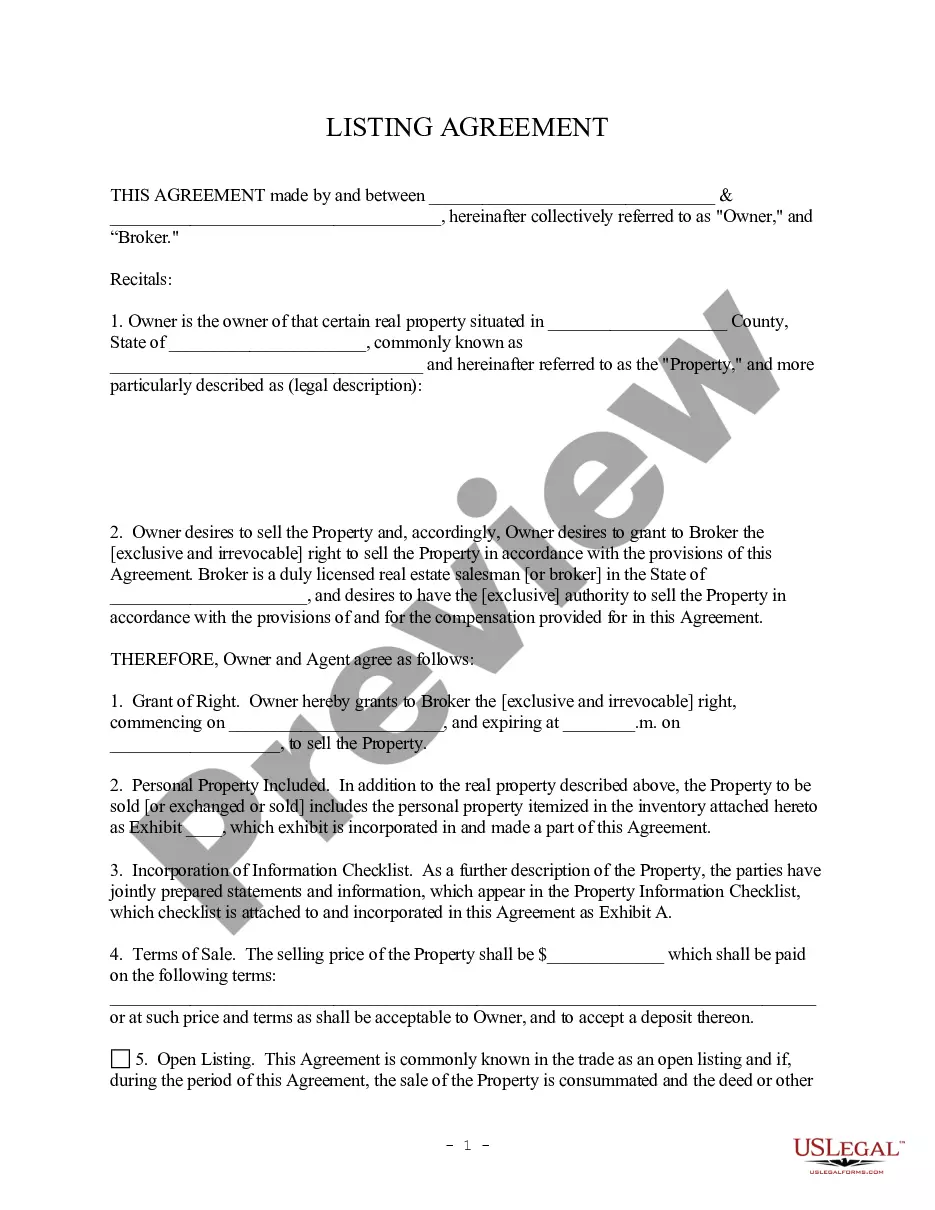
Listing Agreement Contract For Rental Property In Allegheny
Description
Get your form ready online
Our built-in tools help you complete, sign, share, and store your documents in one place.
Make edits, fill in missing information, and update formatting in US Legal Forms—just like you would in MS Word.
Download a copy, print it, send it by email, or mail it via USPS—whatever works best for your next step.
Sign and collect signatures with our SignNow integration. Send to multiple recipients, set reminders, and more. Go Premium to unlock E-Sign.
If this form requires notarization, complete it online through a secure video call—no need to meet a notary in person or wait for an appointment.
We protect your documents and personal data by following strict security and privacy standards.

Make edits, fill in missing information, and update formatting in US Legal Forms—just like you would in MS Word.

Download a copy, print it, send it by email, or mail it via USPS—whatever works best for your next step.

Sign and collect signatures with our SignNow integration. Send to multiple recipients, set reminders, and more. Go Premium to unlock E-Sign.

If this form requires notarization, complete it online through a secure video call—no need to meet a notary in person or wait for an appointment.

We protect your documents and personal data by following strict security and privacy standards.
Looking for another form?

Form popularity
FAQ
Generally no. A lease is a legally binding contract that cannot be altered unilaterally by either party.
Yes, you can create your own lease agreement without the assistance of a lawyer or other professional.
A rental agreement is a short-term contract between the owner of a property or landlord and a tenant. Generally, the contract is on a month-to-month basis and automatically renews unless written notice is given by either party to end the contract.
Both involve the meeting of minds and exchange of promises, but a contract typically entails a more formalized arrangement, often documented in writing, and carries legal enforceability. Conversely, an agreement can be informal and may not always be legally binding.
Here's a list of standard fields that you should include in your lease agreement: Tenant information. Include each tenant's full name and contact information. Rental property description. Security deposit. Monthly rent amount. Utilities. Lease term. Policies. Late fees.
Often, the terms “lease agreement” and “rental agreement” are used interchangeably to mean the same thing.
Once you've written out all the terms of your contract you can put it into a contract form by either using an online template or contacting a real estate attorney to help you draft the contract. A real estate attorney is the safe choice to make sure your contract follows local laws and will be legally binding.
You could have your own rental agreement provided both the owner and the tenent has to read and understand it, then mutually agree and both have to sign it, if possible, with one or two eyewitnesses, so that, in case of any legal dispute, the court could refer it to eyewitnesses.
Once you've written out all the terms of your contract you can put it into a contract form by either using an online template or contacting a real estate attorney to help you draft the contract. A real estate attorney is the safe choice to make sure your contract follows local laws and will be legally binding.

