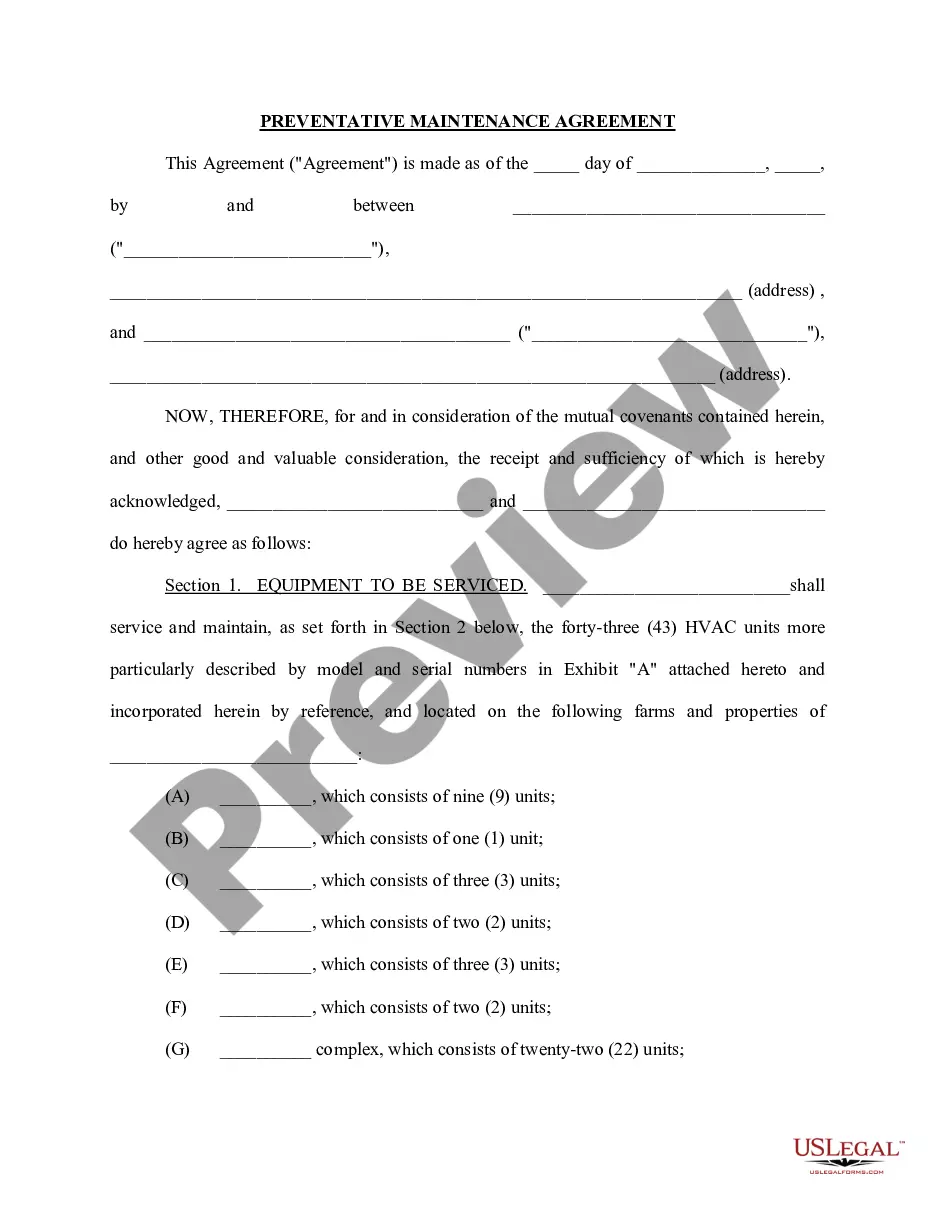
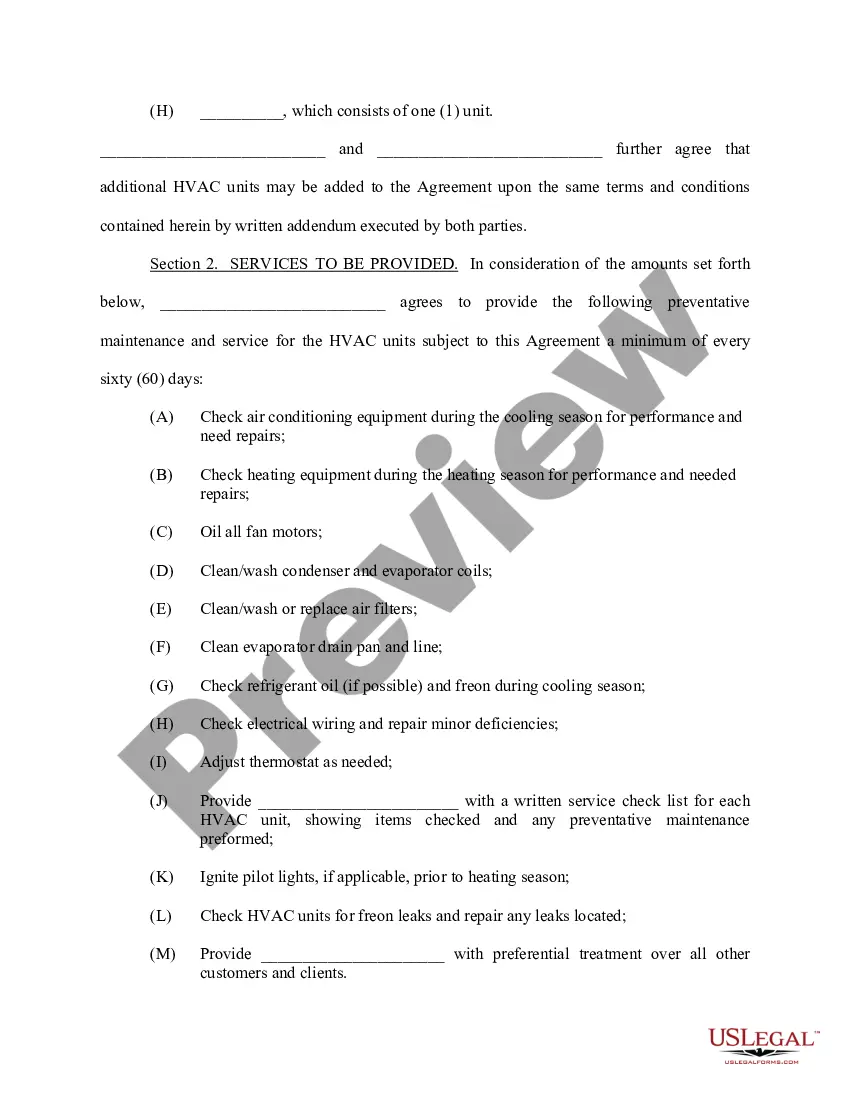
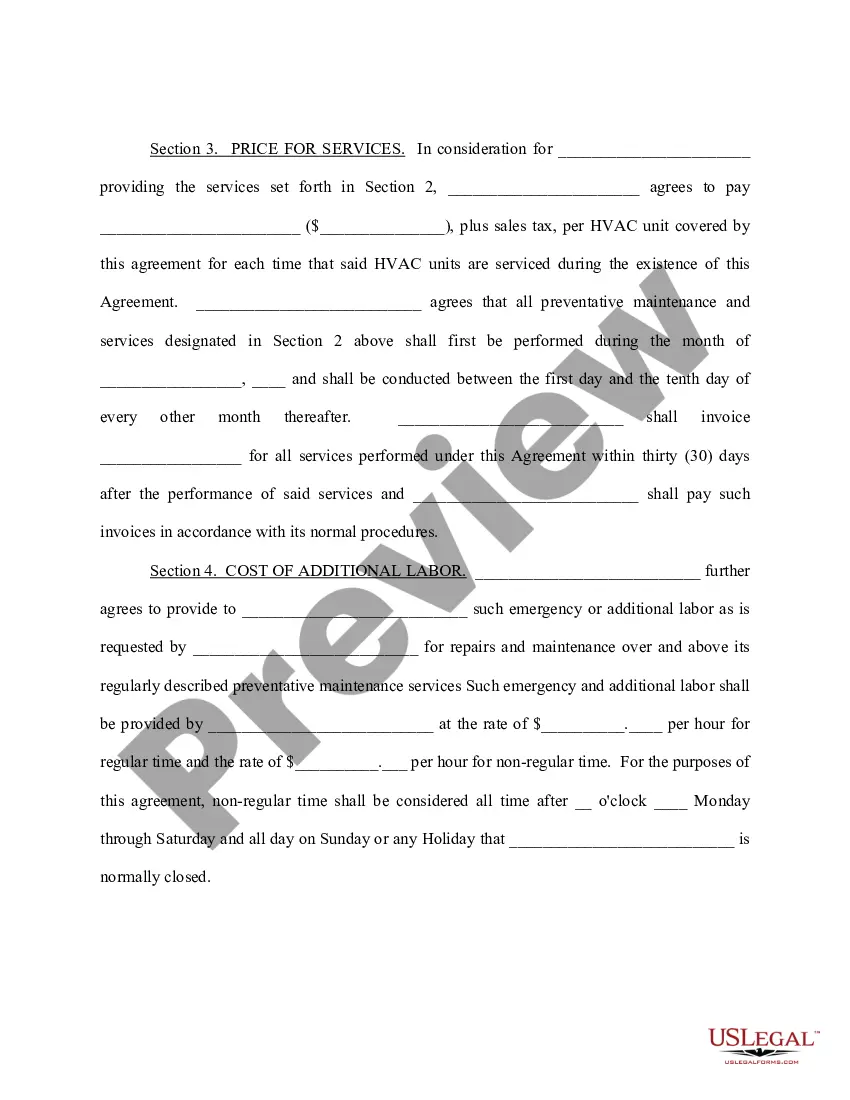
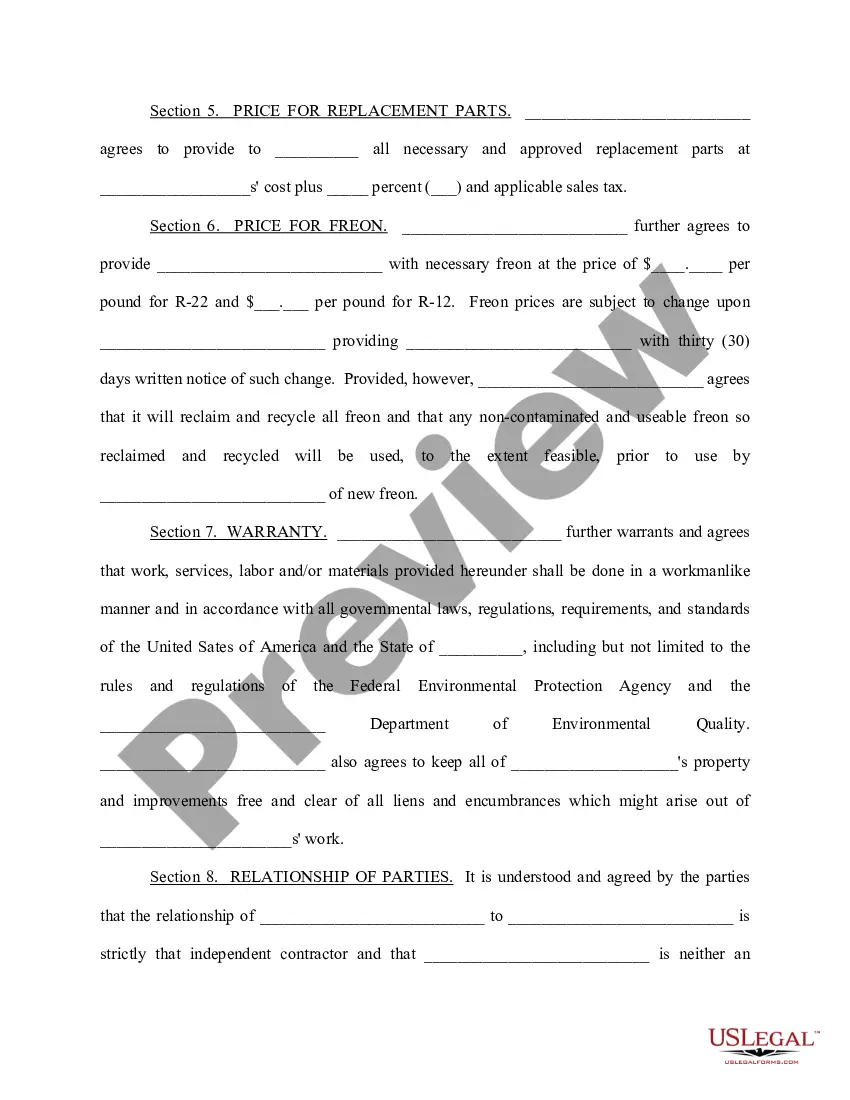
Maintenance Agreement Equipment Template For Construction In North Carolina
Description
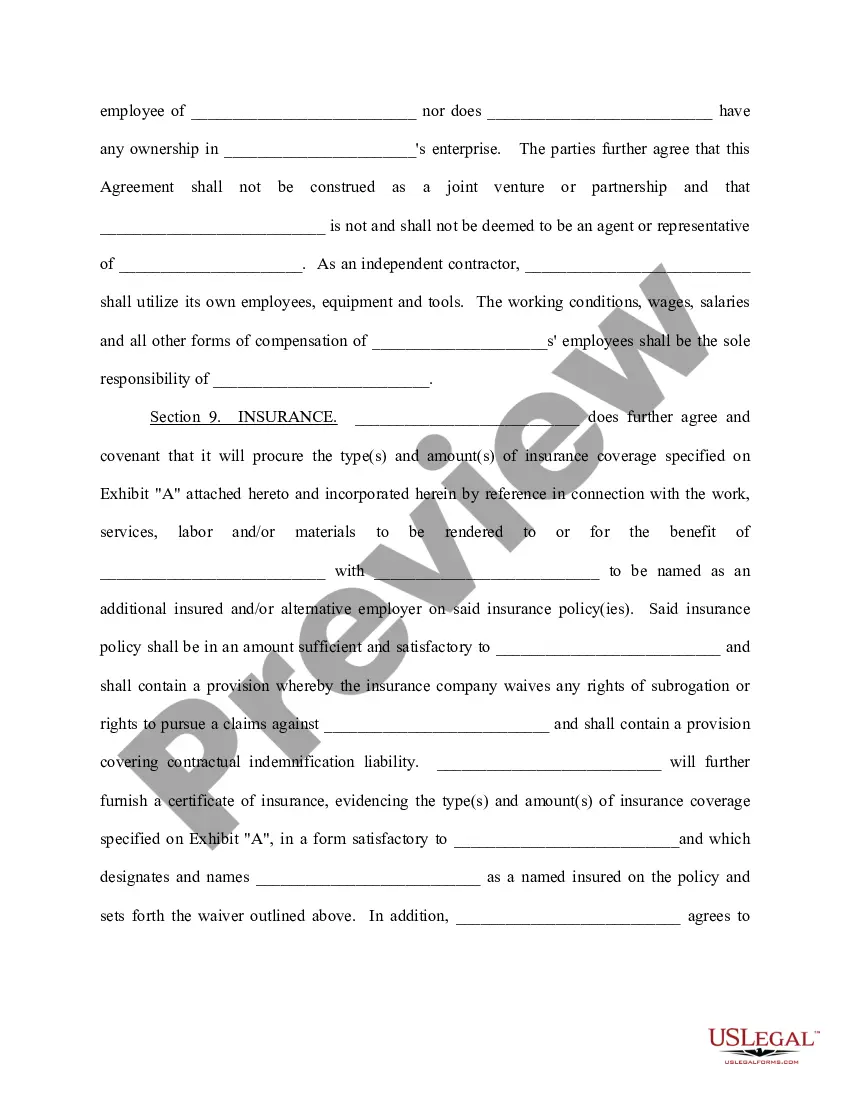
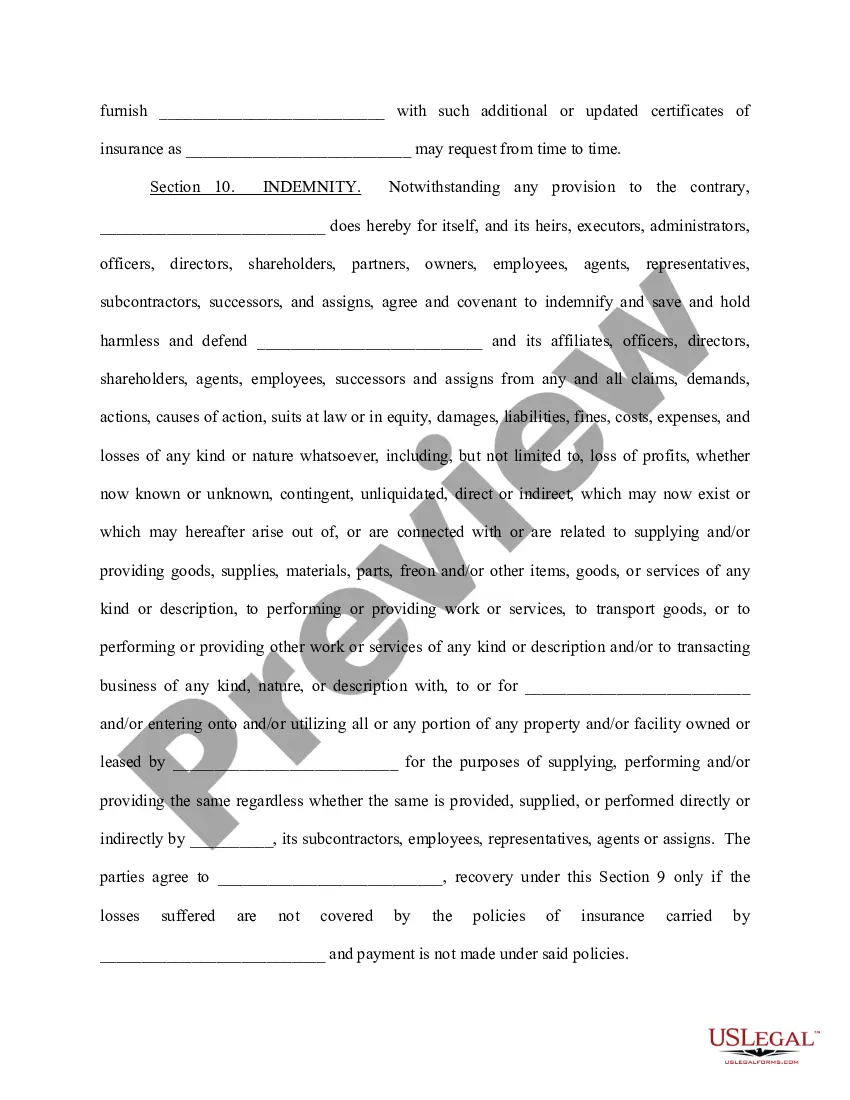
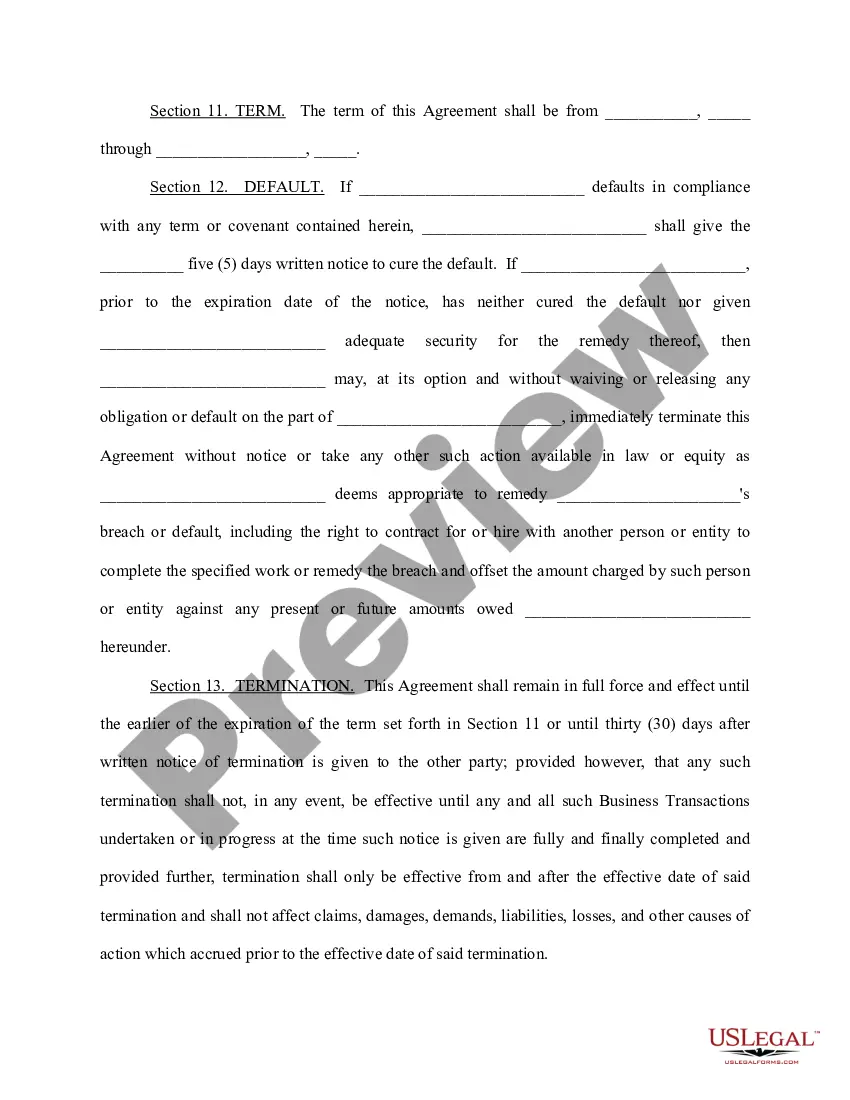
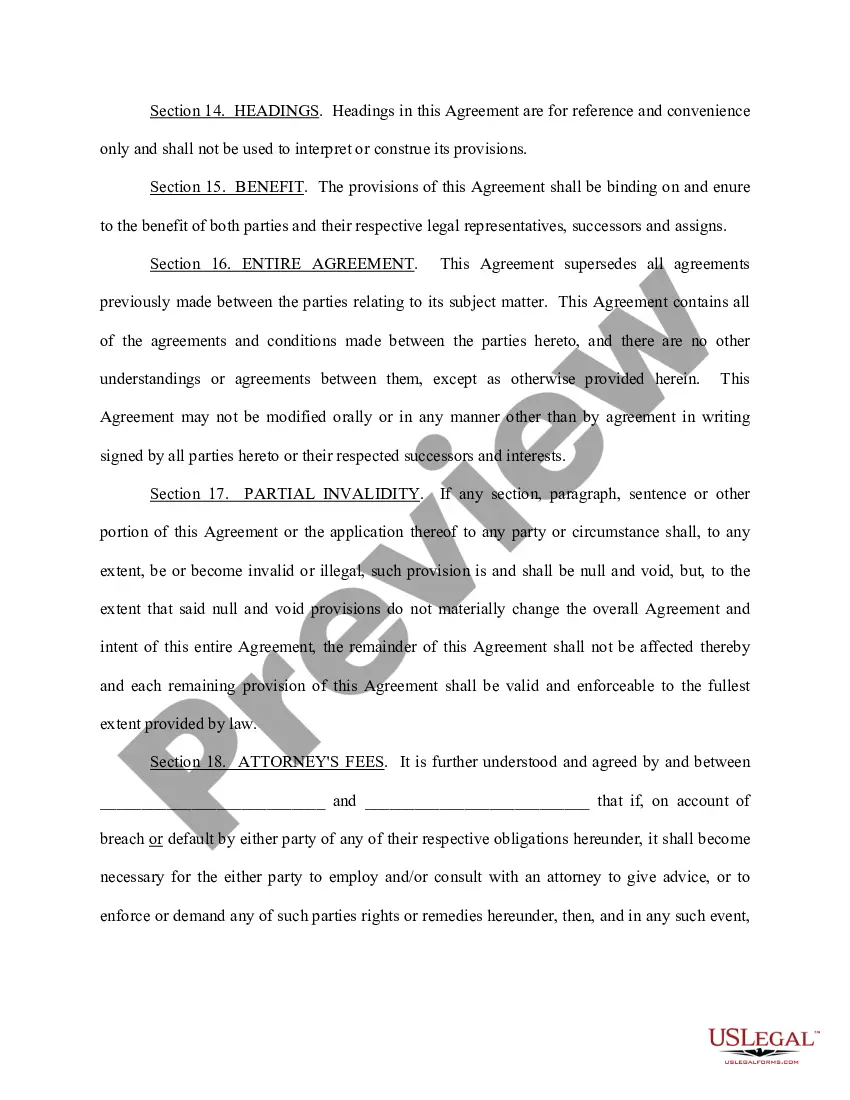
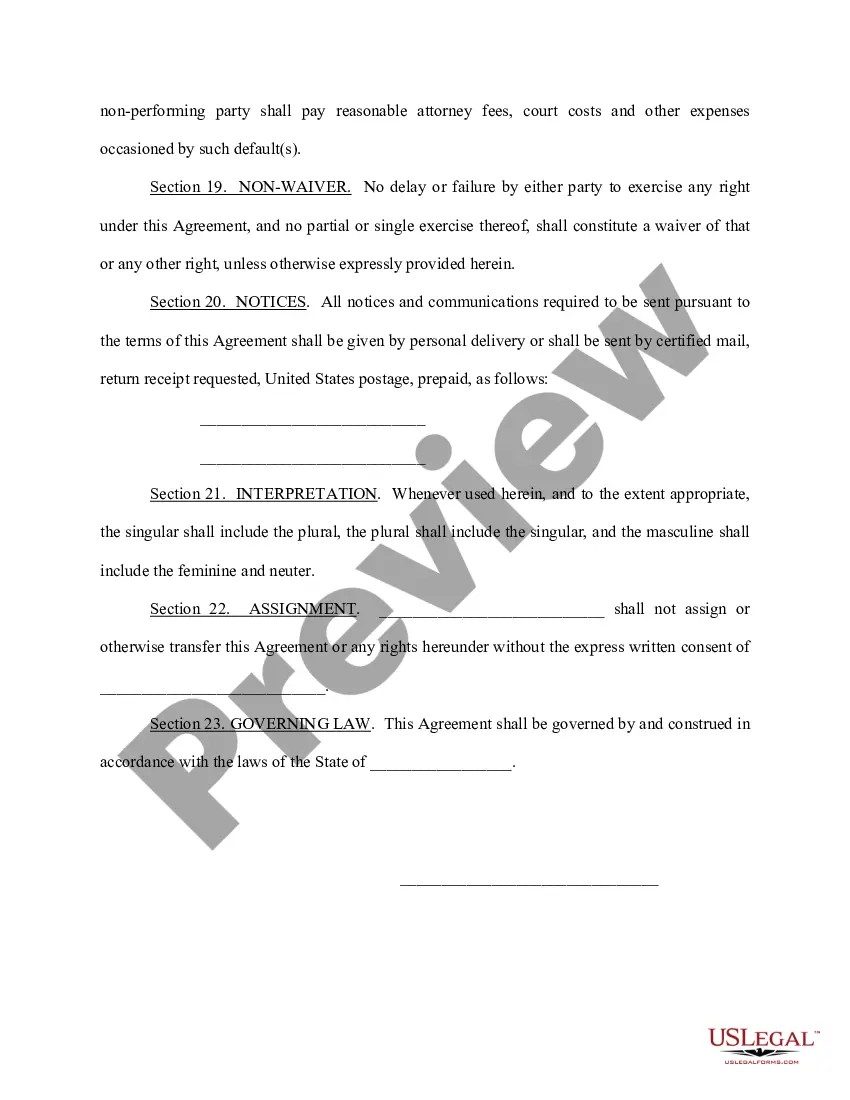
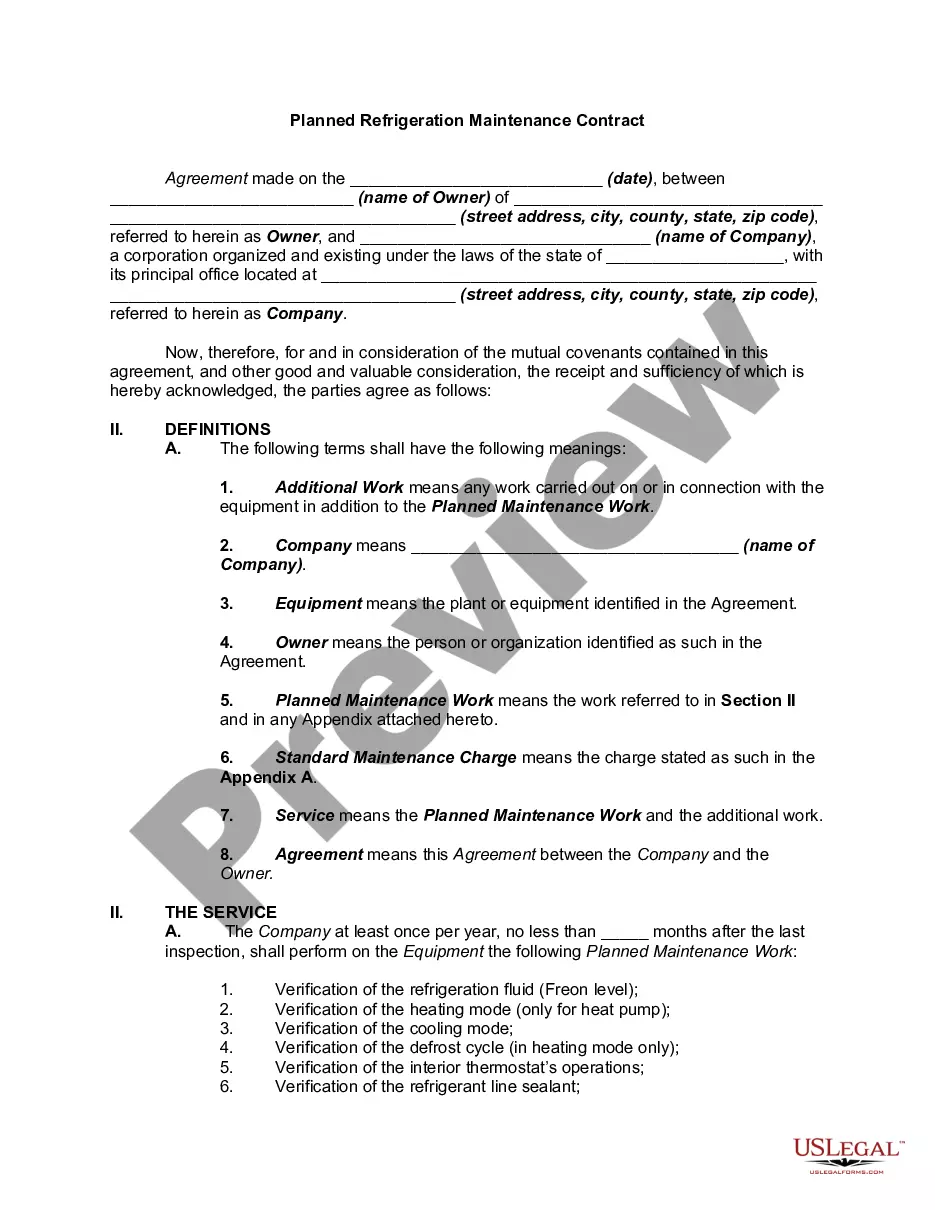
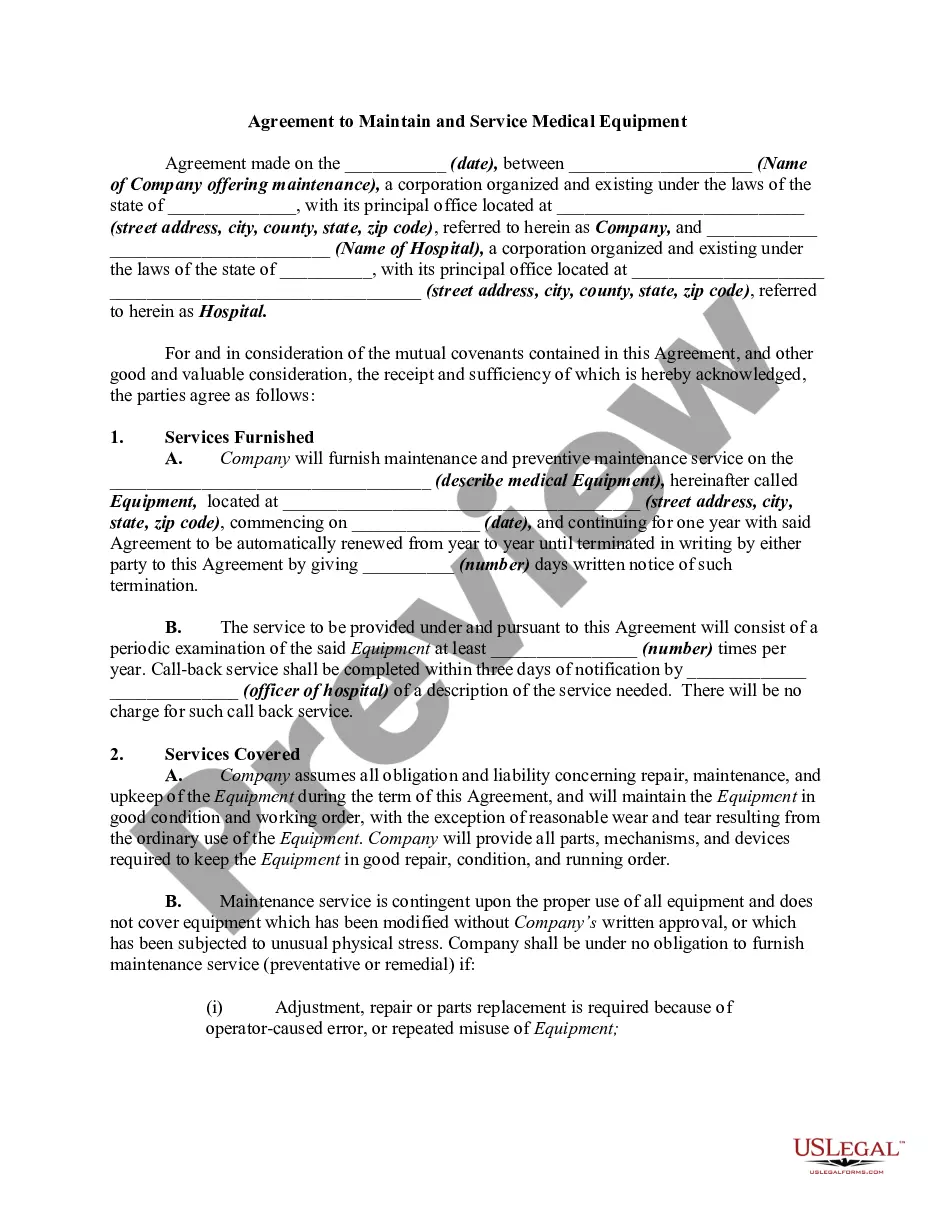
Get your form ready online
Our built-in tools help you complete, sign, share, and store your documents in one place.
Make edits, fill in missing information, and update formatting in US Legal Forms—just like you would in MS Word.
Download a copy, print it, send it by email, or mail it via USPS—whatever works best for your next step.
Sign and collect signatures with our SignNow integration. Send to multiple recipients, set reminders, and more. Go Premium to unlock E-Sign.
If this form requires notarization, complete it online through a secure video call—no need to meet a notary in person or wait for an appointment.
We protect your documents and personal data by following strict security and privacy standards.

Make edits, fill in missing information, and update formatting in US Legal Forms—just like you would in MS Word.

Download a copy, print it, send it by email, or mail it via USPS—whatever works best for your next step.

Sign and collect signatures with our SignNow integration. Send to multiple recipients, set reminders, and more. Go Premium to unlock E-Sign.

If this form requires notarization, complete it online through a secure video call—no need to meet a notary in person or wait for an appointment.

We protect your documents and personal data by following strict security and privacy standards.
Looking for another form?




Form popularity
FAQ
A preventative maintenance agreement is a service contract designed to help businesses maintain their equipment and avoid costly repairs.
How to Write a Maintenance Contract Draw up a section for official definitions at the beginning of the contract. Lay out the maintenance services to be performed early in the contract. Discuss the compensation structure agreed upon for services. Draft a section discussing any warranties or promises made by either party.
Write the contract in six steps Start with a contract template. Open with the basic information. Describe in detail what you have agreed to. Include a description of how the contract will be ended. Write into the contract which laws apply and how disputes will be resolved. Include space for signatures.
Specify governing law. Identify the working relationship. Clearly define the scope of work. Specify what benefits, if any, the contractor will receive. Assign intellectual property. Include confidentiality clauses. Include a termination clause.
Acceptance of an offer: After one party makes an offer, it's up to the other party to accept it. If someone offers you $600 to walk their dogs, for example, you enter into a contractual agreement the moment you accept their offer in exchange for your services.
The IRS requires contractors to fill out a Form W-9, a request for a Taxpayer Identification Number and Certification, which you should keep on file for at least four years after the hiring. This form is used to request the correct name and Taxpayer Identification Number, or TIN, of the worker or their entity.
North Carolina has a three-year statute of limitations period (under N.C. Gen. Stat. § 1-52) on actions for breach of contract, negligence, and fraud. This means that claims based on a contract with the builder must be brought within this period, or they are barred.
In California, the four-year warranty provides an extended layer of protection for homeowners against latent defects that may not be immediately apparent post-construction. This warranty underscores the importance of long-term quality and durability in construction projects.
“But every builder in North Carolina is held to a standard. There is a statute written that they have to warranty the home against defects for six years in North Carolina. That's called a structural warranty.” North Carolina's six-year structural warranty follows standards recommended by the state.
The implied warranty of workmanship is designed to show that construction companies have met the local standards when providing services. It's extended to the original buyers of homes, and it delivers warranty coverage on major workmanship-related defects.
