Force Director To Resign In King
Description

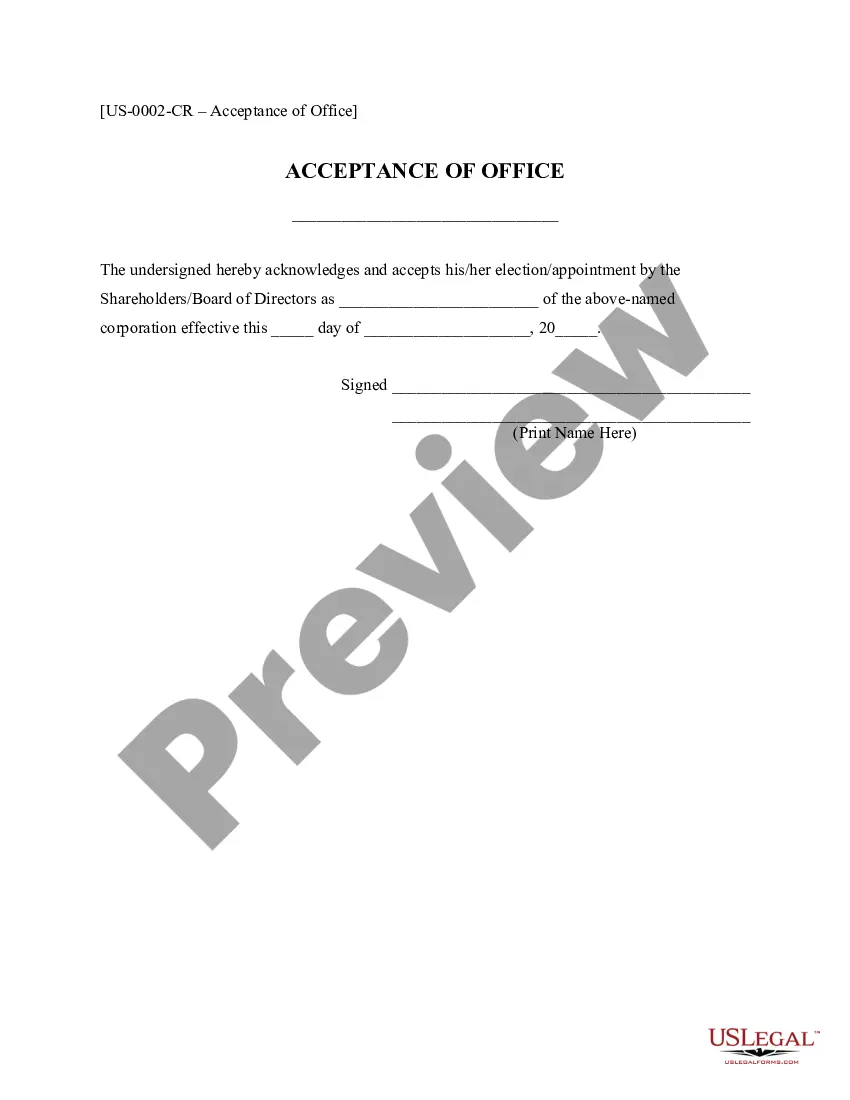
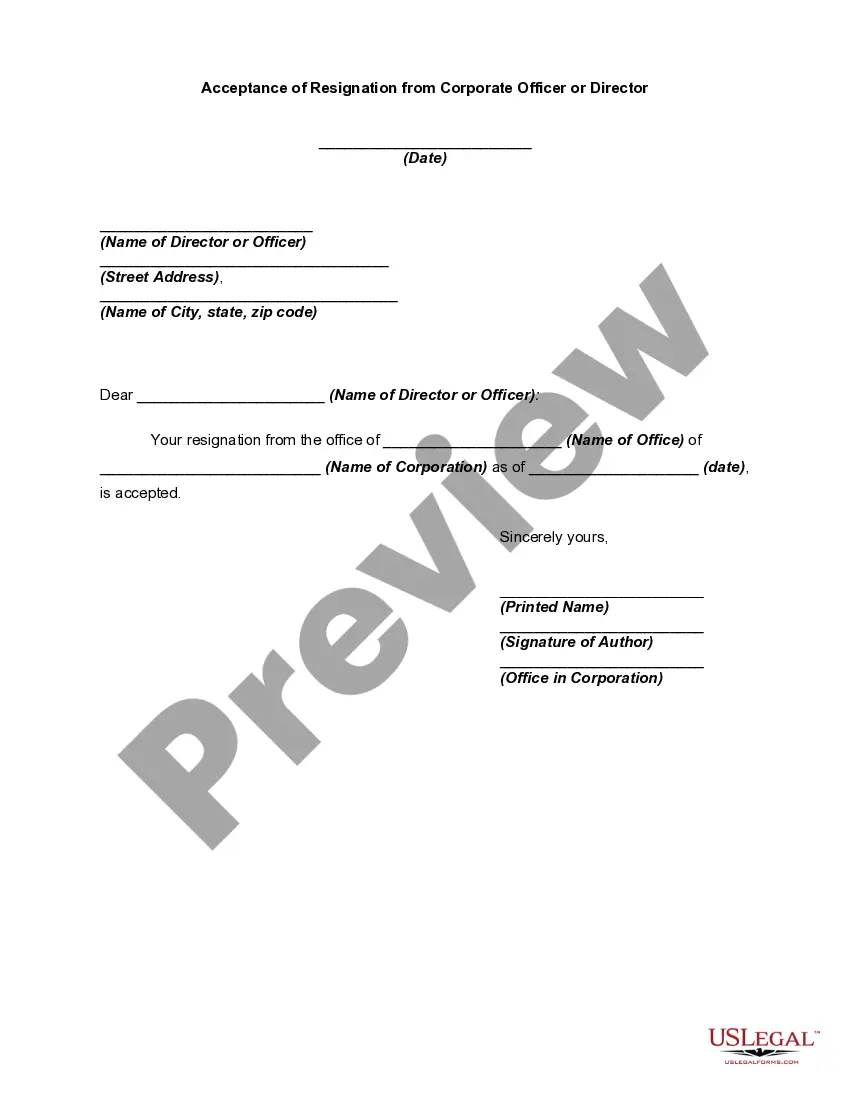
Get your form ready online
Our built-in tools help you complete, sign, share, and store your documents in one place.
Make edits, fill in missing information, and update formatting in US Legal Forms—just like you would in MS Word.
Download a copy, print it, send it by email, or mail it via USPS—whatever works best for your next step.
Sign and collect signatures with our SignNow integration. Send to multiple recipients, set reminders, and more. Go Premium to unlock E-Sign.
If this form requires notarization, complete it online through a secure video call—no need to meet a notary in person or wait for an appointment.
We protect your documents and personal data by following strict security and privacy standards.

Make edits, fill in missing information, and update formatting in US Legal Forms—just like you would in MS Word.

Download a copy, print it, send it by email, or mail it via USPS—whatever works best for your next step.

Sign and collect signatures with our SignNow integration. Send to multiple recipients, set reminders, and more. Go Premium to unlock E-Sign.

If this form requires notarization, complete it online through a secure video call—no need to meet a notary in person or wait for an appointment.

We protect your documents and personal data by following strict security and privacy standards.
Looking for another form?







Form popularity
FAQ
The statutory provision allowing any director to be removed from office by ordinary resolution of the shareholders is in Section 168 of the Companies Act 2006 (CA06). Importantly, the resolution must be proposed at a formal shareholders' meeting and cannot be passed as a written resolution.
If one cannot persuade a corporate director to resign, then one does not ``force'' a resignation. Instead: The shareholders vote to remove the director; or If permitted by the corporation's bylaws, the other directors vote to remove the director in question. Disclaimer:
Under section 71 of the Act a director may be removed from office by ordinary resolution (a resolution adopted with support of more than 50% of the voting rights exercised on the resolution) of the shareholders in a general meeting, by the board of director's resolution, and by the Companies Tribunal in certain ...
If the director resigns; if the director becomes bankrupt or makes any compromise or arrangement with his or her creditors generally; if the director suffers from mental disorder; if the director is prohibited by law from being a director (which includes disqualification);
1. Notify your company secretary that a director wishes to resign. 2. Form 49, a letter of resignation, and a board resolution will be prepared by the company secretary.
So, the answer to the question is: Yes, a director can be forced out – but the exact scenario depends on the protocols you establish from day one.
How is a director removed in a public company? Members (shareholders) can remove a director by resolution (s 203D (1)). This is despite anything in the company's constitution, an agreement between the company and the director or an agreement between any or all members of the company and the director.
Filing of Form DIR-12: The company must then file Form DIR-12 with the Registrar of Companies (ROC). This form serves as a notification of the director's resignation or removal, including cases where the position is vacated due to absence from meetings.

