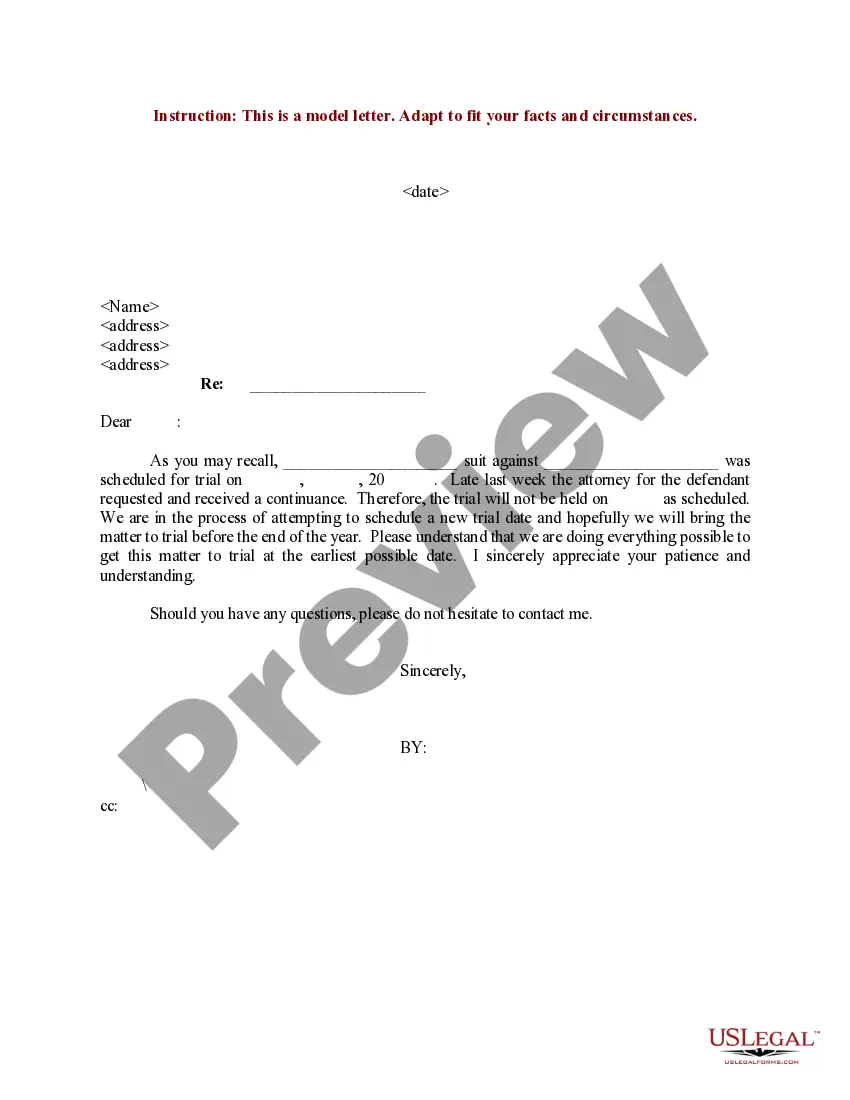
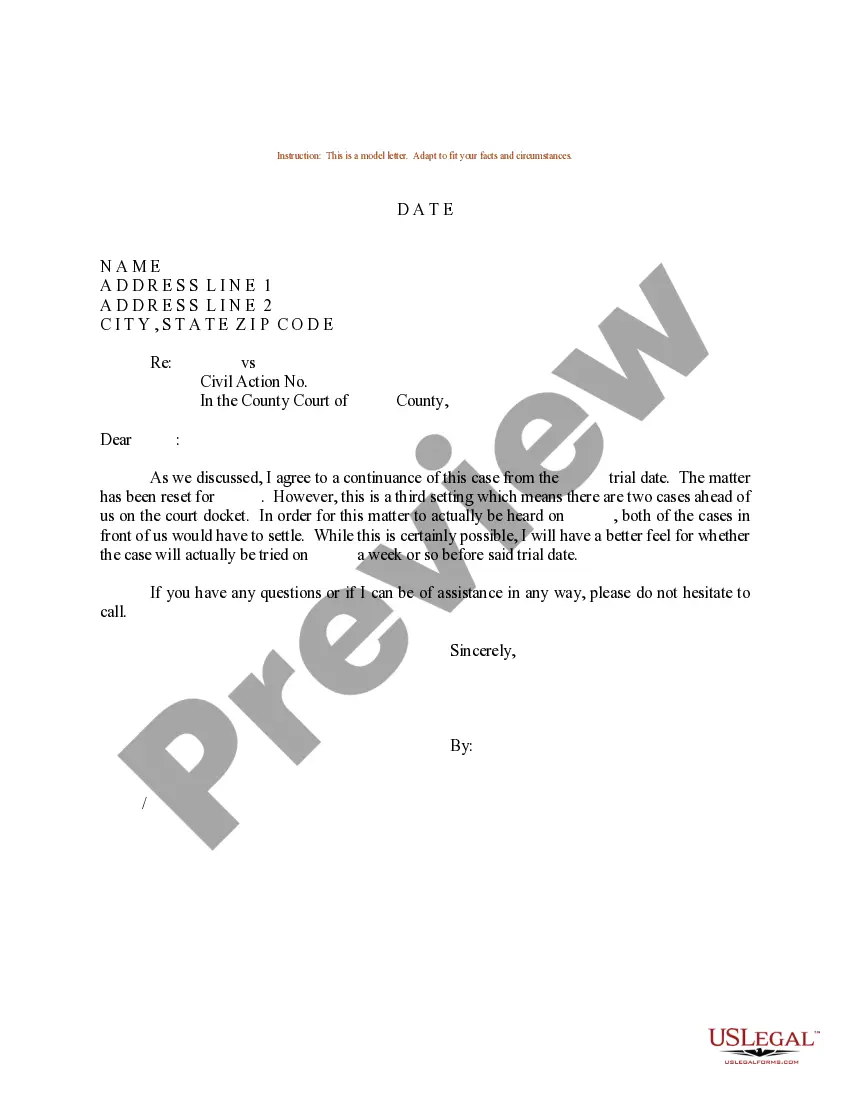
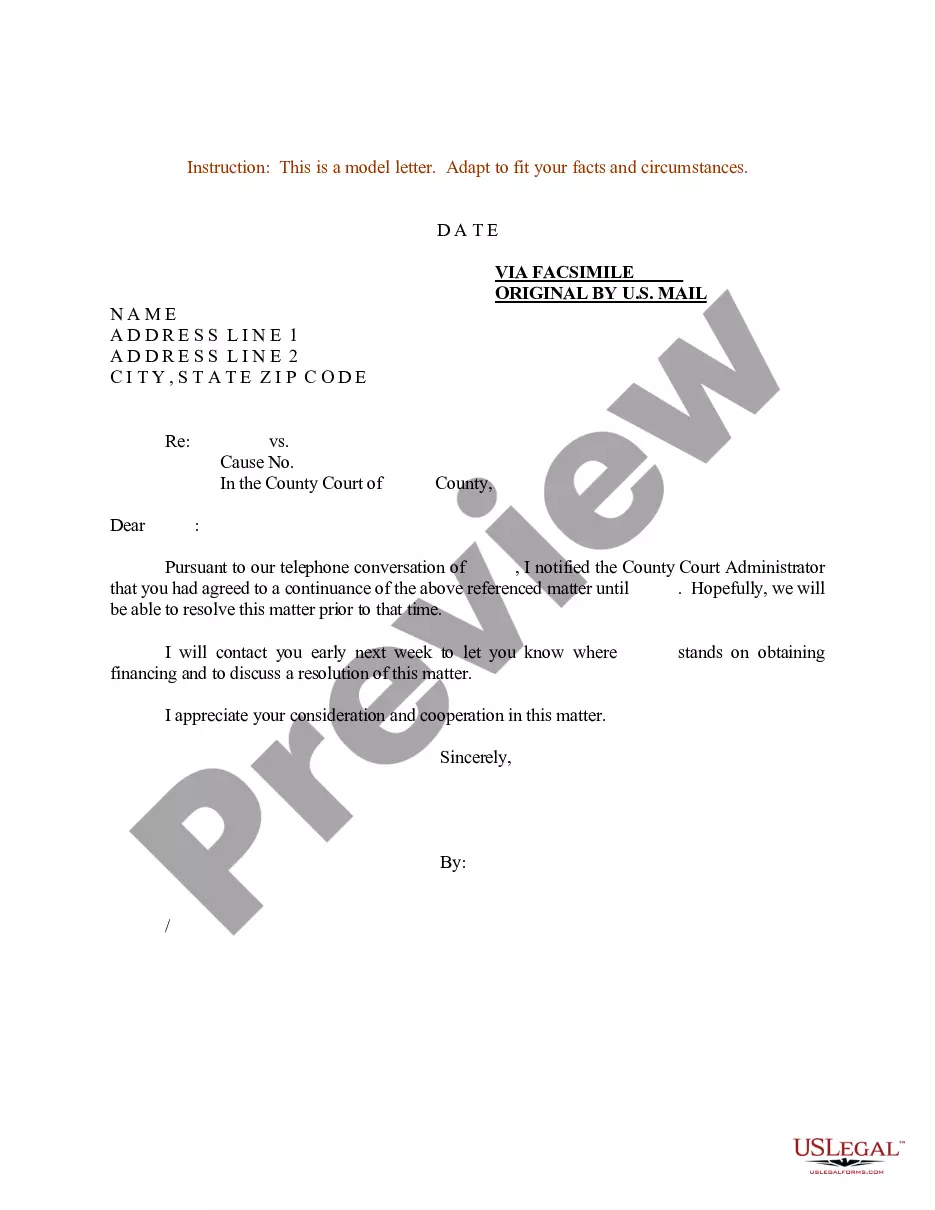
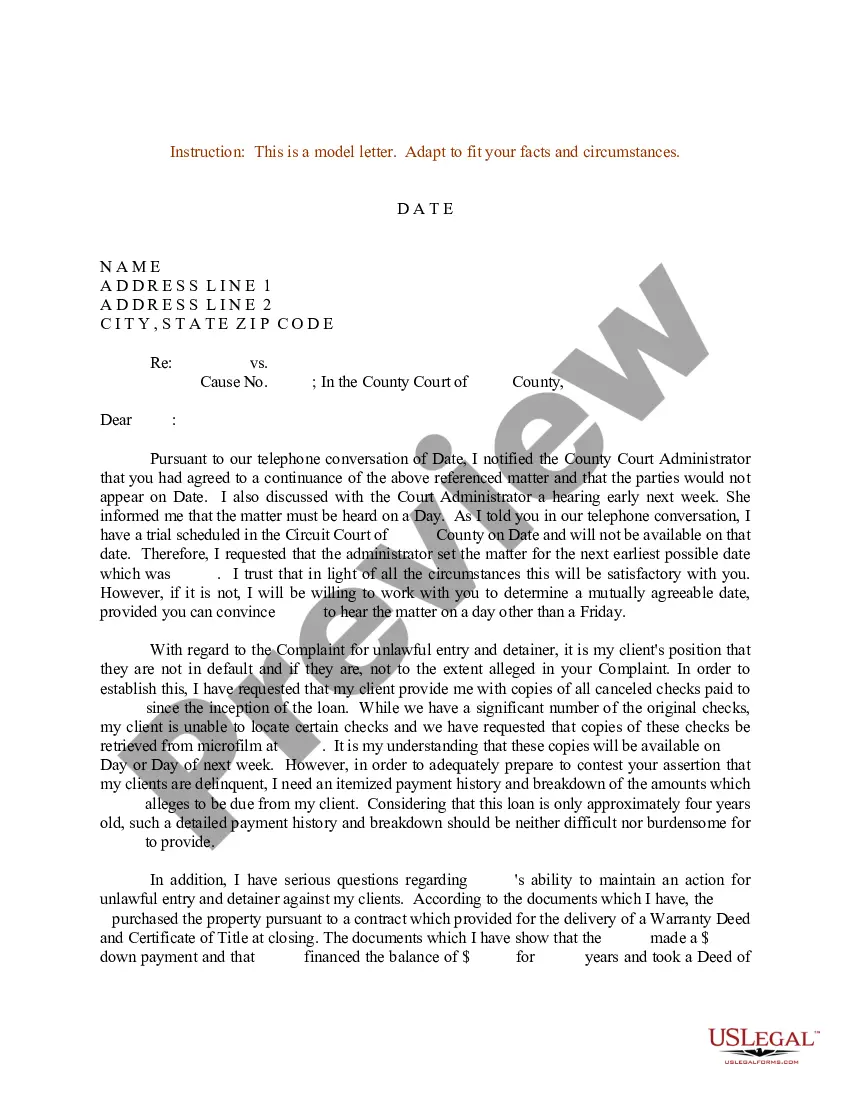
Trial Continuance Without A Finding In Minnesota
Description

Get your form ready online
Our built-in tools help you complete, sign, share, and store your documents in one place.
Make edits, fill in missing information, and update formatting in US Legal Forms—just like you would in MS Word.
Download a copy, print it, send it by email, or mail it via USPS—whatever works best for your next step.
Sign and collect signatures with our SignNow integration. Send to multiple recipients, set reminders, and more. Go Premium to unlock E-Sign.
If this form requires notarization, complete it online through a secure video call—no need to meet a notary in person or wait for an appointment.
We protect your documents and personal data by following strict security and privacy standards.

Make edits, fill in missing information, and update formatting in US Legal Forms—just like you would in MS Word.

Download a copy, print it, send it by email, or mail it via USPS—whatever works best for your next step.

Sign and collect signatures with our SignNow integration. Send to multiple recipients, set reminders, and more. Go Premium to unlock E-Sign.

If this form requires notarization, complete it online through a secure video call—no need to meet a notary in person or wait for an appointment.

We protect your documents and personal data by following strict security and privacy standards.
Looking for another form?







Form popularity
FAQ
Some of the reasons that might necessitate a continuance include: You need additional time to secure an attorney to represent you in court. You need more time to gather evidence because the other side has been stalling on discovery requests. You need more time to locate witnesses who are critical to your case.
If the prosecution or defense needs extra time to prepare for a hearing or trial in a criminal case, they can ask the judge for a continuance. But they need to have a good reason, otherwise, the judge can deny the request.
Continuance Without a Finding (CWOF) is common in cases where the evidence supports a guilty finding. This is when the defendant acknowledges guilt for pleading purposes, but the court does not enter a guilty finding. Instead, it continues the case which will be dismissed upon completion of certain conditions.
A conviction is an adjudication of a criminal defendant 's guilt; specifically, it is the act or judicial process of finding a criminal defendant guilty of a charged offense .
A single request for a reasonable continuance of a trial setting set by notice without hearing should be granted by the court upon agreement of all parties, provided that the request is made within 21 days after notice of the setting to the parties.
Placed on file without a finding: A legal term used to describe the disposition or outcome of a case. It means you maintain your innocence or continue your not-guilty status for a period of time conditioned upon good behavior and possibly some other conditions.
Continuance Without a Finding (CWOF) is common in cases where the evidence supports a guilty finding. This is when the defendant acknowledges guilt for pleading purposes, but the court does not enter a guilty finding.
Go to the court on the date/time you're assigned. They will call your name, and you can ask for a continuance for dismissal. In my case, I didn't have to ask for a continuance for dismissal - the judge saw my record of zero tickets and automatically offered it to me.
To get an Order for Protection dismissed in Minnesota, consult an experienced attorney for guidance. Gather evidence proving innocence, highlight changed circumstances, and attend court hearings. Mediation also aids in resolution. Legal defenses such as lack of evidence or due process violations are also crucial.
Rule 5 prescribes the procedure at the defendant's initial appearance. In most misdemeanor cases, the initial appearance will also be the time of arraignment and disposition. Rule 5.02 requires the appointment of a qualified interpreter for a defendant disabled in communication.