Termination Letter Template For Employee In Washington
Description

Get your form ready online
Our built-in tools help you complete, sign, share, and store your documents in one place.
Make edits, fill in missing information, and update formatting in US Legal Forms—just like you would in MS Word.
Download a copy, print it, send it by email, or mail it via USPS—whatever works best for your next step.
Sign and collect signatures with our SignNow integration. Send to multiple recipients, set reminders, and more. Go Premium to unlock E-Sign.
If this form requires notarization, complete it online through a secure video call—no need to meet a notary in person or wait for an appointment.
We protect your documents and personal data by following strict security and privacy standards.

Make edits, fill in missing information, and update formatting in US Legal Forms—just like you would in MS Word.

Download a copy, print it, send it by email, or mail it via USPS—whatever works best for your next step.

Sign and collect signatures with our SignNow integration. Send to multiple recipients, set reminders, and more. Go Premium to unlock E-Sign.

If this form requires notarization, complete it online through a secure video call—no need to meet a notary in person or wait for an appointment.

We protect your documents and personal data by following strict security and privacy standards.
Looking for another form?









Form popularity
FAQ
It's a troubling question that many employees have wondered about at some point: Can my employer fire me without notice? “The short answer is yes: In many to most circumstances, employees can be fired without notice,” says Sonya Smallets, an employment law attorney at Minnis & Smallets in San Francisco, California.
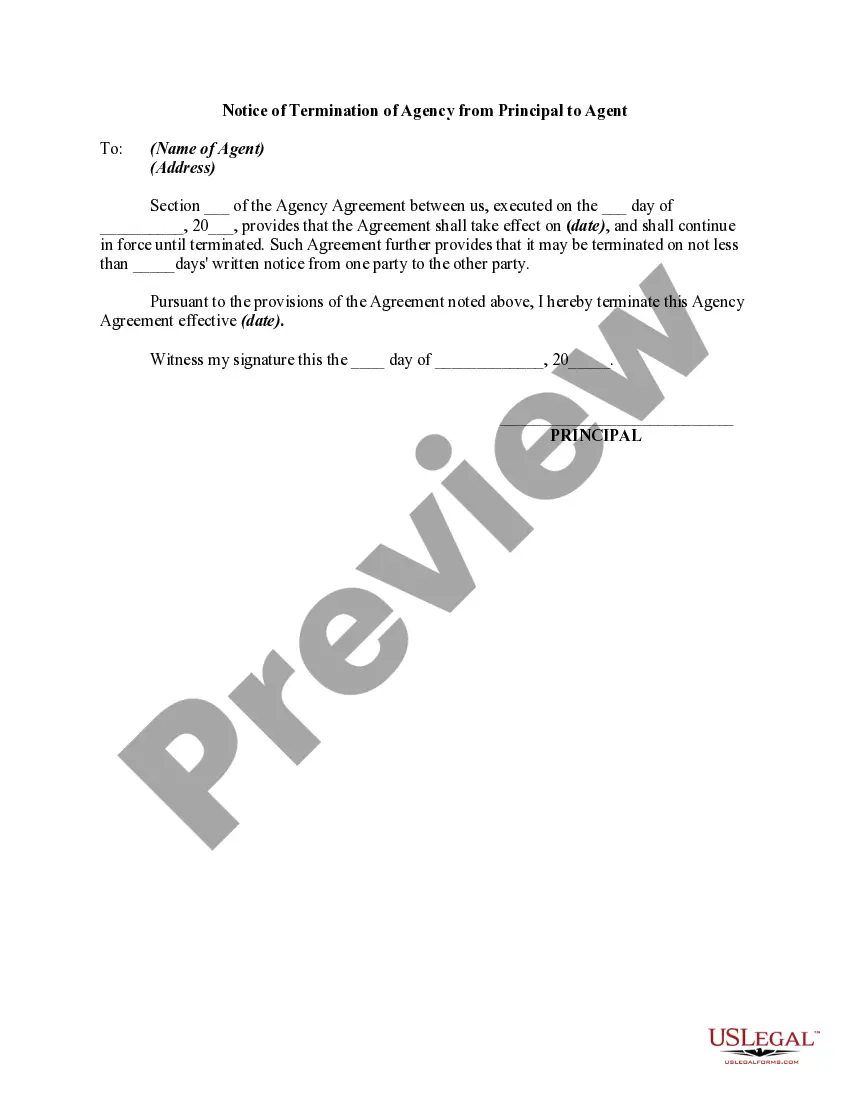
Dear Employee Name, I feel sorry to inform you that your employment with Company Name will be terminated, effective Termination Date. The reason for your termination is Reason for Termination, which was discussed with you on Date of Discussion during our meeting.
California Requirements California Unemployment Insurance Code 1089 requires employers to give a written Notice to Employee as to Change in Relationshipopens in a new tab form to all discharged or laid off employees immediately upon termination.
The law does not require employers to give a worker notice before terminating their job. Employers are not required to give warnings or follow any particular steps before terminating an employee.
When you are terminated, your employer will typically supply you with a document, such as a termination letter or notice. This document contains important information about the reason for the termination, its effective date and the nature of your employment (e.g. temporary or permanent).
Termination letters usually include details such as: The date of termination. The reason for the termination (while not always required, many include it) Any severance benefits or other compensation the employee is entitled to. Instructions for the return of company property.
If you are an at-will employee, an employer can usually terminate you any time, for any or no reason. An employer does not have to give you advance notice of termination. There are 3 exceptions to this: If you and your employer changed your rights by entering into an agreement.
Some states require employers to provide a reason for termination in writing to employees at the time of termination; others require a termination letter be provided at the request of a separated employee.
In Washington State, most employees are hired at-will. That means your employer can terminate you any time, for any reason. Some employees have individual written or implied employment agreements. Union workers may have collective bargaining agreements.
Consult with HR to ensure compliance with company policies and state laws. Prepare a detailed termination letter outlining the reasons for dismissal. Arrange a final paycheck in ance with Washington state law. Schedule a termination meeting with HR and the employee involved.

