Termination Of Contract With Notice In Fairfax
Description
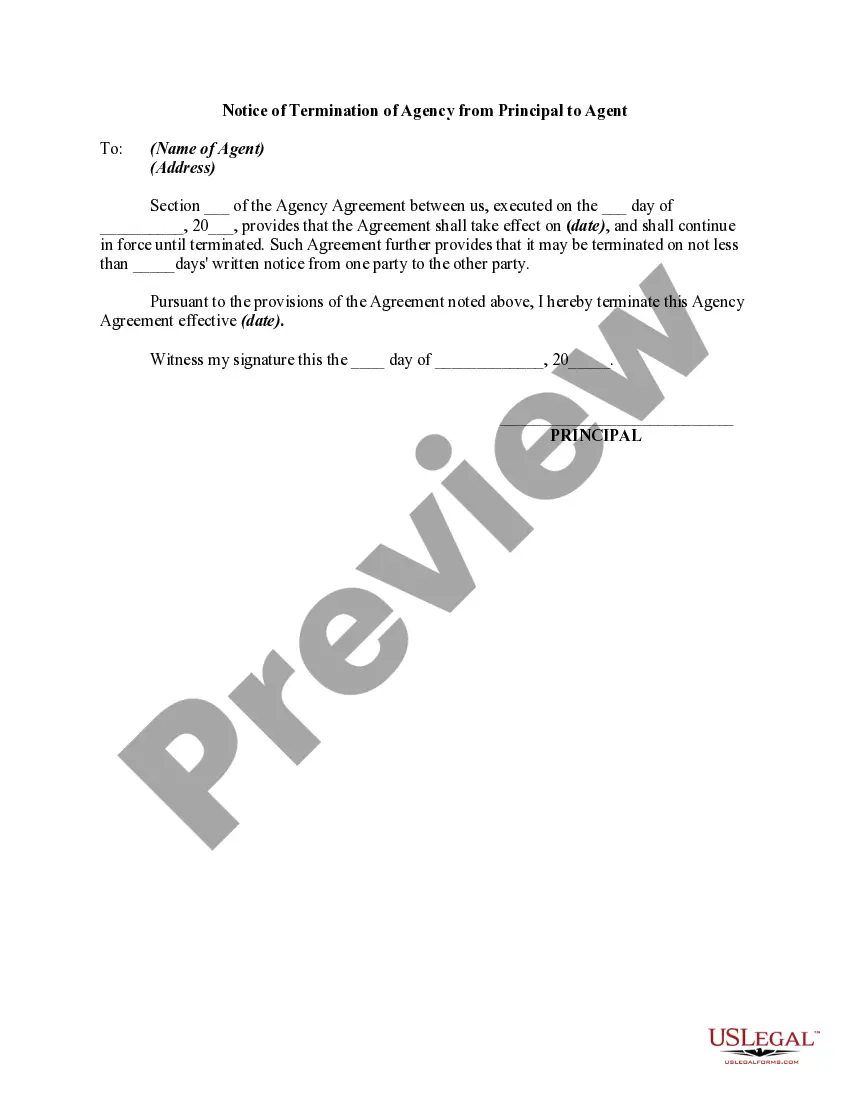
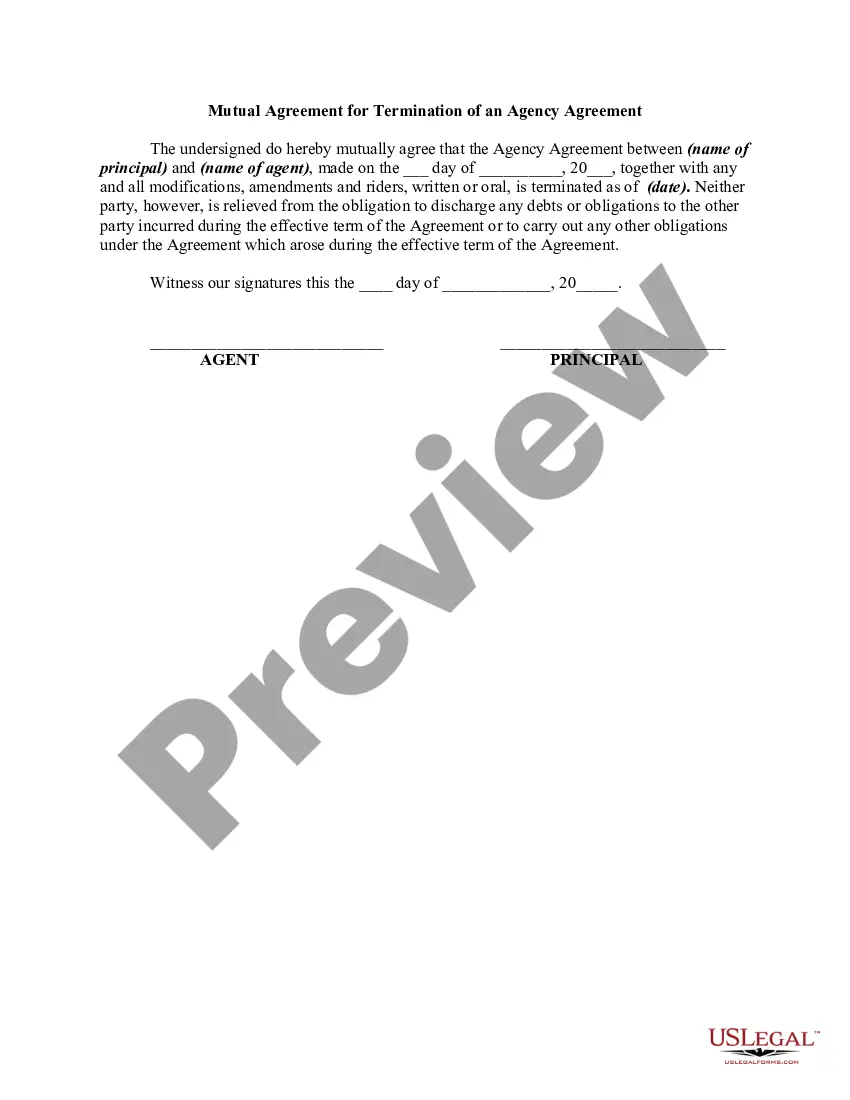
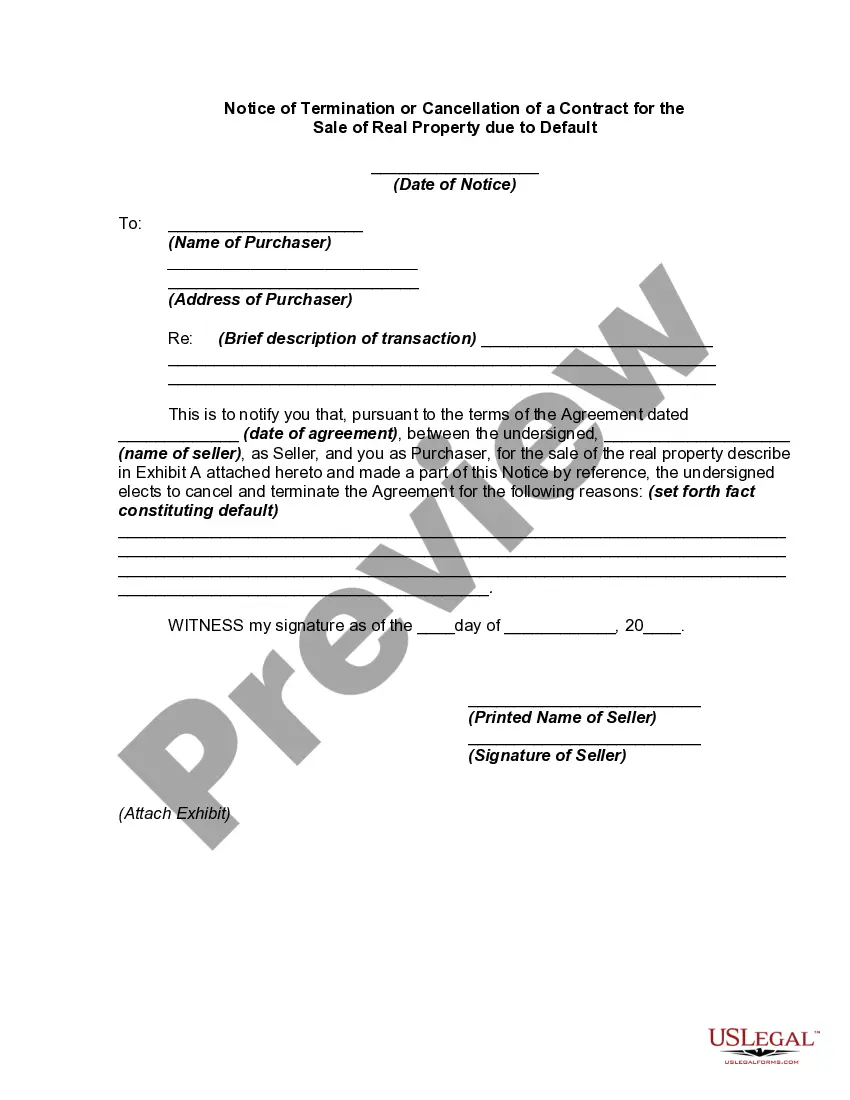

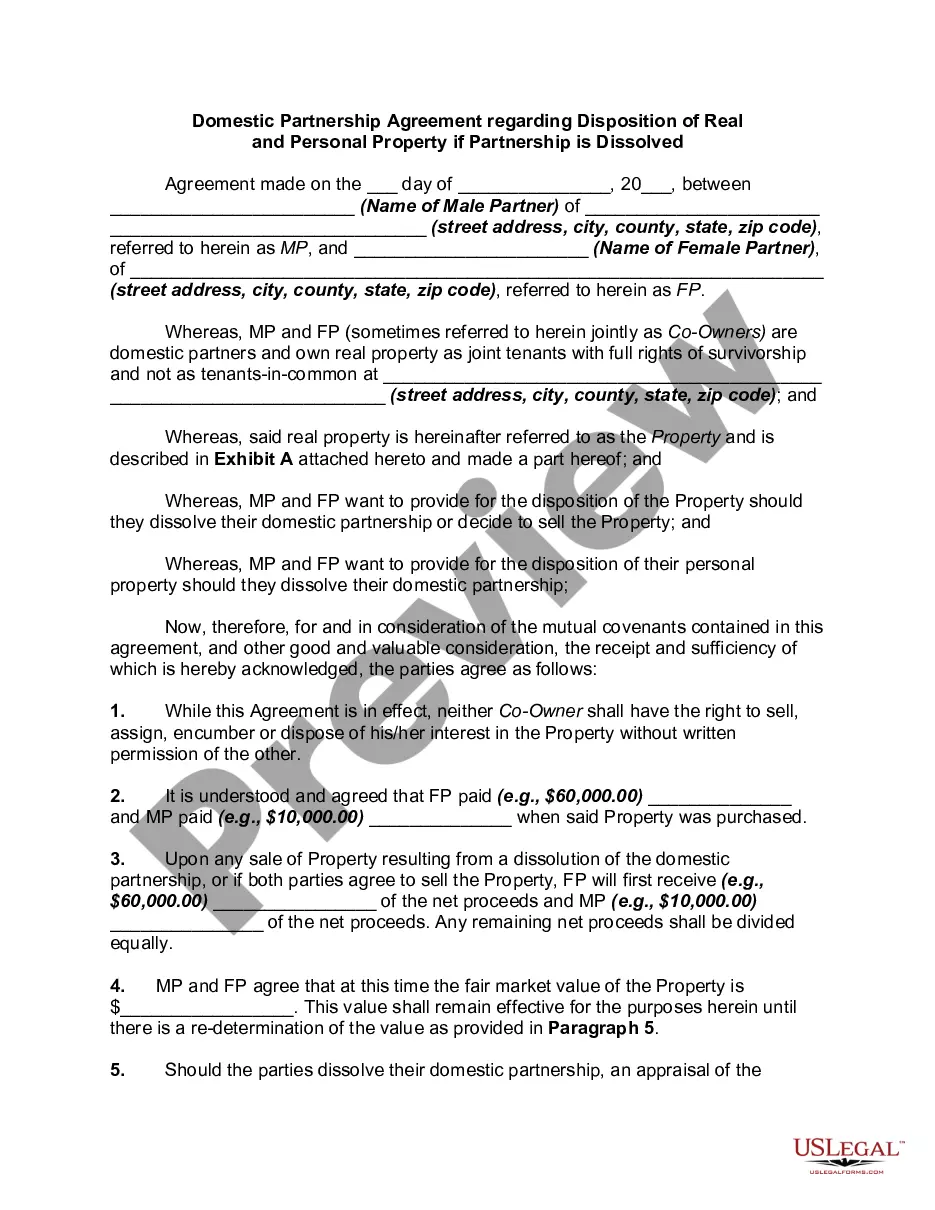
Get your form ready online
Our built-in tools help you complete, sign, share, and store your documents in one place.
Make edits, fill in missing information, and update formatting in US Legal Forms—just like you would in MS Word.
Download a copy, print it, send it by email, or mail it via USPS—whatever works best for your next step.
Sign and collect signatures with our SignNow integration. Send to multiple recipients, set reminders, and more. Go Premium to unlock E-Sign.
If this form requires notarization, complete it online through a secure video call—no need to meet a notary in person or wait for an appointment.
We protect your documents and personal data by following strict security and privacy standards.

Make edits, fill in missing information, and update formatting in US Legal Forms—just like you would in MS Word.

Download a copy, print it, send it by email, or mail it via USPS—whatever works best for your next step.

Sign and collect signatures with our SignNow integration. Send to multiple recipients, set reminders, and more. Go Premium to unlock E-Sign.

If this form requires notarization, complete it online through a secure video call—no need to meet a notary in person or wait for an appointment.

We protect your documents and personal data by following strict security and privacy standards.
Looking for another form?




Form popularity
FAQ
There is a state ban on rent control, governed by VA Stat. § 55.1-1200. This enables landlords to set rent and increase it across the state, given that they provide proper notice. On the other hand, the landlord can increase the rent with certain discretions, as much as they wish, and whenever they want.
Following are the steps a landlord must take in the eviction process. STEP 1: Notice to Tenant. (Referred to herein as “Tenant" whether singular or plural) STEP 2: Summons for Unlawful Detainer. Va. STEP 3: Writ of Eviction in Unlawful Detainer Proceedings. Va. STEP 4: Eviction. There are two types of eviction:
Starting July 1, 2020, all landlords must offer the Statement of Tenant Rights and Responsibilities to any prospective tenant. Both the landlord and tenant must sign a form at the end of the statement acknowledging that the tenant has received from the landlord the statement of tenant rights and responsibilities.
The first step is to terminate her occupancy with a 30 day written Notice of Termination. If she fails to vacate the premises after the required notice, you will need to file an unlawful detainer action to evict her. I would be glad to respond to any related follow-up questions that you may have.
The landlord must first send a termination notice to the tenant, making clear that the tenancy has been terminated. Terms of the notice vary ing to state law, as do the requirements on delivery of the notice. The tenant may be provided time to remedy the violation, by paying outstanding rent, for example.
The landlord gives the tenant written notice to vacate the premises within 30 days.
The landlord or the tenant may terminate a month-to-month tenancy by serving a written notice on the other at least 30 days prior to the next rent due date, unless the rental agreement provides for a different notice period. The landlord and the tenant may agree in writing to an early termination of a rental agreement.
Zoning Ordinance and Safety Rules In general, no more than one family, plus two renters, may live in one house, or no more than four unrelated people may live in one house.
