Competition Noncompetition For 50 In Harris
Description

Get your form ready online
Our built-in tools help you complete, sign, share, and store your documents in one place.
Make edits, fill in missing information, and update formatting in US Legal Forms—just like you would in MS Word.
Download a copy, print it, send it by email, or mail it via USPS—whatever works best for your next step.
Sign and collect signatures with our SignNow integration. Send to multiple recipients, set reminders, and more. Go Premium to unlock E-Sign.
If this form requires notarization, complete it online through a secure video call—no need to meet a notary in person or wait for an appointment.
We protect your documents and personal data by following strict security and privacy standards.

Make edits, fill in missing information, and update formatting in US Legal Forms—just like you would in MS Word.

Download a copy, print it, send it by email, or mail it via USPS—whatever works best for your next step.

Sign and collect signatures with our SignNow integration. Send to multiple recipients, set reminders, and more. Go Premium to unlock E-Sign.

If this form requires notarization, complete it online through a secure video call—no need to meet a notary in person or wait for an appointment.

We protect your documents and personal data by following strict security and privacy standards.
Looking for another form?








Form popularity
FAQ
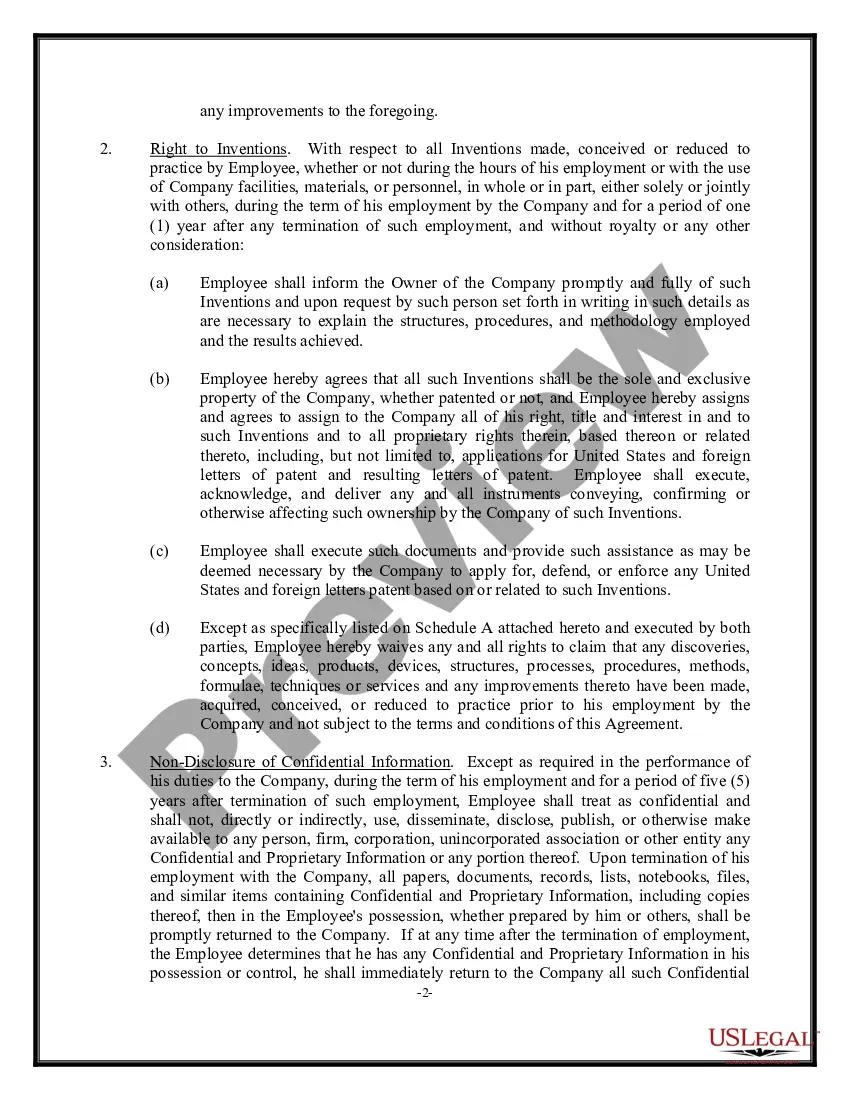
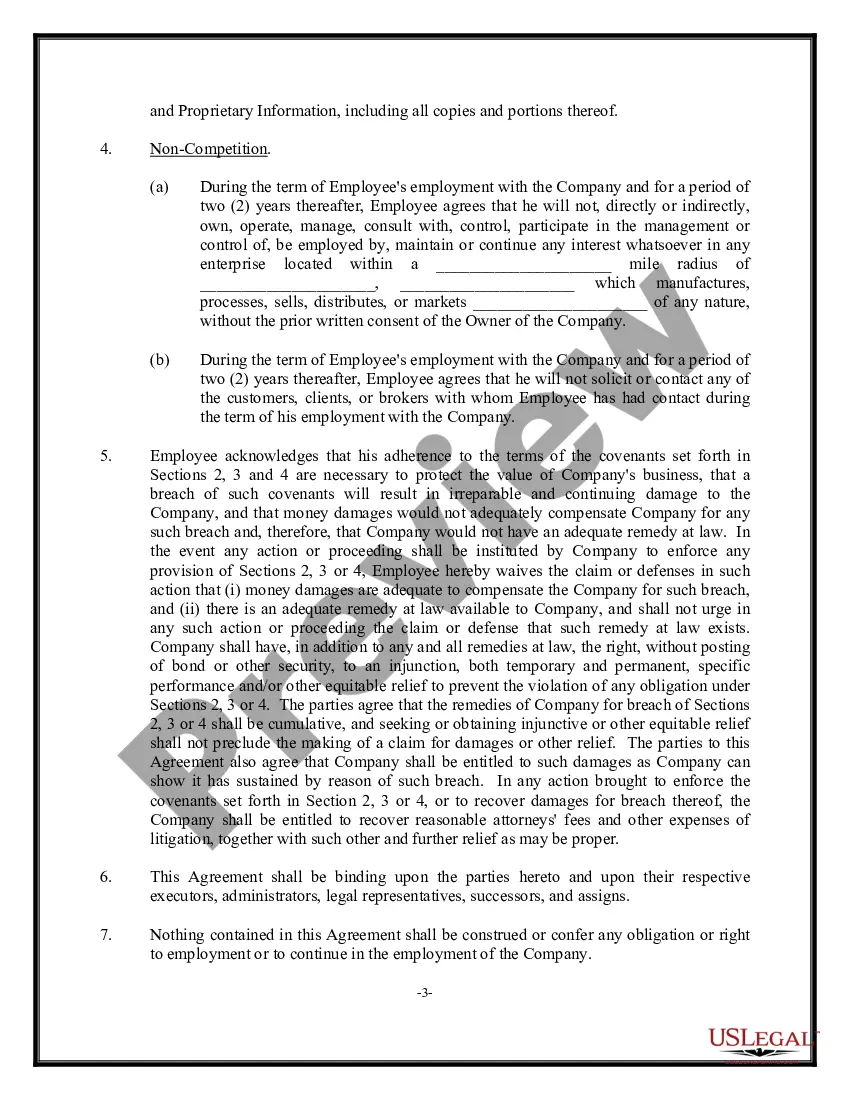
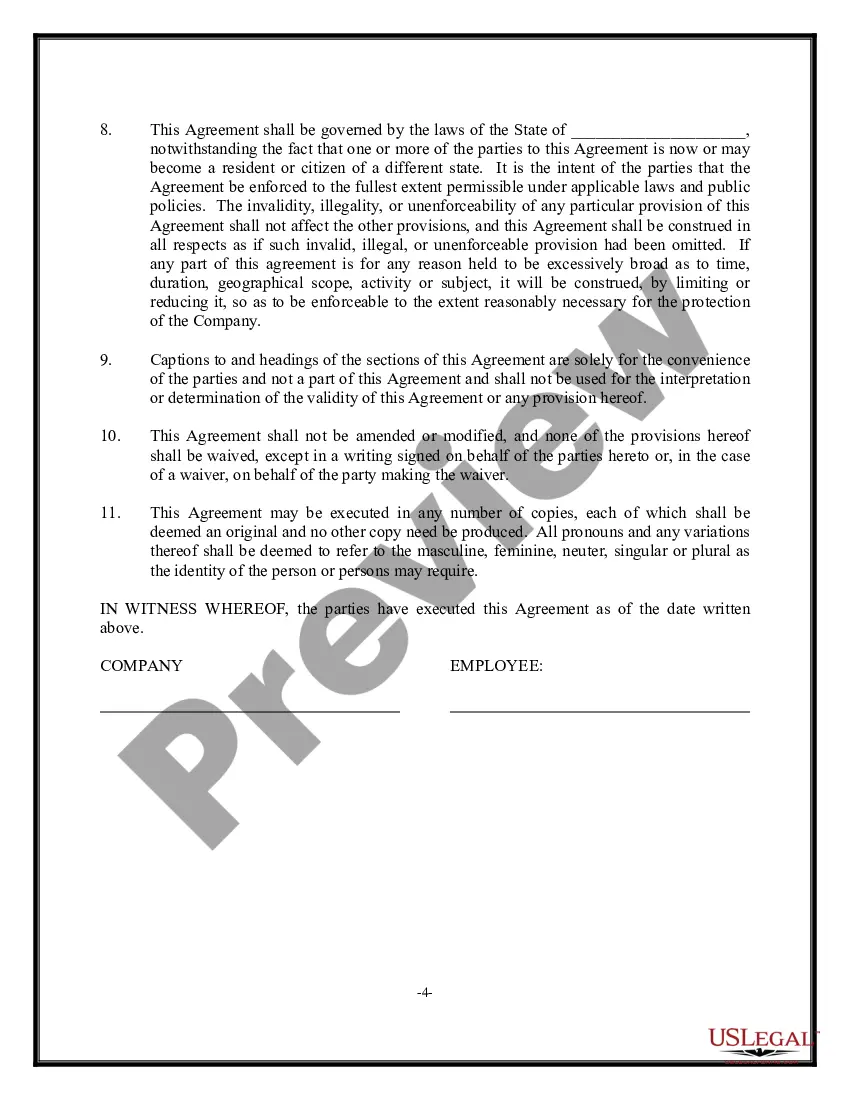
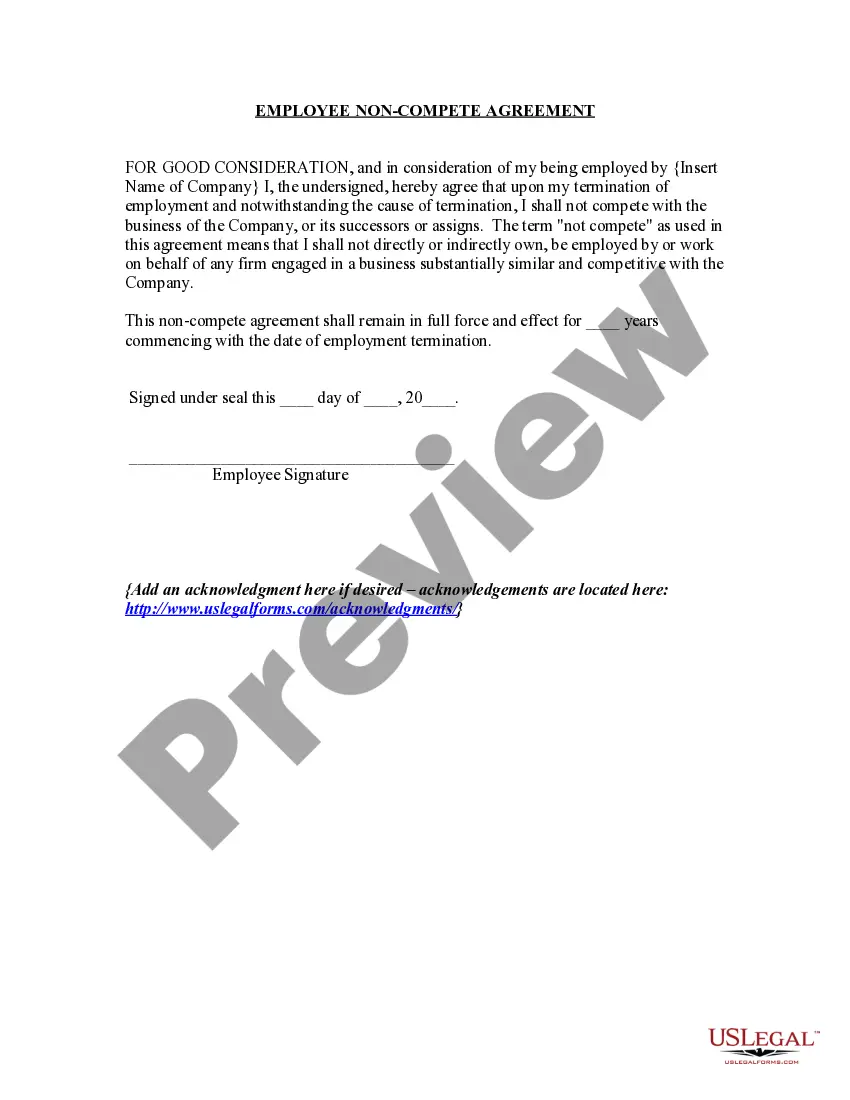
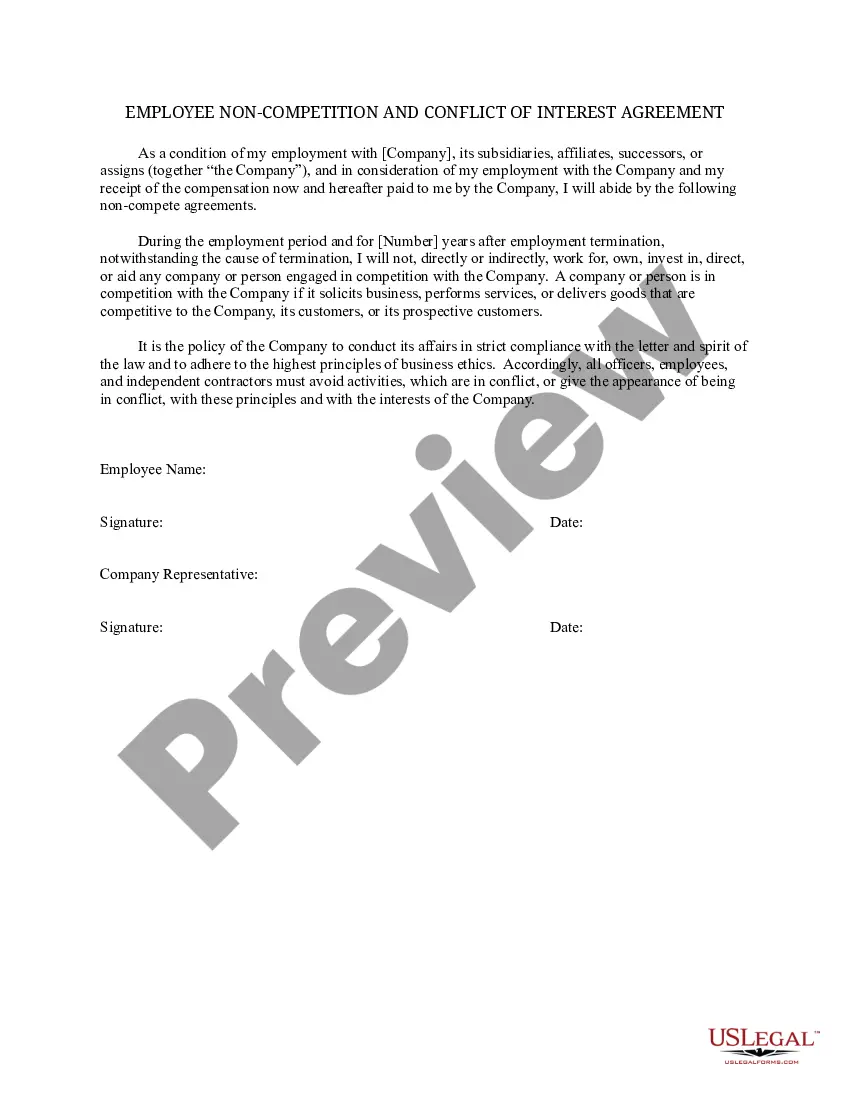
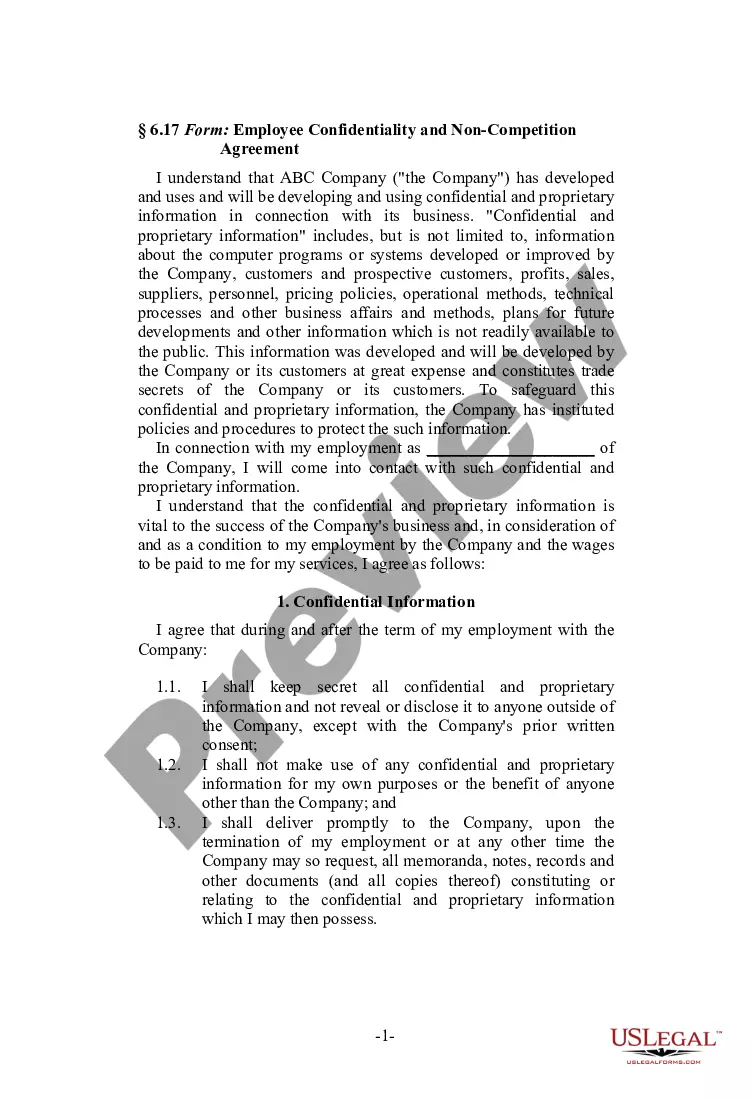
Key Takeaways. A non-compete agreement legally binds a current or former employee from competing with an employer for a specific time after employment ceases. Under such an agreement, the employee must not reveal any trade secrets learned during or after employment.
(c) Employee name agrees not to set up in business as a direct competitor of company name within a radius of number miles of company name and location for a period of number and measure of time (e.g., “four months” or “10 years”) following the expiration or termination of this agreement.
Non-compete Agreements or Clauses A background check reveals a list of old employers and allows the verification team to run relevant inquiries on any such clauses that may still be binding on the employee.
(c) Employee name agrees not to set up in business as a direct competitor of company name within a radius of number miles of company name and location for a period of number and measure of time (e.g., “four months” or “10 years”) following the expiration or termination of this agreement.
The main purpose of them is so that the company can threaten legal action and make you afraid to take the job or to do anything vaguely damaging to them if you do. You should always tell the new employer about the non-compete. So, generally not a big deal to worry about, but always something to discuss and be aware of.
Do You Have a Non-Compete? If you are subject to a non-compete, you should consult with a lawyer about what effect it may have on your business plan. A non-compete or covenant not to compete is an agreement not to compete with your employer in a certain practice and geographical area.
Consideration: Non-compete agreements must be supported by valid consideration, which means that the employee must receive something of value in exchange for agreeing to the restrictions. For example, the offer of initial employment, a promotion, or additional compensation may serve as valid consideration.
Compensation: An employer must offer some benefit to the employee in exchange for limiting future opportunities. For new employees, the job offer itself is generally considered sufficient compensation. Still, existing employees asked to sign a covenant not to compete may be entitled to a raise or promotion.
To get out of a non-compete agreement in Texas, you may negotiate with your employer, prove that the terms are unreasonable or unenforceable, or show that it violates legal standards.
At Xite Realty, we always recommend our clients hire attorneys to review legal documents before signing. Negotiate the smallest non-compete radius. A reasonable non-compete radius should be between three to five miles. We've seen radius as large as 20 miles!
