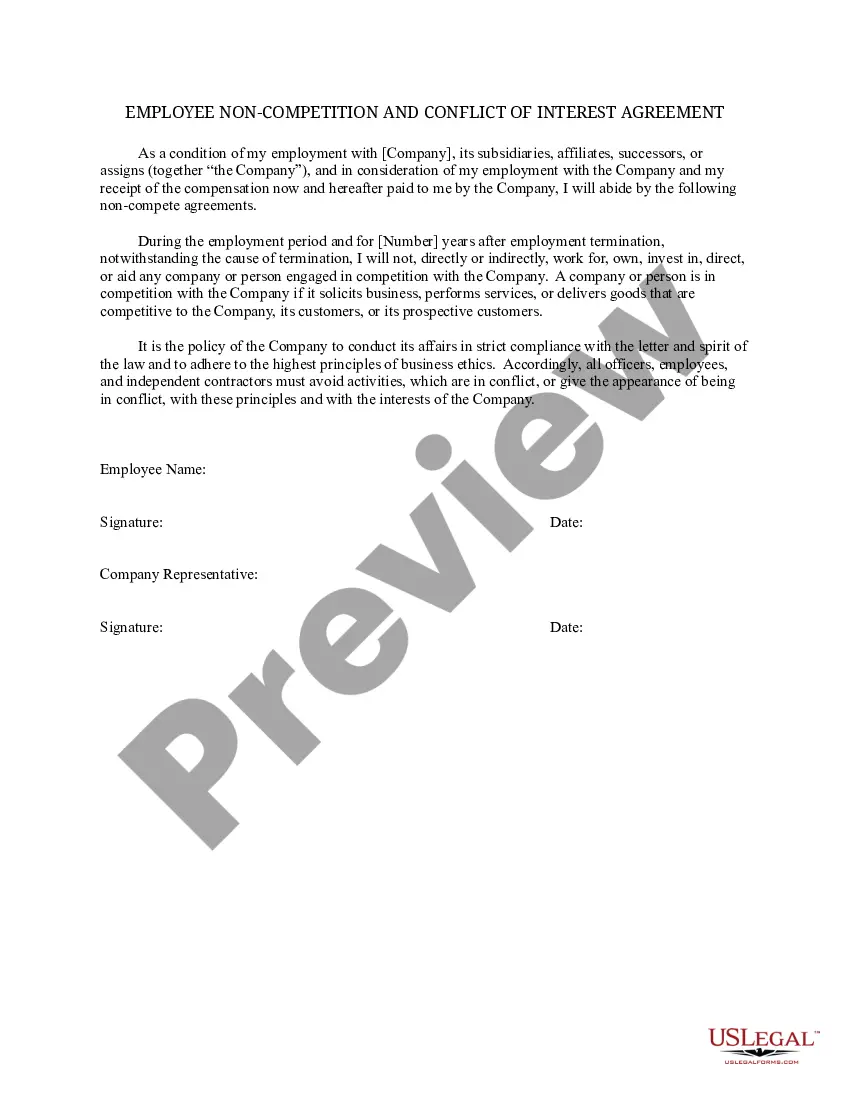
Competition Noncompetition For 50 In Fulton
Description

Get your form ready online
Our built-in tools help you complete, sign, share, and store your documents in one place.
Make edits, fill in missing information, and update formatting in US Legal Forms—just like you would in MS Word.
Download a copy, print it, send it by email, or mail it via USPS—whatever works best for your next step.
Sign and collect signatures with our SignNow integration. Send to multiple recipients, set reminders, and more. Go Premium to unlock E-Sign.
If this form requires notarization, complete it online through a secure video call—no need to meet a notary in person or wait for an appointment.
We protect your documents and personal data by following strict security and privacy standards.

Make edits, fill in missing information, and update formatting in US Legal Forms—just like you would in MS Word.

Download a copy, print it, send it by email, or mail it via USPS—whatever works best for your next step.

Sign and collect signatures with our SignNow integration. Send to multiple recipients, set reminders, and more. Go Premium to unlock E-Sign.

If this form requires notarization, complete it online through a secure video call—no need to meet a notary in person or wait for an appointment.

We protect your documents and personal data by following strict security and privacy standards.
Looking for another form?







Form popularity
FAQ
As a result, the rule, which was set to take effect on September 4, 2024, is void, and existing non-compete agreements remain enforceable under federal law. Despite the federal ruling, state laws governing non-compete agreements continue to restrict their use.
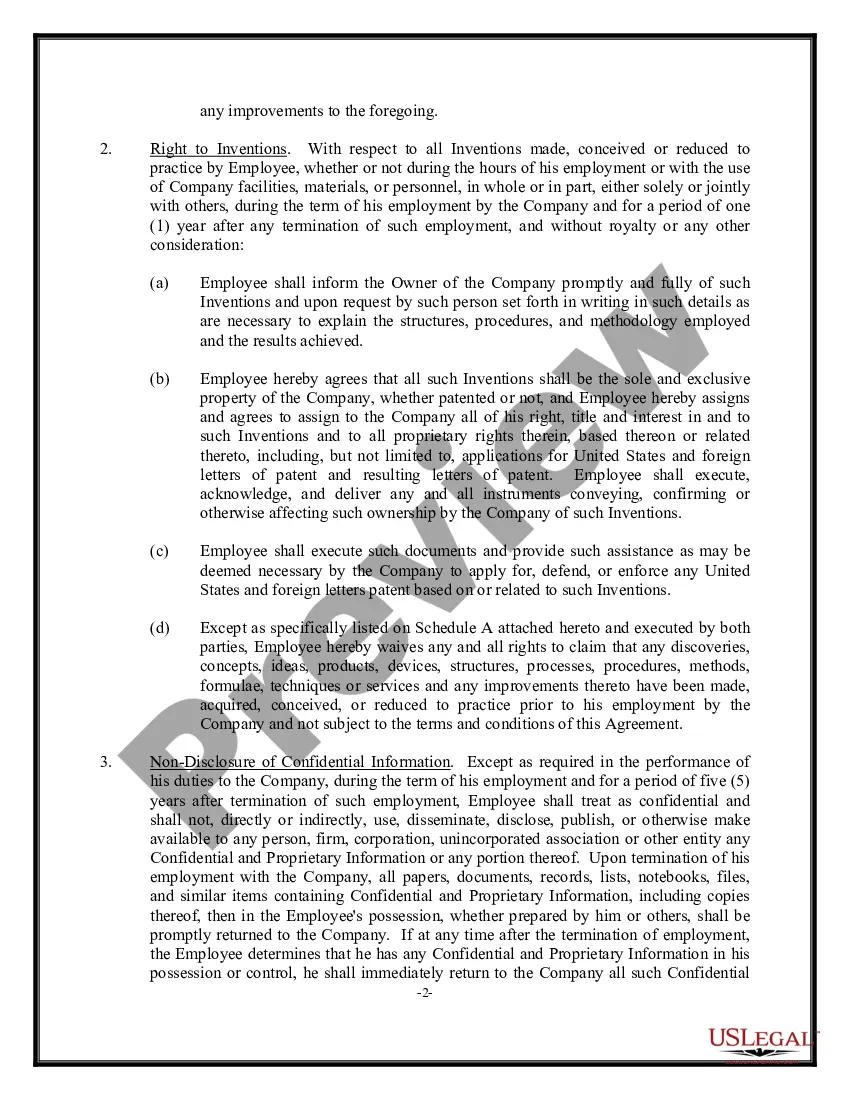
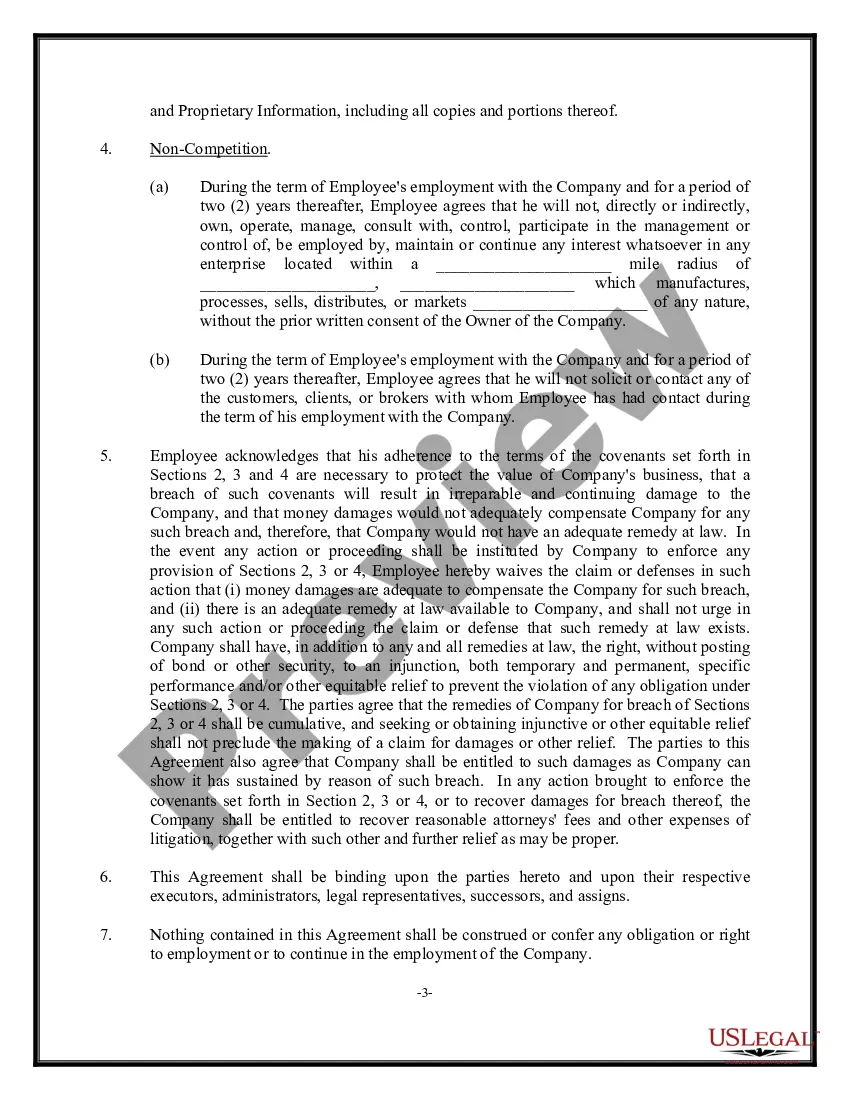
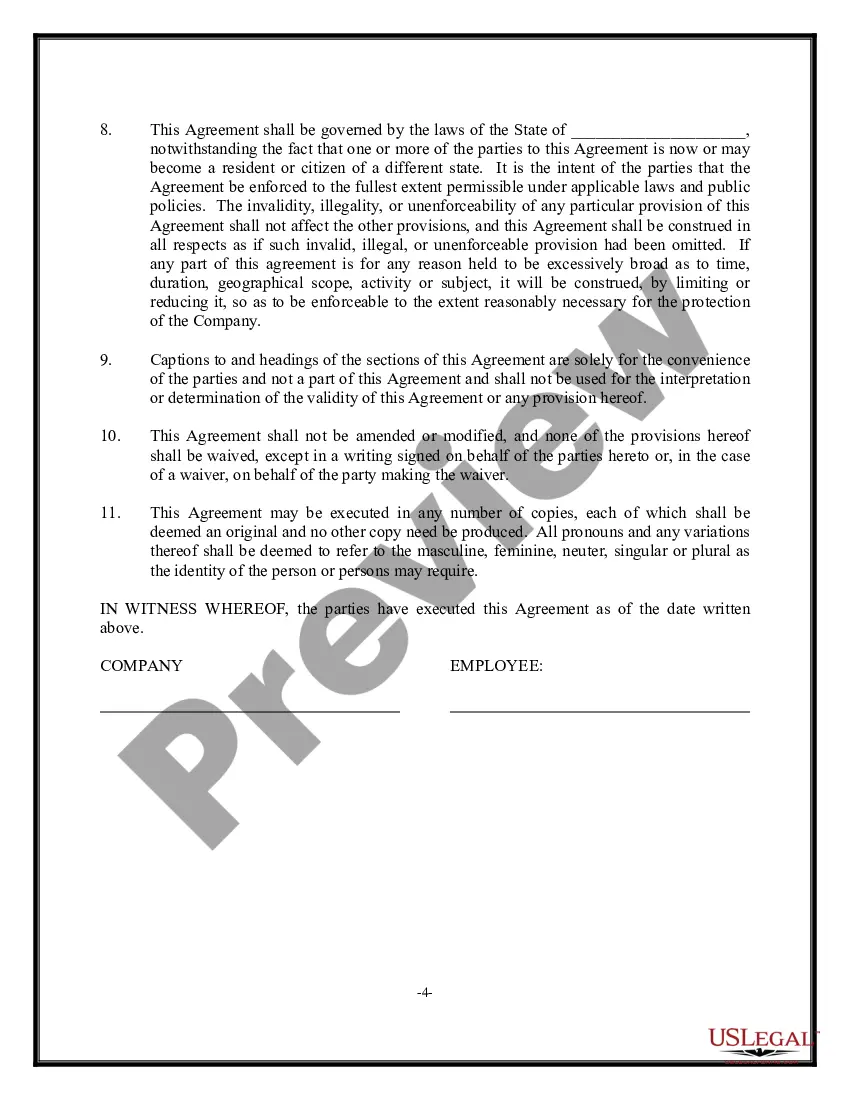
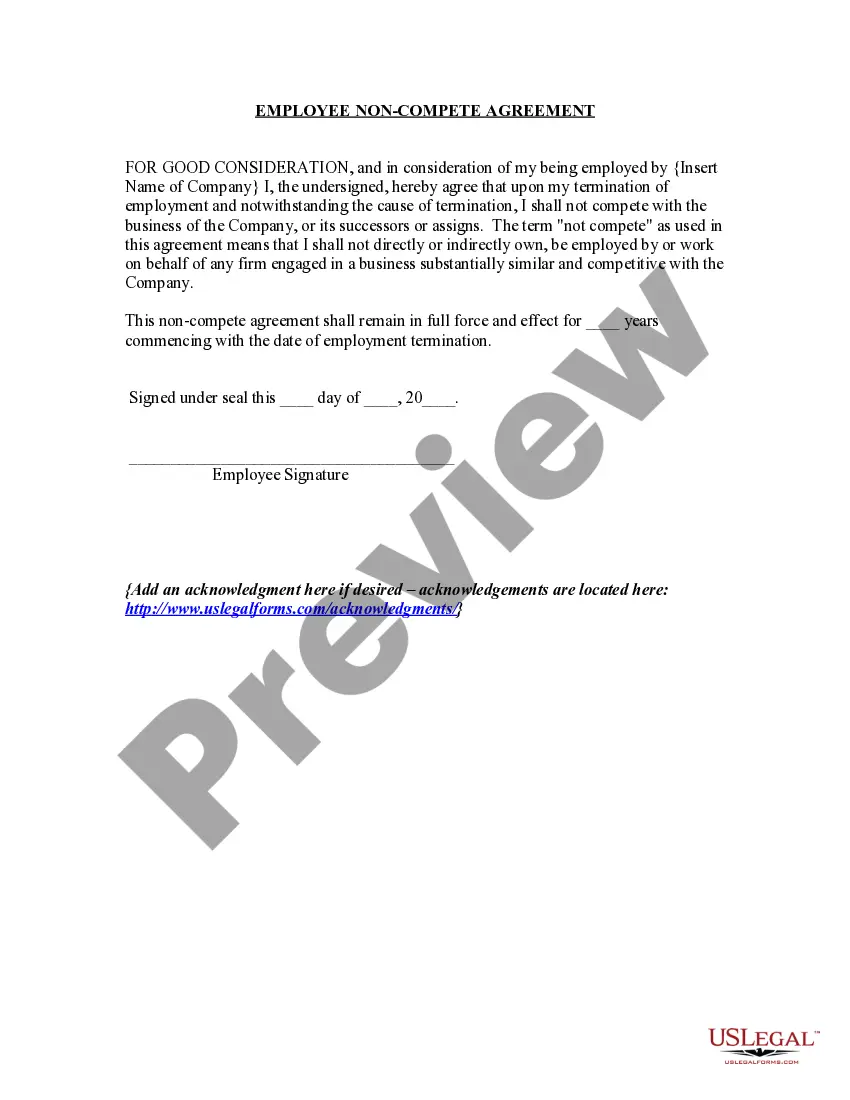
What is a non-compete clause? A non-compete clause is a legal agreement included in employment contracts or agreements to protect the interests of an employer. It restricts employees from working for a competitor or starting a similar business for a specified period after leaving their current job.
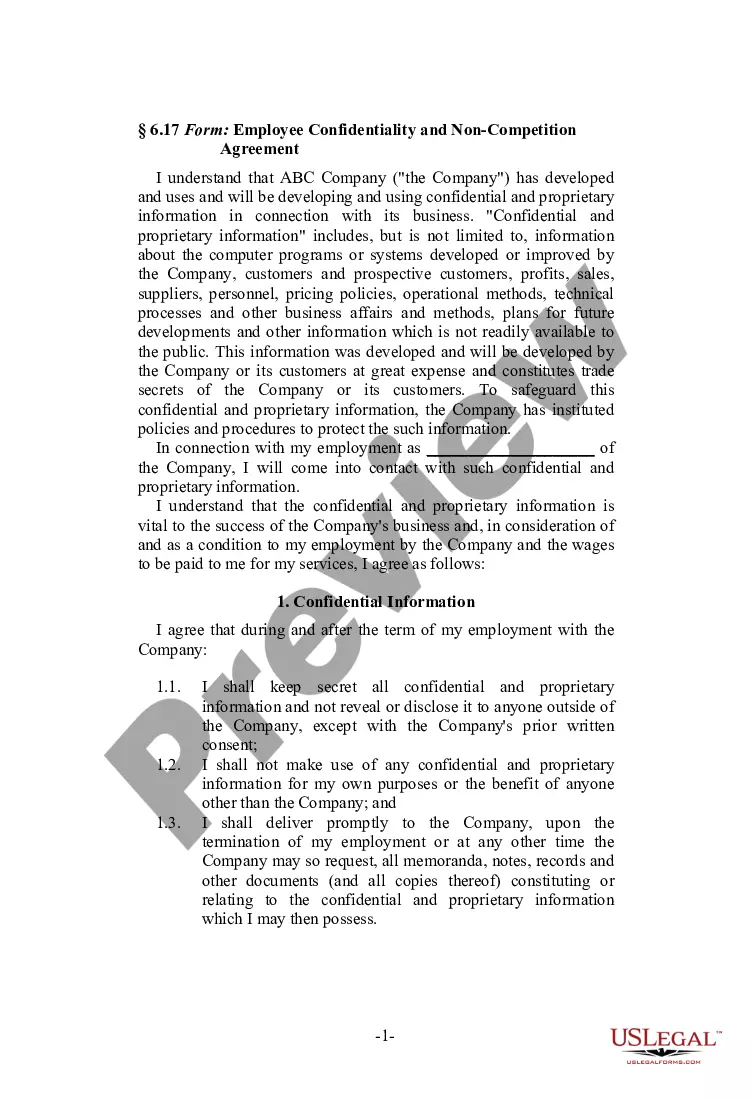
Covenants not to compete are contractual agreements between employees and employers whereby the employee promises not to compete with the employer for a specific period of time and/or within a particular geographic area should the employment relationship terminate.
Non-Competitive Activity at New Employer: One of the most straightforward ways to overcome a noncompete is by ensuring that your new role with a different employer is in a non-competitive capacity. If you're not engaging in activities that directly compete with your former employer's business, you may be in the clear.
If an employee breaches a non-compete clause, you may have grounds for taking them to court. A court could oblige them to stop breaching the term, and you may also be able to have your legal costs covered.
New California Laws Effective January 1, 2024, Senate Bill (SB) 699 makes it generally illegal for employers to enter into noncompete agreements with California employees. This applies to agreements signed both within and outside California.
Showing that the agreement is not related to a legitimate business interest is the most effective way of getting out of a non-compete contract. The goal of any non-compete agreement is to protect trade secrets.
How To Legally Get Out of a Non-Compete Agreement Get a New Job That Doesn't Involve Competitive Activities. Prove That Your Former Employer Breached the Contract. Argue That the Non-Compete Provision Isn't Enforceable. Show That Your Previous Employer Has No Legitimate Business Interests.
In certain circumstances, it is possible to find non-compete contract loopholes that may void the contract. For example, if you can prove that you never signed the contract, or if you can prove the contract is against the public interest, you may be able to void the agreement.
Go to personnel. Tell them you feel the need to start considering your future and would like to be released from the non-compete part of your contract so you can get started. I'd give you until tomorrow about closing time and you won't have to worry about taking paper clips or any other company property home again.
