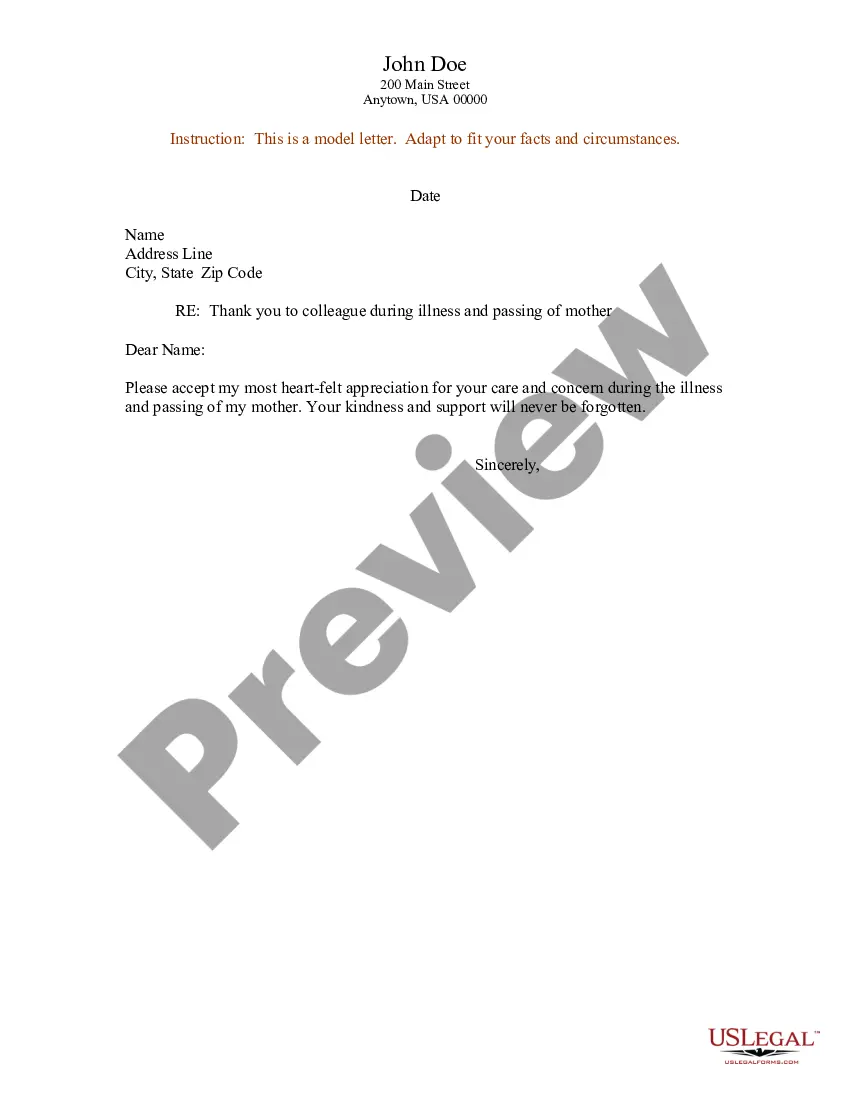
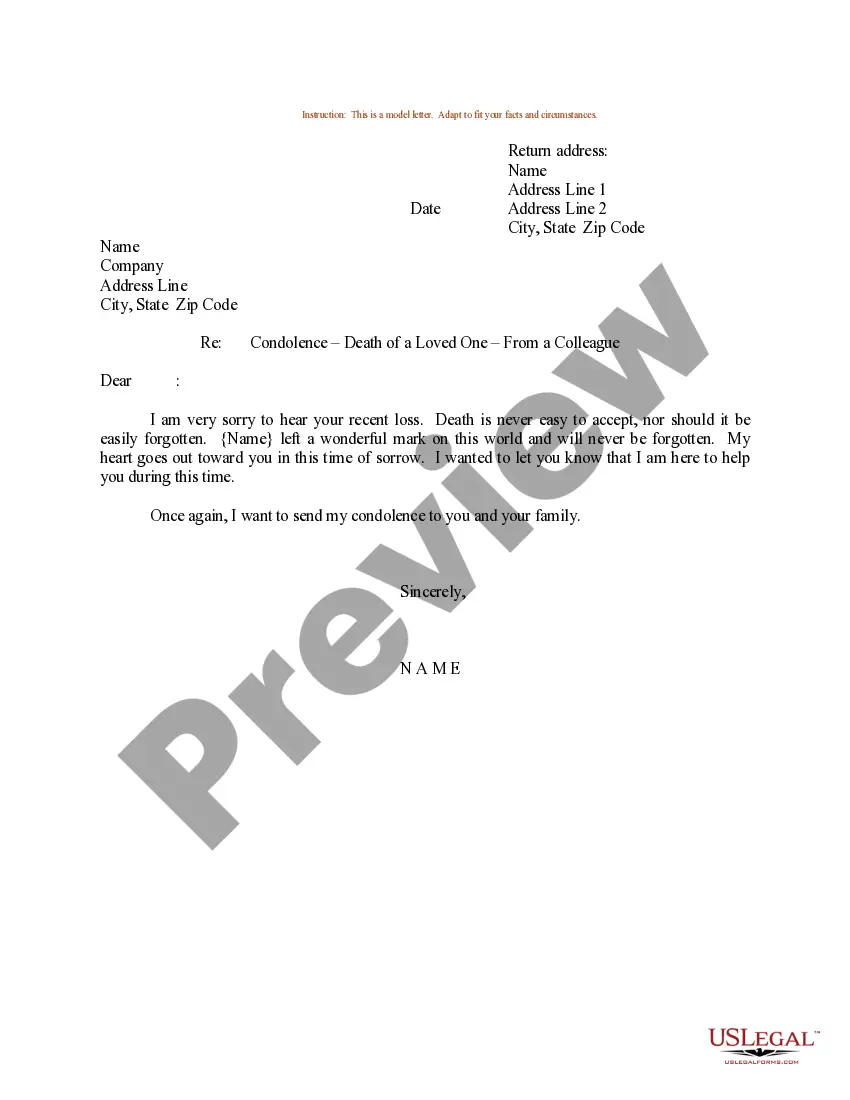
Condolences Letter Formal In Maricopa
Description
Get your form ready online
Our built-in tools help you complete, sign, share, and store your documents in one place.
Make edits, fill in missing information, and update formatting in US Legal Forms—just like you would in MS Word.
Download a copy, print it, send it by email, or mail it via USPS—whatever works best for your next step.
Sign and collect signatures with our SignNow integration. Send to multiple recipients, set reminders, and more. Go Premium to unlock E-Sign.
If this form requires notarization, complete it online through a secure video call—no need to meet a notary in person or wait for an appointment.
We protect your documents and personal data by following strict security and privacy standards.

Make edits, fill in missing information, and update formatting in US Legal Forms—just like you would in MS Word.

Download a copy, print it, send it by email, or mail it via USPS—whatever works best for your next step.

Sign and collect signatures with our SignNow integration. Send to multiple recipients, set reminders, and more. Go Premium to unlock E-Sign.

If this form requires notarization, complete it online through a secure video call—no need to meet a notary in person or wait for an appointment.

We protect your documents and personal data by following strict security and privacy standards.
Looking for another form?









Form popularity
FAQ
For uncontested and informal probate cases, you can expect the estate to be settled in six to eight months, assuming the personal representative completes their duties in a timely fashion. However, more complicated estates and those going through formal or supervised probate can take much longer to settle.
If you're wondering how long probate takes in Arizona, the timeline varies depending on several factors. Simple cases with no disputes or complex assets can take as little as six months, while more complicated cases can extend over a year or more.
Informal probate is the process of submitting the paperwork to the probate court registrar who may appoint the personal representative and admit a will to probate or that the person died intestate (without a will). All without a court hearing before a judge. But informal probate is not available in all cases.
Filing a Will or Probate Case The Probate Filing Counter is located at 201 W. Jefferson in Phoenix, or at our Southeast location, 222 E. Javelina in Mesa, or at our Northwest Regional Court Center location at 14264 W.
Requesting Letters of Testamentary The person acting as the executor of the estate must petition the court to request the letter of testamentary. After they file the necessary documents, the probate court checks them to ensure compliance and authenticate the will.
On average, probate in Arizona takes between six months to a year for an uncontested estate. If complications arise, such as disputes over the will or difficulty locating beneficiaries, the process can extend beyond 12 months. The executor files a petition to open probate with the Arizona probate court.
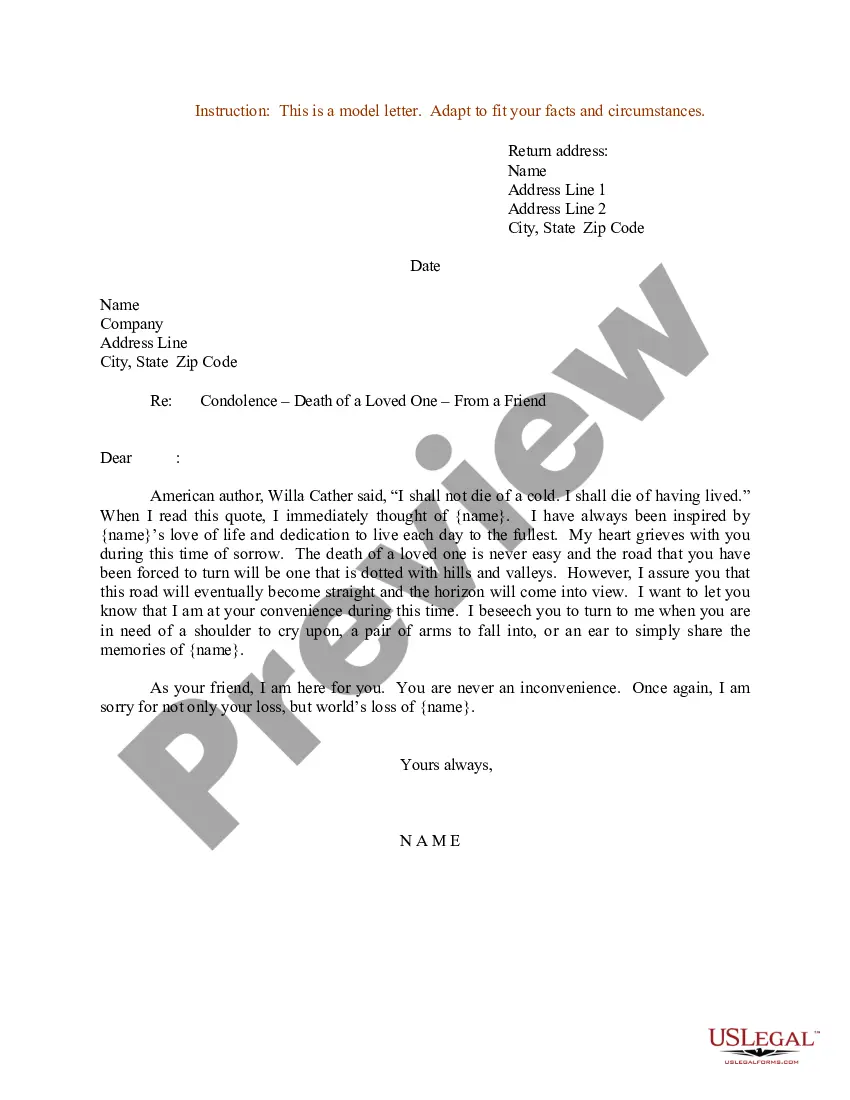
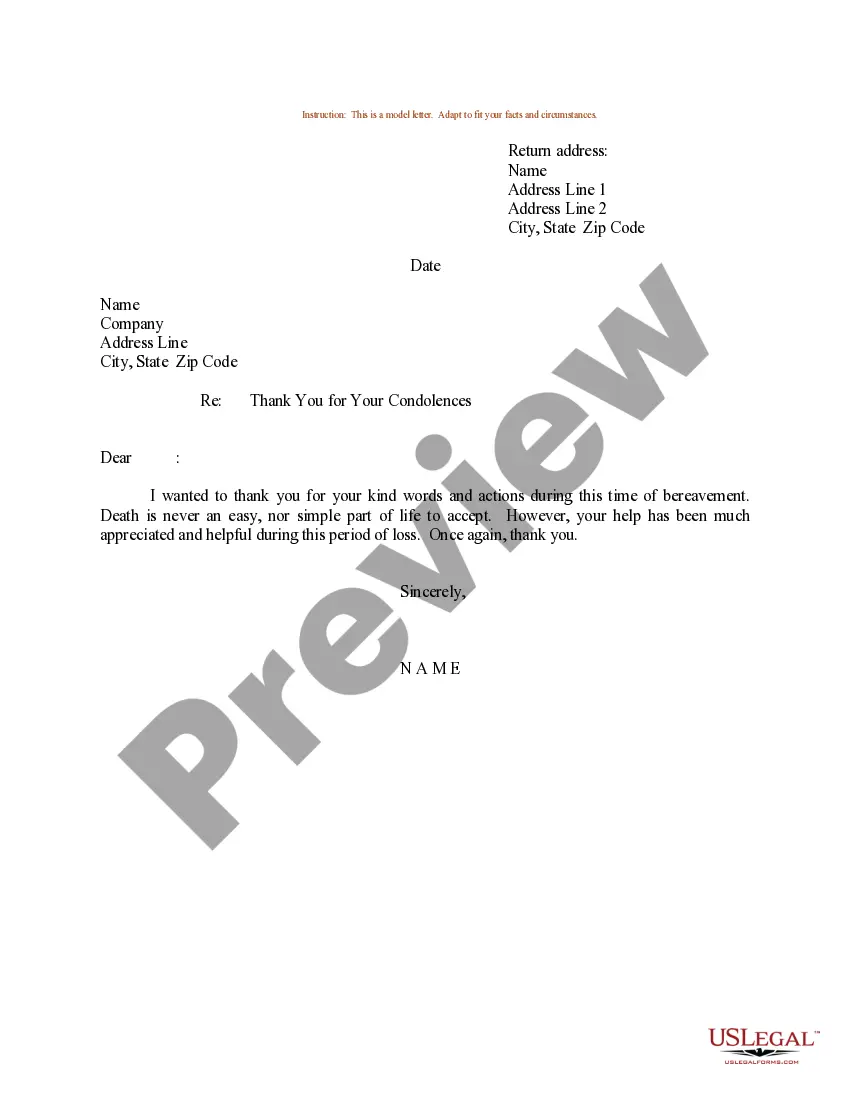
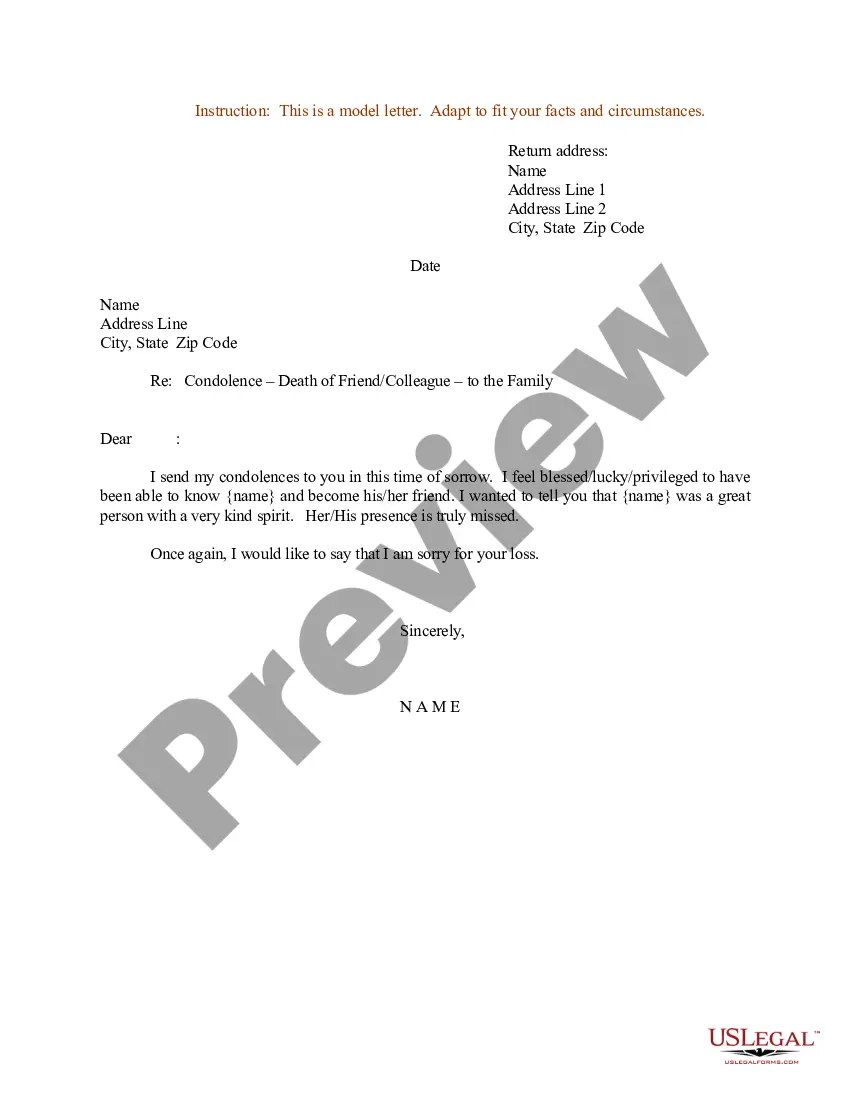
"With a heavy heart, I wish to give my sincere condolences to you and your family.” "Keeping you and name in my thoughts and prayers. My deepest sympathy.” "May the memories of name help you find peace and comfort.”
Guidelines for writing condolence letters: A simple “I'm sorry” is sometimes the only thing that is necessary to say. Avoid being overly dramatic. Keep the letter as brief and as short as possible. Make sure you include the name of the person who died or mention the specific incident that caused sorrow for the person.
Here are several examples to help you write something thoughtful and empathetic: I'm sorry for your loss. Please accept my deepest condolences for you and your family's loss. My heartfelt condolences to you and your family. I am truly sorry to hear about the loss of your father.
Condolence Letter Format Example - a Helpful Template to Use Express sympathy and heartfelt condolences. Explain your relationship to the deceased. Consider sharing some special or distinctive qualities of the deceased. Write down a special memory, story or anecdote.