Breeding Contract For Horses In Travis
Description
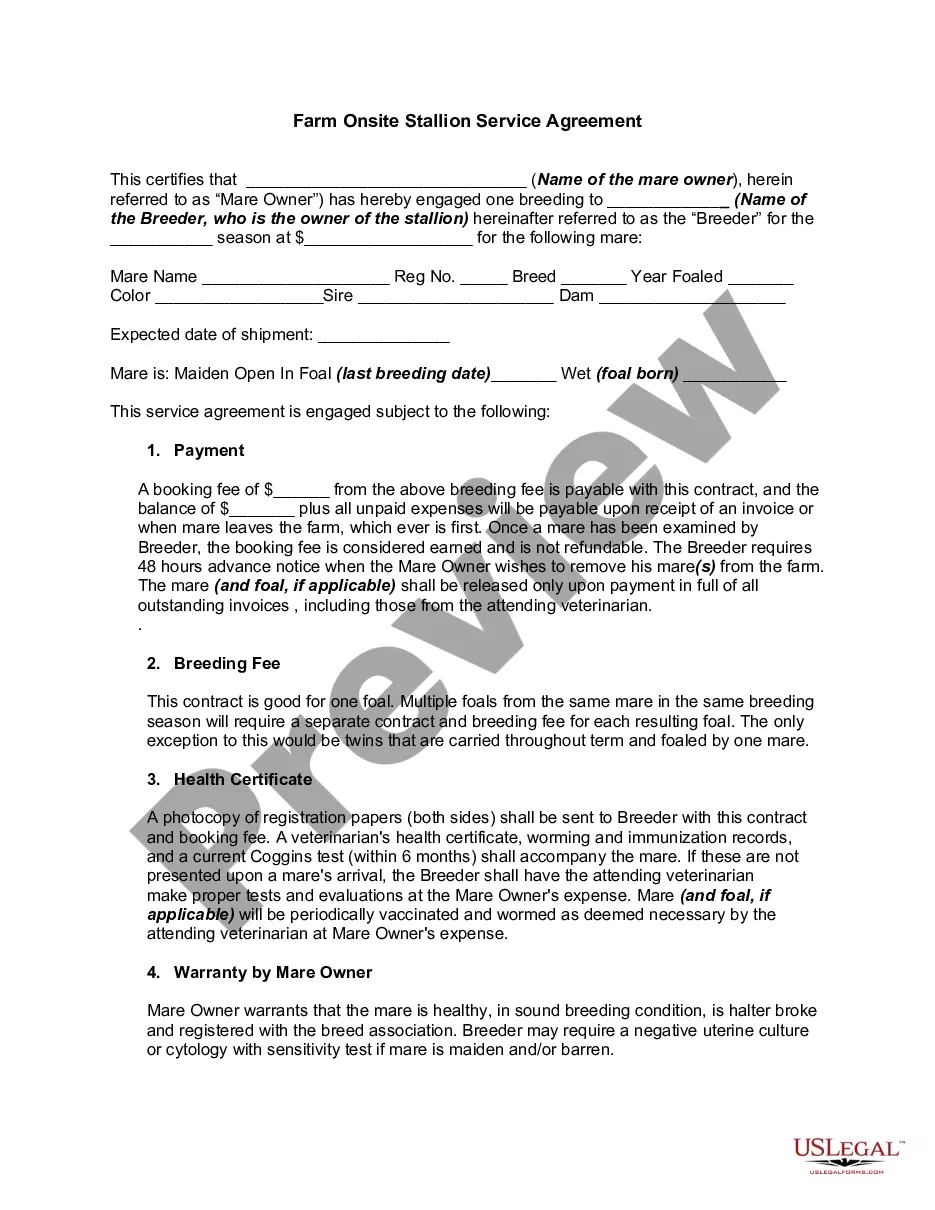
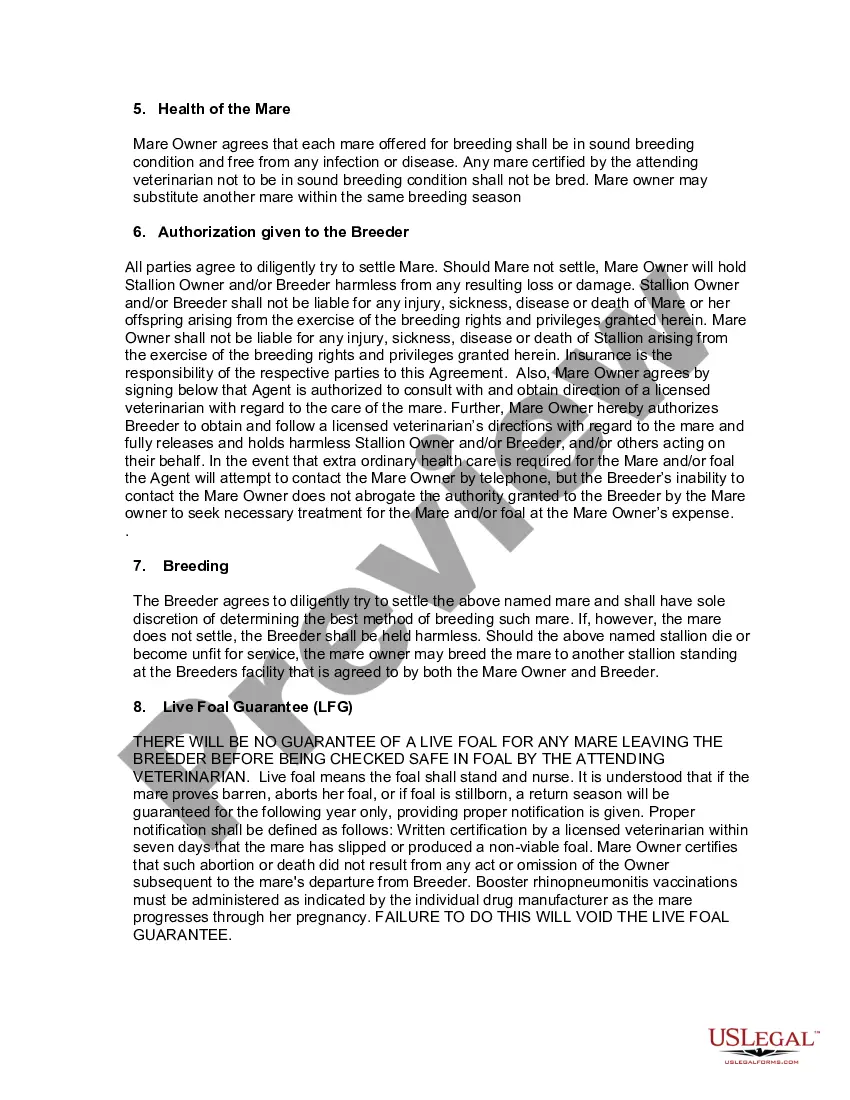
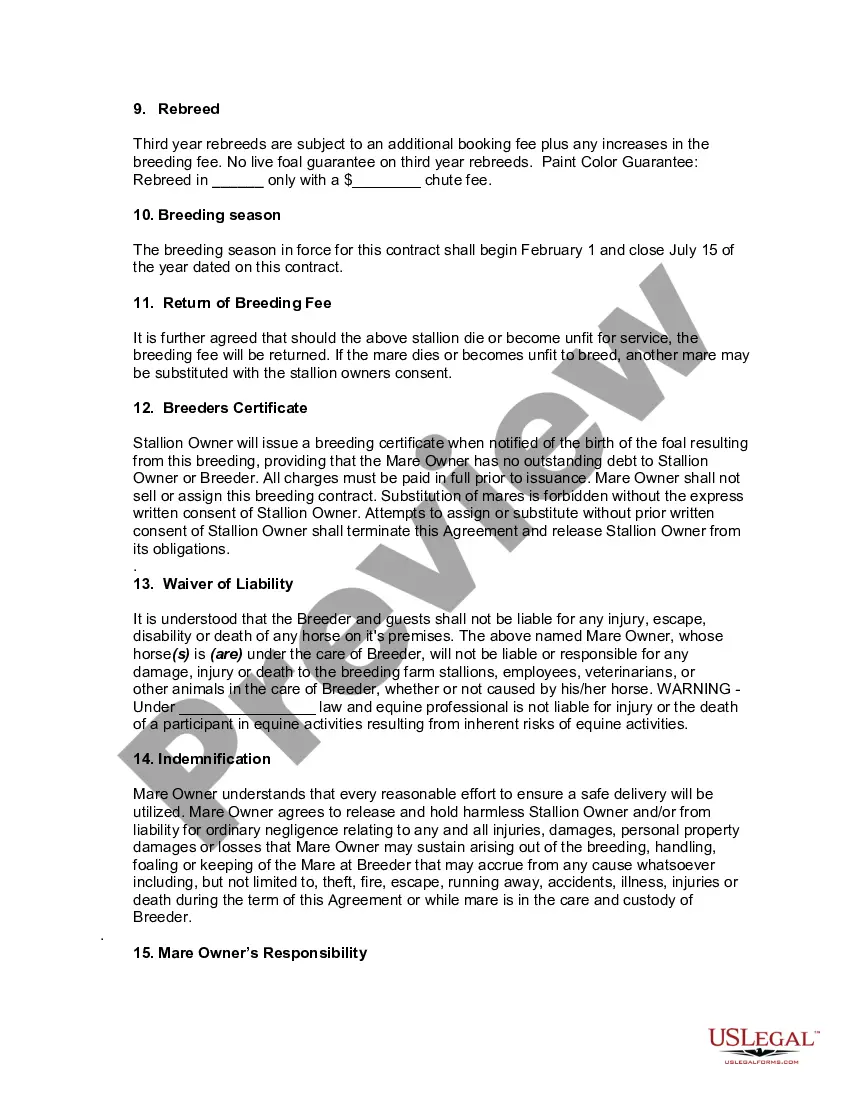
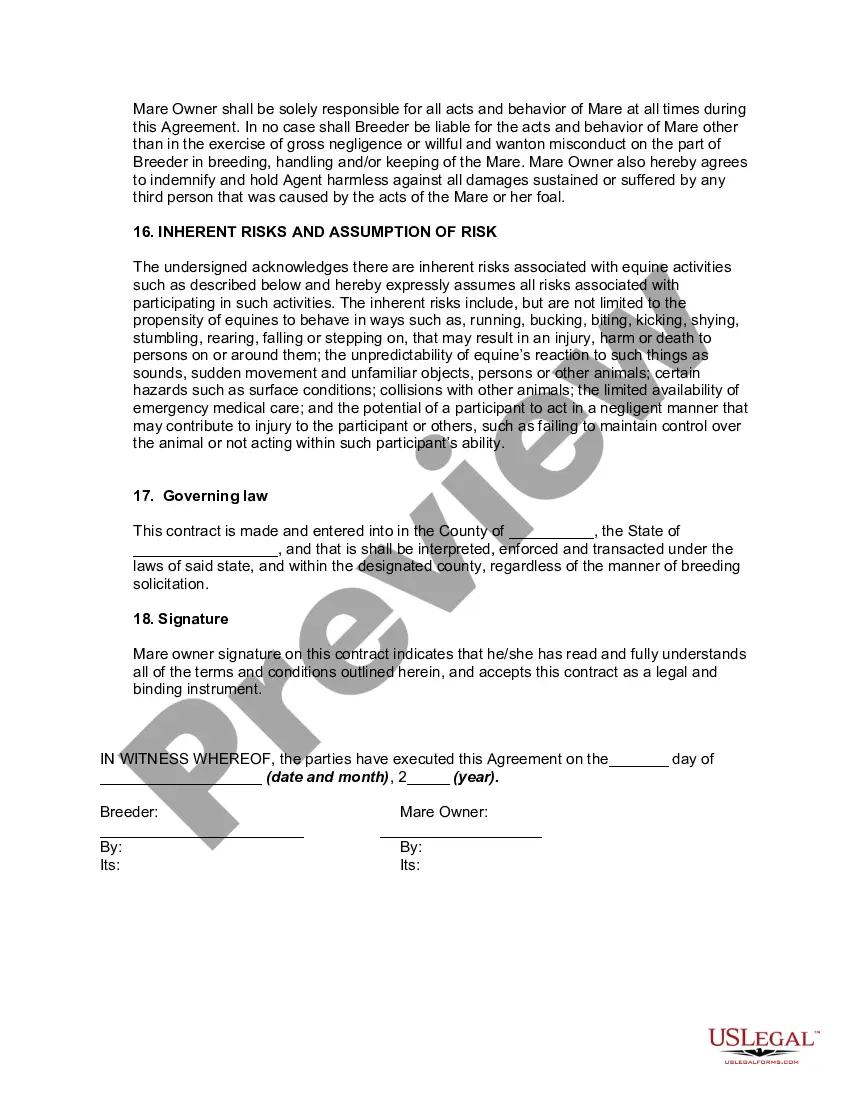
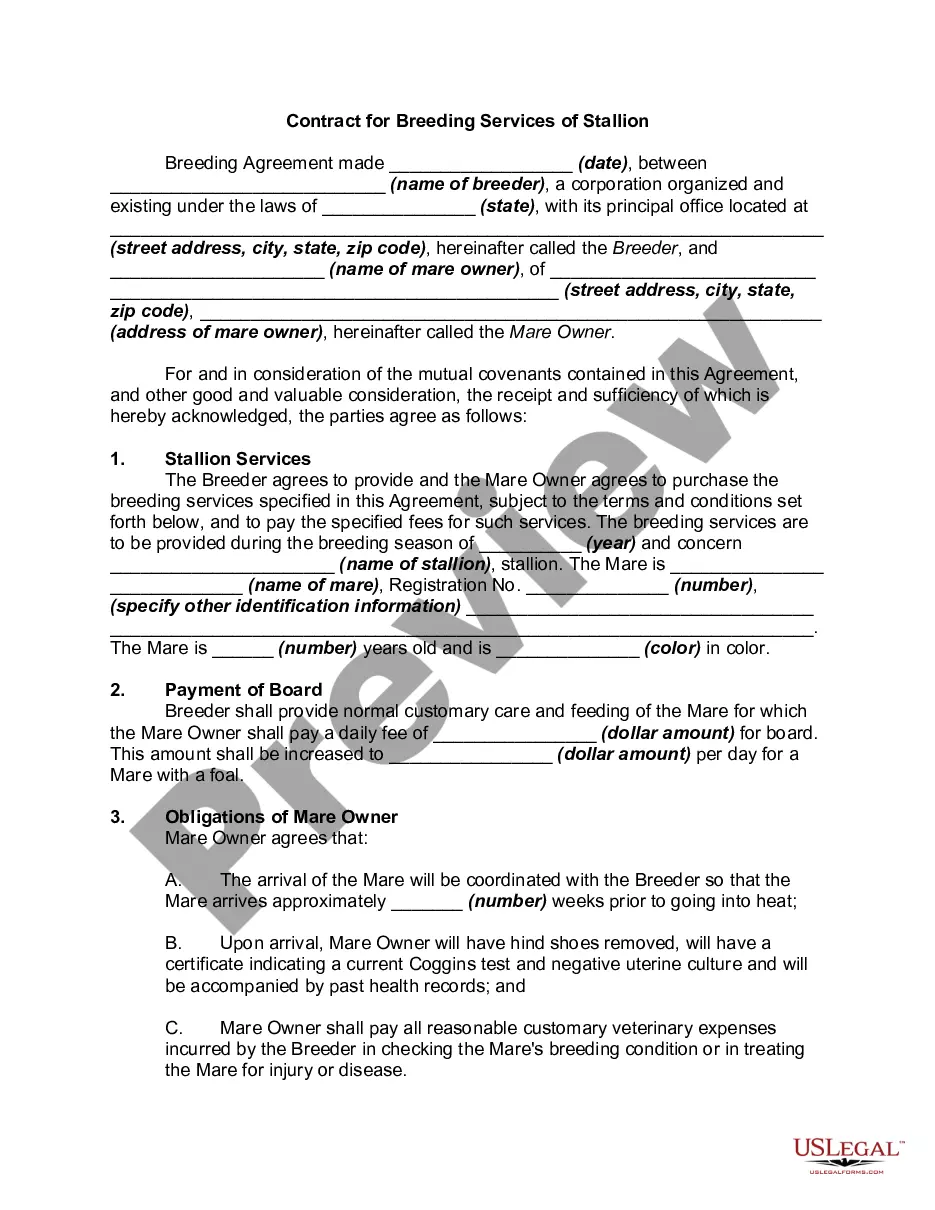
Get your form ready online
Our built-in tools help you complete, sign, share, and store your documents in one place.
Make edits, fill in missing information, and update formatting in US Legal Forms—just like you would in MS Word.
Download a copy, print it, send it by email, or mail it via USPS—whatever works best for your next step.
Sign and collect signatures with our SignNow integration. Send to multiple recipients, set reminders, and more. Go Premium to unlock E-Sign.
If this form requires notarization, complete it online through a secure video call—no need to meet a notary in person or wait for an appointment.
We protect your documents and personal data by following strict security and privacy standards.

Make edits, fill in missing information, and update formatting in US Legal Forms—just like you would in MS Word.

Download a copy, print it, send it by email, or mail it via USPS—whatever works best for your next step.

Sign and collect signatures with our SignNow integration. Send to multiple recipients, set reminders, and more. Go Premium to unlock E-Sign.

If this form requires notarization, complete it online through a secure video call—no need to meet a notary in person or wait for an appointment.

We protect your documents and personal data by following strict security and privacy standards.
Looking for another form?





Form popularity
FAQ
Discuss terms of the agreement with your agent and get them on paper before you begin looking at horses. Standard commissions range between 10 percent and 15 percent and may apply to both the buyer's and seller's agents. Agree ahead of time what your budget will be and if the commission must be included in your budget.
While it is not a title document like a vehicle title, a Horse Bill of Sale is essential for both the buyer and seller to protect their interests and provide a record of the horse's ownership transfer.
A horse bill of sale may detail the horse's name, the size of the horse, its gender, its lineage, markings, colors, and other physical features. This type of bill of sale may also include information about breeding the horse or any warranties if the horse is expected to produce young.
Mares give off a certain scent when they come in estrus( heat). The stallions smell that and knowx they're ready to breed, not every mare accepts the stallion so often artificial insemination is used to protect the stallions from injury by mares kicking.
How do you breed horses? Horses can be bred by live cover which means a stallion mounts a mare to copulate just as would be done in the wild or by artificial insemination (AI) where a vet injects semen into the mare's reproductive tract.
Collection and Preservation of Equine Semen The collection of semen from stallions is typically done using an artificial vagina (AV), which mimics the natural reproductive process. The stallion is trained to mount a dummy mare, and the AV is used to collect the semen.
By using recipient mares, breeders can amplify the number of foals produced by genetically superior individuals, accelerating the genetic progress within a breeding program. In the intricate tapestry of horse breeding, recipient mares emerge as silent contributors to the success and progress of breeding programs.
Pasture mating, hand mating and artificial insemination are the three methods used, with variations of each. Breed registry regulations vary regarding the use of artificial insemination.
There are no strict education requirements to become a breeder. Individuals can learn the scientific concepts and techniques involved in breeding by completing an animal science bachelor's degree program. Relevant coursework includes animal nutrition, genetics, husbandry, and horse management.
Often self-employed, the breeder must master the management of an agricultural structure (administrative and economic management), but the job also requires sales and communication skills to successfully promote and market the horses bred.
