Stallion Breeding Contract Forms In Mecklenburg
Description
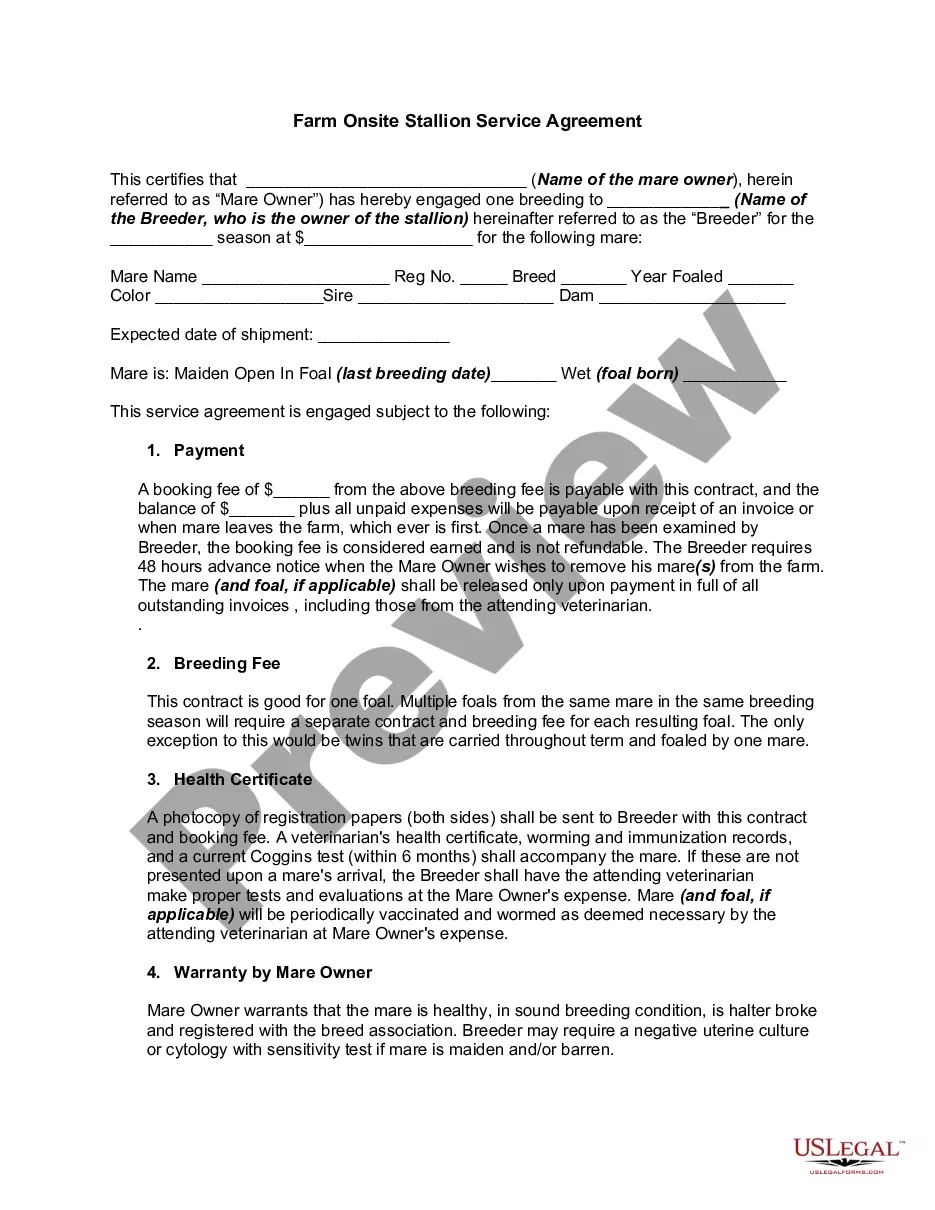
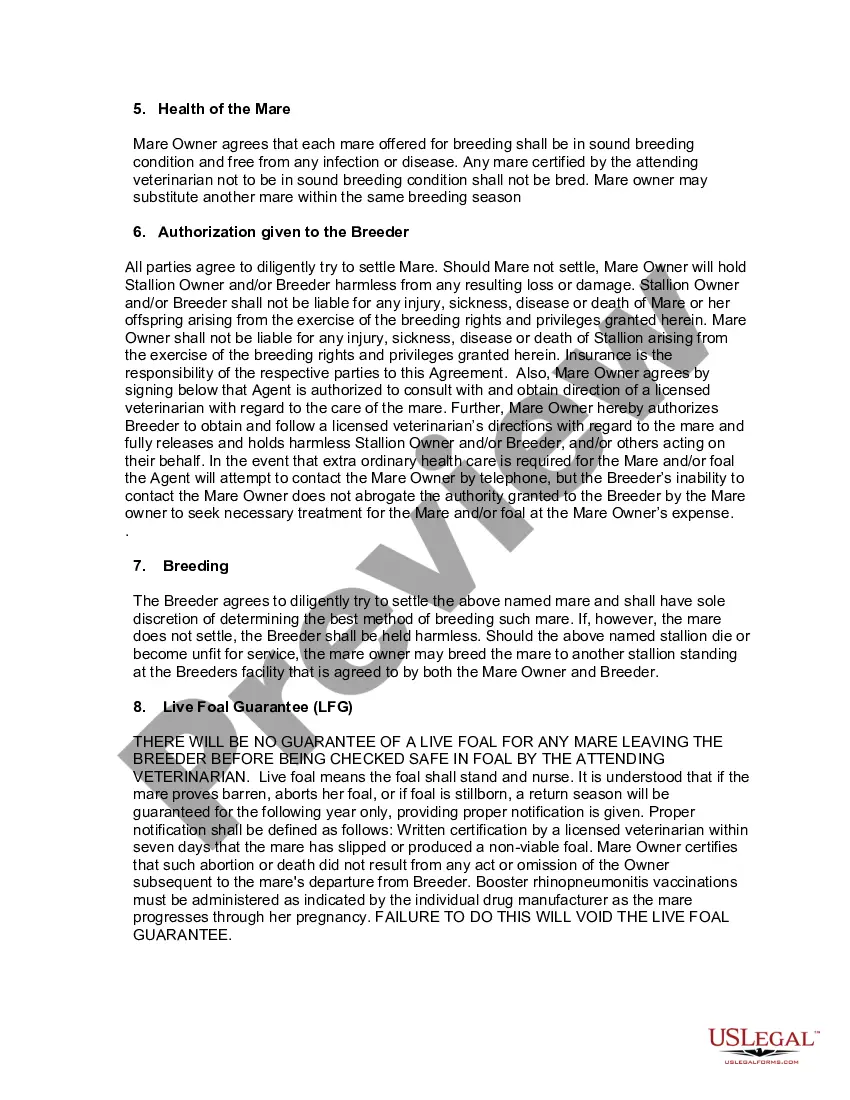
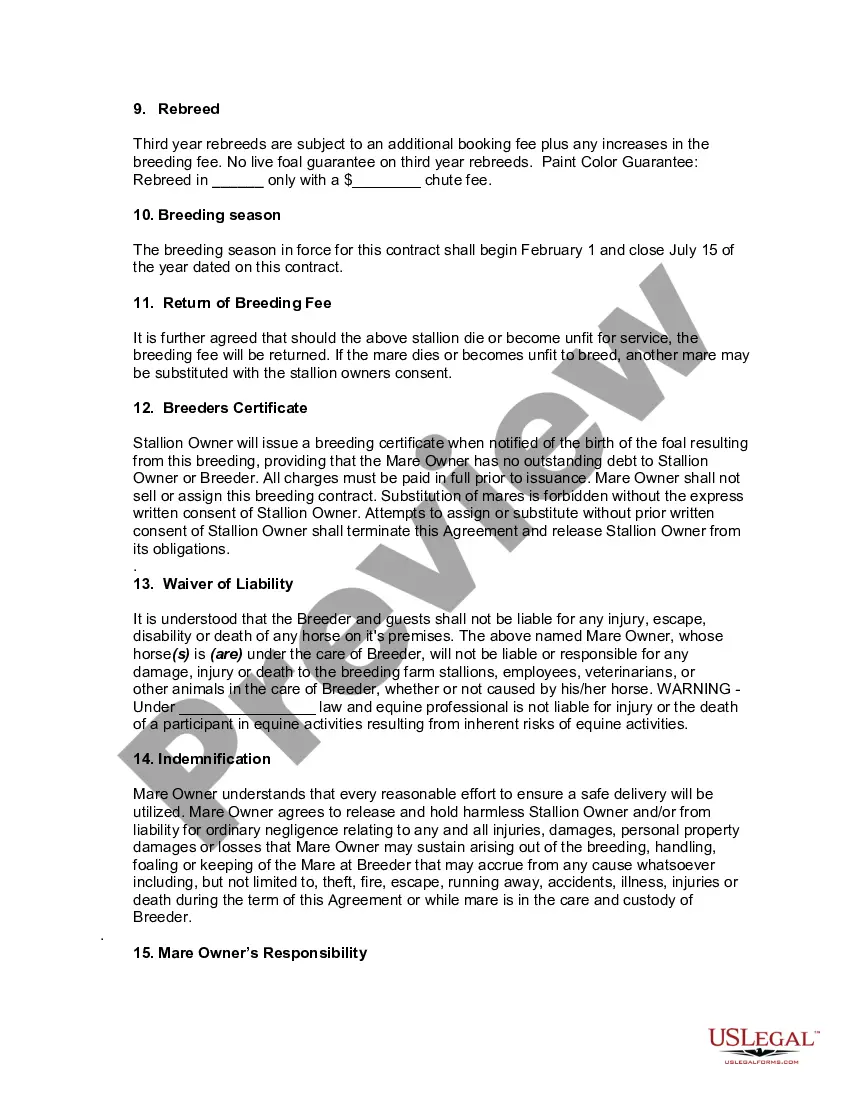
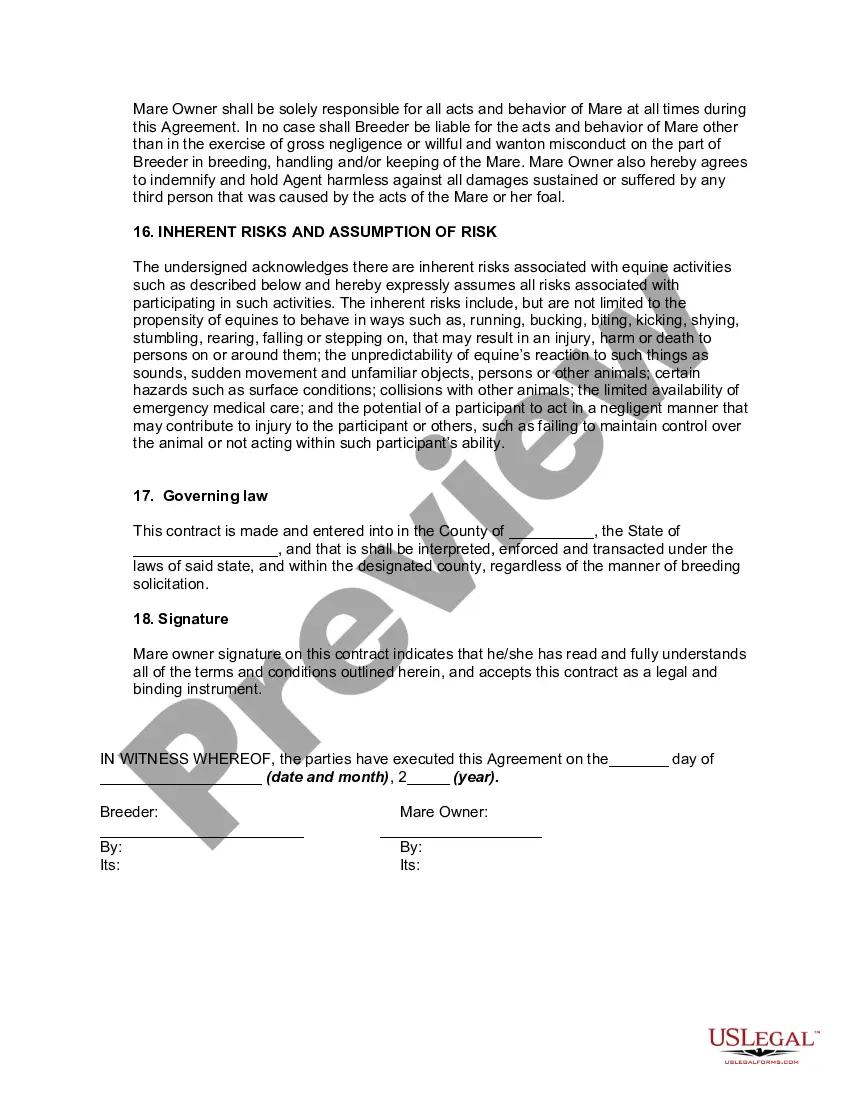
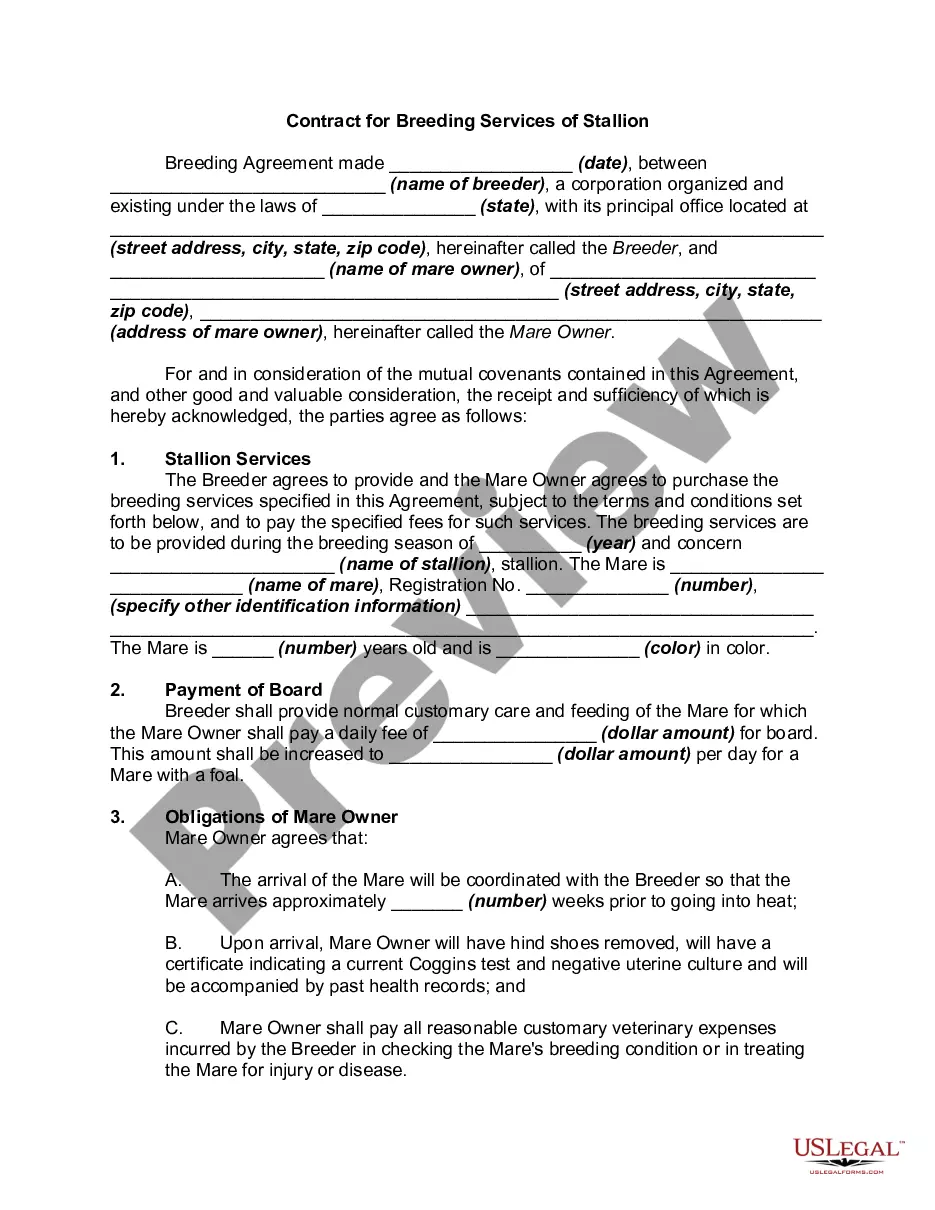
Get your form ready online
Our built-in tools help you complete, sign, share, and store your documents in one place.
Make edits, fill in missing information, and update formatting in US Legal Forms—just like you would in MS Word.
Download a copy, print it, send it by email, or mail it via USPS—whatever works best for your next step.
Sign and collect signatures with our SignNow integration. Send to multiple recipients, set reminders, and more. Go Premium to unlock E-Sign.
If this form requires notarization, complete it online through a secure video call—no need to meet a notary in person or wait for an appointment.
We protect your documents and personal data by following strict security and privacy standards.

Make edits, fill in missing information, and update formatting in US Legal Forms—just like you would in MS Word.

Download a copy, print it, send it by email, or mail it via USPS—whatever works best for your next step.

Sign and collect signatures with our SignNow integration. Send to multiple recipients, set reminders, and more. Go Premium to unlock E-Sign.

If this form requires notarization, complete it online through a secure video call—no need to meet a notary in person or wait for an appointment.

We protect your documents and personal data by following strict security and privacy standards.
Looking for another form?










Form popularity
FAQ
How to Start a Horse Breeding Farm Finding the Right Land. Setting Up Your Farm. Stocking All the Necessary Supplies. Purchasing the Horses. Starting Your Breeding Program. Marketing Your Horse Breeding Business.
If a colt appears to be breeding, does that mean he is mature enough to impregnate the mare? A. Most yearlings and two-year-olds can and will breed under good circumstances. There's probably not a horse practice without a firsthand story of the pregnant filly that was only with a colt until a year of age.
Mature stallions can breed two or three mares a day throughout a long breeding season and maintain a good level of fertility, but young stallions should not be expected to handle this level of work.
A good breeding stallion should have: Calm Disposition: A gentle and cooperative nature. Willingness to Work: Eagerness to perform tasks and learn. Good Behaviour: Minimal aggressive or undesirable behaviours.
A stallion used for breeding is known as a stud.
Horses can be capable of breeding from 18 months old, but domesticated horses are usually allowed to mature to at least three years old before breeding. Gestation lasts between 11 and 13 months, depending on the breed, and usually results in the birth of just one foal.
Vocalization, nipping and striking are all normal behavior for stallions. Good stallion handlers remain calm and do not overly punish or act punitively to punish the stallion for even adverse frustration behaviors.
From ages 4 to 15, mares are in their reproductive prime. But from 15 to 20, their fertility declines, says McCue. Reproductive problems only continue to intensify in mares older than 20. Of course, each mare is an individual with her own health history and genetic tendencies.
A. Most yearlings and two-year-olds can and will breed under good circumstances.
