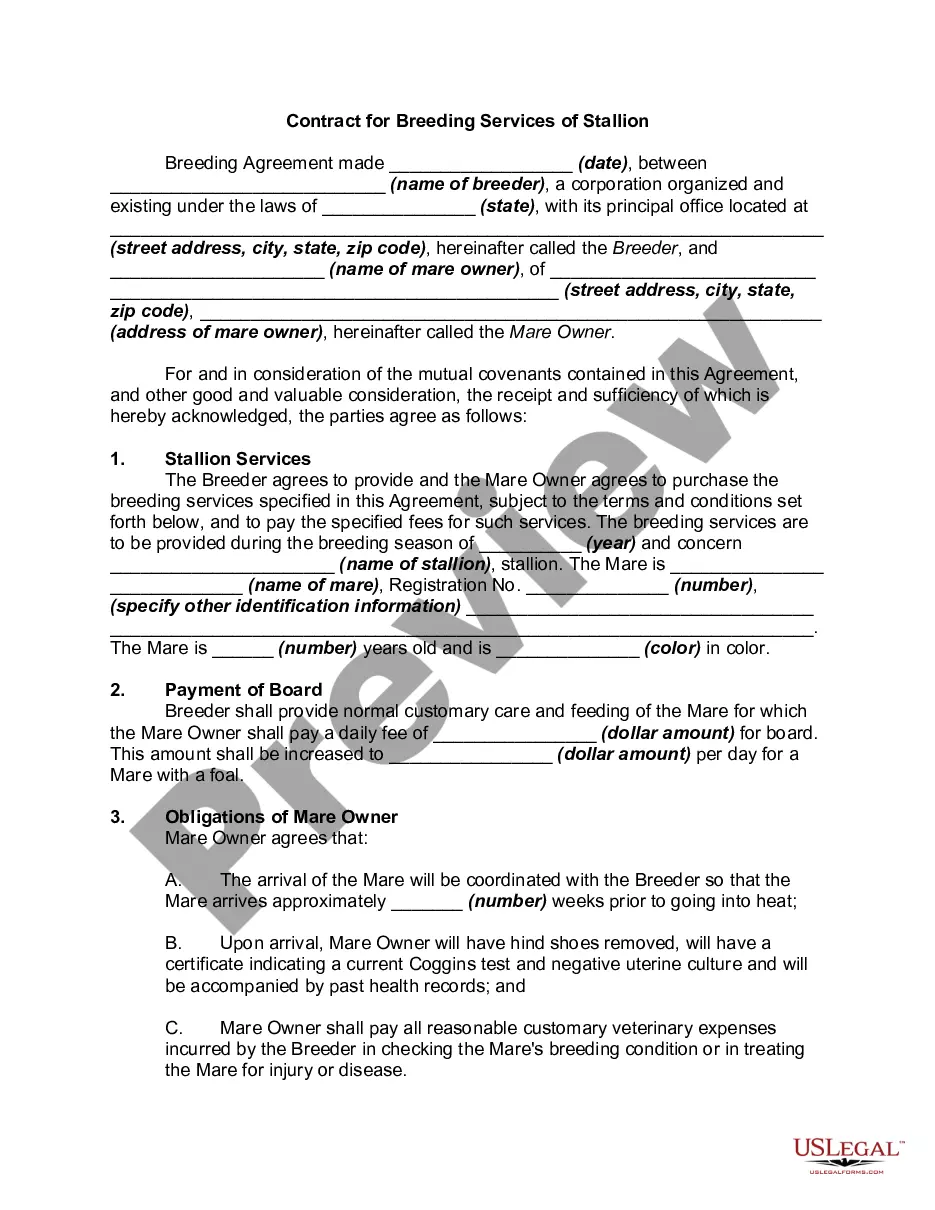
Stallion Breeding Contract Forms In Harris
Description
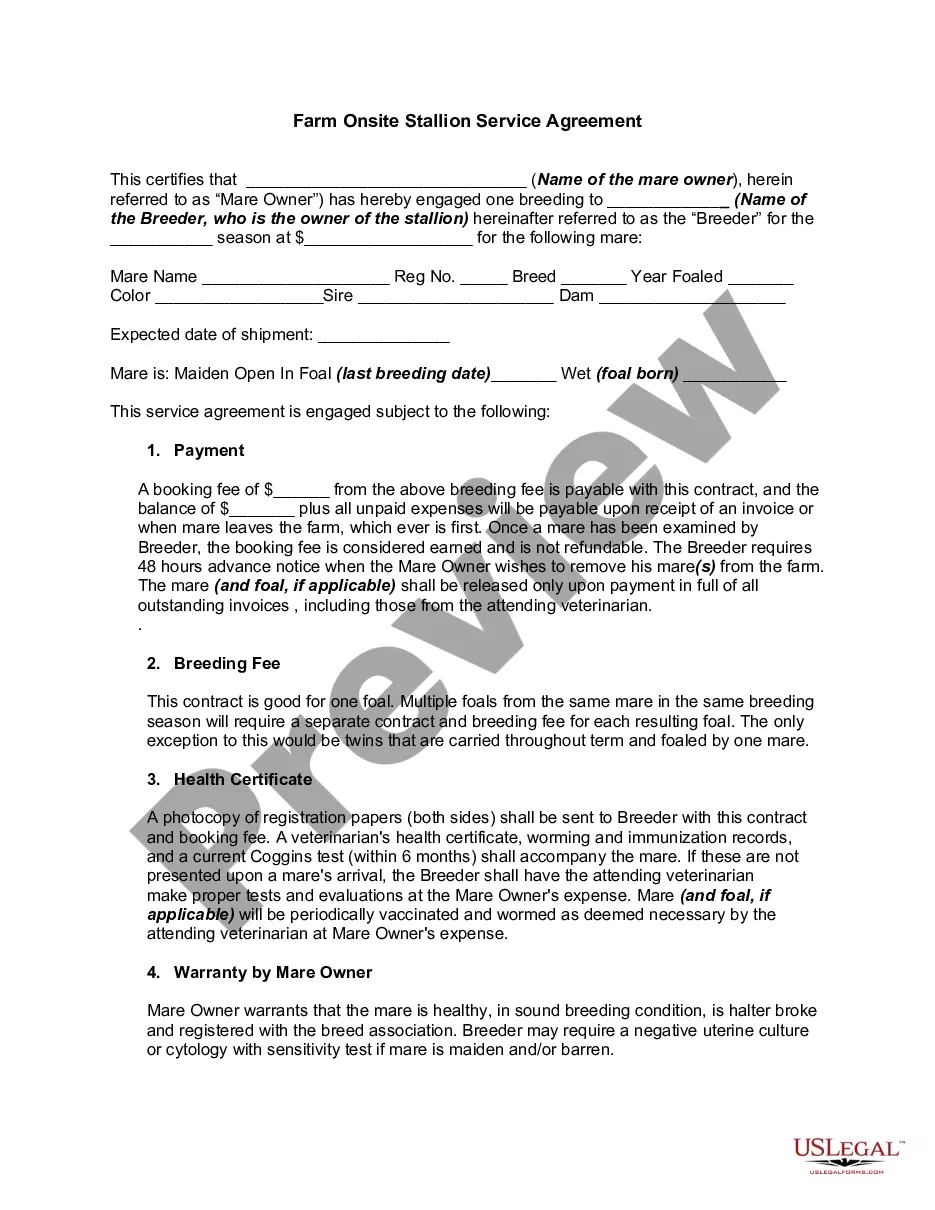
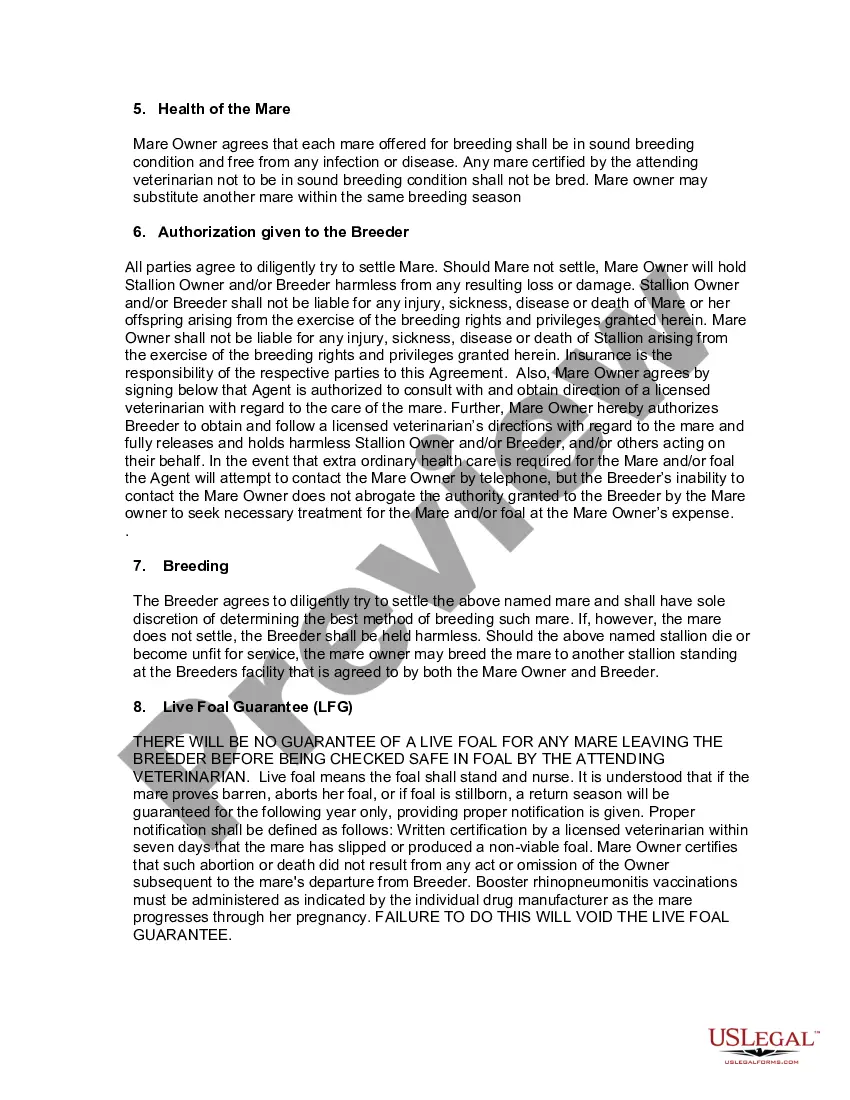
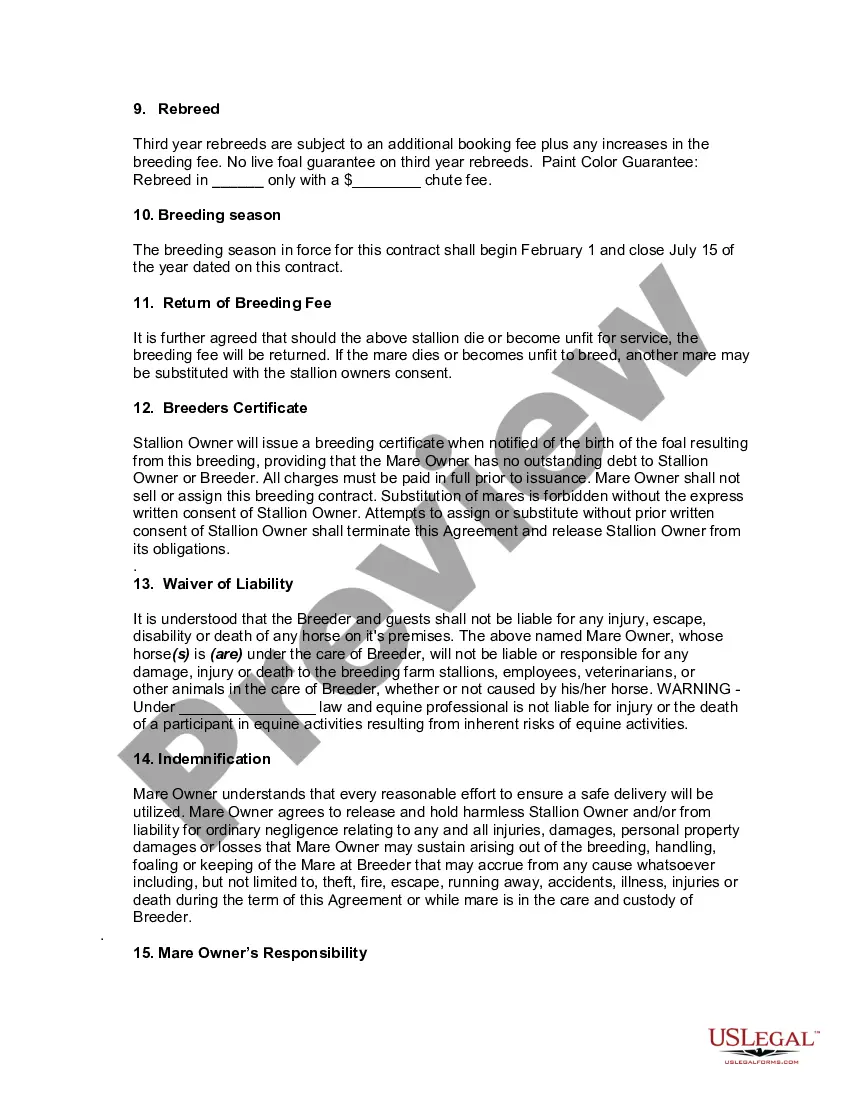
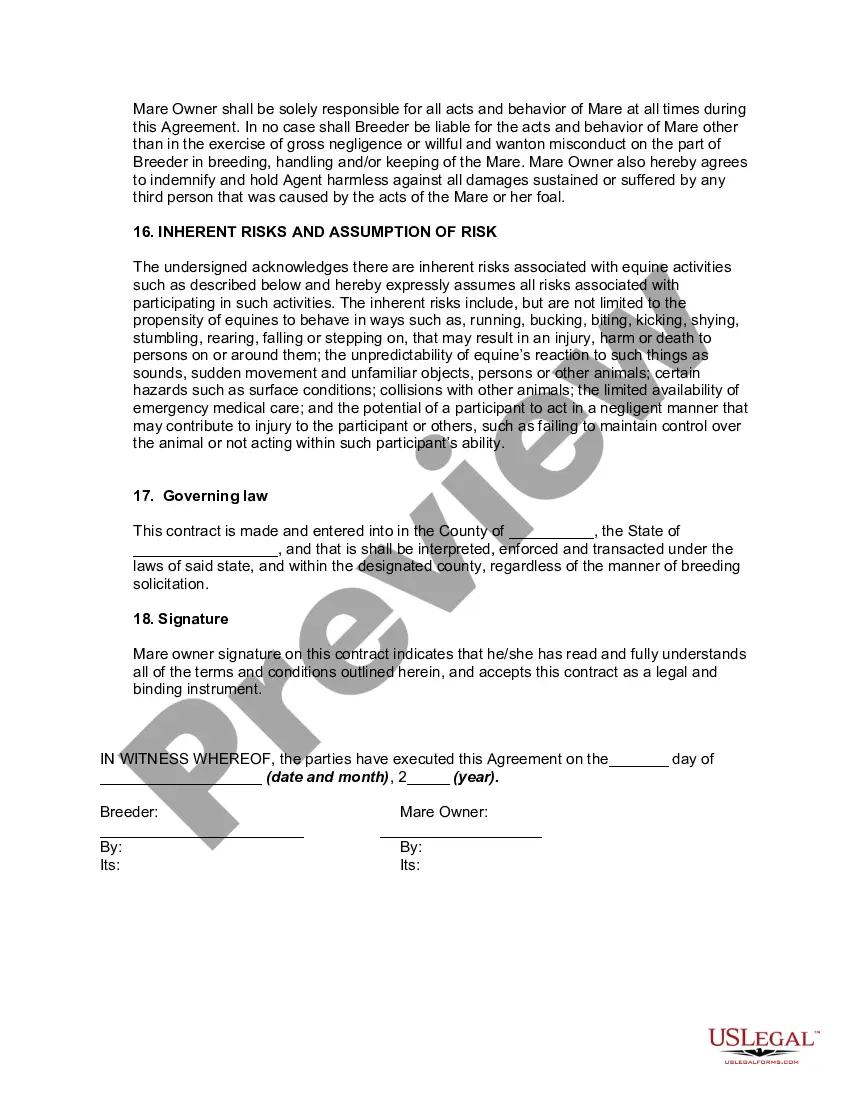
Get your form ready online
Our built-in tools help you complete, sign, share, and store your documents in one place.
Make edits, fill in missing information, and update formatting in US Legal Forms—just like you would in MS Word.
Download a copy, print it, send it by email, or mail it via USPS—whatever works best for your next step.
Sign and collect signatures with our SignNow integration. Send to multiple recipients, set reminders, and more. Go Premium to unlock E-Sign.
If this form requires notarization, complete it online through a secure video call—no need to meet a notary in person or wait for an appointment.
We protect your documents and personal data by following strict security and privacy standards.

Make edits, fill in missing information, and update formatting in US Legal Forms—just like you would in MS Word.

Download a copy, print it, send it by email, or mail it via USPS—whatever works best for your next step.

Sign and collect signatures with our SignNow integration. Send to multiple recipients, set reminders, and more. Go Premium to unlock E-Sign.

If this form requires notarization, complete it online through a secure video call—no need to meet a notary in person or wait for an appointment.

We protect your documents and personal data by following strict security and privacy standards.
Looking for another form?


Form popularity
FAQ
Mature stallions can breed two or three mares a day throughout a long breeding season and maintain a good level of fertility, but young stallions should not be expected to handle this level of work.
Key elements of an equine breeding contract typically include: Identifying all parties involved, including names, phone numbers, and addresses. Stallion name and registration number. Breeding fees, including amounts and payment methods.
If she is receptive to the stallion, showing her rear and raising her tail as she would during heat then the likelihood is that she is not in foal. Although a refusal to be sired is not a guaranteed reason for pregnancy, most mare's will refuse the advances of a stallion if she has conceived.
Researchers at the Swiss National Stud Farm in Avenches designed an experiment to determine whether domesticated stallions could live together peacefully, as do males in the wild. Stallions can be safely housed together if introduced gradually and thoughtfully, ing to Swiss research.
Stallions will typically remain fertile beyond their 20th year of age. The age that stallions stop producing spermatozoa will vary between stallions. It is important that is routinely evaluated on all stallions, especially when using older stallions because of the expected decrease of production with age.
Close breeding such as a mating between sire and daughter will test the good and the bad genes in that family. Such matings are used on an experimental basis to discover if there are any undesirable recessives in the family (such as red coat colour in Friesians).
One stallion can mate with every mare in his herd , multiple mares without damage to him. Present owners use Artificial Insemination to get mares in foal.
A common booking limit is 30 to 40 mares per season with natural mating. This number can be larger if the manager utilizes palpation and ultrasound to accurately determine ovulation time in mares. Note: some stallions are booked for up to 200 breedings in a season.
