Stallion Breeding Contract Forms In Collin
Description
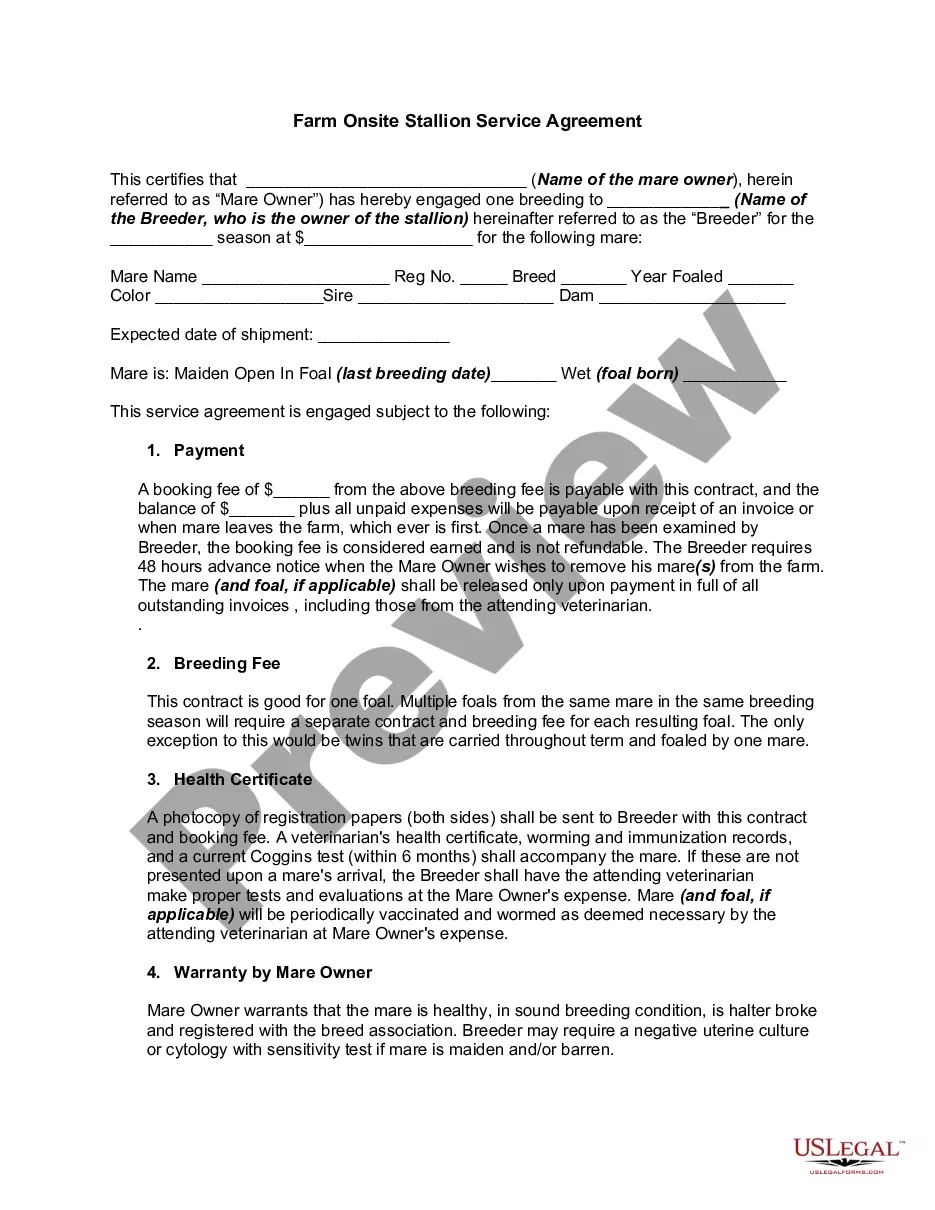
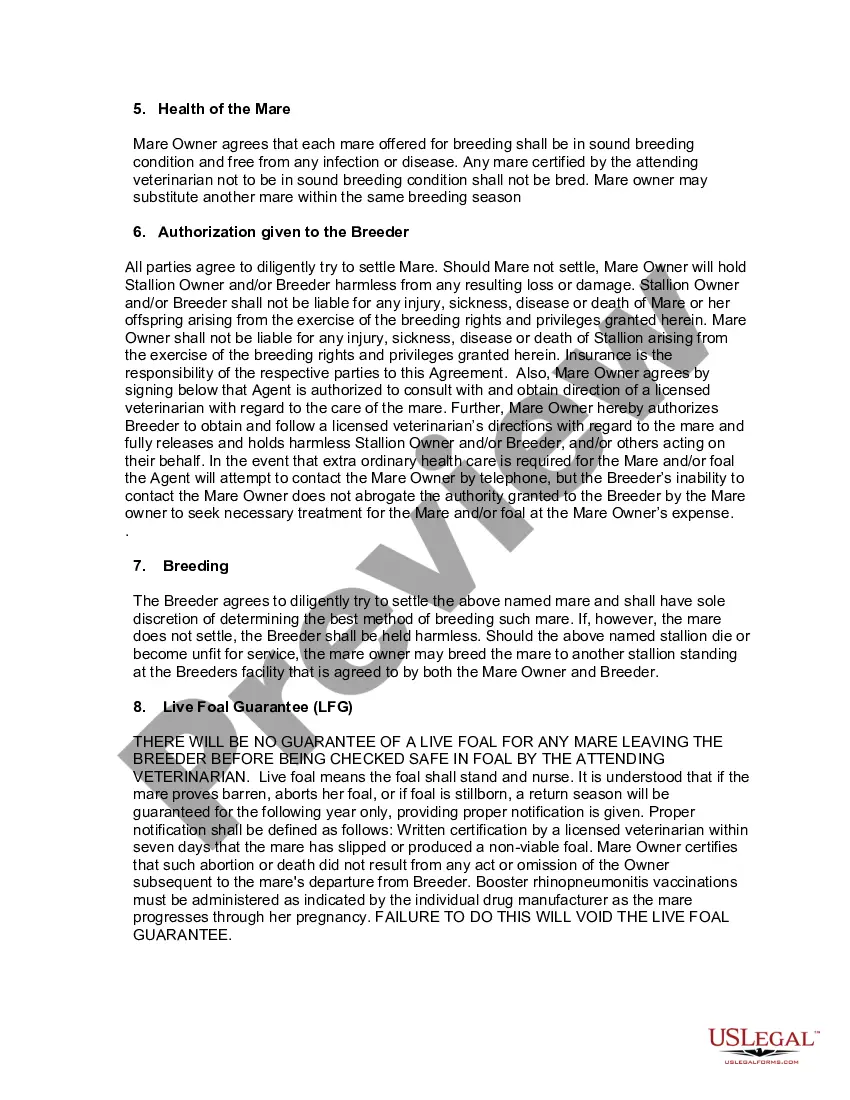
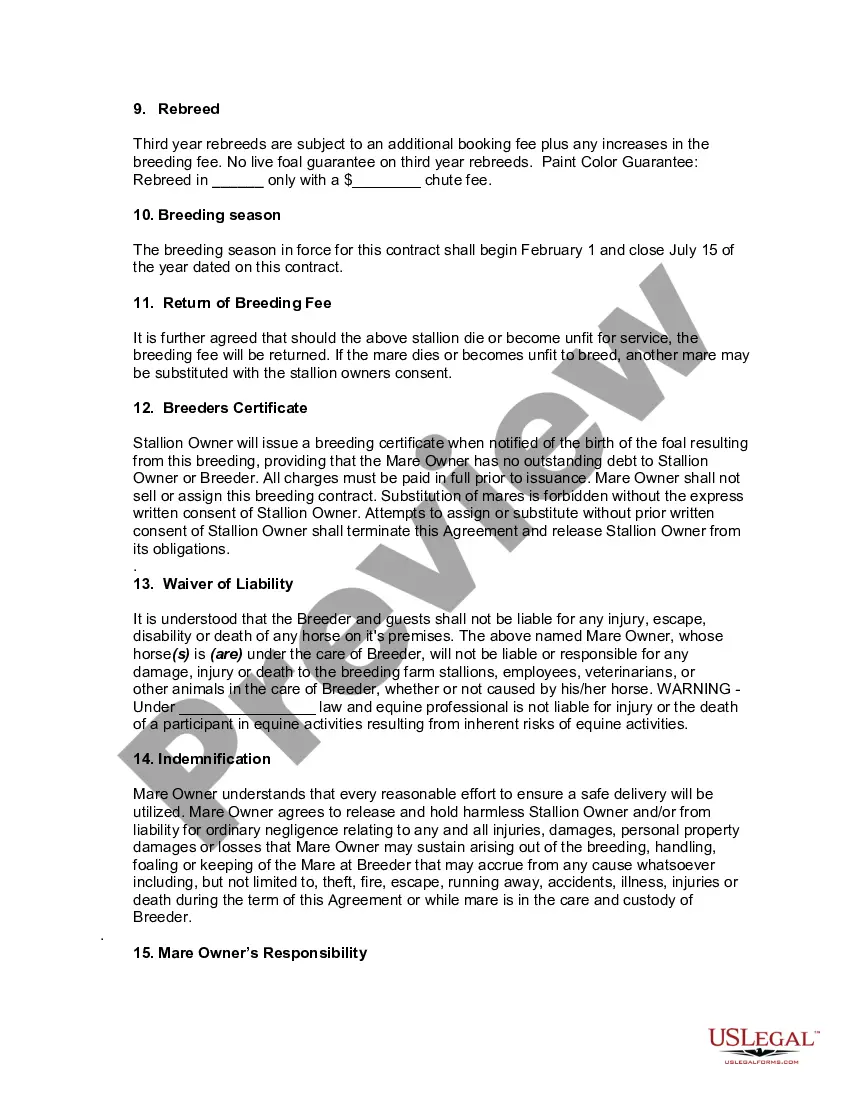
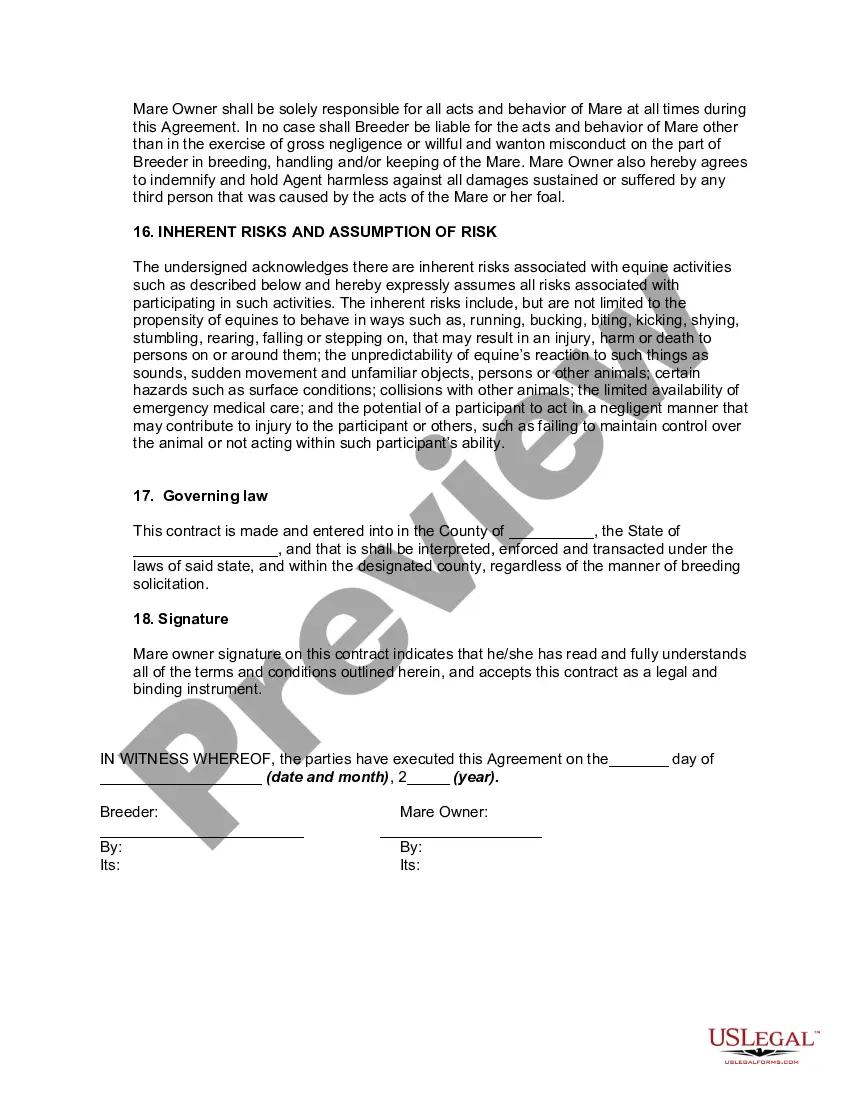
Get your form ready online
Our built-in tools help you complete, sign, share, and store your documents in one place.
Make edits, fill in missing information, and update formatting in US Legal Forms—just like you would in MS Word.
Download a copy, print it, send it by email, or mail it via USPS—whatever works best for your next step.
Sign and collect signatures with our SignNow integration. Send to multiple recipients, set reminders, and more. Go Premium to unlock E-Sign.
If this form requires notarization, complete it online through a secure video call—no need to meet a notary in person or wait for an appointment.
We protect your documents and personal data by following strict security and privacy standards.

Make edits, fill in missing information, and update formatting in US Legal Forms—just like you would in MS Word.

Download a copy, print it, send it by email, or mail it via USPS—whatever works best for your next step.

Sign and collect signatures with our SignNow integration. Send to multiple recipients, set reminders, and more. Go Premium to unlock E-Sign.

If this form requires notarization, complete it online through a secure video call—no need to meet a notary in person or wait for an appointment.

We protect your documents and personal data by following strict security and privacy standards.
Looking for another form?







Form popularity
FAQ
DAMSIRE Also known as the broodmare sire – the sire of the dam of a horse, or maternal grandsire. DISTAFF The female or dam's side of the pedigree. ENTIRE Male horse over three years old which has not been castrated, also known as a stallion.
A stallion used for breeding is known as a stud.
Sire and dam: A sire is a horse's father, a dam its mother. To produce and to sire: A mare produces foals; stallions sire foals; stallions do not produce foals.
A broodmare is a mare used for breeding.
A. Most yearlings and two-year-olds can and will breed under good circumstances.
A male horse is a stallion; during the conception and breeding process, he is called the sire.
On average, however, males become fertile after six months of age and reach full sexual maturity by 12 to 15 months.
Although the mare continues to ovulate regularly every 21 days throughout the breeding season, the length of estrus (sexual receptivity) varies from 2–8 days, and the length of diestrus varies ingly to maintain a 21-day interval.
They may even learn how to be loaded into a trailer so they can be transported. While a foal will only be called a foal for the first year of its life, a horse is not fully mature until it is 4-5 years old. Those are their teenage years! Foal = a baby horse.
A. Most yearlings and two-year-olds can and will breed under good circumstances. There's probably not a horse practice without a firsthand story of the pregnant filly that was only with a colt until a year of age. So for sure, many fairly young colts can be fertile.
