Non Breeding Contract For Dogs In Collin
Description
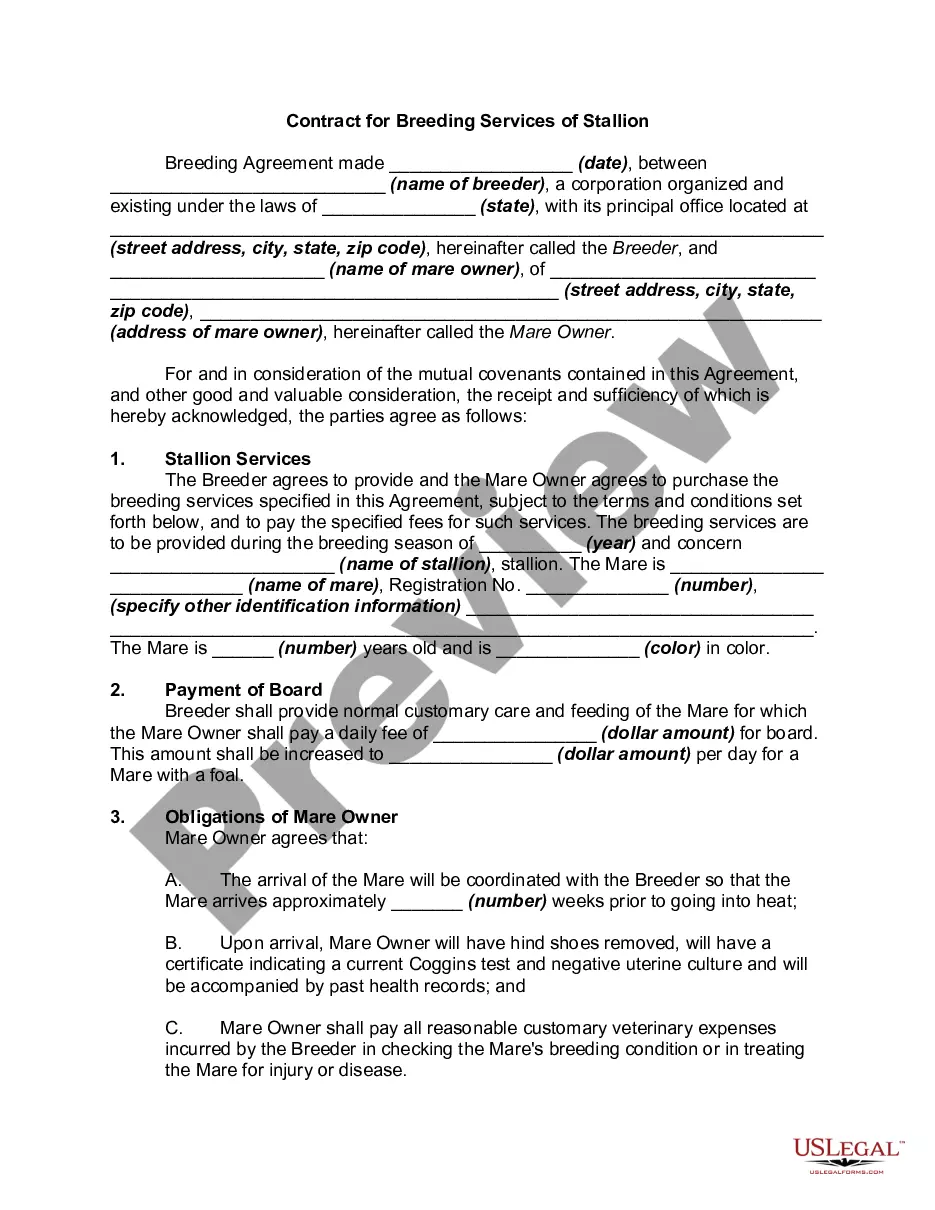
Get your form ready online
Our built-in tools help you complete, sign, share, and store your documents in one place.
Make edits, fill in missing information, and update formatting in US Legal Forms—just like you would in MS Word.
Download a copy, print it, send it by email, or mail it via USPS—whatever works best for your next step.
Sign and collect signatures with our SignNow integration. Send to multiple recipients, set reminders, and more. Go Premium to unlock E-Sign.
If this form requires notarization, complete it online through a secure video call—no need to meet a notary in person or wait for an appointment.
We protect your documents and personal data by following strict security and privacy standards.

Make edits, fill in missing information, and update formatting in US Legal Forms—just like you would in MS Word.

Download a copy, print it, send it by email, or mail it via USPS—whatever works best for your next step.

Sign and collect signatures with our SignNow integration. Send to multiple recipients, set reminders, and more. Go Premium to unlock E-Sign.

If this form requires notarization, complete it online through a secure video call—no need to meet a notary in person or wait for an appointment.

We protect your documents and personal data by following strict security and privacy standards.
Looking for another form?









Form popularity
FAQ
The safest and most responsible way to ensure that your dogs don't breed (whether at home or by staging a dramatic breakout to impress a neighbor's poodle) is to have them spayed or neutered by your vet or clinic.
Breeding a dog without proper breeding rights may result in legal consequences, including fines or legal action from the dog's rightful owner or the relevant breeding organization.
Currently, most dog breeders do not need a permit. Permits are required in some states when a dog breeder goes over a certain number of litters per year or has a certain number of breeding dogs at once. Anyone whose dog produces puppies, even just one, is considered a dog breeder by law.
Breeding a dog without proper breeding rights may result in legal consequences, including fines or legal action from the dog's rightful owner or the relevant breeding organization.
Non-Breeding Agreement. The Purchaser agrees that the Puppy is being sold as a companion animal (Pet) and not for breeding purposes. The Purchaser agrees to have the Puppy spayed/neutered between the ages of 8 months to 18 months and as recommended or advised by a licensed Veterinarian.
If there appears to be cruelty or neglect (unsanitary conditions, sick animals, lack of food/water/shelter, etc.), please also immediately contact the breeder's or pet store's local animal control agency, humane society or animal shelter and request that they inspect the facility.
Not everything is a Deal Breaker - Remember, if the contract is too overbearing and unreasonable, it likely won't be enforceable. Some breeders use the "carrot" approach and provide incentives for Buyers to meet the terms of the Contract such as spay/neuter requirements and OFA x-rays.
Be aware that most contracts in the dog world are not legally enforceable, especially the ones that are micromanaging. Legally, dogs are property. As a result, do not rely on contracts to ``force'' the behavior that you want. Instead....
While there is generally nothing to prevent anyone from selling puppies, be aware that you may be liable to the purchasers under any applicable pet lemon laws or other laws regulating the sale of pets in your state, or if for some reason the puppies are sick or the buyers are unsatisfied for other reasons.
