Lease Employee Agreement For Cell Phone In Wayne
Description

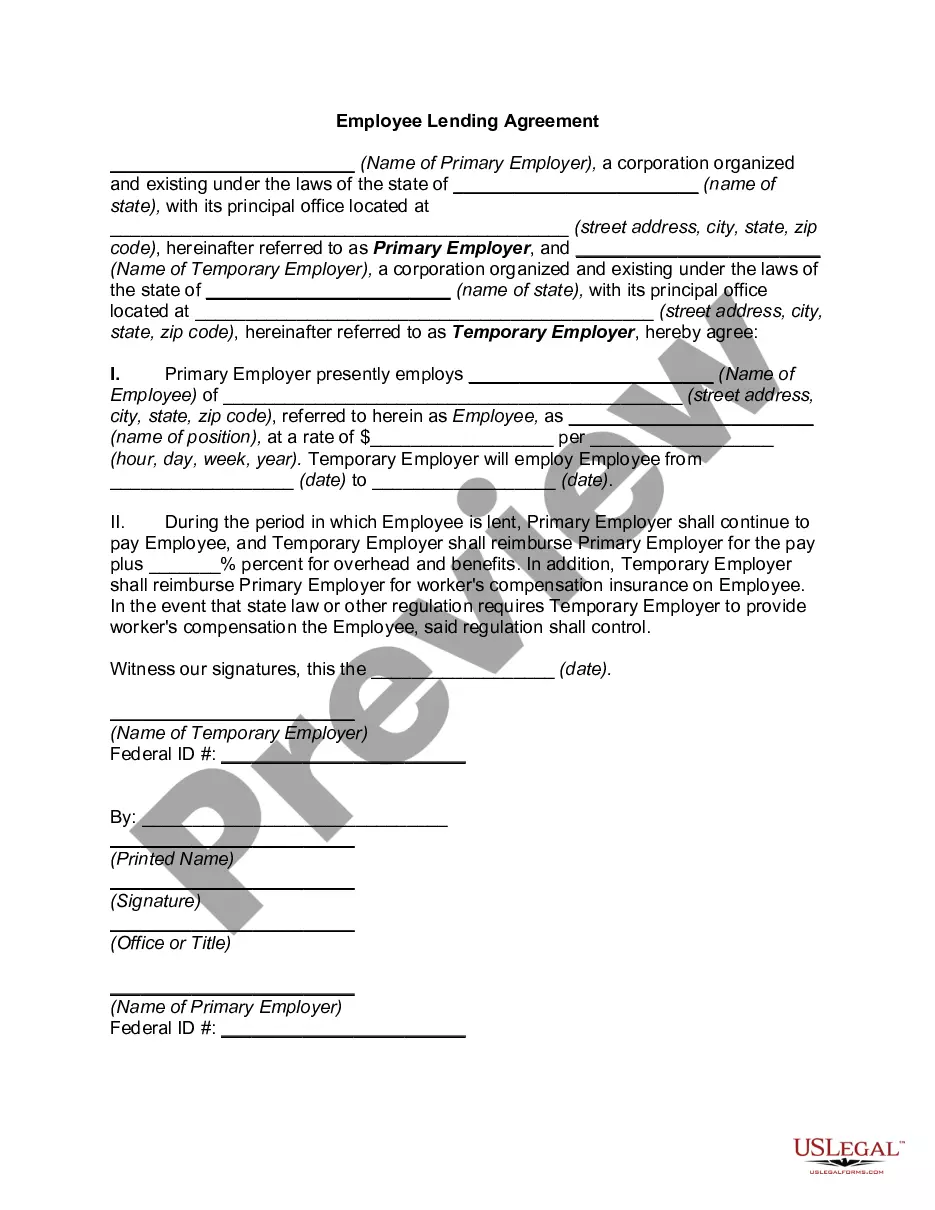
Get your form ready online
Our built-in tools help you complete, sign, share, and store your documents in one place.
Make edits, fill in missing information, and update formatting in US Legal Forms—just like you would in MS Word.
Download a copy, print it, send it by email, or mail it via USPS—whatever works best for your next step.
Sign and collect signatures with our SignNow integration. Send to multiple recipients, set reminders, and more. Go Premium to unlock E-Sign.
If this form requires notarization, complete it online through a secure video call—no need to meet a notary in person or wait for an appointment.
We protect your documents and personal data by following strict security and privacy standards.

Make edits, fill in missing information, and update formatting in US Legal Forms—just like you would in MS Word.

Download a copy, print it, send it by email, or mail it via USPS—whatever works best for your next step.

Sign and collect signatures with our SignNow integration. Send to multiple recipients, set reminders, and more. Go Premium to unlock E-Sign.

If this form requires notarization, complete it online through a secure video call—no need to meet a notary in person or wait for an appointment.

We protect your documents and personal data by following strict security and privacy standards.
Looking for another form?



Form popularity
FAQ
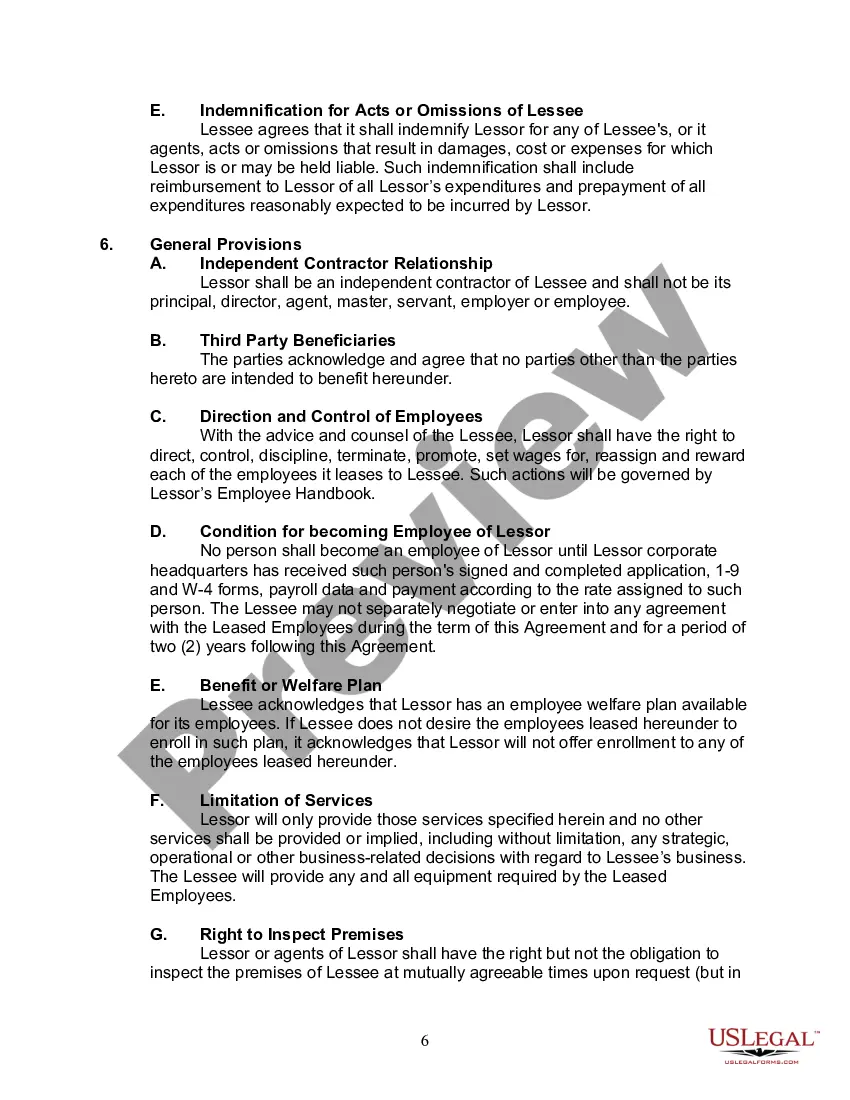
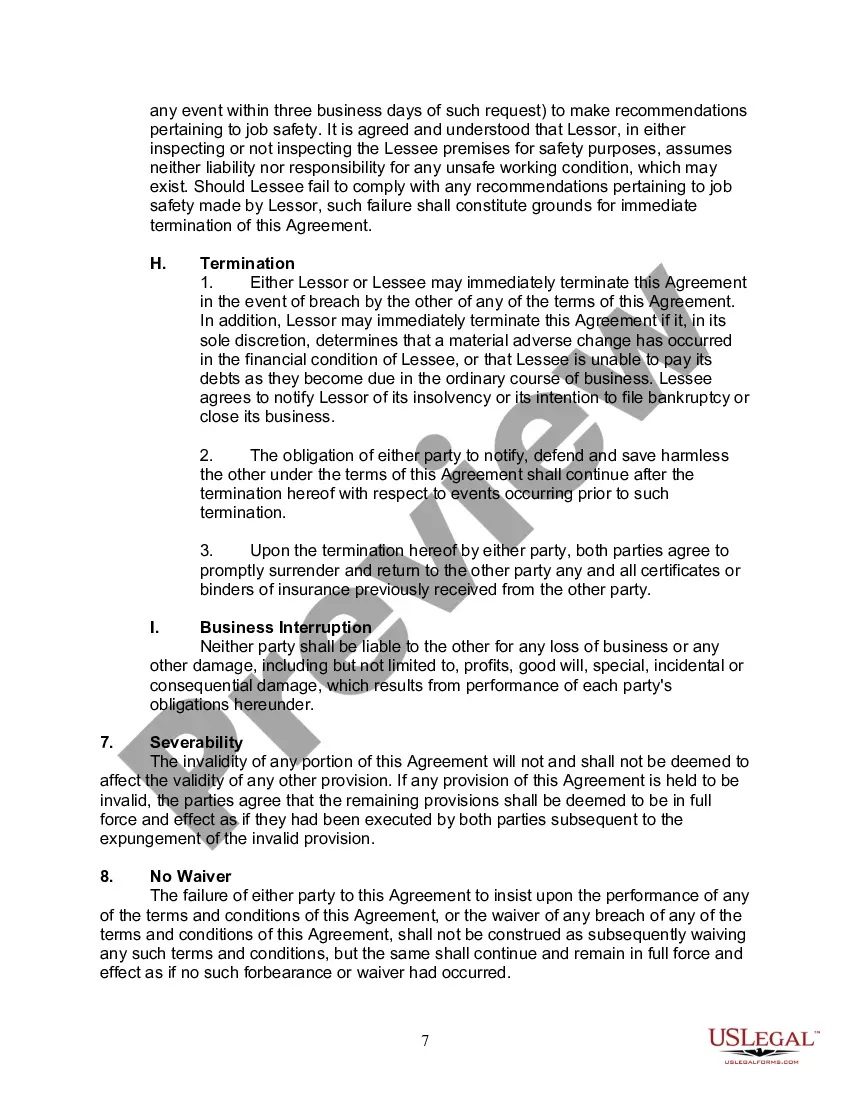
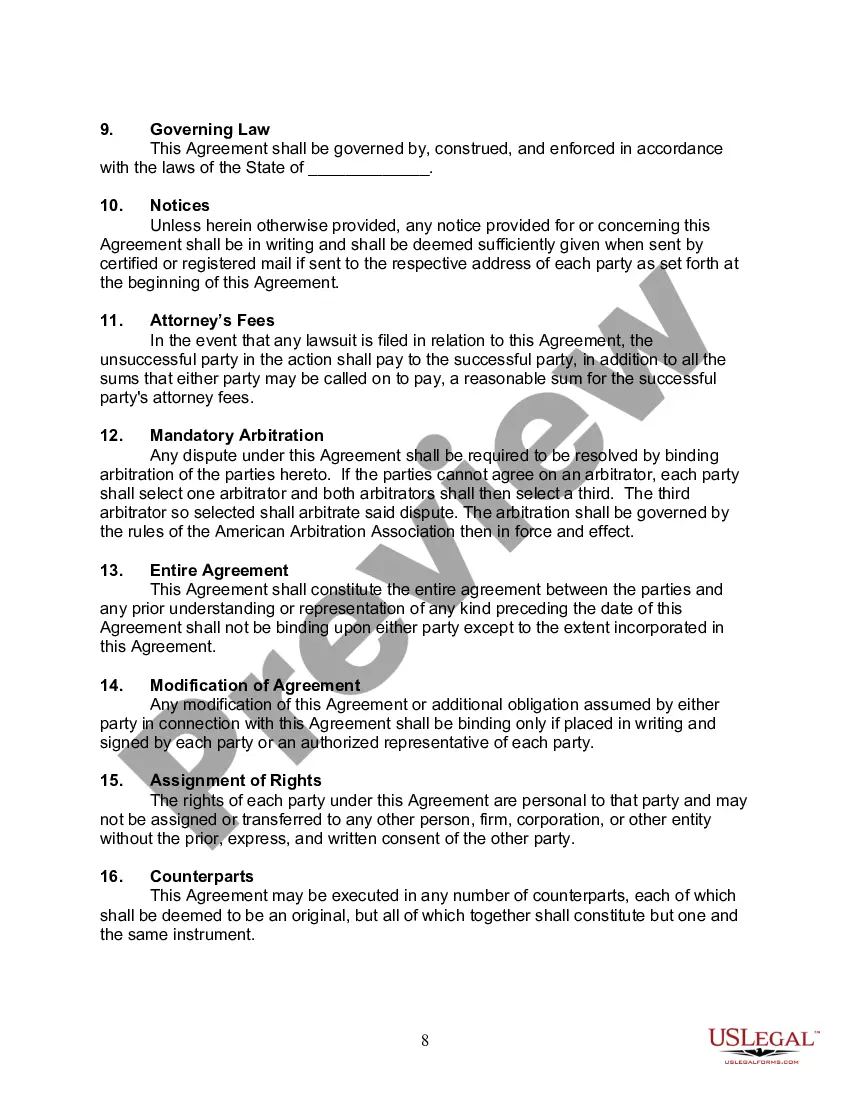
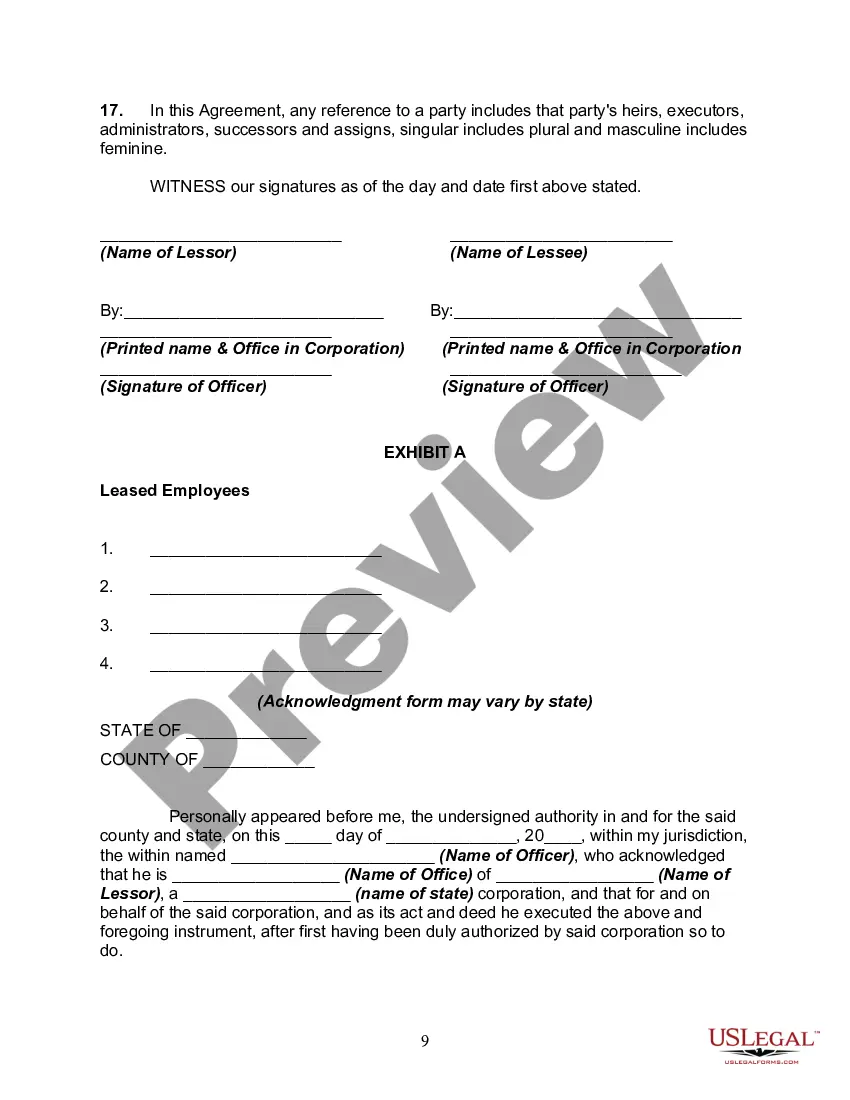
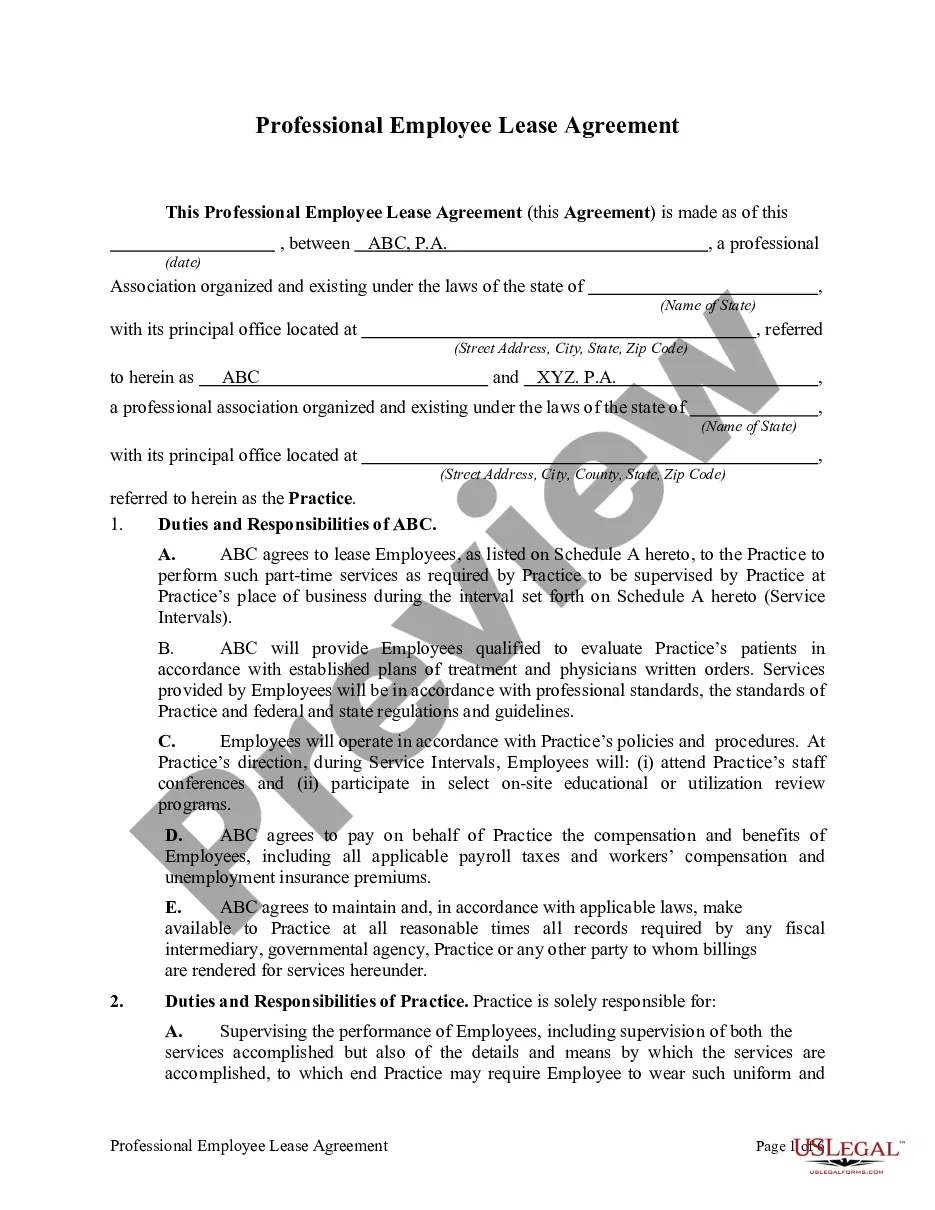
Subscribe now. Employee leasing is an arrangement between a business and a staffing firm, who supplies workers on a project-specific or temporary basis. These employees work for the client business, but the leasing agency pays their salaries and handles all of the HR administration associated with their employment.
Employee leasing is an arrangement between a business and a staffing firm, who supplies workers on a project-specific or temporary basis. These employees work for the client business, but the leasing agency pays their salaries and handles all of the HR administration associated with their employment.
Drawbacks of employee leasing Less control: One of the greatest risks of employee leasing is that you're delegating an important part of your business to an outside company that doesn't know your business as well as you do. You lose control of your processes, systems and benefits.
While leased employees are legally employed by a PEO, they work under the day-to-day management and supervision of the leasing business — much like any other employee.
You sign a lease with a smartphone leasing company, which gives you the right to use the smartphone for a set period. In return, you make lease payments. 2. Leasing isn't the same as buying a phone on an installment plan, which many cellphone networks also offer to make smartphones more affordable.
A PEO, or professional employer organization, has a different relationship with client companies. Instead of being a firm that leases employees to their clients, a PEO becomes an employer of record for the client's employees. This is known as a co-employment agreement.
The private use and work phone agreement is between the company and you, the employee. It covers your use of the work phone and the personal device your employer gives you for work purposes. If you're an employee using a company-issued device for work and personal use, you must protect your phone's data.
When personal cell phones are used in the workplace, it can put the company at risk. Although we recognize the need to have personal cell phones at work, employees should use them only intermittently or outside of working hours. When using cell phones, employees should move away from colleagues to prevent distractions.
Excessive personal calls during the workday, regardless of the phone used, can interfere with employee productivity and be distracting to other employees. Employees should restrict personal calls during work time, and should use personal cell phones only during scheduled break or lunch periods in non-working areas.
