Employee Rental Agreement Form California In Utah
Description

Get your form ready online
Our built-in tools help you complete, sign, share, and store your documents in one place.
Make edits, fill in missing information, and update formatting in US Legal Forms—just like you would in MS Word.
Download a copy, print it, send it by email, or mail it via USPS—whatever works best for your next step.
Sign and collect signatures with our SignNow integration. Send to multiple recipients, set reminders, and more. Go Premium to unlock E-Sign.
If this form requires notarization, complete it online through a secure video call—no need to meet a notary in person or wait for an appointment.
We protect your documents and personal data by following strict security and privacy standards.

Make edits, fill in missing information, and update formatting in US Legal Forms—just like you would in MS Word.

Download a copy, print it, send it by email, or mail it via USPS—whatever works best for your next step.

Sign and collect signatures with our SignNow integration. Send to multiple recipients, set reminders, and more. Go Premium to unlock E-Sign.

If this form requires notarization, complete it online through a secure video call—no need to meet a notary in person or wait for an appointment.

We protect your documents and personal data by following strict security and privacy standards.
Looking for another form?






Form popularity
FAQ
The Employee Housing Act and the adopted regulations govern the standards for the construction, maintenance, use, and occupancy of living quarters, called "employee housing," provided for five or more employees under specified circumstances.
Is this possible? A: Provided your corporation's by-laws permit the leasing of real estate (typically by-laws do) then renting under a corporate name is possible.
An initial decision to be made when it comes to employee housing is whether you want your employees to occupy your housing as a tenant, or under a license. A license means that the employee is there under the owner's permission, and housing is connected directly to his or her employment.
At this time, California is the only state in which employer-provided lodging is subject to taxation. Although state income tax does not apply, lodging is subject to other taxes: State Unemployment Insurance, Employee Training Tax and State Disability Insurance.
State laws on leases and rental agreements can vary, but a landlord or property management company should provide you with a copy of your signed lease upon request. You should make your request in writing, so you have proof if there is a dispute later.
California Standard Residential Lease Agreement. A California standard residential lease agreement is a fixed-term contract between a landlord and a tenant regarding a rental property.
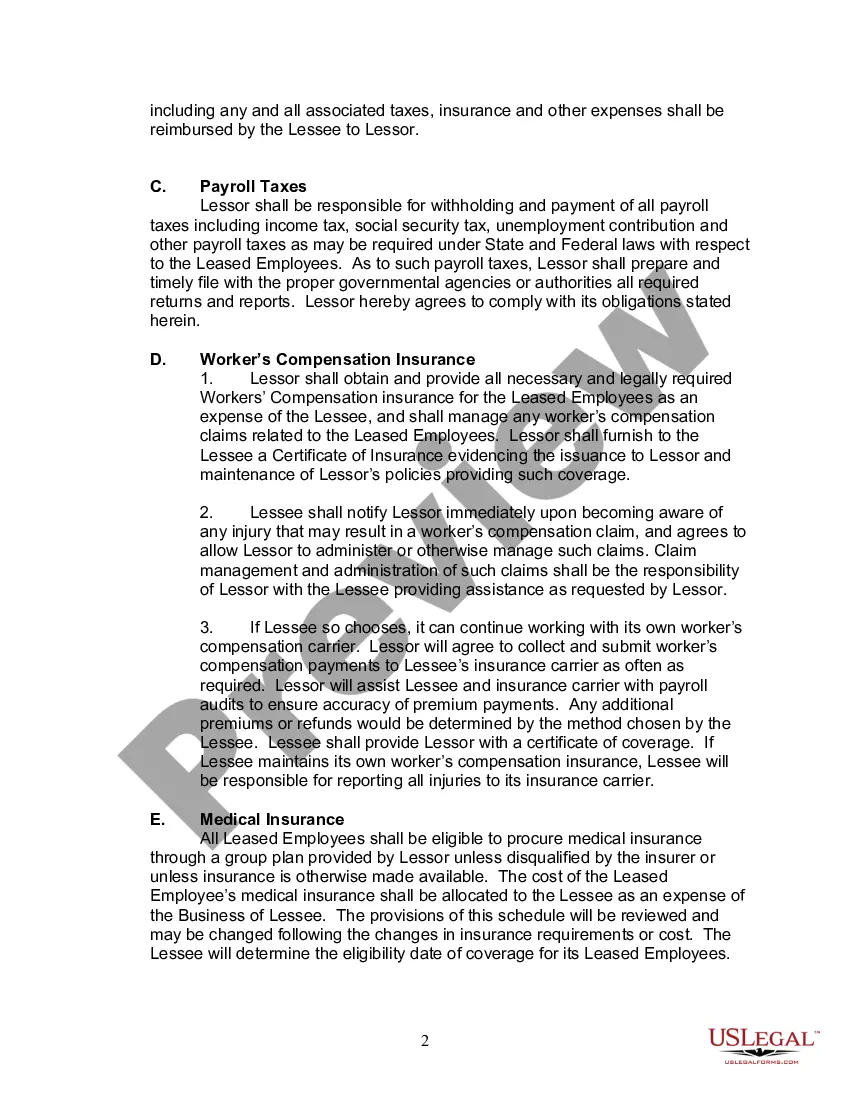
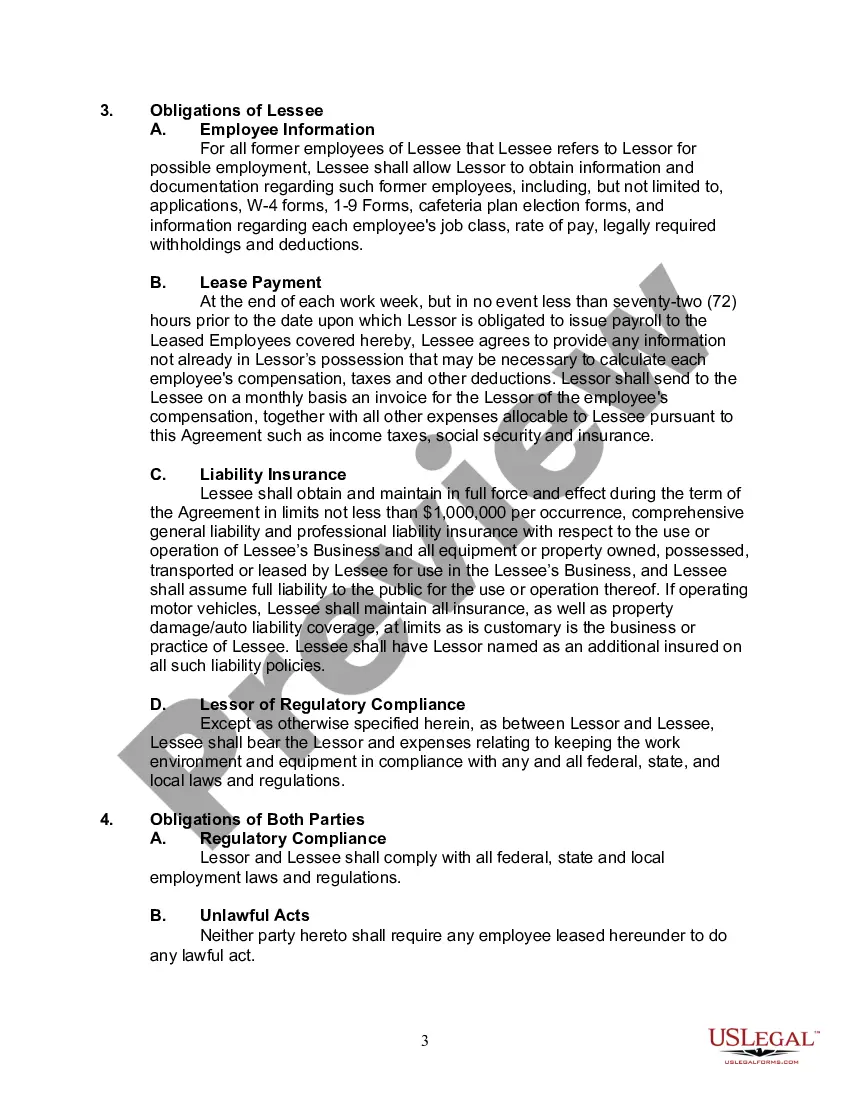
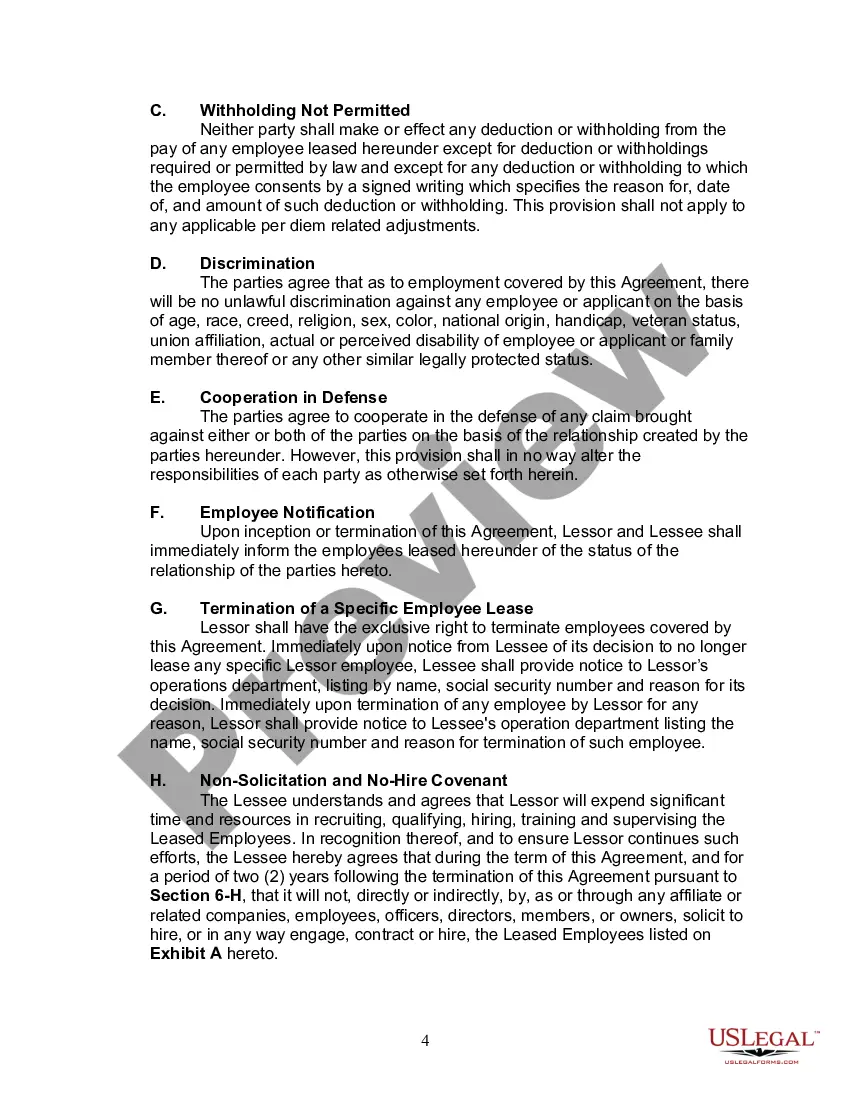
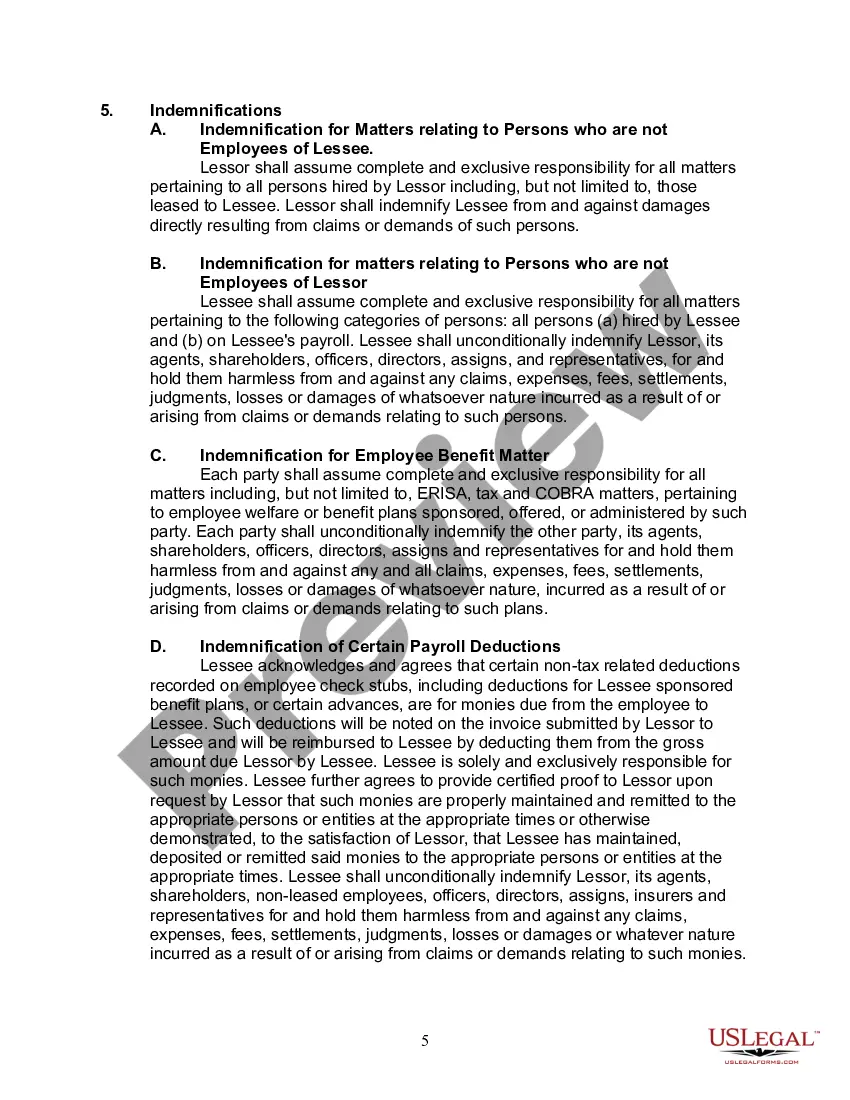
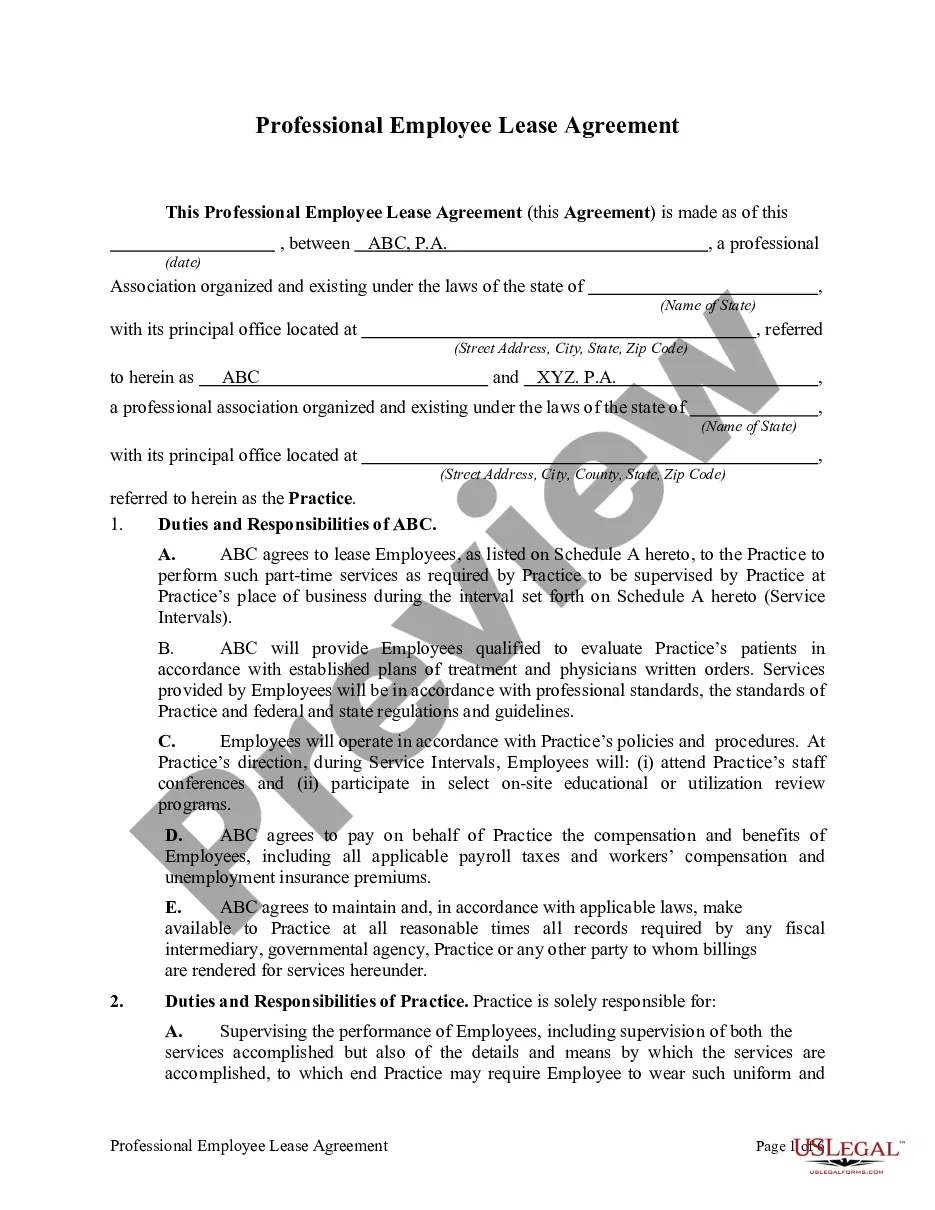
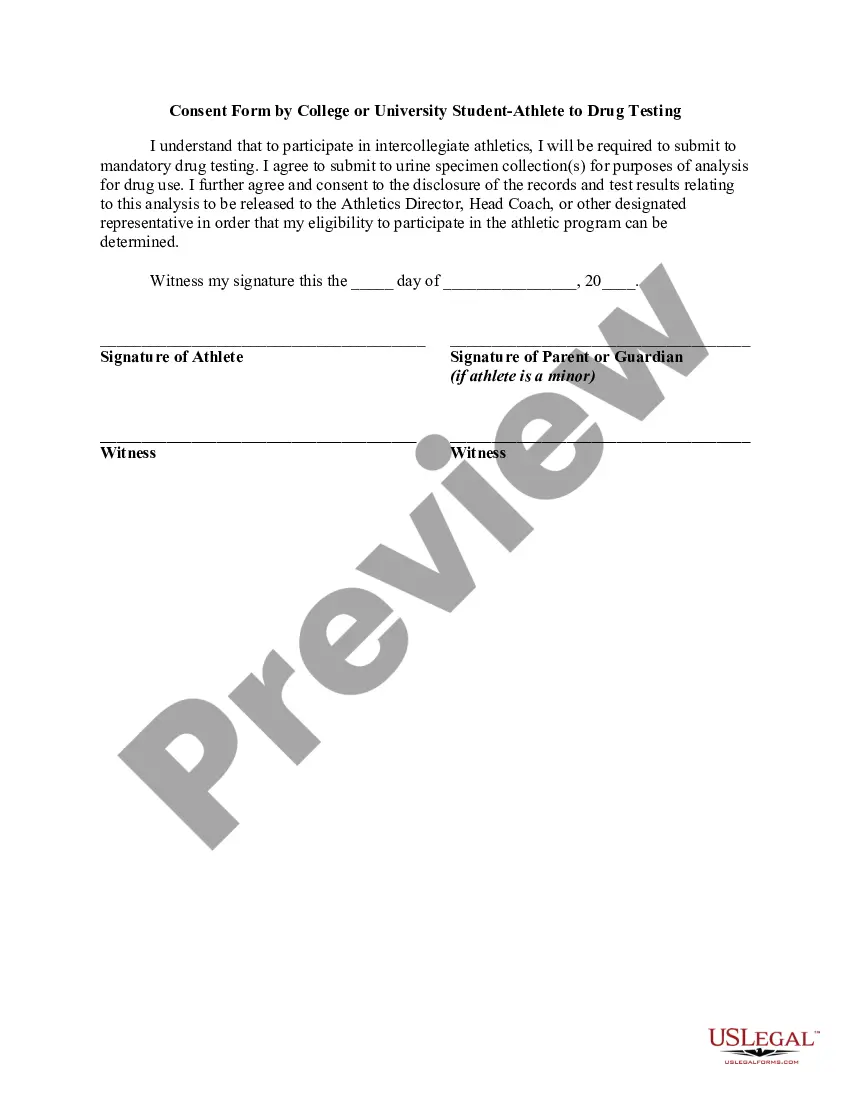
Employee leasing is an arrangement between a business and a staffing firm, who supplies workers on a project-specific or temporary basis. These employees work for the client business, but the leasing agency pays their salaries and handles all of the HR administration associated with their employment.
The standard lease agreement in California, whether for residential or commercial property, is a legal contract between the property owner and the prospective tenant. It outlines the terms under which the tenant can occupy and use the rental property.
Verbal and Written Agreements California's Statute of Frauds requires a lease to be in writing if it either: 1. has a term longer than one year; or 2. has a term less than one year which expires more than one year after the agreement is reached.
