Lease Employee Agreement With Japan In Florida
Description


Form popularity
FAQ
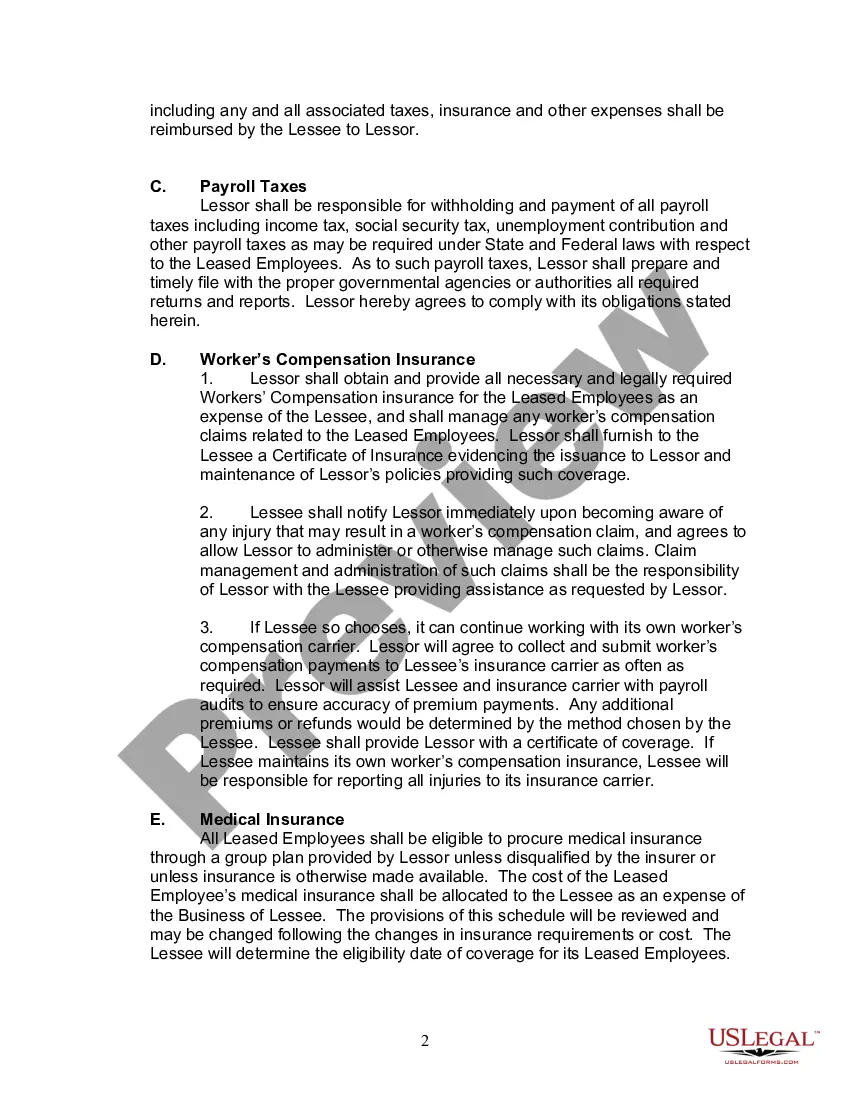
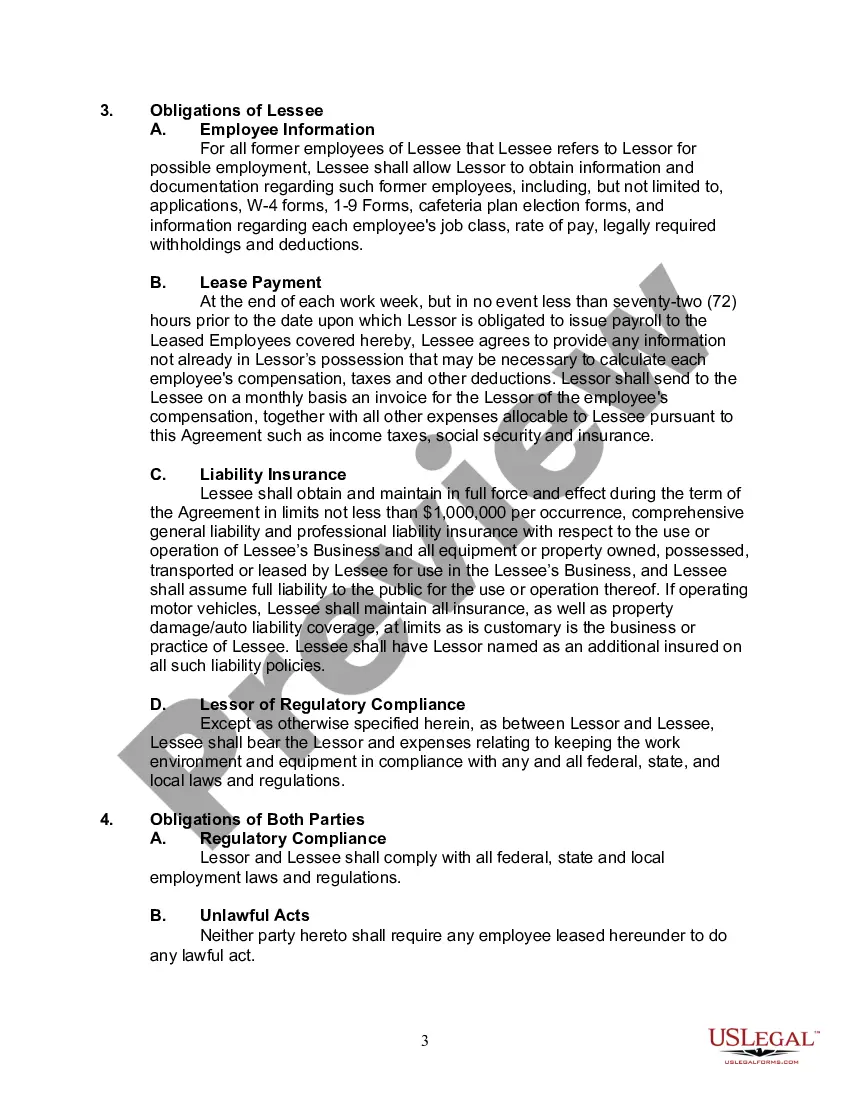
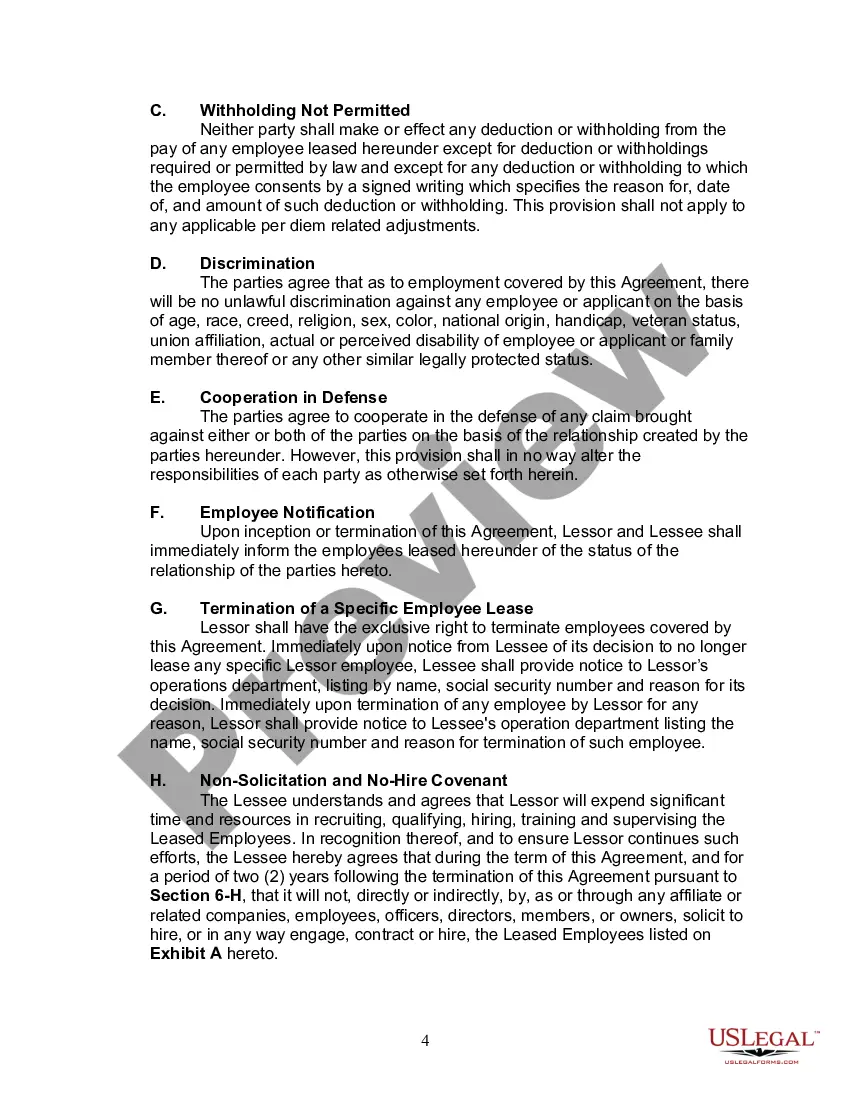
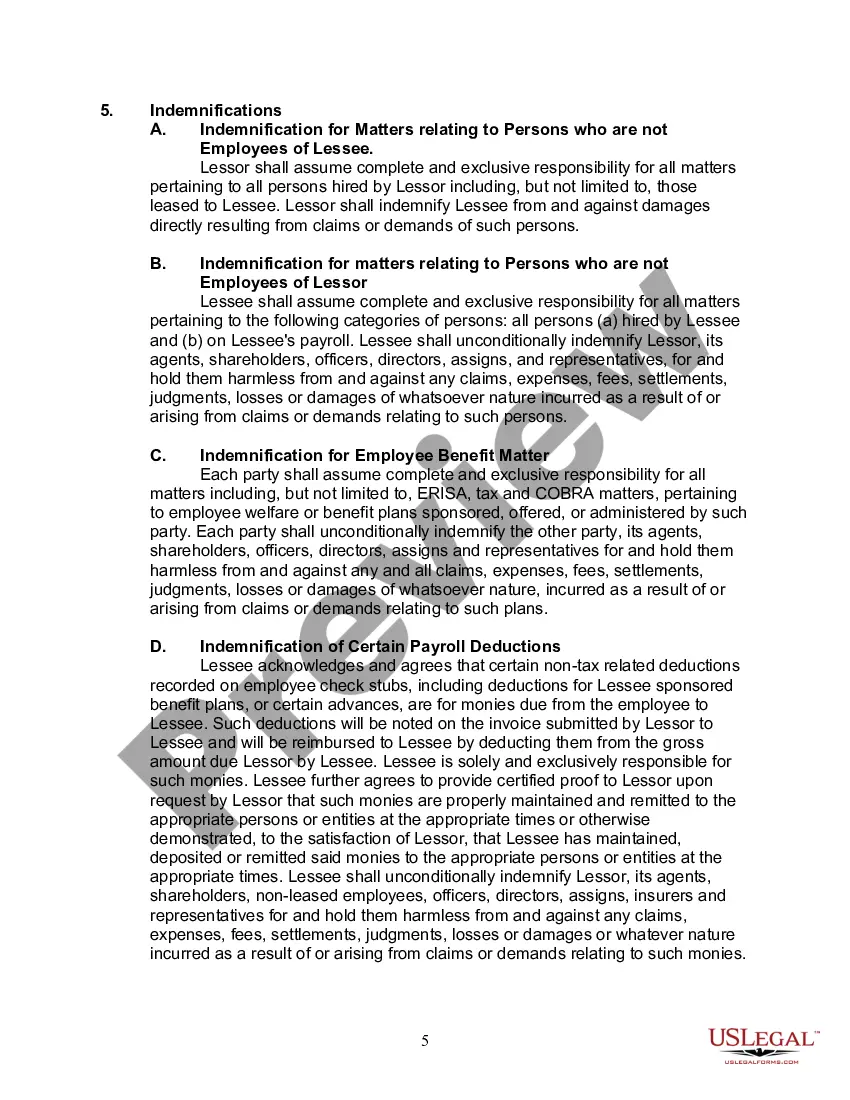
Drawbacks of employee leasing Less control: One of the greatest risks of employee leasing is that you're delegating an important part of your business to an outside company that doesn't know your business as well as you do. You lose control of your processes, systems and benefits.
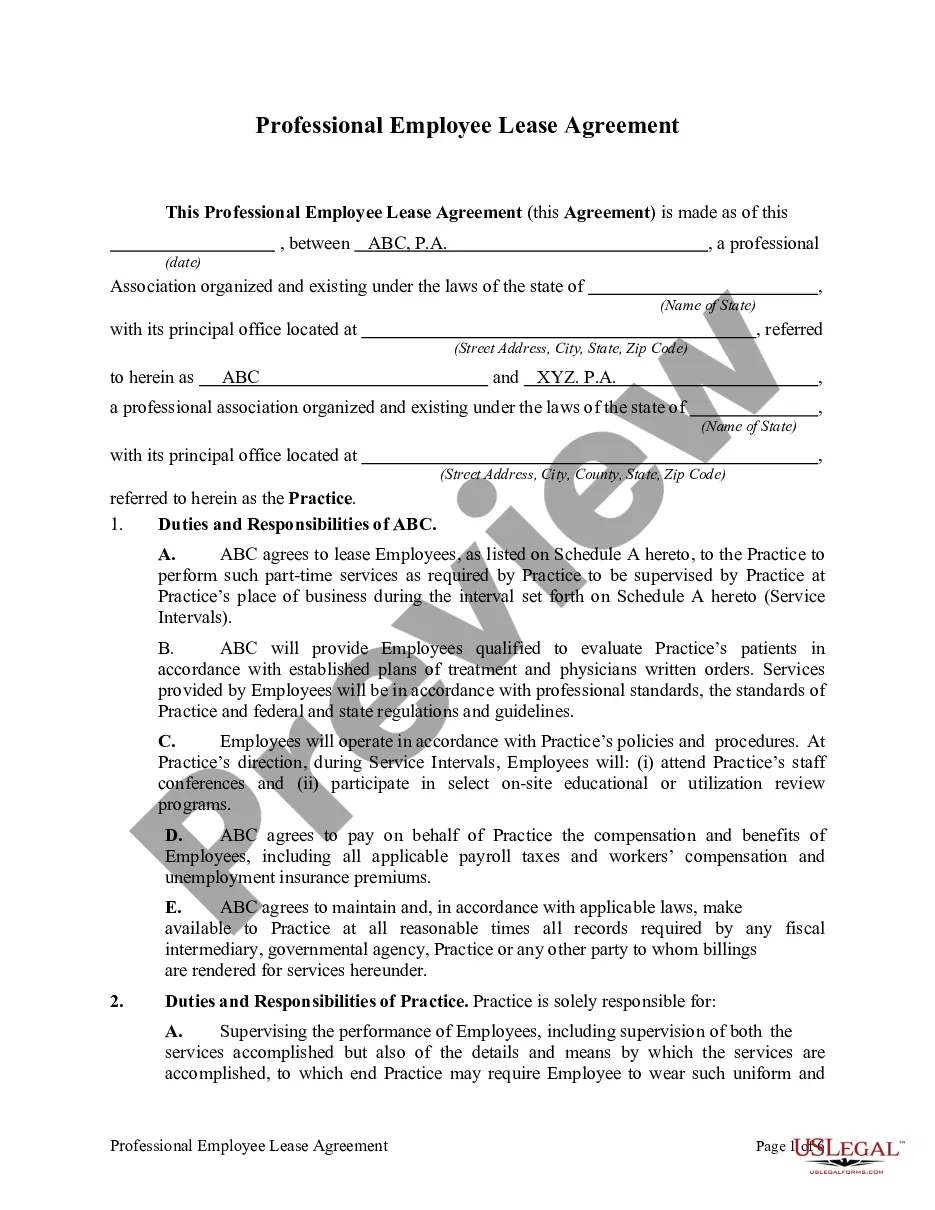
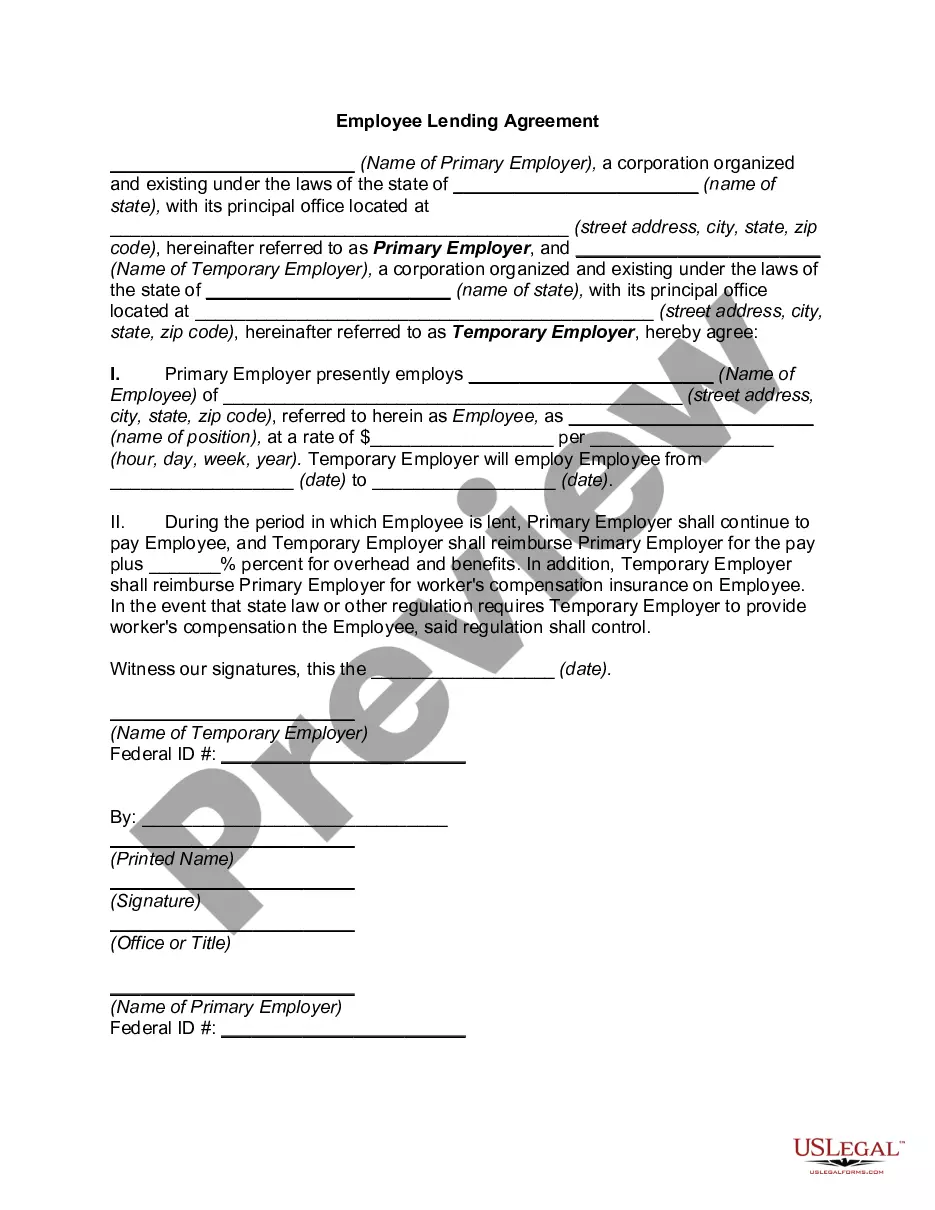
Subscribe now. Employee leasing is an arrangement between a business and a staffing firm, who supplies workers on a project-specific or temporary basis. These employees work for the client business, but the leasing agency pays their salaries and handles all of the HR administration associated with their employment.
Employee leasing is an arrangement between a business and a staffing firm, who supplies workers on a project-specific or temporary basis. These employees work for the client business, but the leasing agency pays their salaries and handles all of the HR administration associated with their employment.
A PEO, or professional employer organization, has a different relationship with client companies. Instead of being a firm that leases employees to their clients, a PEO becomes an employer of record for the client's employees. This is known as a co-employment agreement.
Given the stakes, it's common for property owners to consider whether they can draft this document themselves. While it is legally possible to write your own commercial lease agreement in Florida, doing so involves careful consideration of legal, business, and practical factors.
While leased employees are legally employed by a PEO, they work under the day-to-day management and supervision of the leasing business — much like any other employee.
Fixed-term contracts in Japan Fixed-term employment contracts have a set duration, usually lasting up to three years. However, an employee can extend their contract for up to five years if they possess special skills or knowledge, or if they are 60 years of age or older.
Employment contracts are legally binding agreements that protect the rights of both parties. They require clear terms, mutual consent, and consideration. This clarity helps prevent legal disputes and explicitly lays out responsibilities. It also protects your business from legal liability.
The Japanese wage system has traditionally been closely linked to the seniority system. Wages are often still strongly influenced by an employee's length of service. Salaried workers normally receive a monthly salary plus two seasonal bonuses. Particularly in large companies, the bonus system plays an important role.
