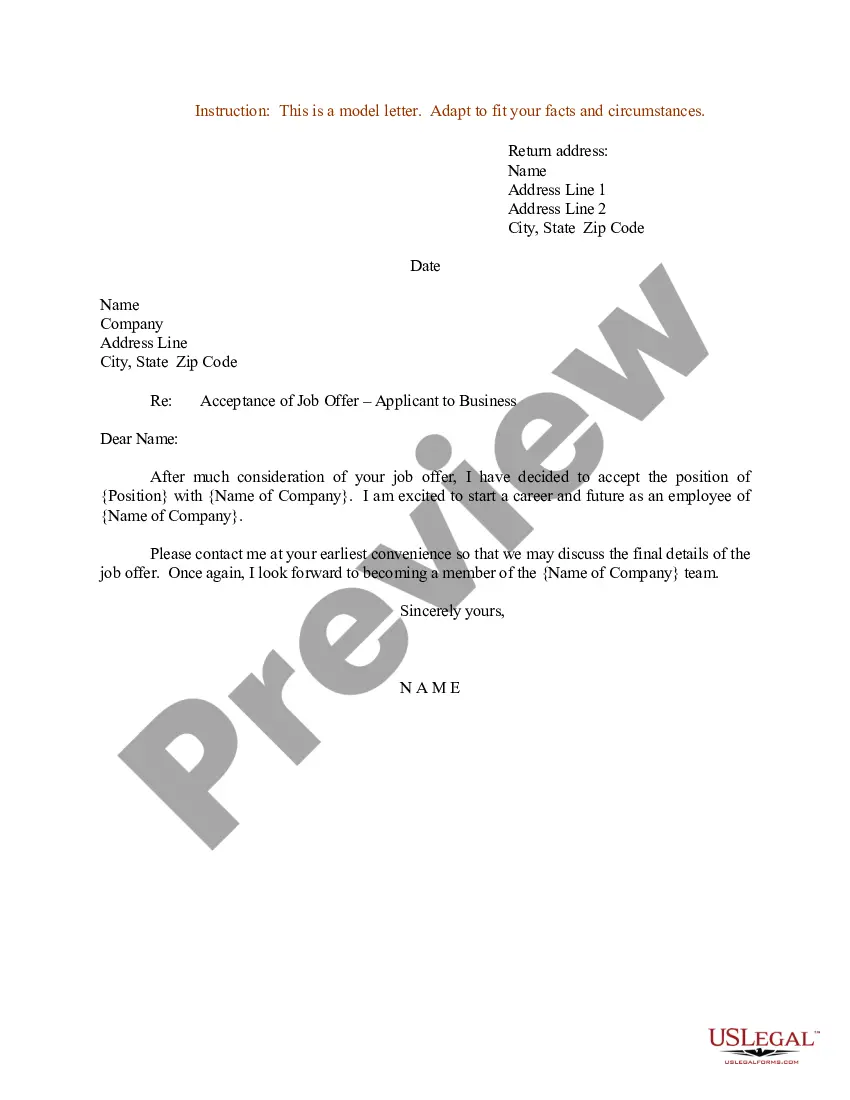
Factoring Agreement Example In Sacramento
Description









Get your form ready online
Our built-in tools help you complete, sign, share, and store your documents in one place.
Make edits, fill in missing information, and update formatting in US Legal Forms—just like you would in MS Word.
Download a copy, print it, send it by email, or mail it via USPS—whatever works best for your next step.
Sign and collect signatures with our SignNow integration. Send to multiple recipients, set reminders, and more. Go Premium to unlock E-Sign.
If this form requires notarization, complete it online through a secure video call—no need to meet a notary in person or wait for an appointment.
We protect your documents and personal data by following strict security and privacy standards.

Make edits, fill in missing information, and update formatting in US Legal Forms—just like you would in MS Word.

Download a copy, print it, send it by email, or mail it via USPS—whatever works best for your next step.

Sign and collect signatures with our SignNow integration. Send to multiple recipients, set reminders, and more. Go Premium to unlock E-Sign.

If this form requires notarization, complete it online through a secure video call—no need to meet a notary in person or wait for an appointment.

We protect your documents and personal data by following strict security and privacy standards.
Looking for another form?








Form popularity
FAQ
With debt factoring, a factoring company buys your outstanding invoices and advances you a percentage of the total amount. For example, a company might advance 90% of a $100,000 invoice, so you receive $90,000 and the remaining 10% is kept in a reserve account.
Factoring is used in several activities of daily life. We know that factoring enables things to be divided into several pieces thus anything that is divided into equal pieces involves the idea of factoring. Another example of factoring is finding dimensions of a specific area like pool, backyard, and many more.
Debt financing includes bank loans, loans from family and friends, government-backed loans such as SBA loans, lines of credit, credit cards, mortgages, and equipment loans.
What is bank factoring? The name, bankfactoring, might suggest that it is the bank that provides factoring services, but this is a simplification. It is not the banks, but actually companies specifically delegated by them to use bank capital, that offer factoring.
In order to qualify for factoring, your company will need to have the following items: Invoices to factor. Creditworthy clients. A completed factoring application – apply now. An accounts receivable aging report. A business bank account. A tax ID number. A form of personal identification.
Another document required for factoring is an accounts receivable aging report. This report lists out unpaid invoices, credit memos, and notes by date. Accounts receivable aging reports may also be referred to as a schedule of accounts receivable or just a schedule.
A factoring relationship involves three parties: (i) a buyer, who is a person or a commercial enterprise to whom the services are supplied on credit, (ii) a seller, who is a commercial enterprise which supplies the services on credit and avails the factoring arrangements, and (iii) a factor, which is a financial ...
FACTORING IN A CONTINUING AGREEMENT - It is an arrangement where a financing entity purchases all of the accounts receivable of a certain entity.