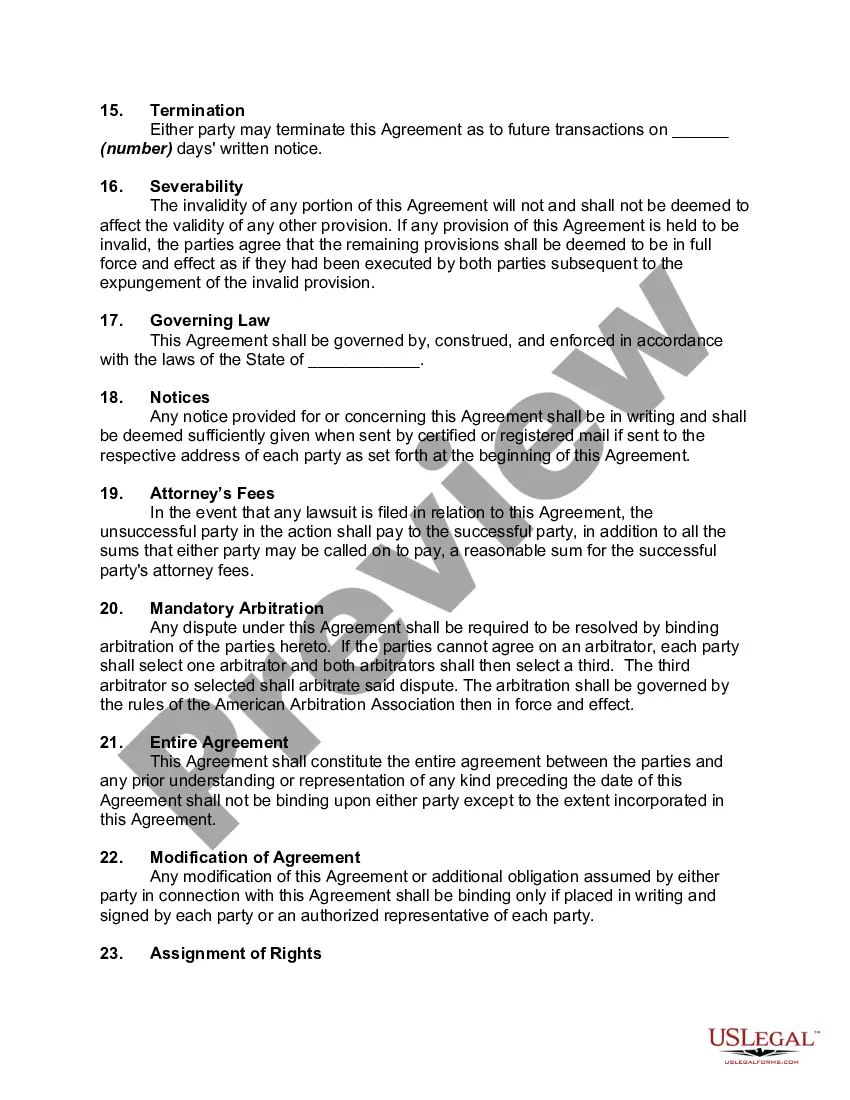
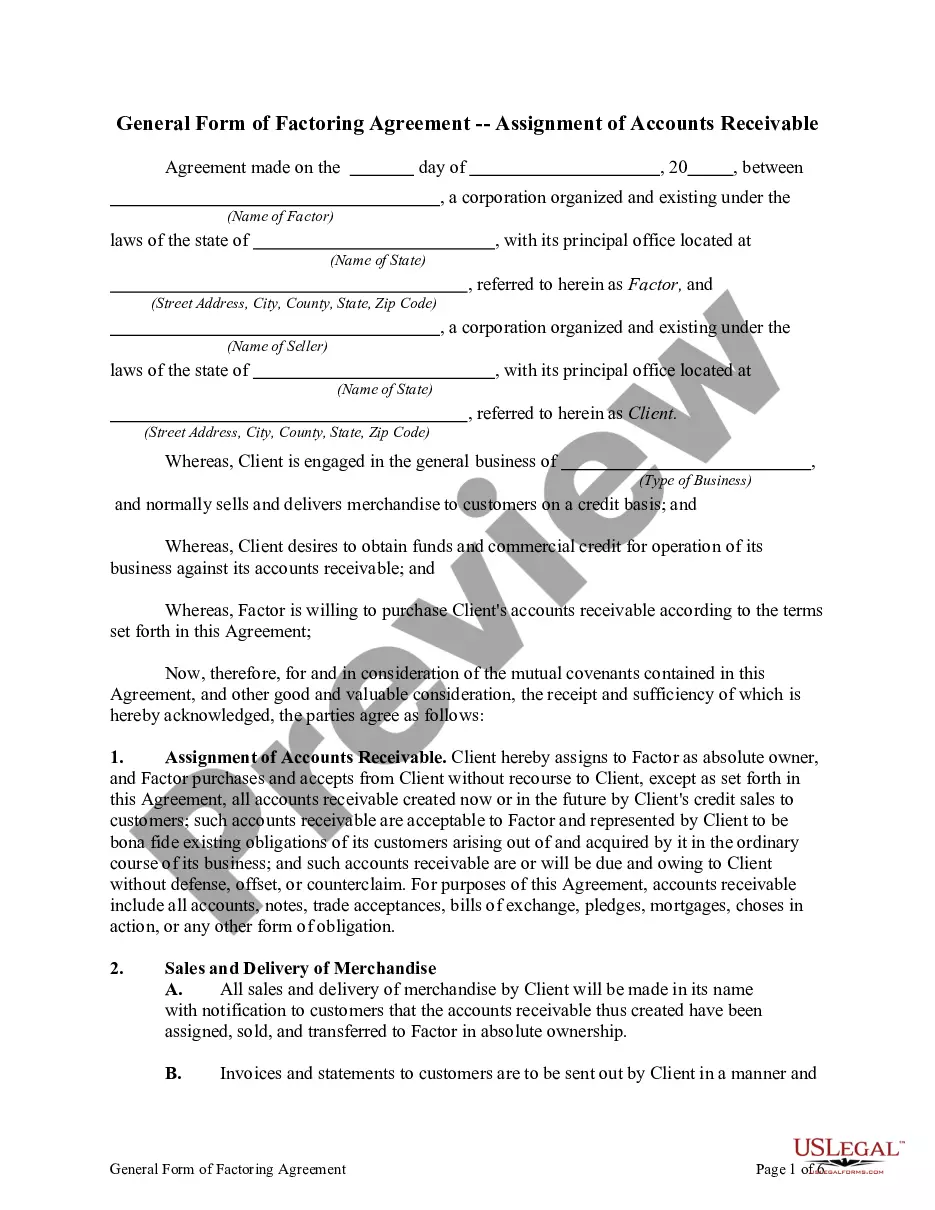
Factoring Agreement Document Without Comments In Miami-Dade
Description

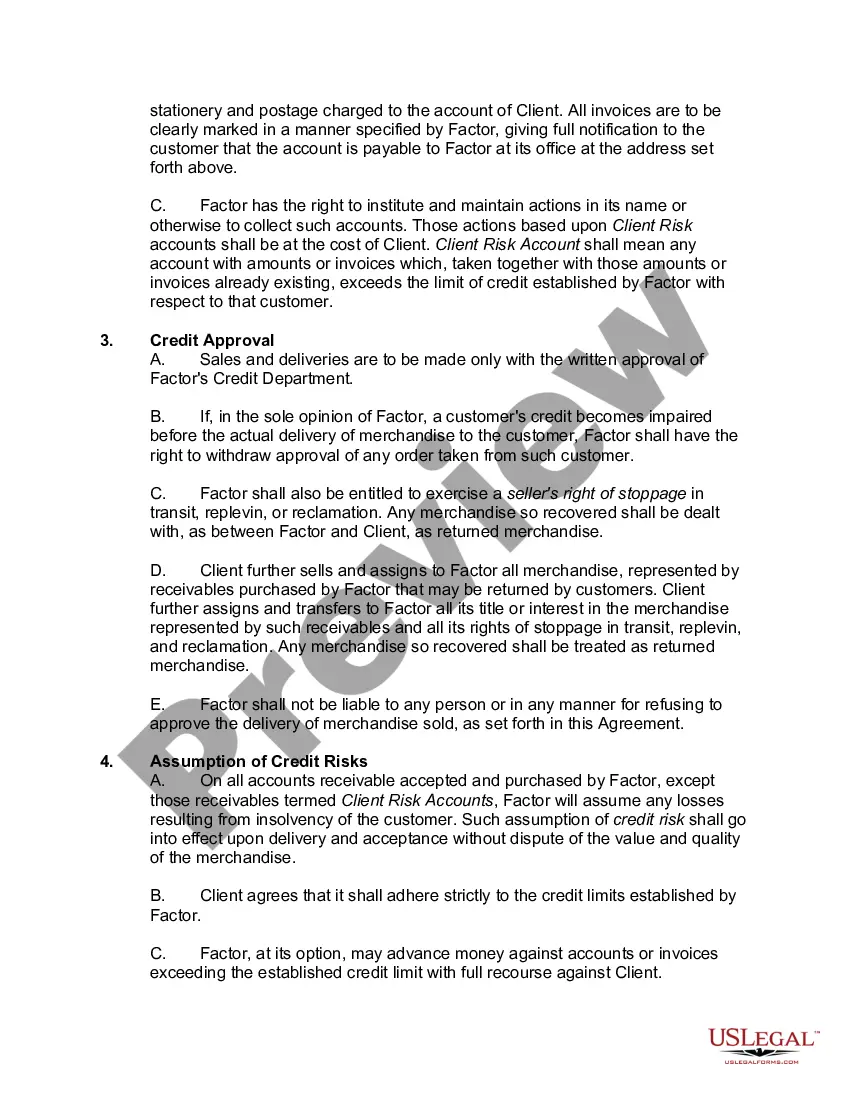
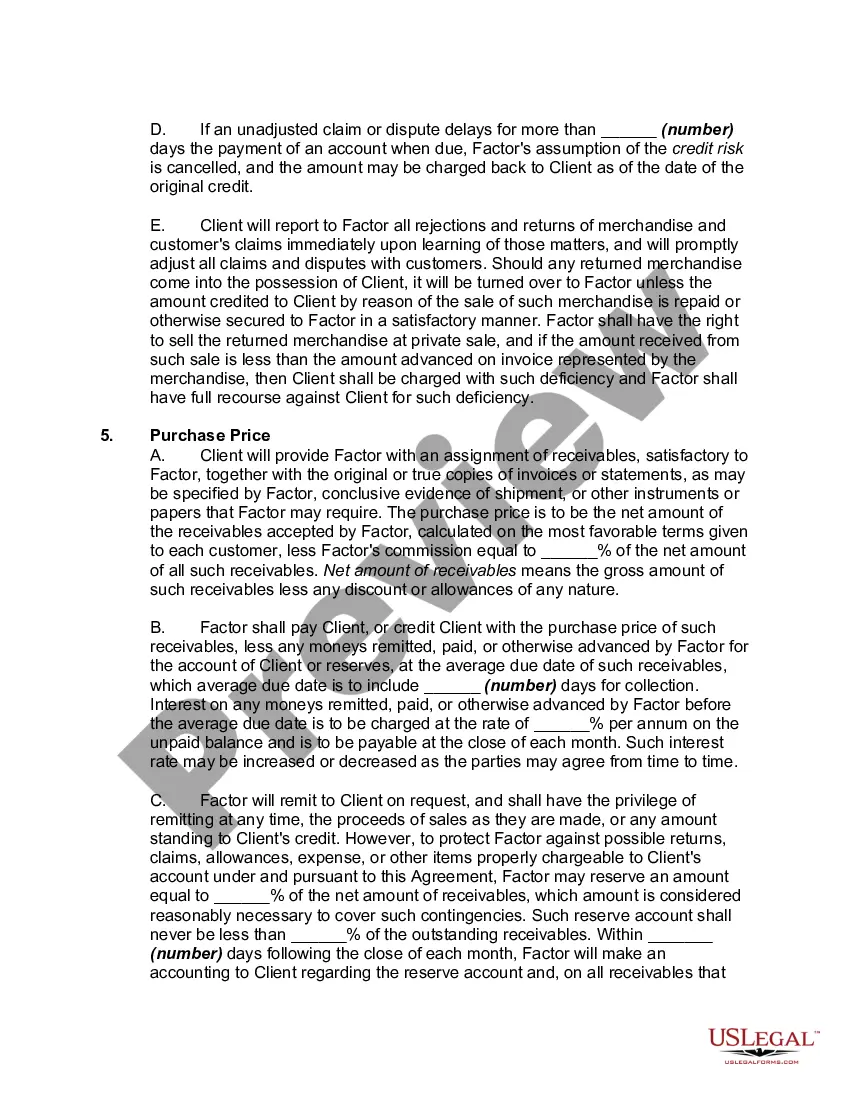
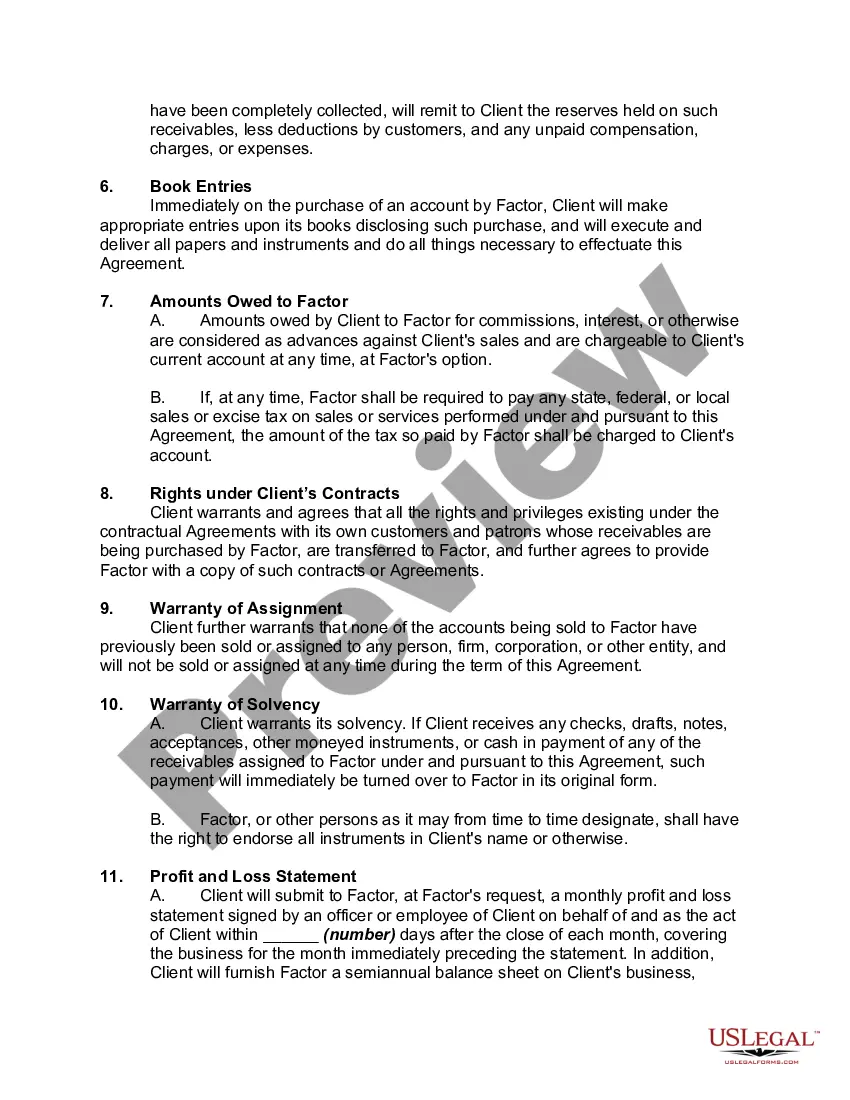
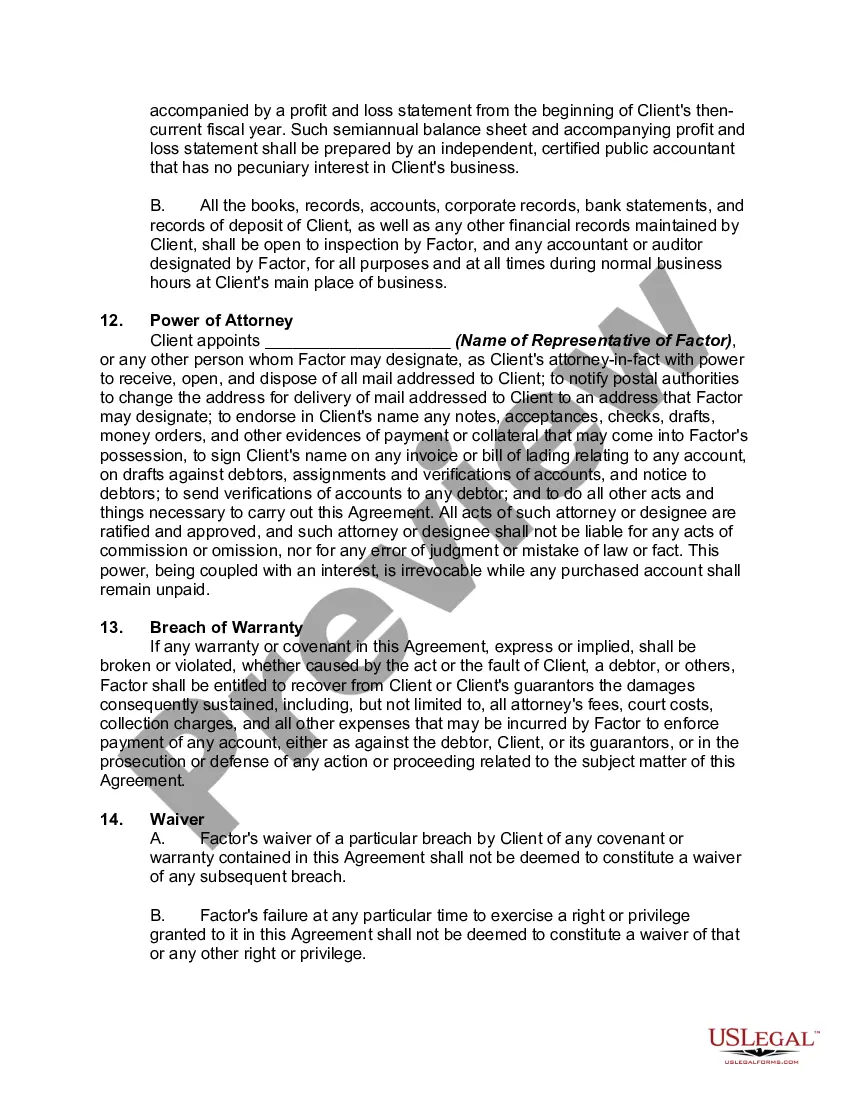


Get your form ready online
Our built-in tools help you complete, sign, share, and store your documents in one place.
Make edits, fill in missing information, and update formatting in US Legal Forms—just like you would in MS Word.
Download a copy, print it, send it by email, or mail it via USPS—whatever works best for your next step.
Sign and collect signatures with our SignNow integration. Send to multiple recipients, set reminders, and more. Go Premium to unlock E-Sign.
If this form requires notarization, complete it online through a secure video call—no need to meet a notary in person or wait for an appointment.
We protect your documents and personal data by following strict security and privacy standards.

Make edits, fill in missing information, and update formatting in US Legal Forms—just like you would in MS Word.

Download a copy, print it, send it by email, or mail it via USPS—whatever works best for your next step.

Sign and collect signatures with our SignNow integration. Send to multiple recipients, set reminders, and more. Go Premium to unlock E-Sign.

If this form requires notarization, complete it online through a secure video call—no need to meet a notary in person or wait for an appointment.

We protect your documents and personal data by following strict security and privacy standards.
Looking for another form?

Form popularity
FAQ
A Notice of Assignment (“NOA”) is a letter sent by the factoring company (“factor”) to your customers (aka “account debtors”) notifying them that the ownership of your accounts receivable, or invoices, has changed hands to the factor, and payments should be made in ance with the instructions provided.
Net operating assets (NOA) are a business's operating assets minus its operating liabilities. NOA is calculated by reformatting the balance sheet so that operating activities are separated from financing activities.
Factoring without recourse means that the risk of accounts receivable being uncollectible transfers from the buyer to the seller. Basically, if an accounts receivable cannot be collected, the seller does not have to reimburse the buyer like they would if the factoring was “with recourse”.
A Notice of Assignment (NOA) is a document that factoring companies send to the end-customers of their clients. This document informs end-customers of the factoring financing relationship. Clients usually have some concerns when they learn that a factor will notify their customers.
Another document required for factoring is an accounts receivable aging report. This report lists out unpaid invoices, credit memos, and notes by date. Accounts receivable aging reports may also be referred to as a schedule of accounts receivable or just a schedule.
Leaving Your Current Factor You need to consider the fees associated with switching before committing to the change. Once you've decided to leave your current factor, you will need to give notice. All factoring companies require written notice to terminate the contract.
Get a Release Letter: Once all obligations are fulfilled, ask for a release letter from the factoring company. This document should state that you have fulfilled all contractual obligations and that the factoring company has no further claim on your invoices or receivables.