Equity Share Agreement With Mexico In Florida
Description






Get your form ready online
Our built-in tools help you complete, sign, share, and store your documents in one place.
Make edits, fill in missing information, and update formatting in US Legal Forms—just like you would in MS Word.
Download a copy, print it, send it by email, or mail it via USPS—whatever works best for your next step.
Sign and collect signatures with our SignNow integration. Send to multiple recipients, set reminders, and more. Go Premium to unlock E-Sign.
If this form requires notarization, complete it online through a secure video call—no need to meet a notary in person or wait for an appointment.
We protect your documents and personal data by following strict security and privacy standards.

Make edits, fill in missing information, and update formatting in US Legal Forms—just like you would in MS Word.

Download a copy, print it, send it by email, or mail it via USPS—whatever works best for your next step.

Sign and collect signatures with our SignNow integration. Send to multiple recipients, set reminders, and more. Go Premium to unlock E-Sign.

If this form requires notarization, complete it online through a secure video call—no need to meet a notary in person or wait for an appointment.

We protect your documents and personal data by following strict security and privacy standards.
Looking for another form?






Form popularity
FAQ
Any business entity formed outside the U.S. is a foreign entity. That foreign entity becomes a foreign partnership if it has two or more owners and at least one of the owners has unlimited liability with respect to the entity's affairs.
A foreign partnership is any partnership (including an entity classified as a partnership) that is not organized under the laws of any state of the United States or the District of Columbia or any partnership that is treated as foreign under the income tax regulations.
Partnerships (Form 1065 U.S. Return of Partnership Income) are able to e-file their business tax return with nonresident partners who do not have an Individual Taxpayer Identification Number (ITIN) or Social Security Number (SSN), provided they have made an application to obtain one of these.
Taxpayers conducting business through foreign partnerships must comply with the U.S. income tax reporting requirements for such partnerships. These reporting requirements may include filing either Form 8865 or Form 1065, or both.
An unincorporated organization with two or more members is generally classified as a partnership for federal tax purposes if its members carry on a trade, business, financial operation, or venture and divide its profits. However, a joint undertaking merely to share expenses is not a partnership.
A foreign person includes a nonresident alien individual, foreign corporation, foreign partnership, foreign trust, foreign estate, and any other person that is not a U.S. person. It also includes a foreign branch of a U.S. financial institution if the foreign branch is a qualified intermediary.
When you draft an employment contract that includes equity incentives, you need to ensure you do the following: Define the equity package. Outline the type of equity, and the number of the shares or options (if relevant). Set out the vesting conditions. Clarify rights, responsibilities, and buyout clauses.
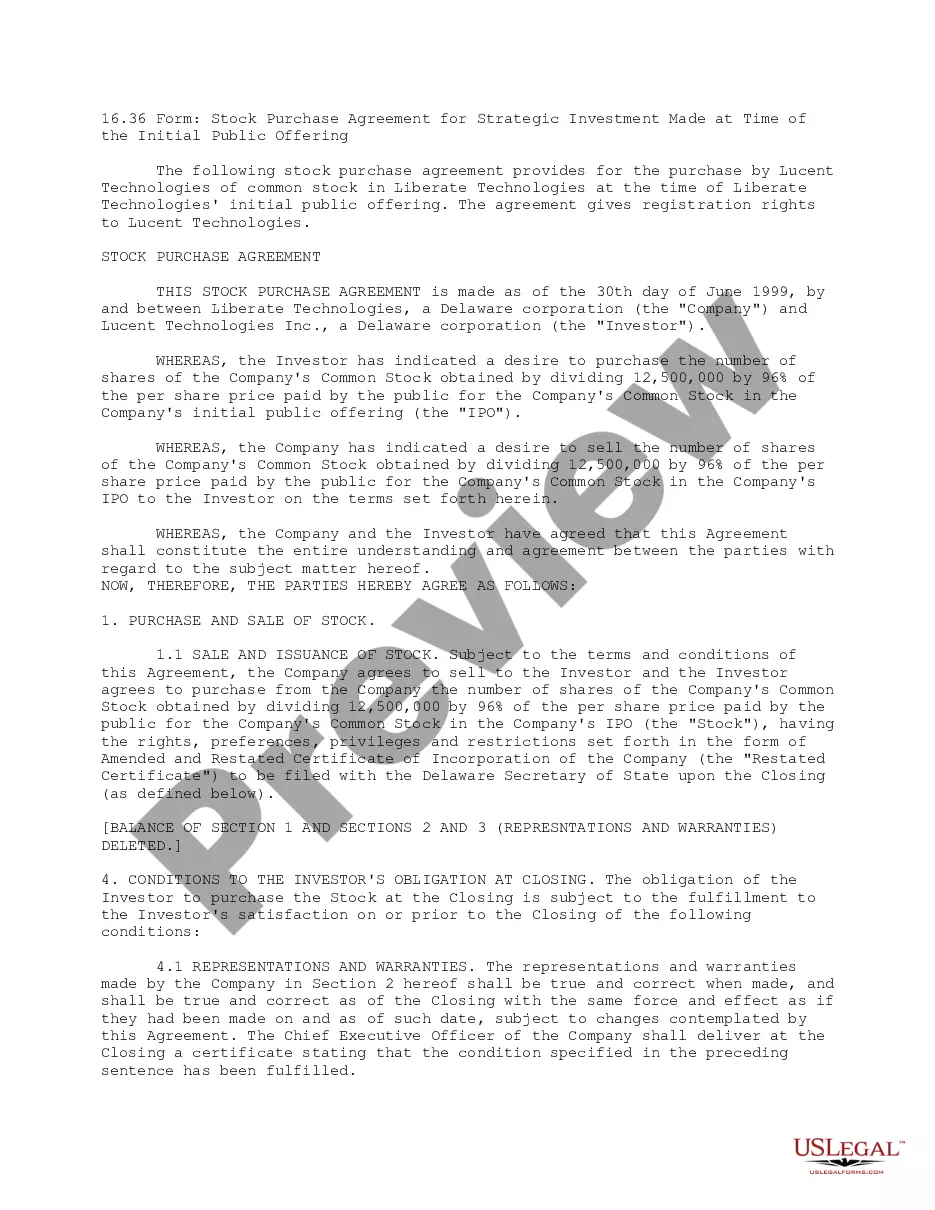
Equity agreements allow entrepreneurs to secure funding for their start-up by giving up a portion of ownership of their company to investors. In short, these arrangements typically involve investors providing capital in exchange for shares of stock which they will hold and potentially sell in the future for a profit.
Let's say your home has an appraised value of $250,000, and you enter into a contract with one of the home equity agreement companies on the market. They agree to provide a lump sum of $25,000 in exchange for 10% of your home's appreciation. If you sell the house for $250,000, the HEA company is entitled to $25,000.
Draft the equity agreement, detailing the company's capital structure, the number of shares to be offered, the rights of the shareholders, and other details. Consult legal and financial advisors to ensure that the equity agreement is in line with all applicable laws and regulations.
