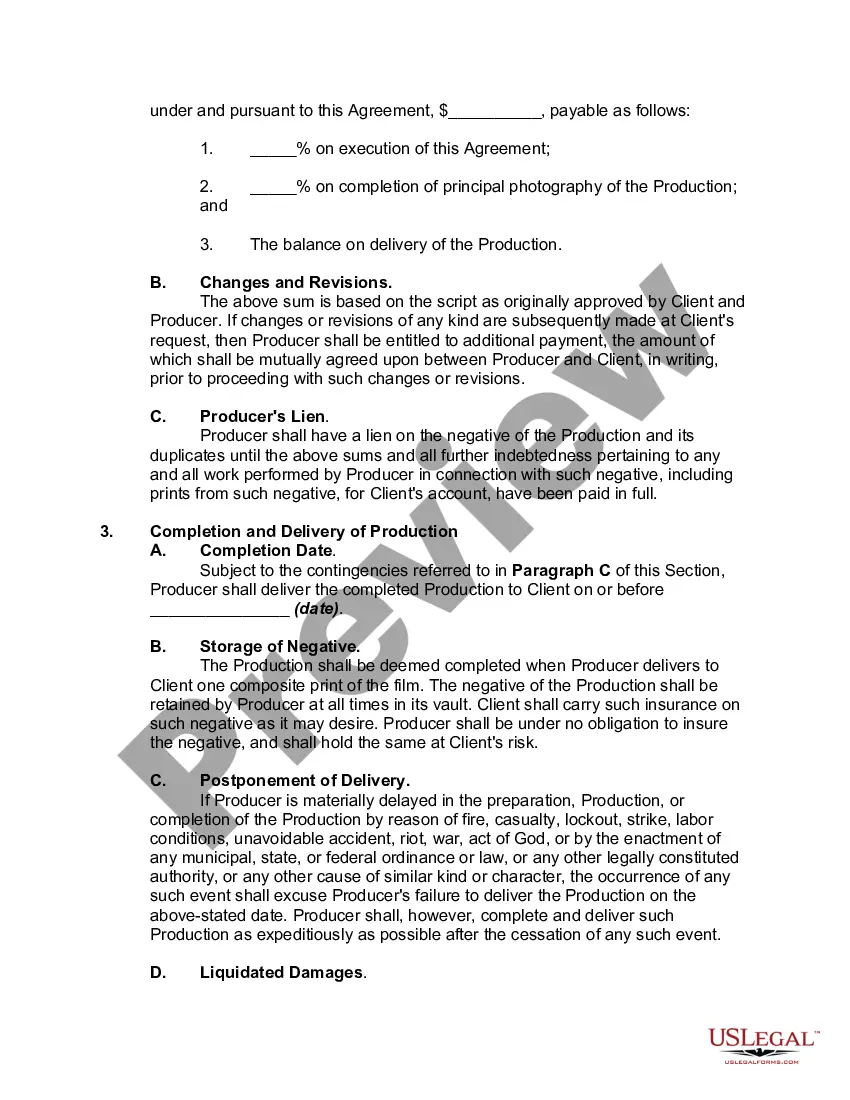
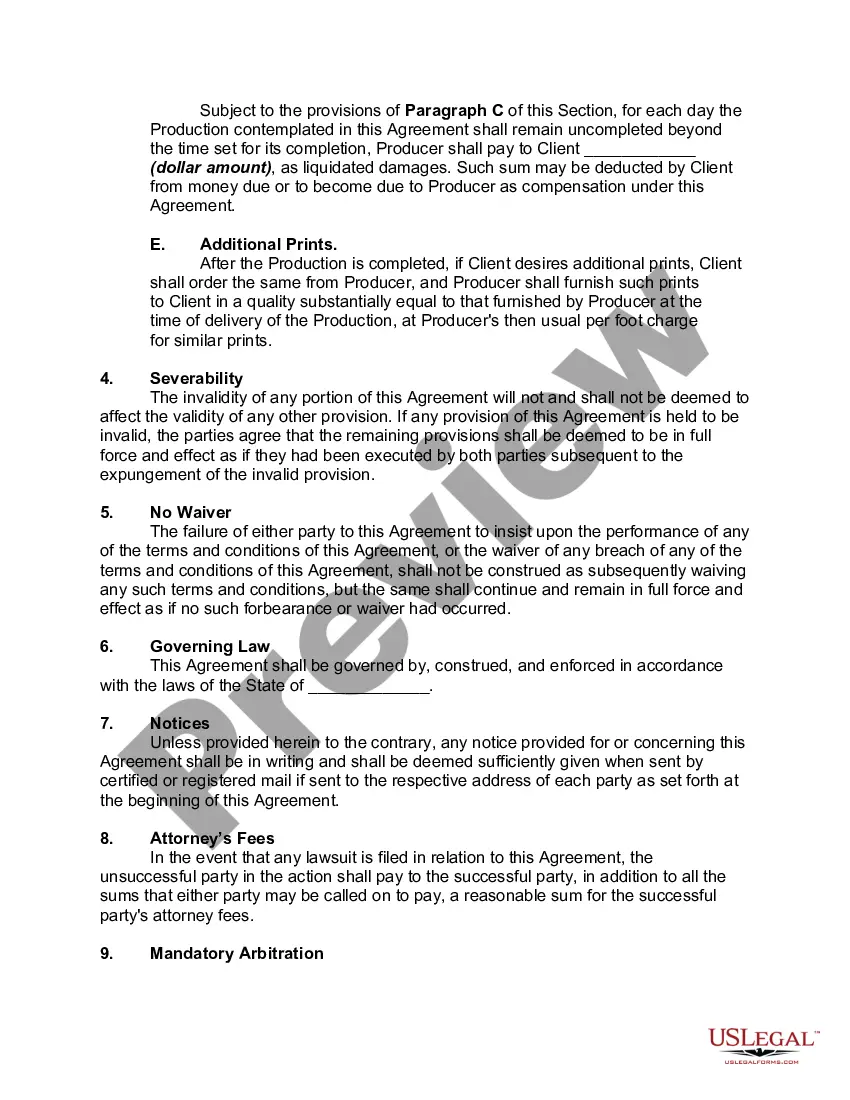
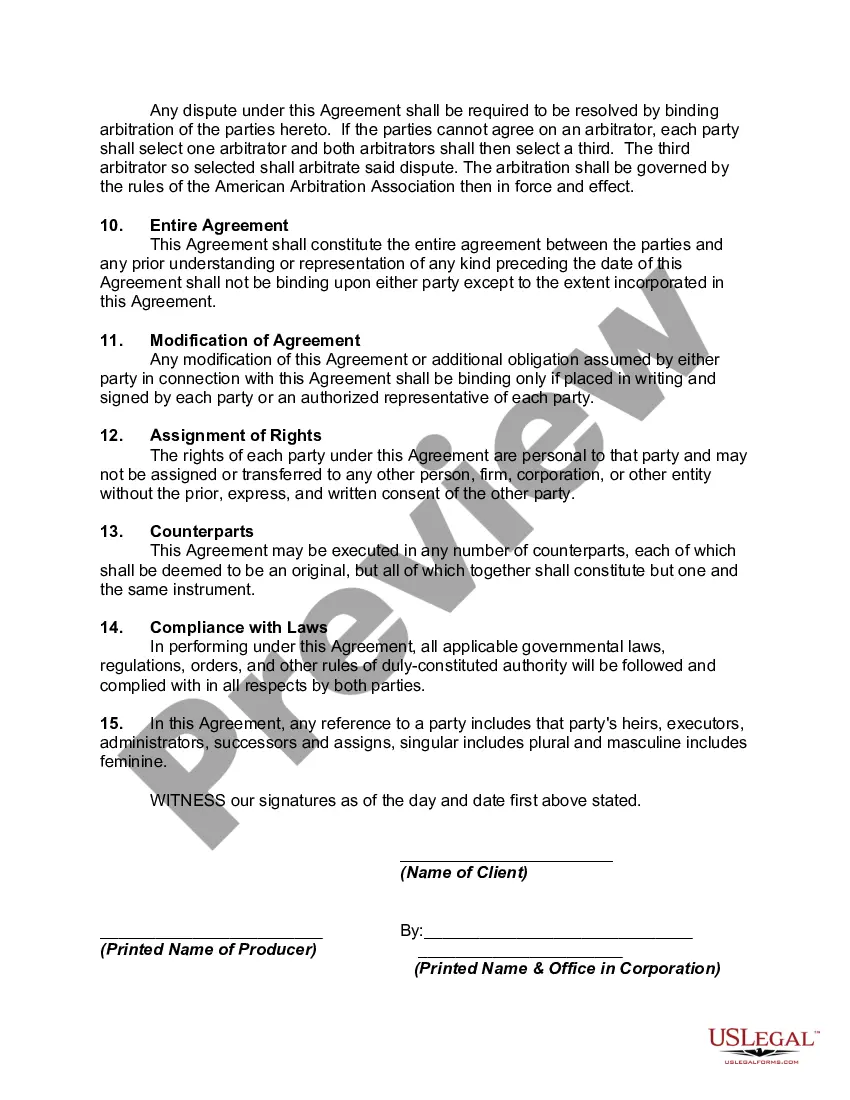
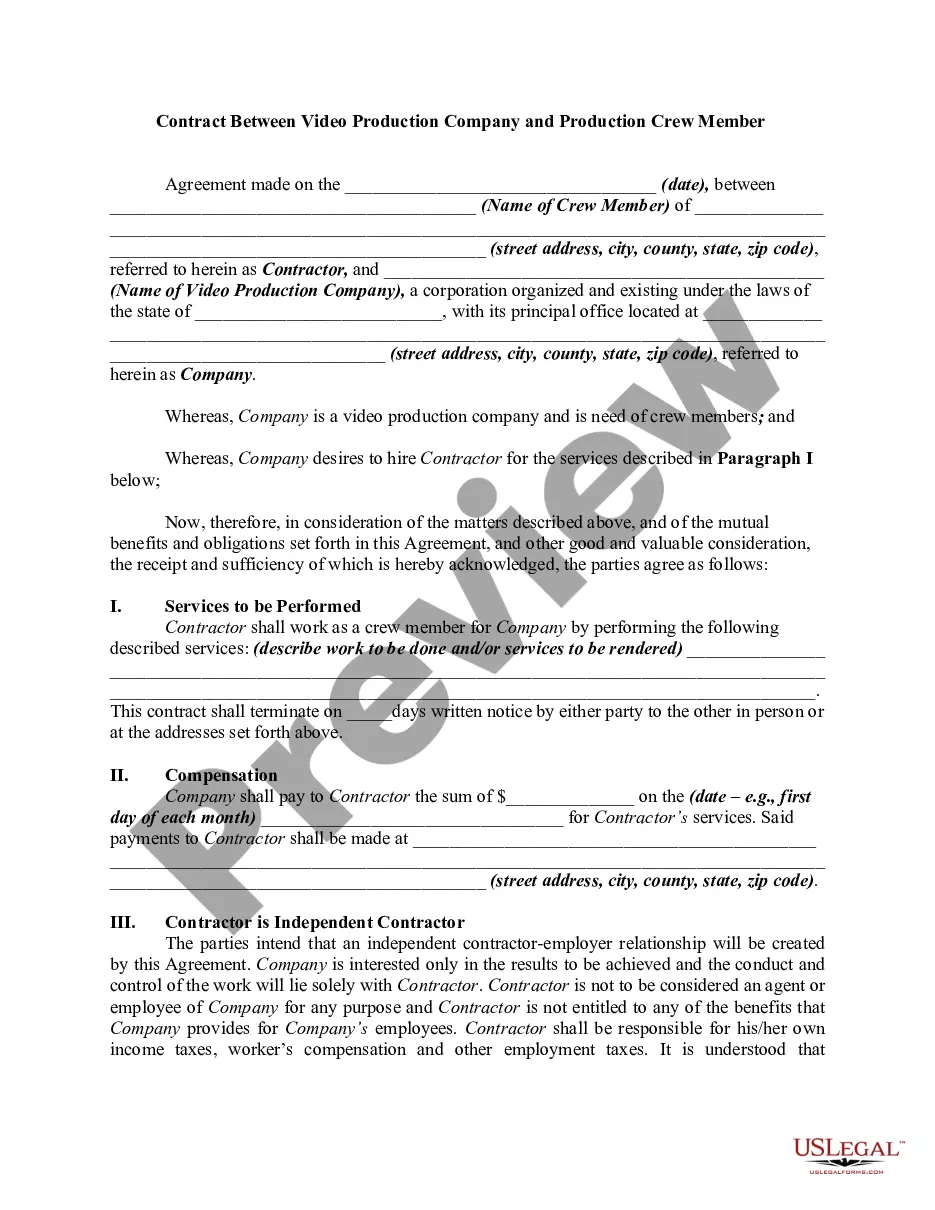
Film Production Contract Template Formation In Texas
Description

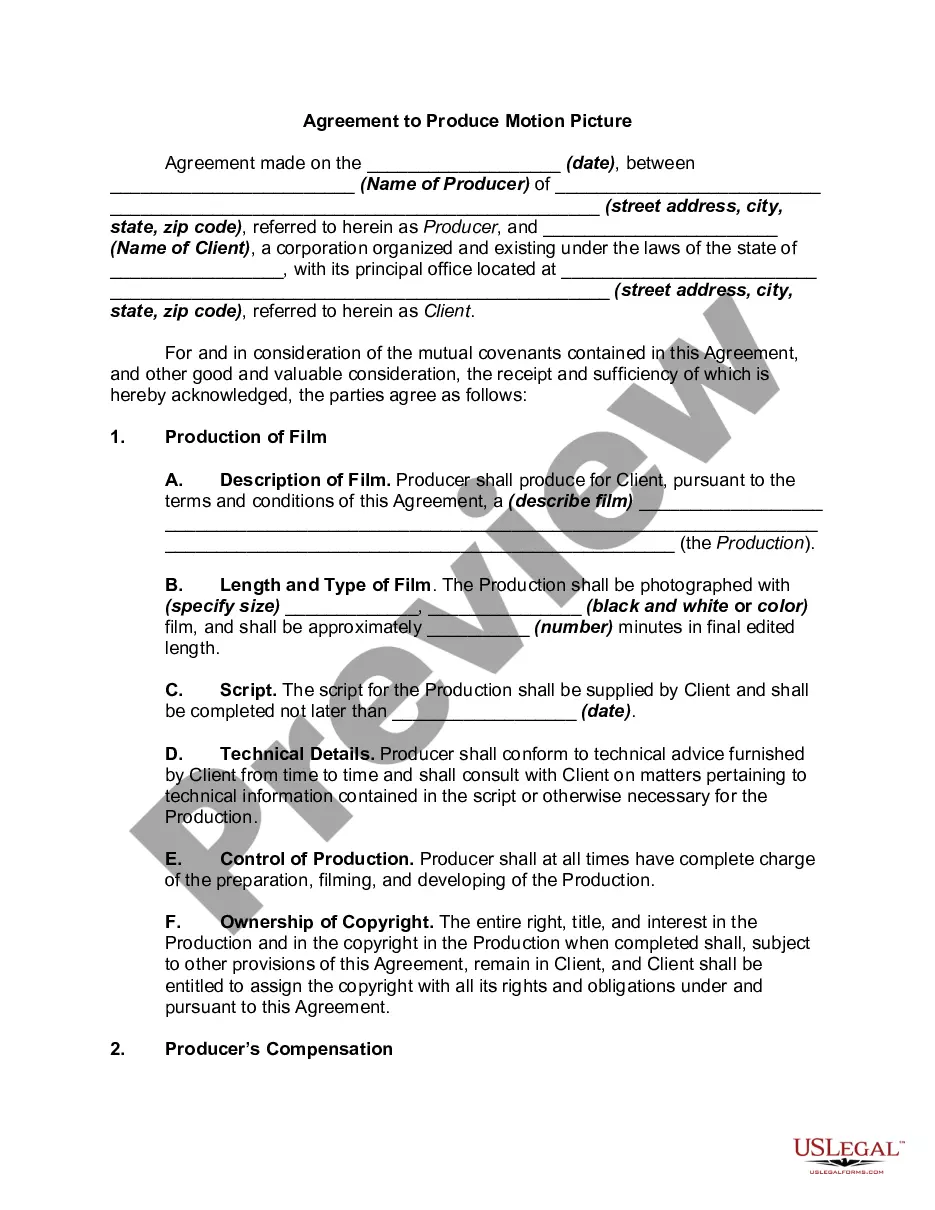
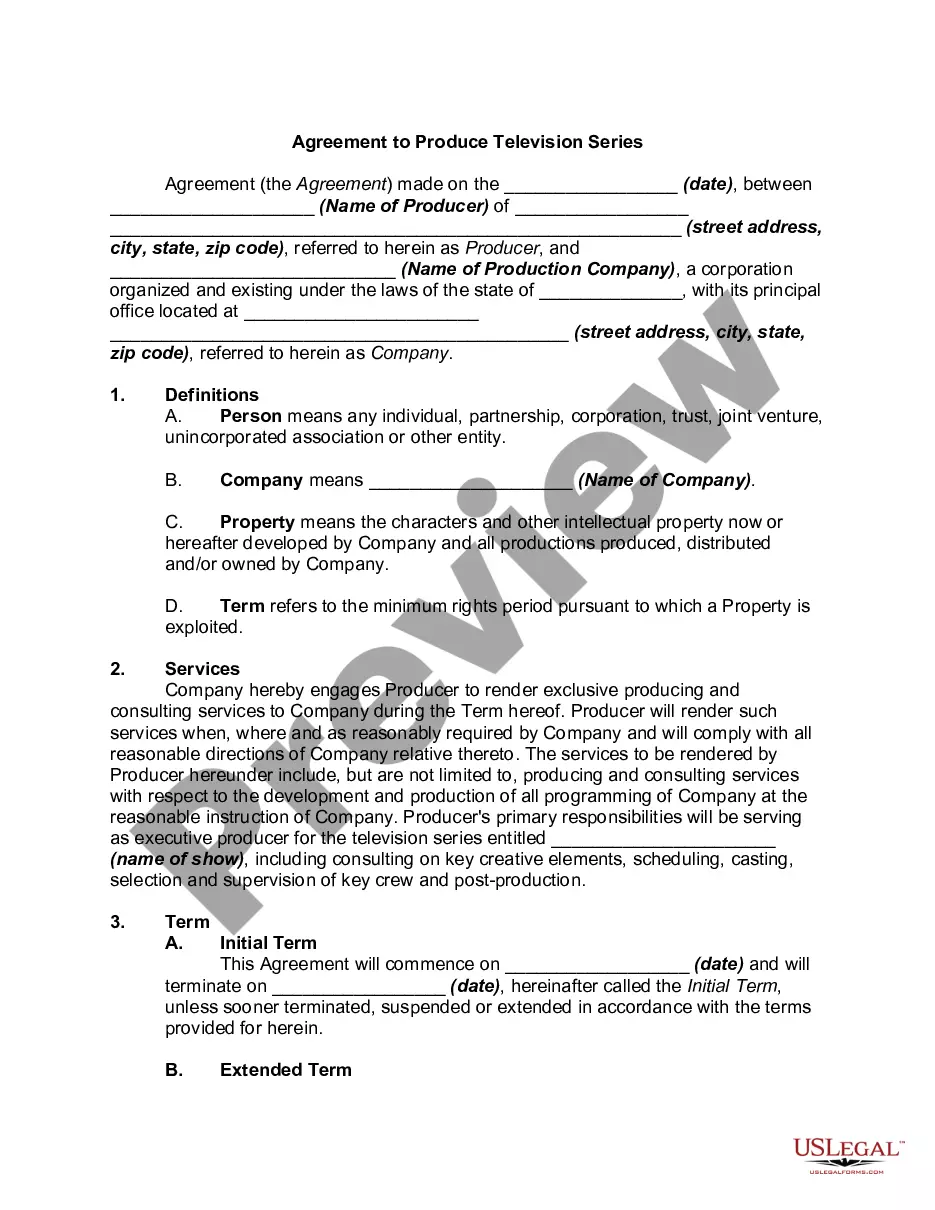
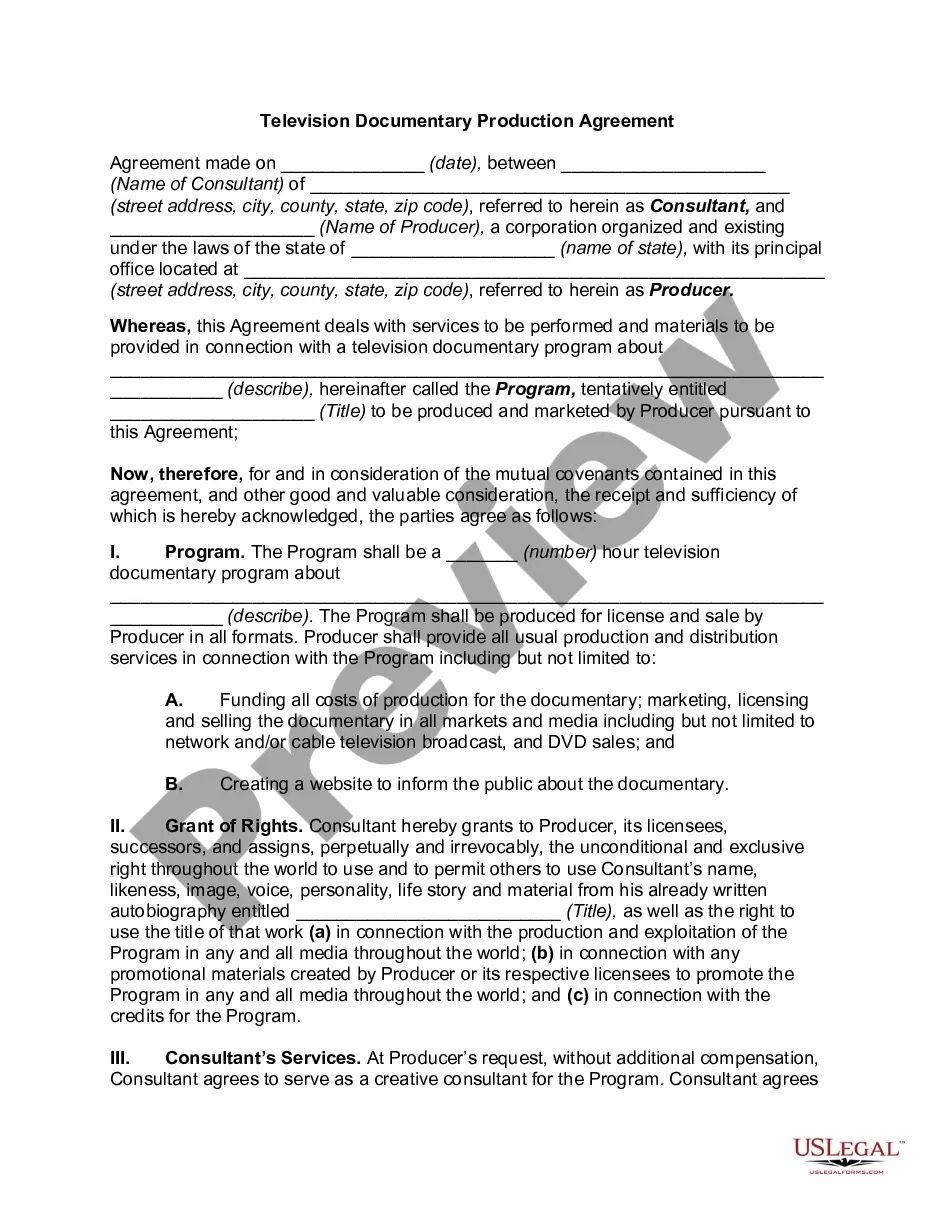
Get your form ready online
Our built-in tools help you complete, sign, share, and store your documents in one place.
Make edits, fill in missing information, and update formatting in US Legal Forms—just like you would in MS Word.
Download a copy, print it, send it by email, or mail it via USPS—whatever works best for your next step.
Sign and collect signatures with our SignNow integration. Send to multiple recipients, set reminders, and more. Go Premium to unlock E-Sign.
If this form requires notarization, complete it online through a secure video call—no need to meet a notary in person or wait for an appointment.
We protect your documents and personal data by following strict security and privacy standards.

Make edits, fill in missing information, and update formatting in US Legal Forms—just like you would in MS Word.

Download a copy, print it, send it by email, or mail it via USPS—whatever works best for your next step.

Sign and collect signatures with our SignNow integration. Send to multiple recipients, set reminders, and more. Go Premium to unlock E-Sign.

If this form requires notarization, complete it online through a secure video call—no need to meet a notary in person or wait for an appointment.

We protect your documents and personal data by following strict security and privacy standards.
Looking for another form?










Form popularity
FAQ
How to write a contract agreement in 7 steps. Determine the type of contract required. Confirm the necessary parties. Choose someone to draft the contract. Write the contract with the proper formatting. Review the written contract with a lawyer. Send the contract agreement for review or revisions.
Sample Movie Production Agreement Description of Project. . Production Specifications. The Project will be produced in color on , using both studio and location recording techniques. Budget. Script. Date of Delivery. Ownership of Rights in Project. Credits. Right to Enter Project in Competitions.
A Production Plan is basically a shotlist and a schedule. It is important to put it on paper and have it at your shoot. Preparing a Production Plan will also help you identify any missing elements in your storyboard. Where and when are good starting points when making your production plan.
Creating a Production Schedule Read Over the Script. Use Breakdown Sheets. Estimate the Length of Production. Under-Schedule Each Day. Keep Your Cast and Crew in Mind. Schedule Difficult Scenes First in Production. Avoid Abruptly Shifting Emotional Gears. Shoot Chronologically Whenever Possible.
Adopting a methodical approach that includes detailed scheduling and following the following steps can make the process easier: Demand analysis. Review of existing assets. Definition of objectives. Development of the preliminary plan. Production sequence planning. Labour Planning. Raw material planning. Monitoring and control.
When it comes to film production, you've got 5 key phases: development, pre-production, production, post-production and distribution. Each stage is centered around a different purpose, with each one leading nicely onto the next. Many films fall at the development and pre-production stages.
Here are the steps for creating a production schedule: Define the project scope and goals. Determine the shooting schedule and locations. Identify the necessary equipment and resources. Assign roles and responsibilities. Establish a timeline and deadlines. Regularly review and update the schedule.
Write the contract in six steps Start with a contract template. Open with the basic information. Describe in detail what you have agreed to. Include a description of how the contract will be ended. Write into the contract which laws apply and how disputes will be resolved. Include space for signatures.
Online Directories: Websites like ProductionHub, Mandy, and FilmFreeway provide listings of production companies. Social Media: Platforms like LinkedIn, Instagram, and Facebook have groups and pages dedicated to filmmakers. Film Schools: Reach out to nearby film schools or universities with film programs.
It is generally recommended that you create a LLC or C-Corp in order to protect yourself and other investors/co-creators from personal liability arising from any movie production venture you are considering.
