Film Contract For Actors In Tarrant
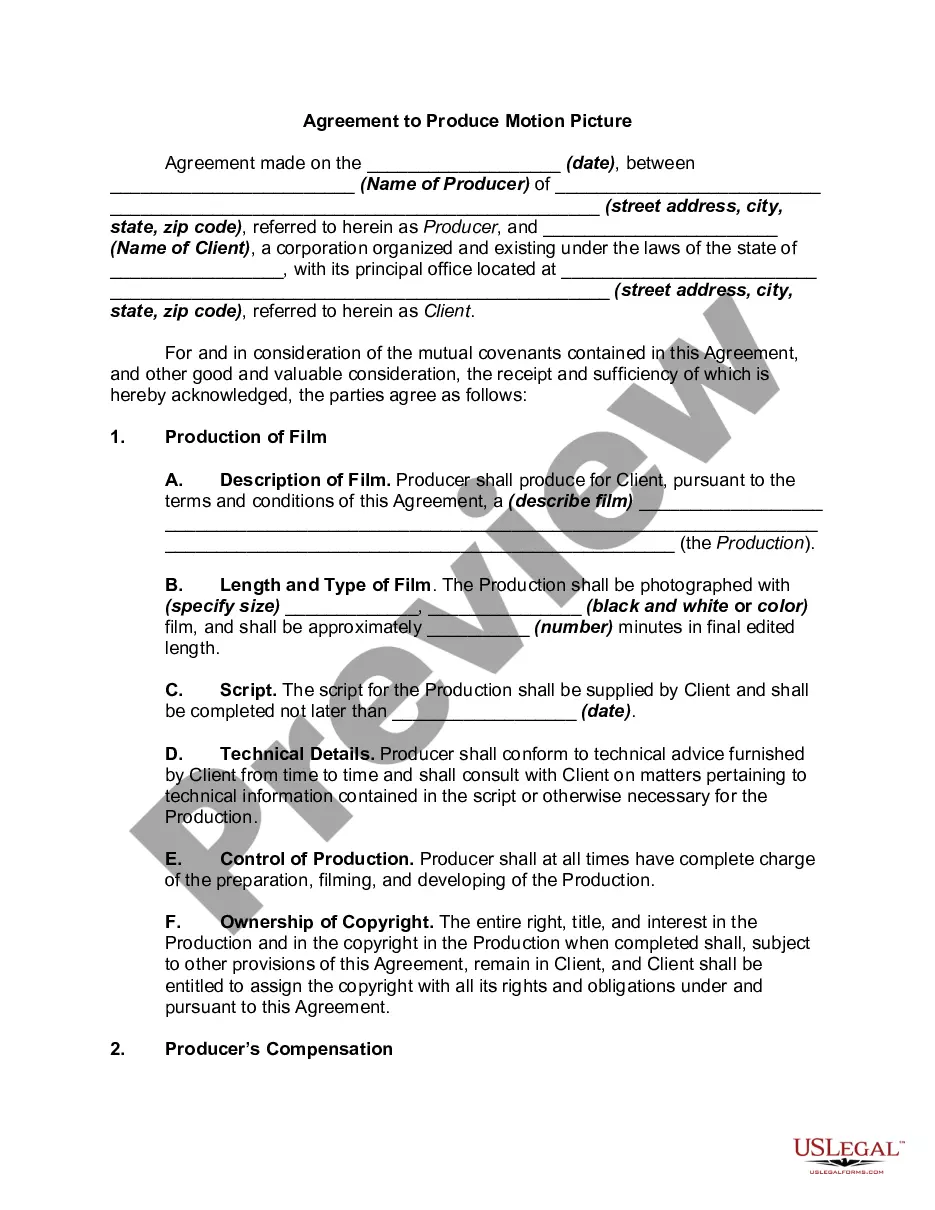
Description

Get your form ready online
Our built-in tools help you complete, sign, share, and store your documents in one place.
Make edits, fill in missing information, and update formatting in US Legal Forms—just like you would in MS Word.
Download a copy, print it, send it by email, or mail it via USPS—whatever works best for your next step.
Sign and collect signatures with our SignNow integration. Send to multiple recipients, set reminders, and more. Go Premium to unlock E-Sign.
If this form requires notarization, complete it online through a secure video call—no need to meet a notary in person or wait for an appointment.
We protect your documents and personal data by following strict security and privacy standards.

Make edits, fill in missing information, and update formatting in US Legal Forms—just like you would in MS Word.

Download a copy, print it, send it by email, or mail it via USPS—whatever works best for your next step.

Sign and collect signatures with our SignNow integration. Send to multiple recipients, set reminders, and more. Go Premium to unlock E-Sign.

If this form requires notarization, complete it online through a secure video call—no need to meet a notary in person or wait for an appointment.

We protect your documents and personal data by following strict security and privacy standards.
Looking for another form?









Form popularity
FAQ
An effective actor contract template should include the following sections: Personal details: Role specifics: Compensation: Duration: Termination clauses: Confidentiality: Health and safety: Intellectual property:
A standard actor contract is a formal agreement between an actor and their client or company. This is a legally binding contract. Thus it protects both parties' rights and includes their terms and conditions for completing an acting assignment.
For most working actors, you start with agents and managers who specialize in getting less-experienced actors auditions for smaller jobs, and then you eventually work your way up to the higher-profile agents and managers, who can get you auditions for bigger jobs, he said.
SAG-AFTRA negotiates contracts that cover the work of media professionals in front of a camera or behind a microphone. Below are links to contract information, rates, FAQs and resources that help members and producers navigate the media and entertainment industries.
The contract should clearly outline the role the actor is expected to perform, including the character's name, description, and any specific obligations or requirements. This ensures both parties are on the same page regarding the actor's responsibilities.
Go to your local community theatre and start volunteering, whether it's building and painting sets, making costumes, working the box office or answering the phone. If the theatre offers a summer program or classes, take some. Audition for any productions.
Go to casting or agent/manager workshops. Email or mail agents on your own, just be creative and innovative. A lot of casting sites have a sign up for agent searches where they blast your headshot and resume out to agencies. Just be innovative and productive and you'll prevail.
Look for reputable acting schools or programs that offer comprehensive training in various acting techniques. As you gain experience, start building a portfolio that showcases your acting abilities. This can include footage from theater performances, monologues, and scenes filmed specifically for your portfolio.
Here are nine steps to help you start gaining experience as an actor: Consider local gigs. Take acting classes. Further your formal education in acting. Join a local theater. Learn about the industry. Create an acting reel. Build your resume. Get a professional headshot.
