Film Production Examples In Salt Lake
Description

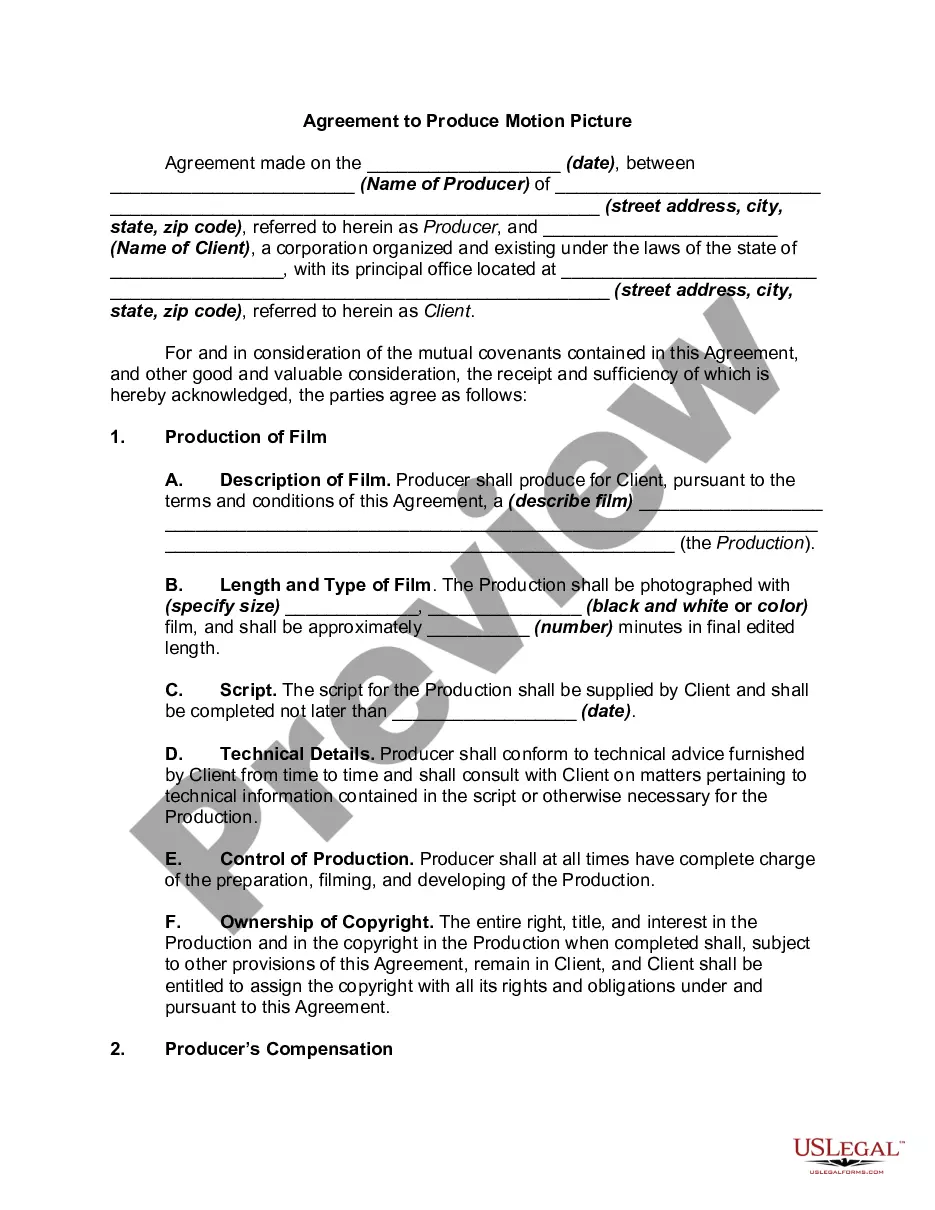
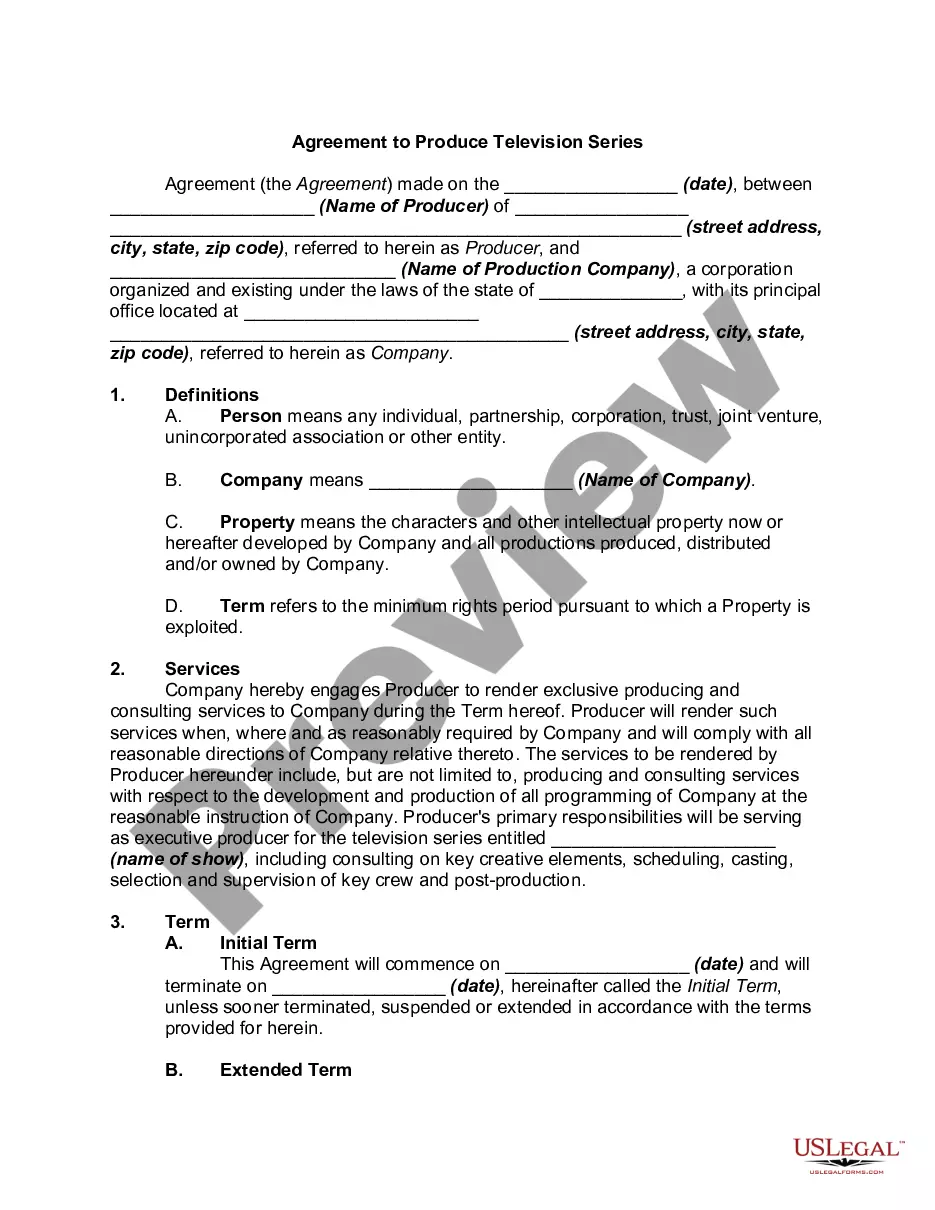
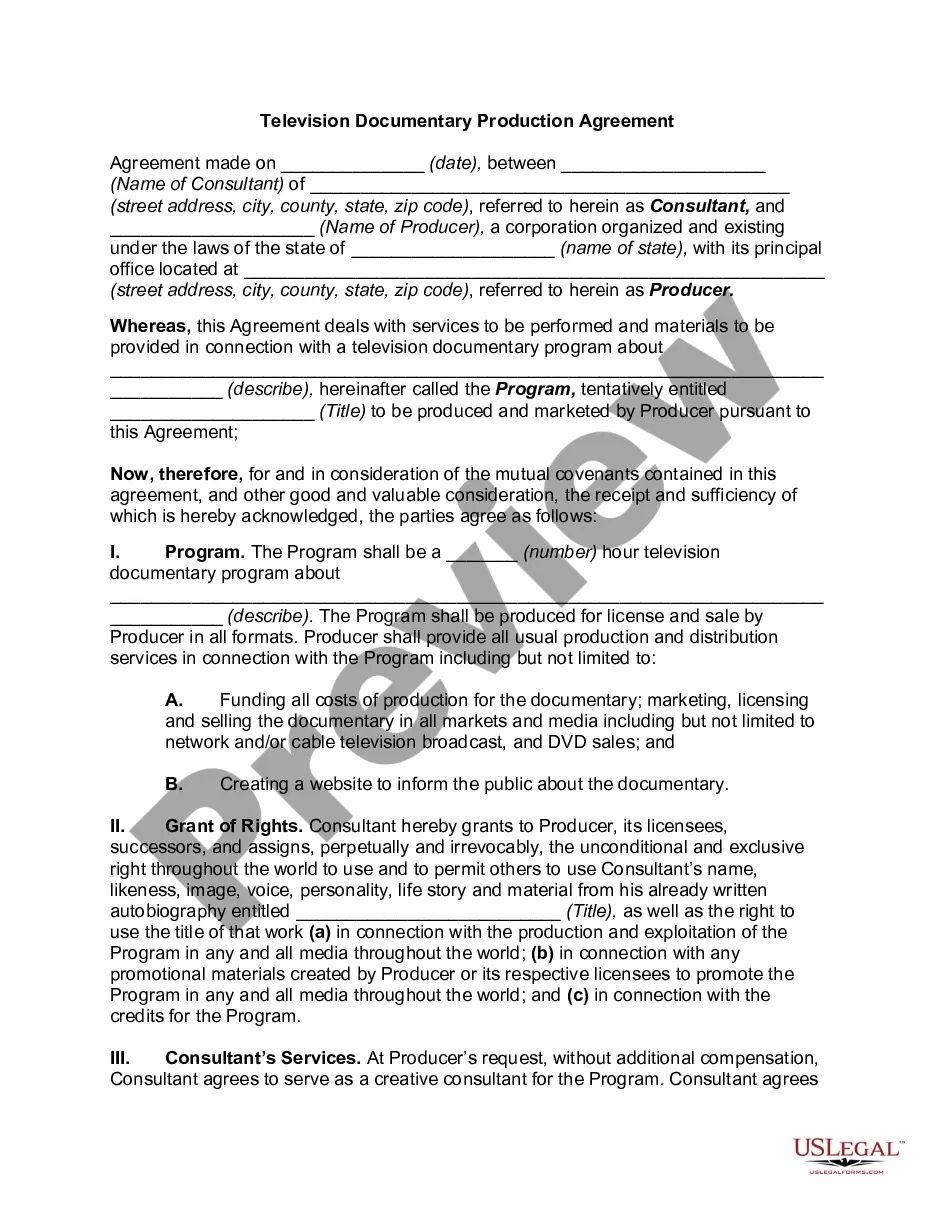
Get your form ready online
Our built-in tools help you complete, sign, share, and store your documents in one place.
Make edits, fill in missing information, and update formatting in US Legal Forms—just like you would in MS Word.
Download a copy, print it, send it by email, or mail it via USPS—whatever works best for your next step.
Sign and collect signatures with our SignNow integration. Send to multiple recipients, set reminders, and more. Go Premium to unlock E-Sign.
If this form requires notarization, complete it online through a secure video call—no need to meet a notary in person or wait for an appointment.
We protect your documents and personal data by following strict security and privacy standards.

Make edits, fill in missing information, and update formatting in US Legal Forms—just like you would in MS Word.

Download a copy, print it, send it by email, or mail it via USPS—whatever works best for your next step.

Sign and collect signatures with our SignNow integration. Send to multiple recipients, set reminders, and more. Go Premium to unlock E-Sign.

If this form requires notarization, complete it online through a secure video call—no need to meet a notary in person or wait for an appointment.

We protect your documents and personal data by following strict security and privacy standards.
Looking for another form?
Form popularity
FAQ
The 5 Steps to Filmmaking Step 1 of Filmmaking: Development Step 2 of Filmmaking: Pre-Production Step 3 of Filmmaking: Production Step 4 of Filmmaking: Post-Production Step 5 of Filmmaking: Distribution
An applicant must provide the following documents: Certificate of Registration/Incorporation of Company. KRA PIN Certificate. Professional Certificate in audio-visual media production/ film making. List of Equipment (for those who own equipment ONLY)
Utah has deep roots in the entertainment industry, with thousands of productions filmed in the state since the 1920s. With a competitive incentive program, trained crews, professional vendors, and over 84,000 square miles of diverse and unique landscapes, it's safe to say that Utah has what you're searching for.
How to become a movie producer Get a qualification in the field. Get an industry internship. Develop your portfolio. Get an entry-level position. Learn to network. Gain experience in low- and mid-level producer roles. Advance to senior producer roles.
How to get into post-production Get educated. There are no education requirements for post-producers, but a degree can still teach you valuable skills. Get experience. Know the stages. Choose a post-production facility. Network. Build a demo reel. Prepare your CV and cover letter. Learn on the job.
To begin with, a lot of filmmakers gain experience by working on independent film sets. The easiest way to find film production work is online. Through film jobs sites, Facebook groups, social media and by promoting yourself online. Technically you don't need experience for entry-level film and tv jobs.
An applicant must provide the following documents: Certificate of Registration/Incorporation of Company. KRA PIN Certificate. Professional Certificate in audio-visual media production/ film making. List of Equipment (for those who own equipment ONLY)
Incentives. Utah's competitive incentive program offers a fully refundable tax credit of up to 25% on in-state spend, which helps you cut production costs without sacrificing quality.
It might come as no surprise that the home of Hollywood is the setting for most movies, with 543 films shot in Los Angeles.
