Contract Template For Video Production In Phoenix
Description

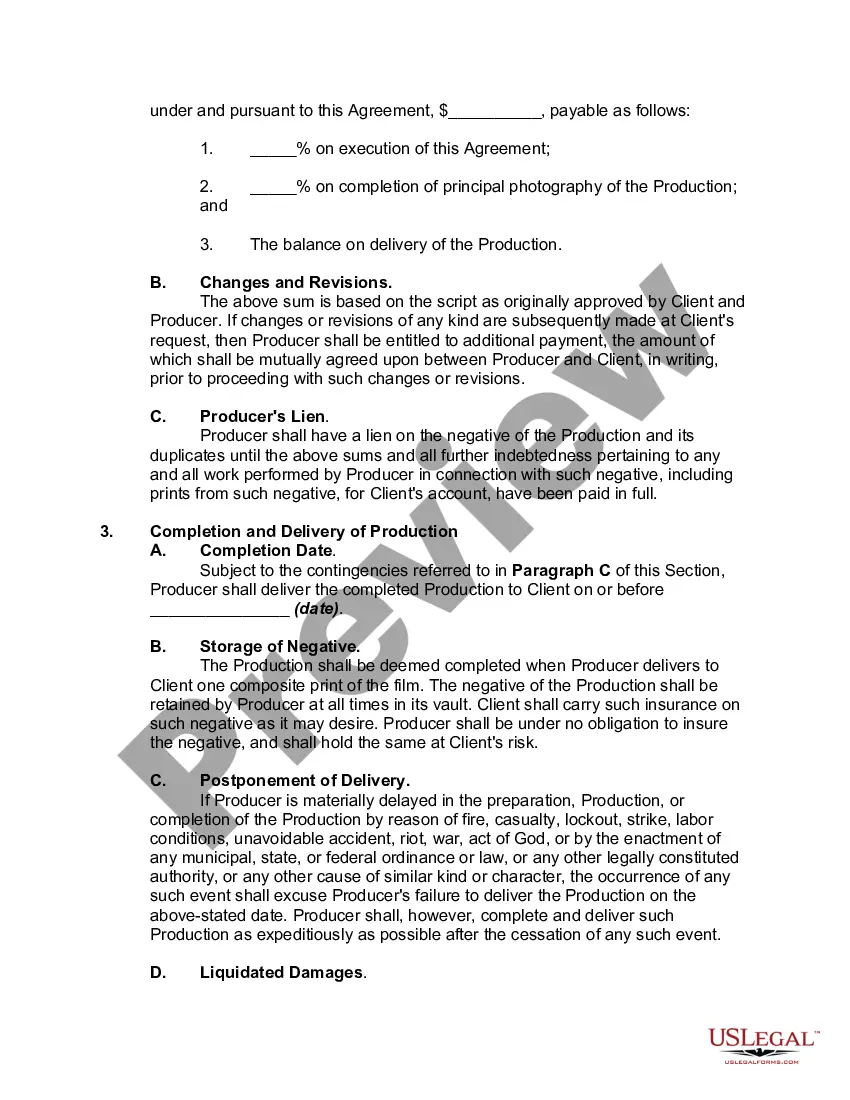
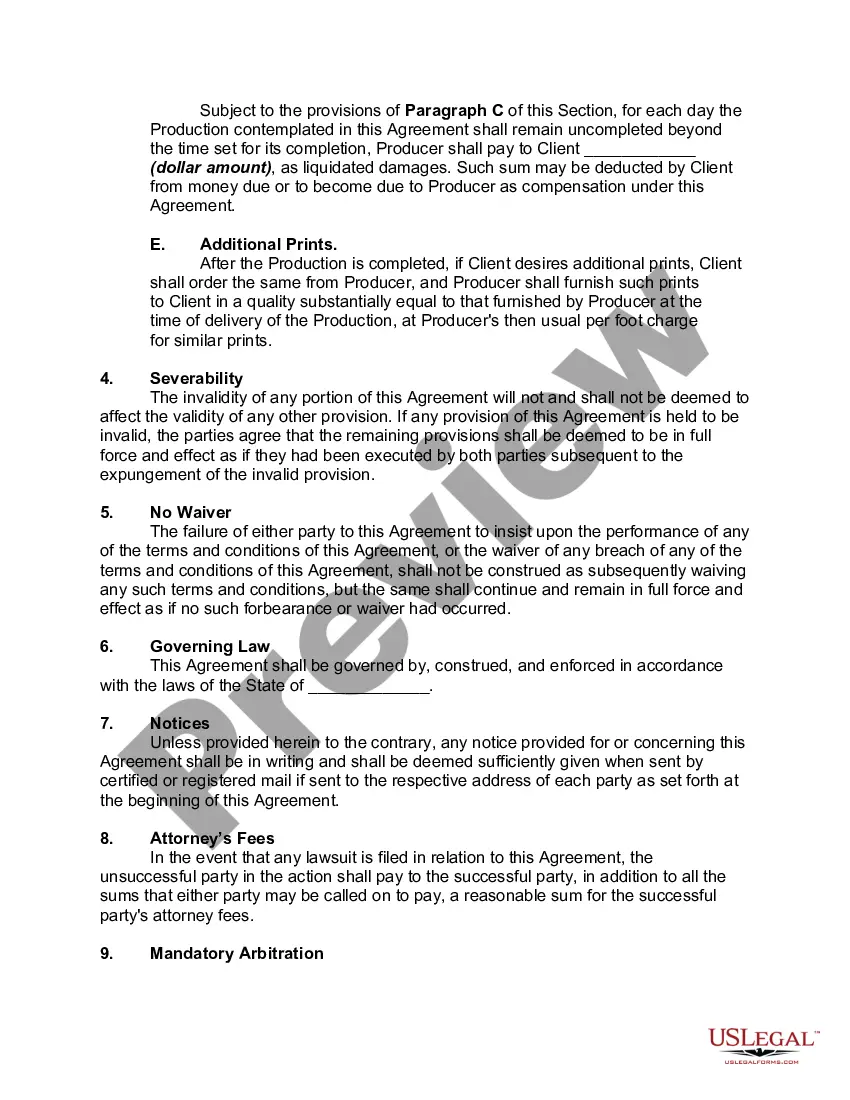
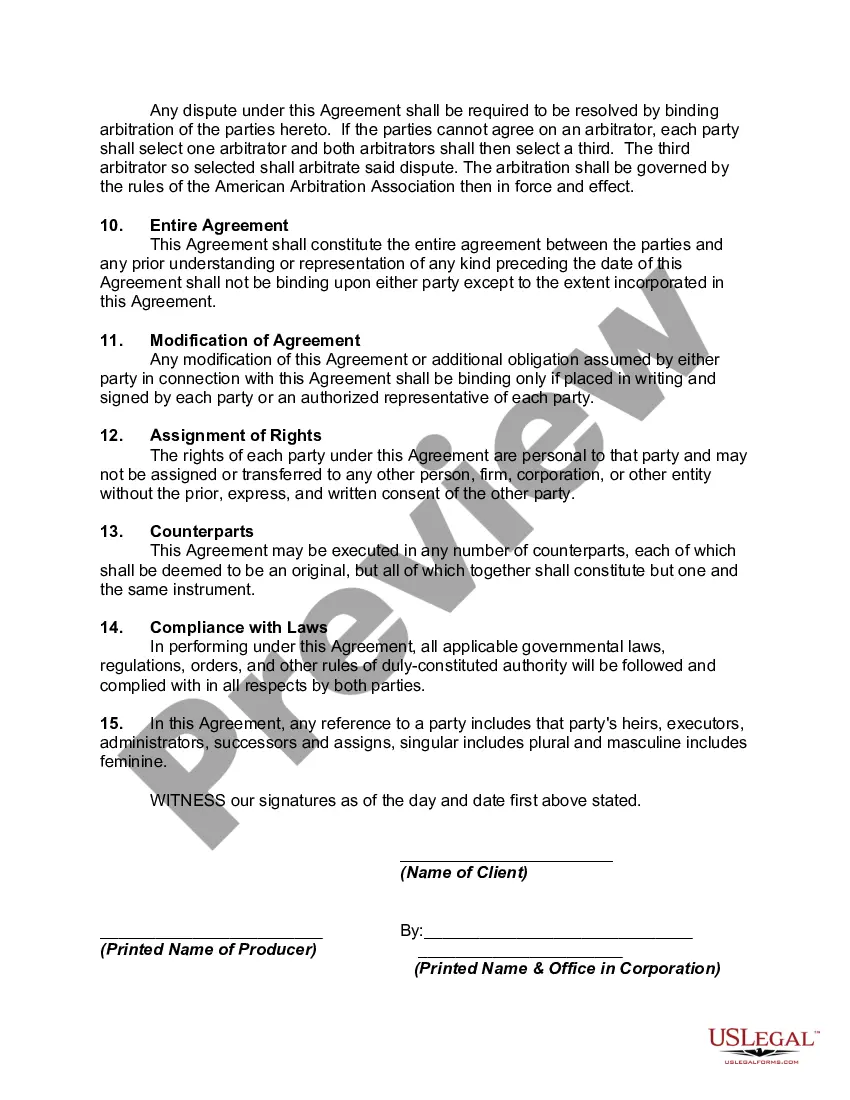
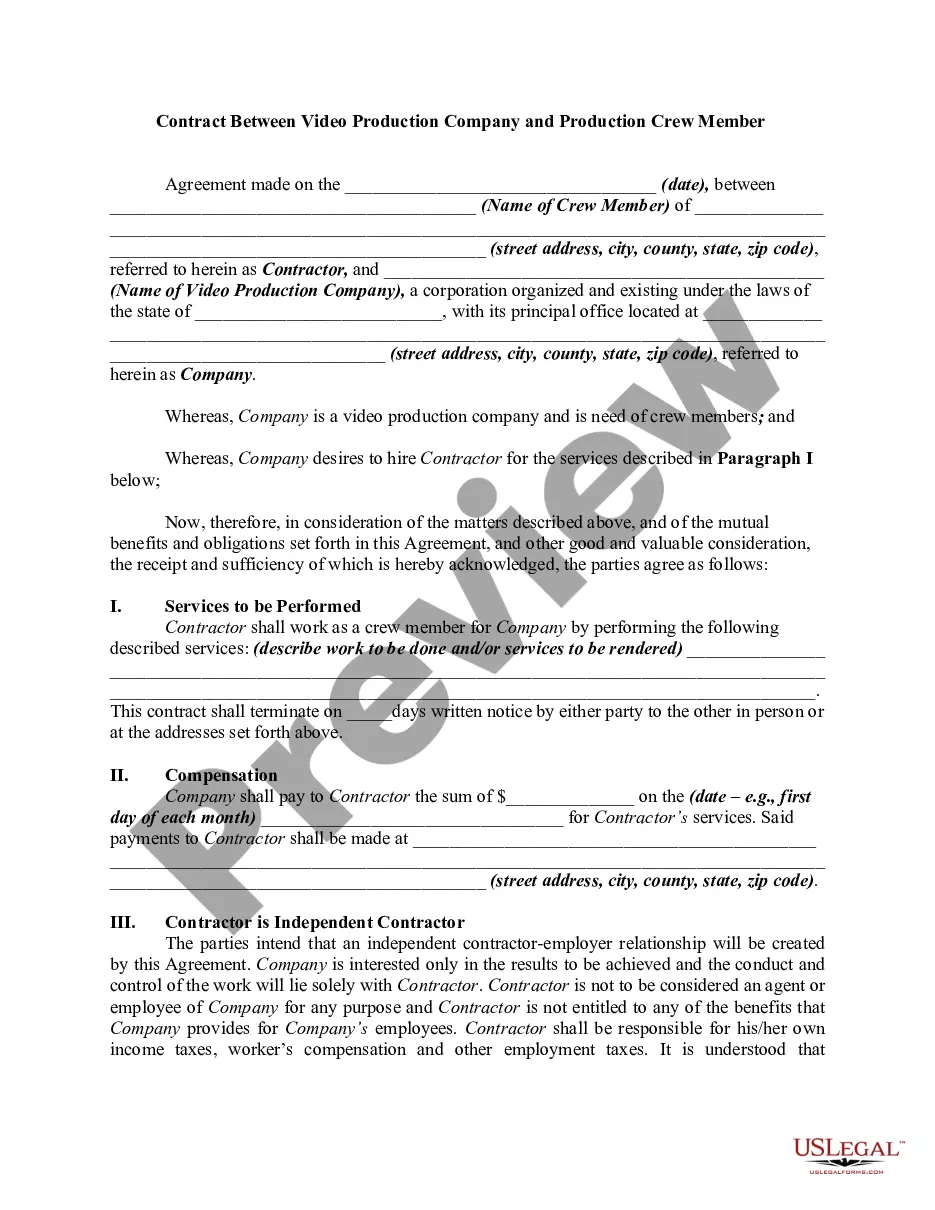
Get your form ready online
Our built-in tools help you complete, sign, share, and store your documents in one place.
Make edits, fill in missing information, and update formatting in US Legal Forms—just like you would in MS Word.
Download a copy, print it, send it by email, or mail it via USPS—whatever works best for your next step.
Sign and collect signatures with our SignNow integration. Send to multiple recipients, set reminders, and more. Go Premium to unlock E-Sign.
If this form requires notarization, complete it online through a secure video call—no need to meet a notary in person or wait for an appointment.
We protect your documents and personal data by following strict security and privacy standards.

Make edits, fill in missing information, and update formatting in US Legal Forms—just like you would in MS Word.

Download a copy, print it, send it by email, or mail it via USPS—whatever works best for your next step.

Sign and collect signatures with our SignNow integration. Send to multiple recipients, set reminders, and more. Go Premium to unlock E-Sign.

If this form requires notarization, complete it online through a secure video call—no need to meet a notary in person or wait for an appointment.

We protect your documents and personal data by following strict security and privacy standards.
Looking for another form?








Form popularity
FAQ
Video Production Checklist: How to Plan a Video Shoot Define Your Goals. Establish exactly what your video hopes to achieve. Identify Your Audience. Develop Your Message. Establish a Budget. Plan Distribution Channels. Select the Type of Video. Storyboard Your Concept. Write Your Script.
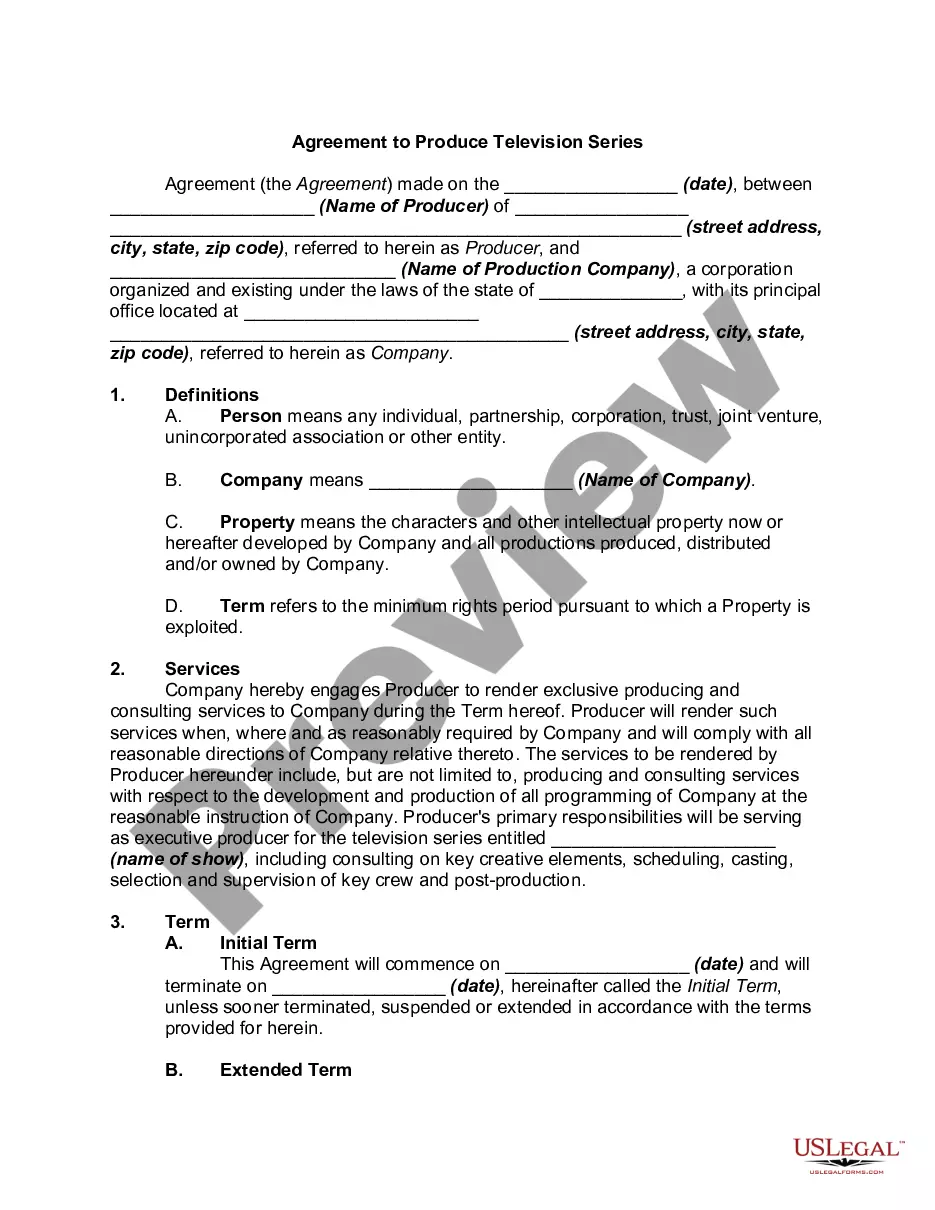
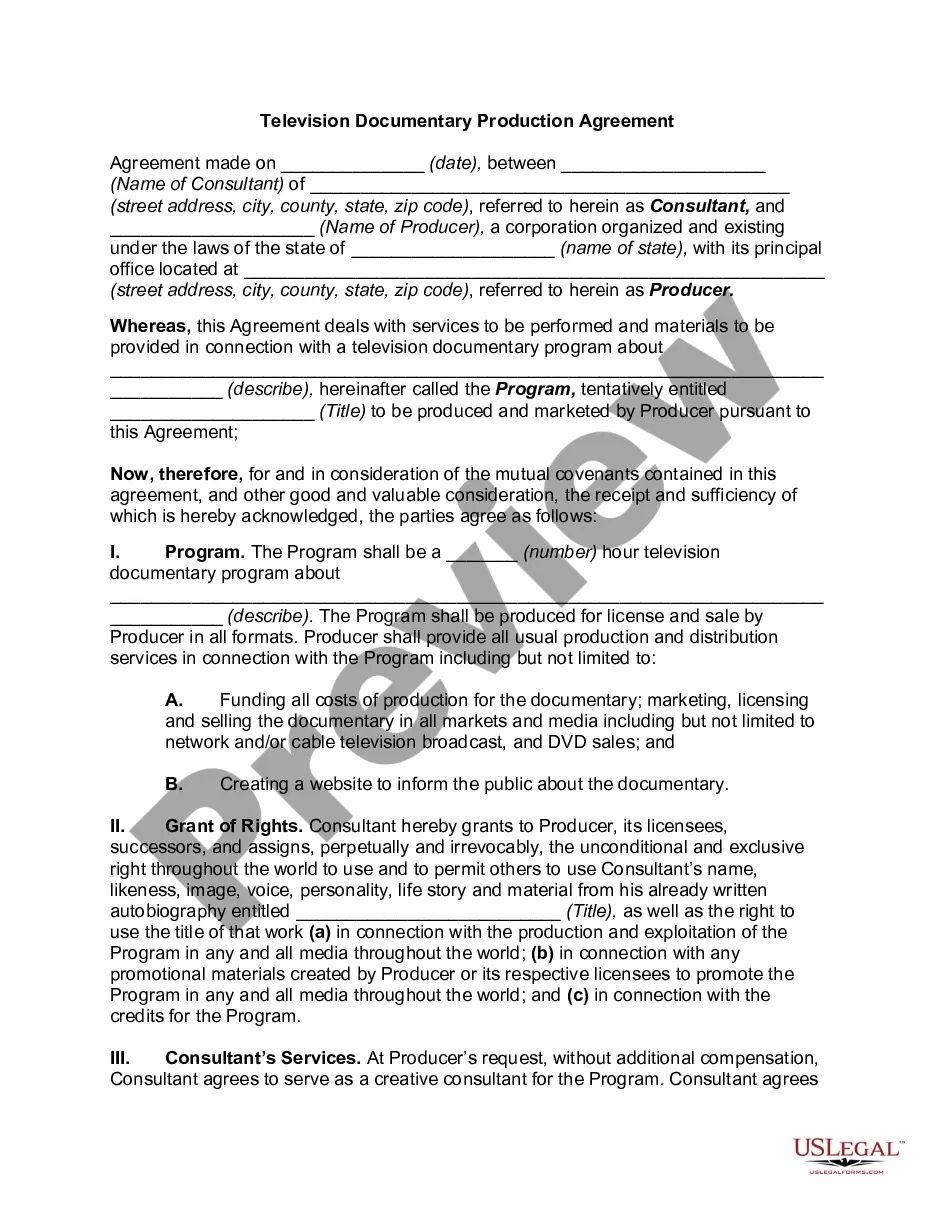
Sample Movie Production Agreement Description of Project. . Production Specifications. The Project will be produced in color on , using both studio and location recording techniques. Budget. Script. Date of Delivery. Ownership of Rights in Project. Credits. Right to Enter Project in Competitions.
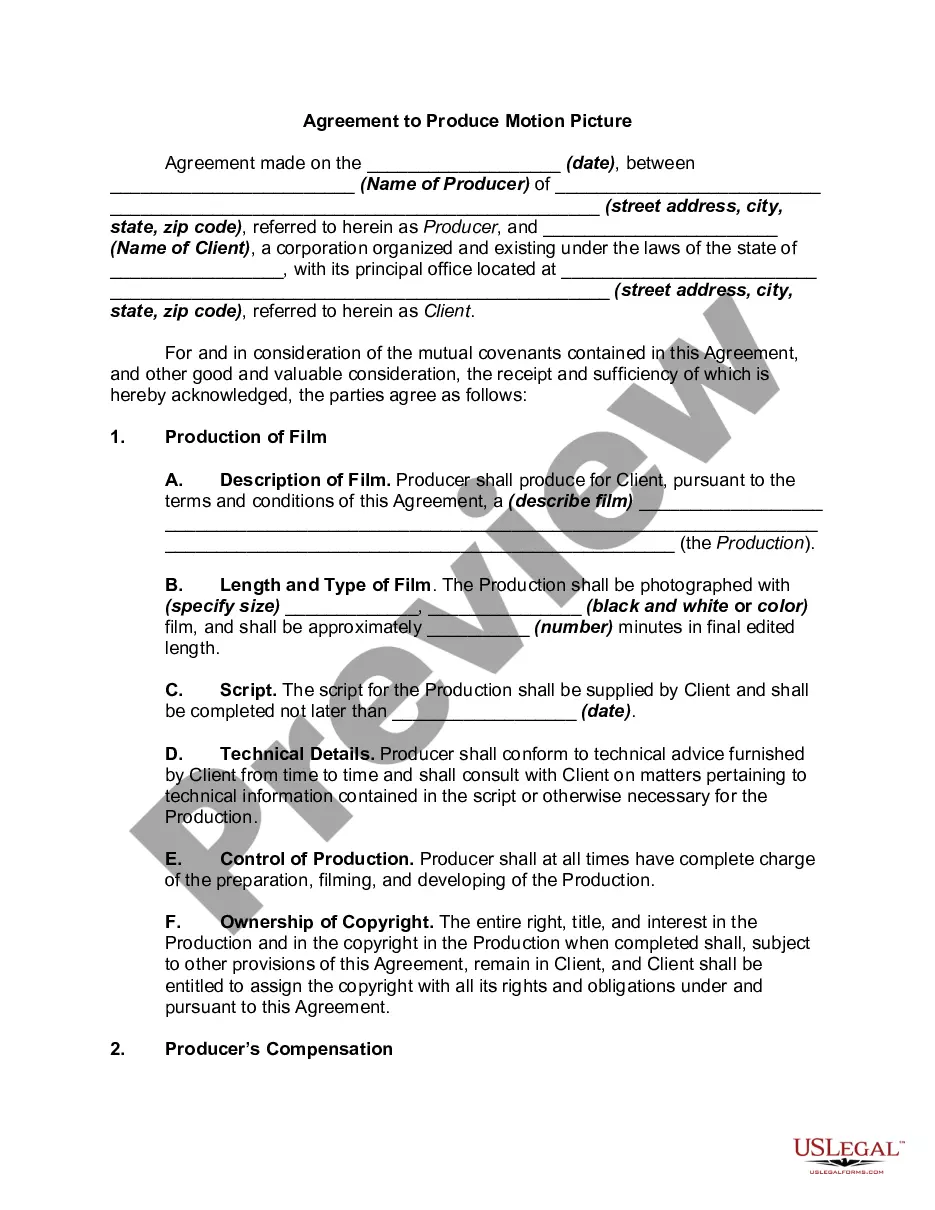
A video production contract is a legal agreement between a video production company or videographer and a client. It lays it all out – the scope of the work, the budget, when the project will be completed, and everything else you need to ensure things go off without a hitch.
Open the Google Docs template Contract Template and enter your company details and an image with your signature in the provided space, as well as the actual contract.
Here are the steps for creating a production schedule: Define the project scope and goals. Determine the shooting schedule and locations. Identify the necessary equipment and resources. Assign roles and responsibilities. Establish a timeline and deadlines. Regularly review and update the schedule.
The process of creating a video from concept to completion consists of three phases: Pre-Production, Production and Post-Production.
How to Plan a Video Production Identify the Purpose: Determine why you are making the video. Target Audience: Understand who your audience is. Key Messages: Outline the core messages you want to convey. Brainstorming: Gather your team to brainstorm creative ideas. Research: Look at similar videos and competitors' work.
Adopting a methodical approach that includes detailed scheduling and following the following steps can make the process easier: Demand analysis. Review of existing assets. Definition of objectives. Development of the preliminary plan. Production sequence planning. Labour Planning. Raw material planning. Monitoring and control.
