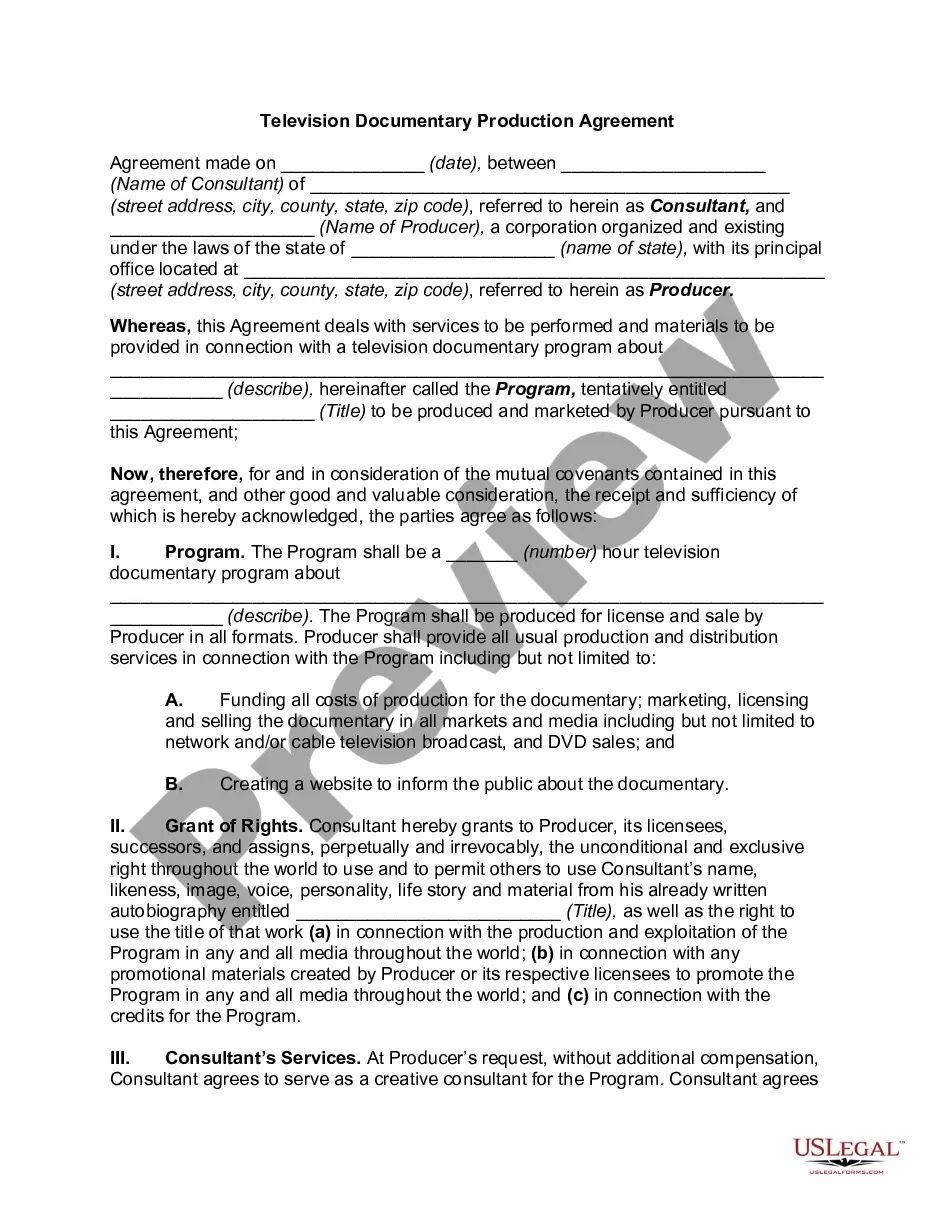
Agreement For Film Production In Collin
Description

Get your form ready online
Our built-in tools help you complete, sign, share, and store your documents in one place.
Make edits, fill in missing information, and update formatting in US Legal Forms—just like you would in MS Word.
Download a copy, print it, send it by email, or mail it via USPS—whatever works best for your next step.
Sign and collect signatures with our SignNow integration. Send to multiple recipients, set reminders, and more. Go Premium to unlock E-Sign.
If this form requires notarization, complete it online through a secure video call—no need to meet a notary in person or wait for an appointment.
We protect your documents and personal data by following strict security and privacy standards.

Make edits, fill in missing information, and update formatting in US Legal Forms—just like you would in MS Word.

Download a copy, print it, send it by email, or mail it via USPS—whatever works best for your next step.

Sign and collect signatures with our SignNow integration. Send to multiple recipients, set reminders, and more. Go Premium to unlock E-Sign.

If this form requires notarization, complete it online through a secure video call—no need to meet a notary in person or wait for an appointment.

We protect your documents and personal data by following strict security and privacy standards.
Looking for another form?









Form popularity
FAQ
A film production services agreement will identify the nature and scope of the project, the people involved in the project, and the script that will be produced. It also will outline all the services provided under the contract, possibly identifying the individuals who will be responsible for performing each service.
Online Directories: Websites like ProductionHub, Mandy, and FilmFreeway provide listings of production companies. Social Media: Platforms like LinkedIn, Instagram, and Facebook have groups and pages dedicated to filmmakers. Film Schools: Reach out to nearby film schools or universities with film programs.
Within it, both parties can detail their stipulations for when filming occurs, but also afterward. While a location agreement is first and foremost an authorization to step foot on a property and capture video footage or photographs of it, it also acts as a form of protection for both parties.
The location manager oversees the locations department and its staff, typically reporting directly to the production manager and/or assistant firector (or even director and/or executive producer). The location manager is responsible for obtaining the final permission to use a location for filming.
Film financing can be acquired from a private investor, sponsor, product placement, film studio, entertainment company, and/or out-of-pocket funds.
This can involve negotiating a location agreement or rental contract with the owner or manager of the property. The location agreement should outline the terms of the filming, including the dates and times of the shoot, the areas of the property that will be used, and any special requirements or restrictions.
An applicant must provide the following documents: Certificate of Registration/Incorporation of Company. KRA PIN Certificate. Professional Certificate in audio-visual media production/ film making. List of Equipment (for those who own equipment ONLY)
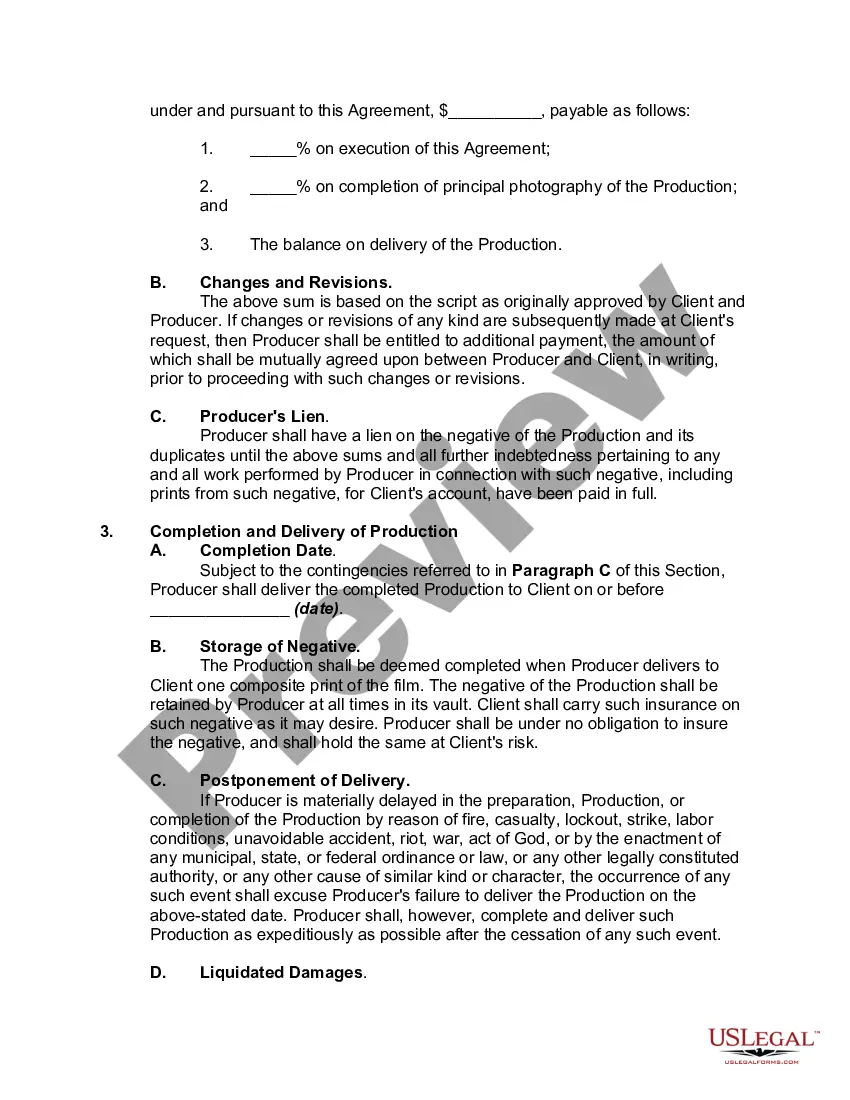
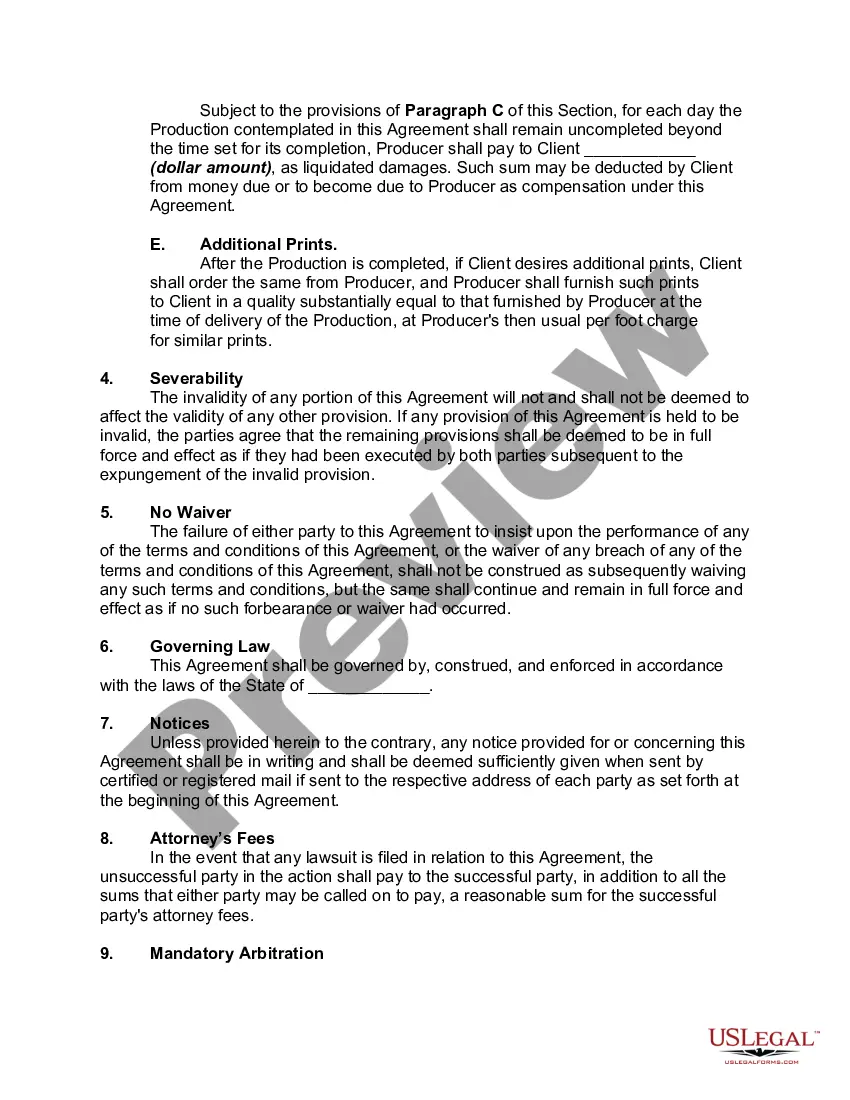
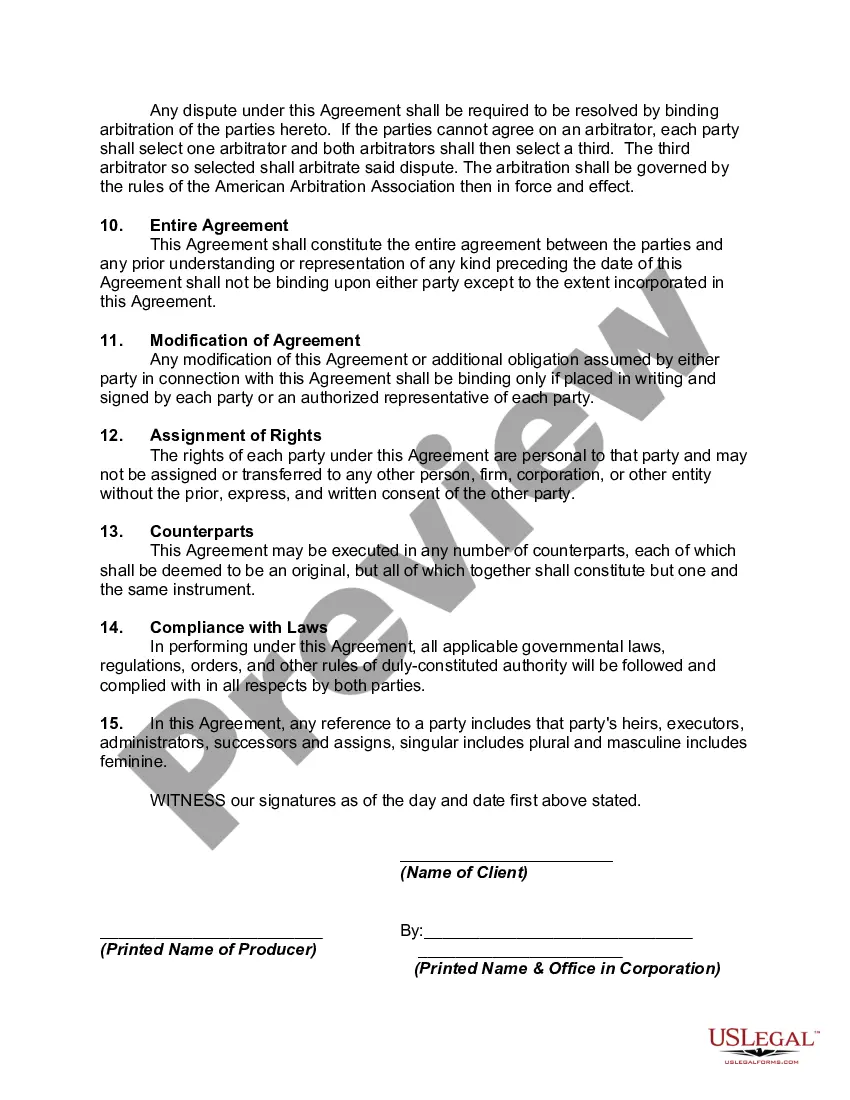
Sample Movie Production Agreement Description of Project. . Production Specifications. The Project will be produced in color on , using both studio and location recording techniques. Budget. Script. Date of Delivery. Ownership of Rights in Project. Credits. Right to Enter Project in Competitions.
How to become a movie producer Get a qualification in the field. Get an industry internship. Develop your portfolio. Get an entry-level position. Learn to network. Gain experience in low- and mid-level producer roles. Advance to senior producer roles.
How to write a letter of agreement Title the document. Add the title at the top of the document. List your personal information. Include the date. Add the recipient's personal information. Address the recipient. Write an introduction paragraph. Write your body. Conclude the letter.
