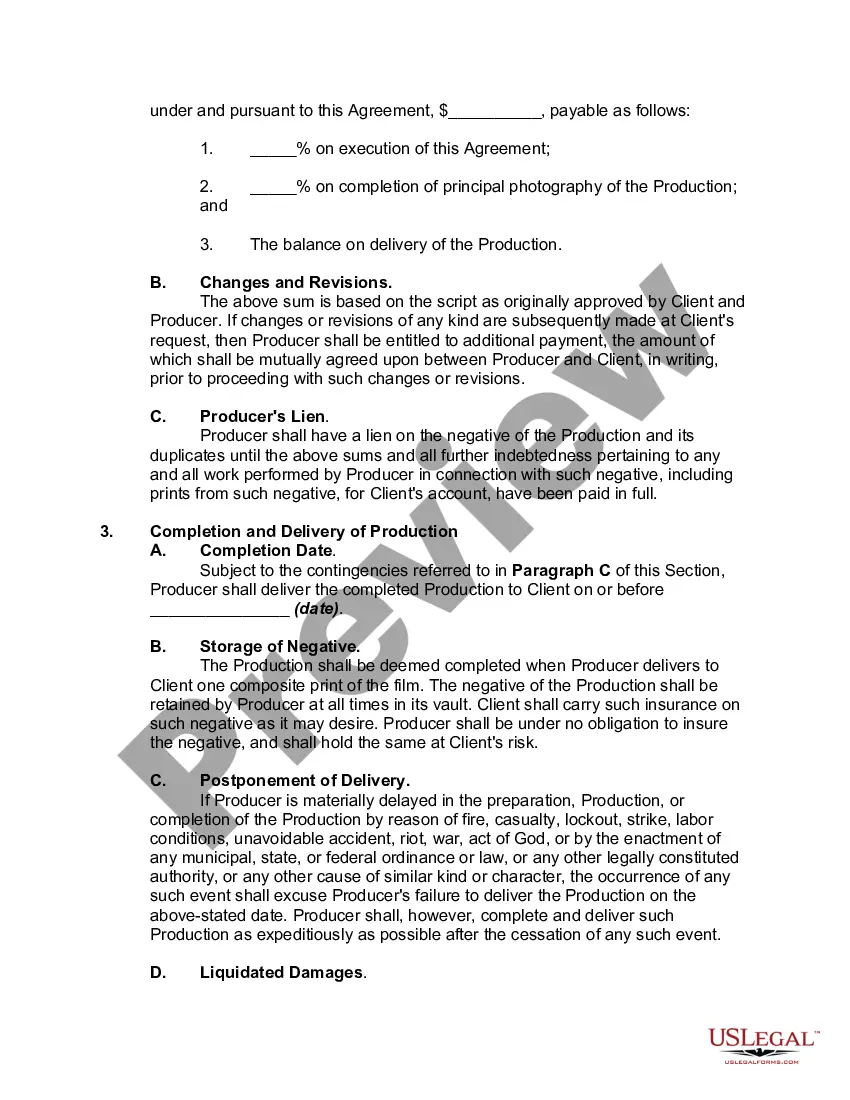
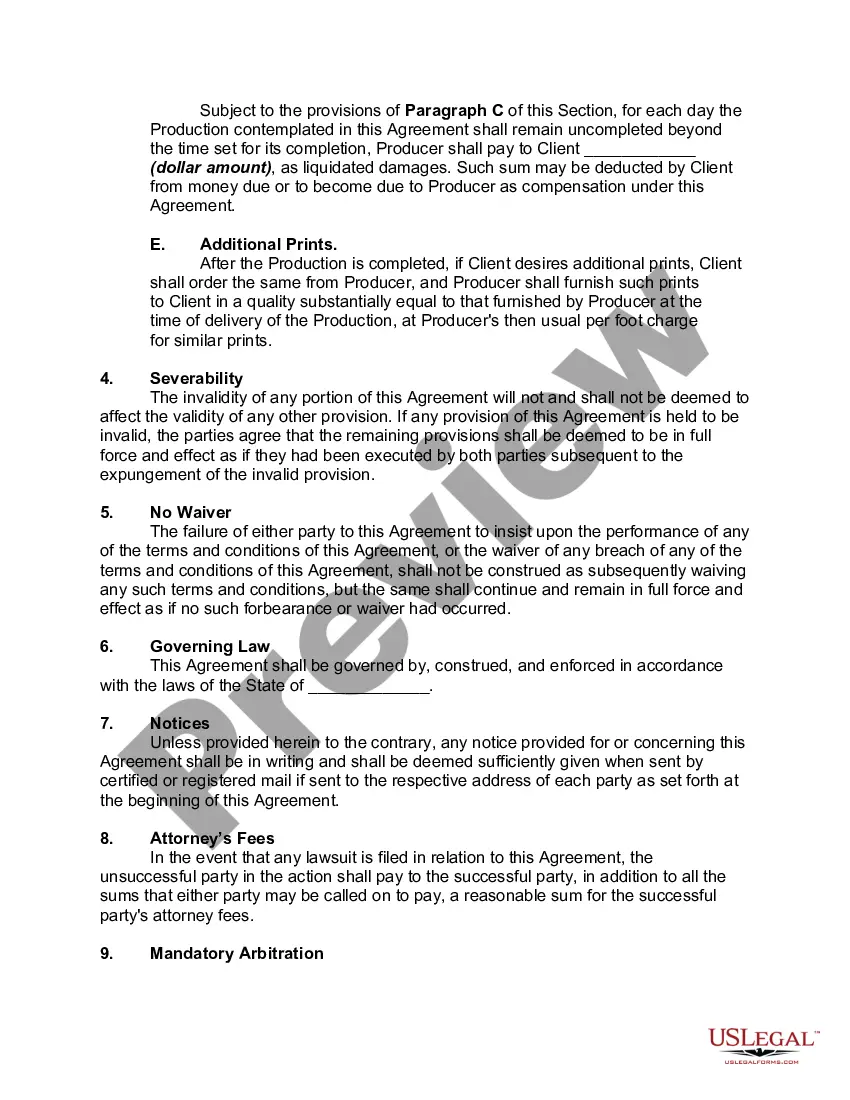
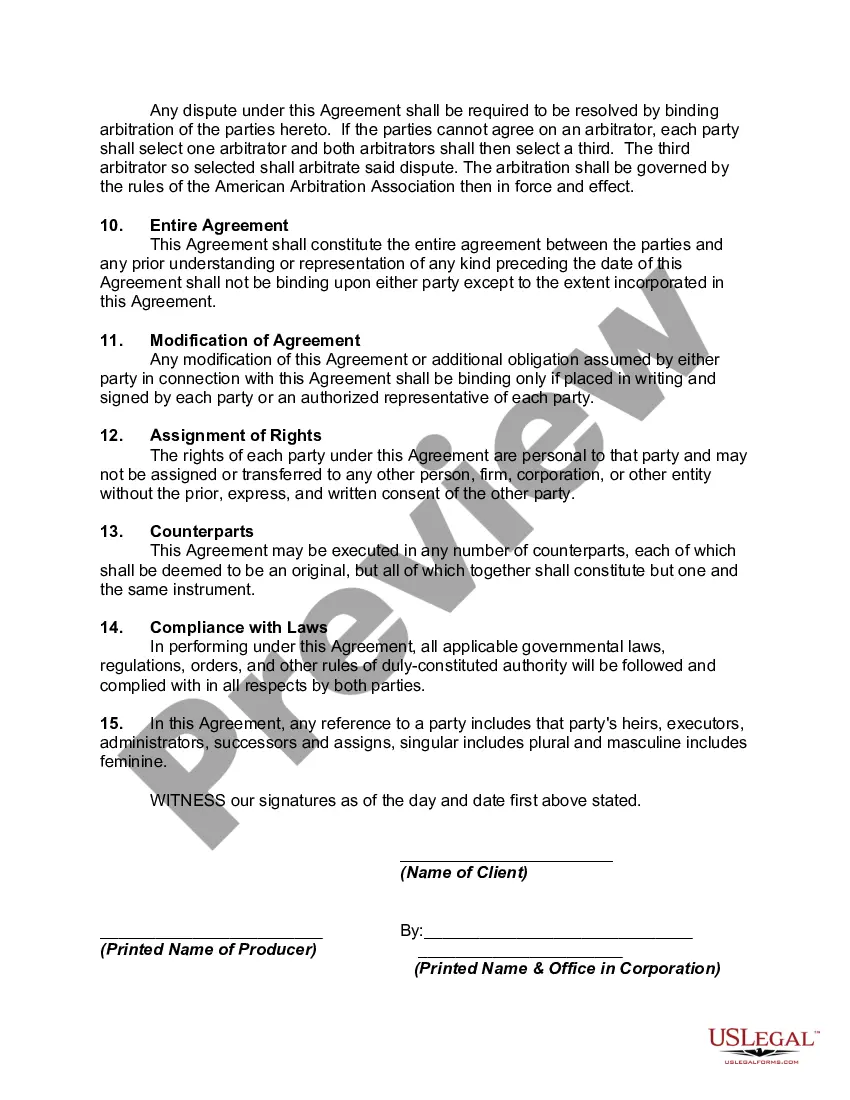
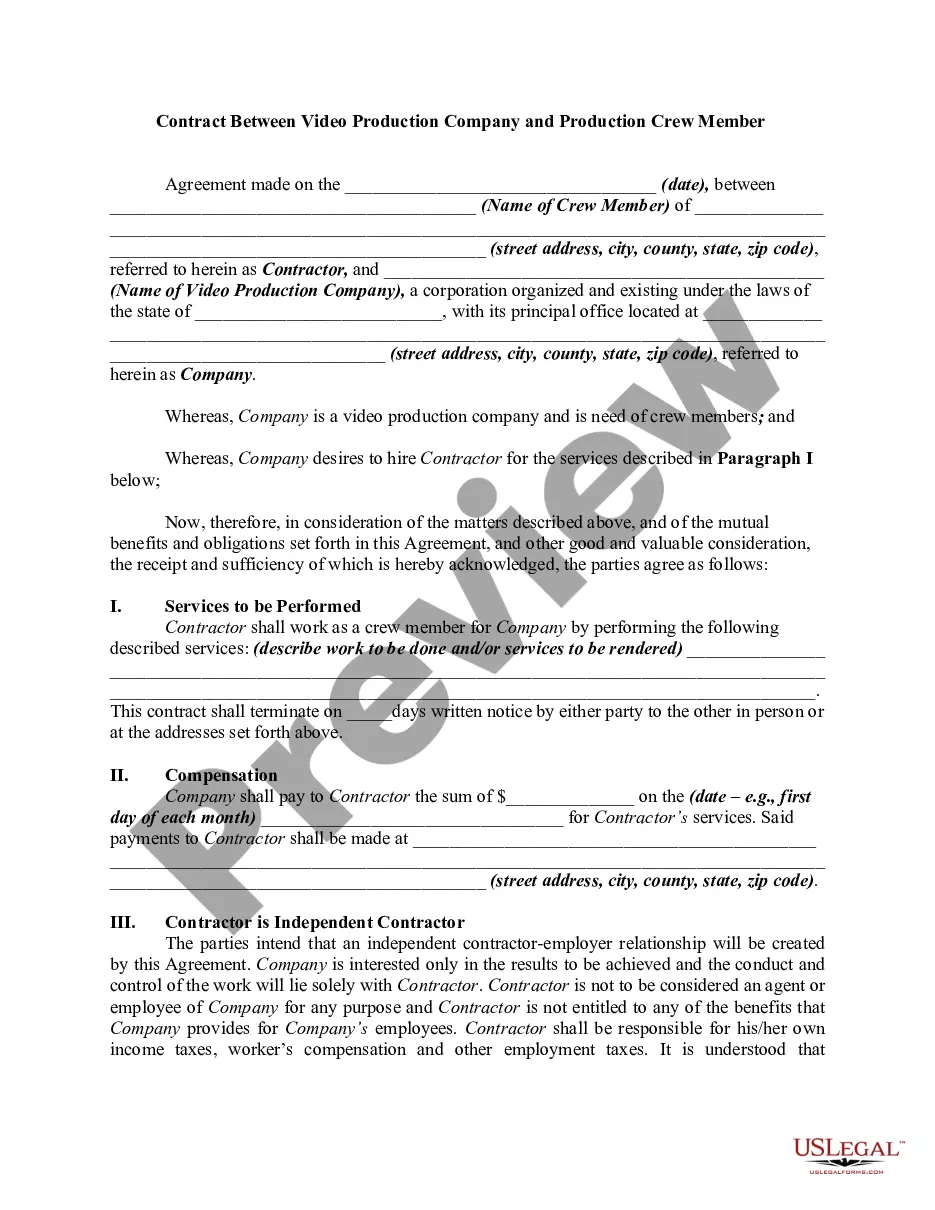
Movie Agreement Contract Without In California
Description

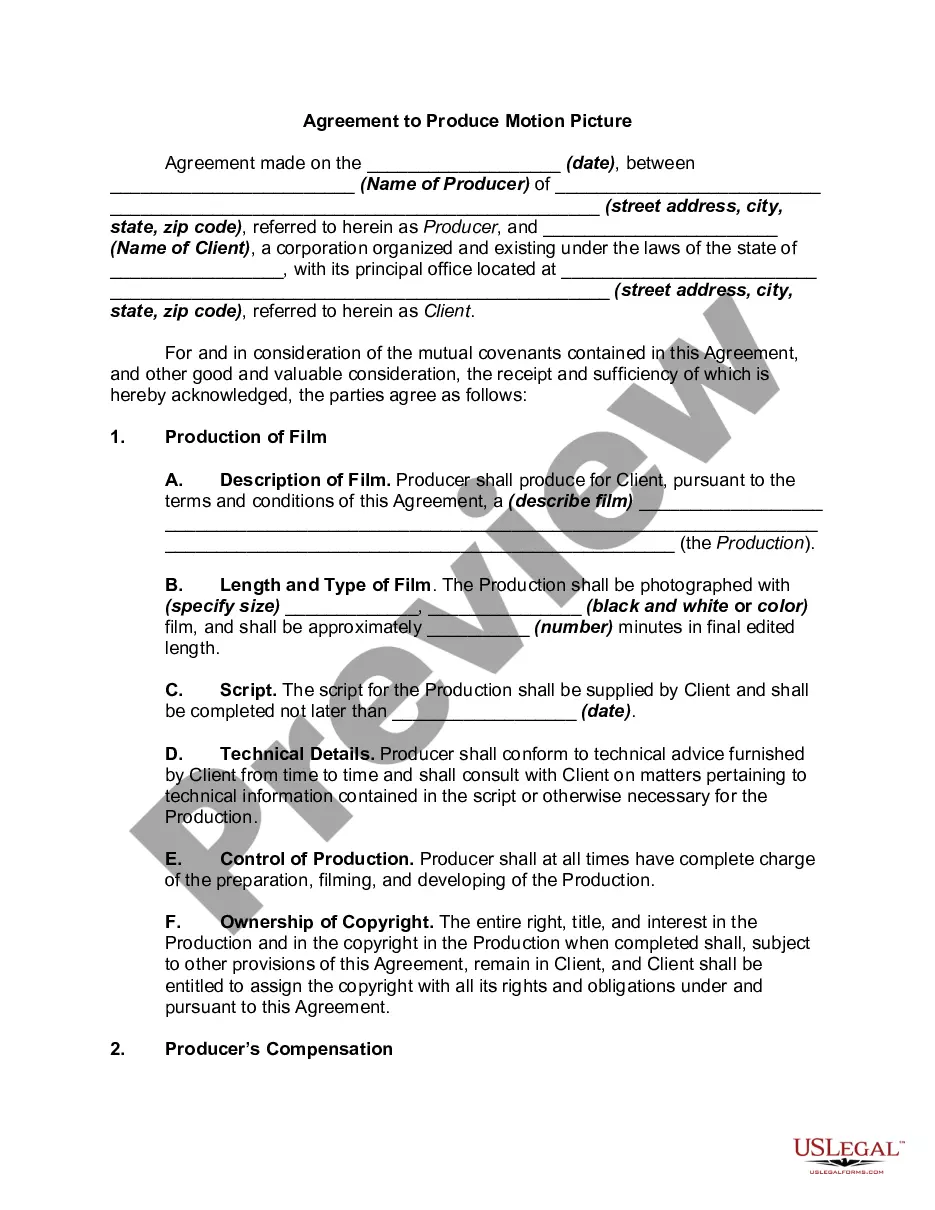
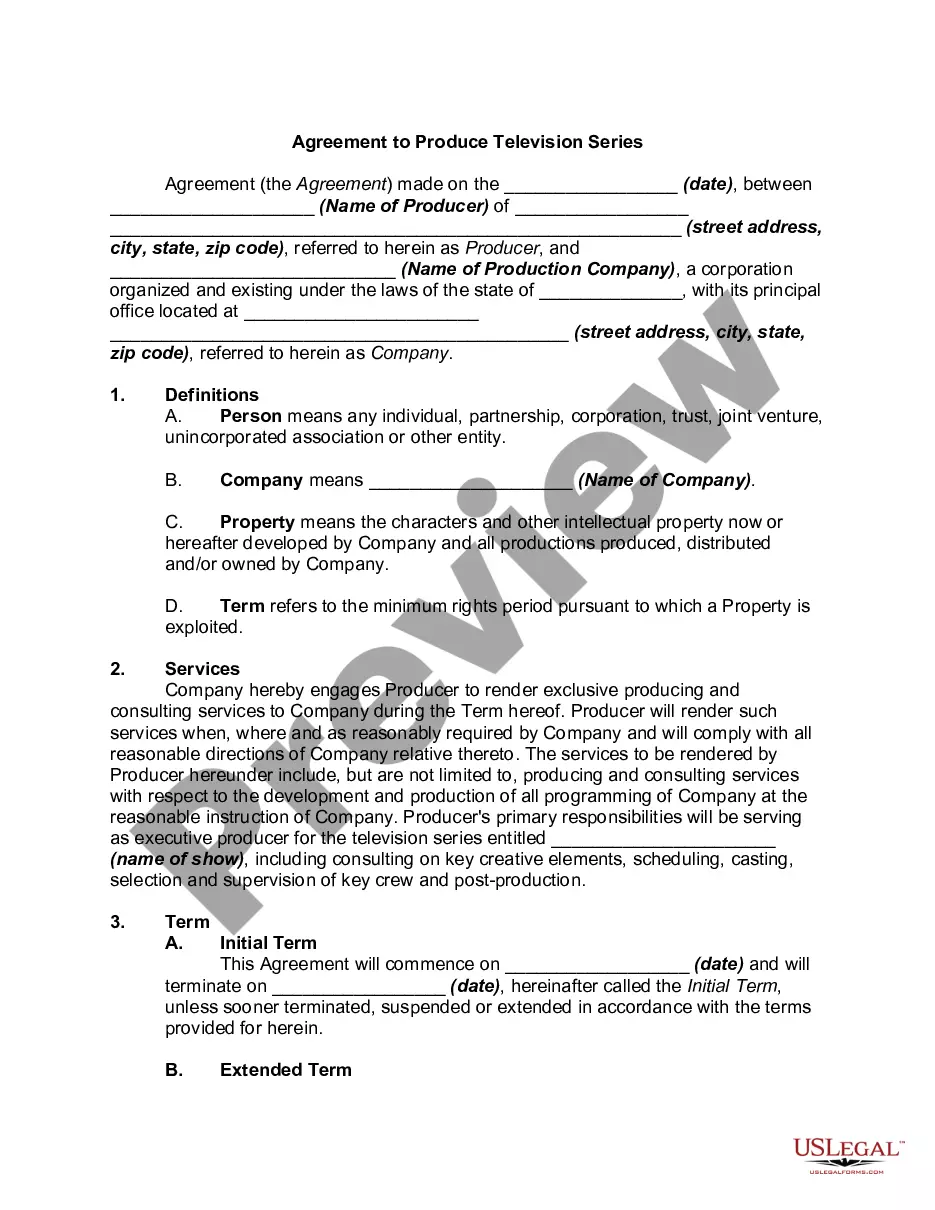
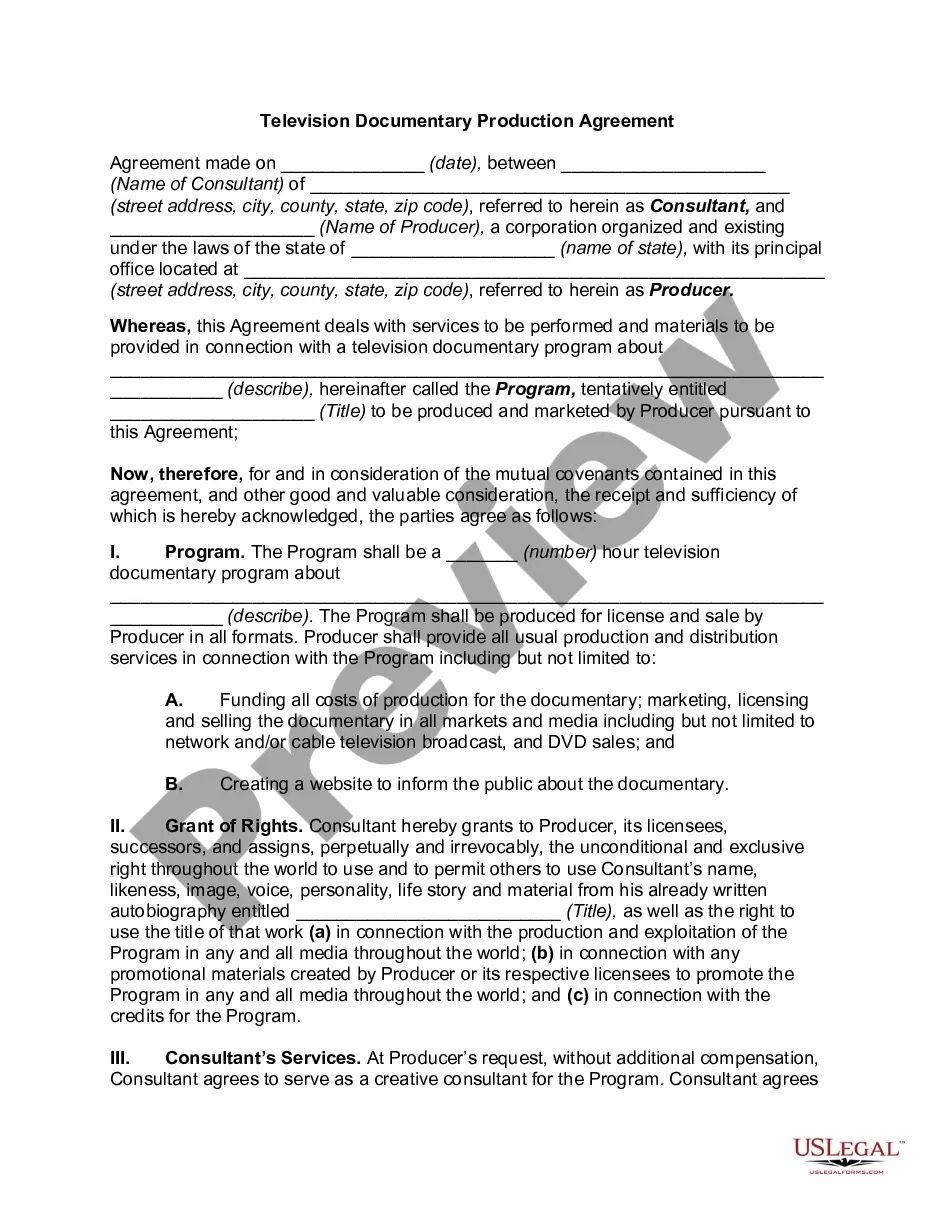
Get your form ready online
Our built-in tools help you complete, sign, share, and store your documents in one place.
Make edits, fill in missing information, and update formatting in US Legal Forms—just like you would in MS Word.
Download a copy, print it, send it by email, or mail it via USPS—whatever works best for your next step.
Sign and collect signatures with our SignNow integration. Send to multiple recipients, set reminders, and more. Go Premium to unlock E-Sign.
If this form requires notarization, complete it online through a secure video call—no need to meet a notary in person or wait for an appointment.
We protect your documents and personal data by following strict security and privacy standards.

Make edits, fill in missing information, and update formatting in US Legal Forms—just like you would in MS Word.

Download a copy, print it, send it by email, or mail it via USPS—whatever works best for your next step.

Sign and collect signatures with our SignNow integration. Send to multiple recipients, set reminders, and more. Go Premium to unlock E-Sign.

If this form requires notarization, complete it online through a secure video call—no need to meet a notary in person or wait for an appointment.

We protect your documents and personal data by following strict security and privacy standards.
Looking for another form?


Form popularity
FAQ
Most actor contracts are between two and three pages long. The typical term for an actor contract is a certain a number of months after the film or play premieres, although some go on indefinitely. Term lengths can vary greatly! The typical term for an agent or manager contract for actors is about 12 to 18 months.
If an actor quits a project, they may face professional consequences. This could include damaging their reputation within the industry, losing future job opportunities, and possibly even facing legal ramifications if contractual obligations are not fulfilled.
The Basic Agreement (BA) covers projects shot on film made under an agreement with the Association of Motion Picture and Television Producers (AMPTP). This contract applies to Directors, Assistant Directors and Unit Production Managers working in film and television.
REQUIREMENTS FOR A CONTRACT A valid contract is a legally binding agreement and is enforceable in court by and against the contracting parties. In order for a contract to be valid, there must be an offer, an acceptance of the offer, an exchange between the parties of something of value, and an agreement to the terms.
These contracts specify the actor's role and cover aspects such as compensation (salary, bonuses and profit-sharing arrangements), work schedule (filming dates, call times and duration of the shoot), rights and obligations (the actor's responsibilities, confidentiality agreements and moral clauses) and perks and ...
For a contract to be valid and enforceable in California, all parties must enter into the agreement voluntarily. If one of the contracting parties can prove that they entered into the contract under duress, coercion, or undue influence, the court may cancel or revoke the contract.
The production agreement sets forth the term between two or more producers, individuals, or companies, who together agree to produce a feature film based on an existing screenplay. The production agreement may include financing elements.
One of the parties exerted undue influence over the other party. one of the parties misrepresented the terms or conditions of the contract. one of the parties didn't disclose an important fact or detail to the other party. one or both parties made a mistake about something related to the contract.
Write the contract in six steps Start with a contract template. Open with the basic information. Describe in detail what you have agreed to. Include a description of how the contract will be ended. Write into the contract which laws apply and how disputes will be resolved. Include space for signatures.
Mistake One: Failure to Put the Agreement in Writing. Mistake Two: Incomplete or Vague Contract Terms. Mistake Three: Ignoring or Misunderstanding Contractual Obligations. Mistake Four: Failing to Include or Understand Legal Provisions. Mistake Five: Failing to Seek Legal Help.
