Wrongful Interference In A Contractual Relationship
Description


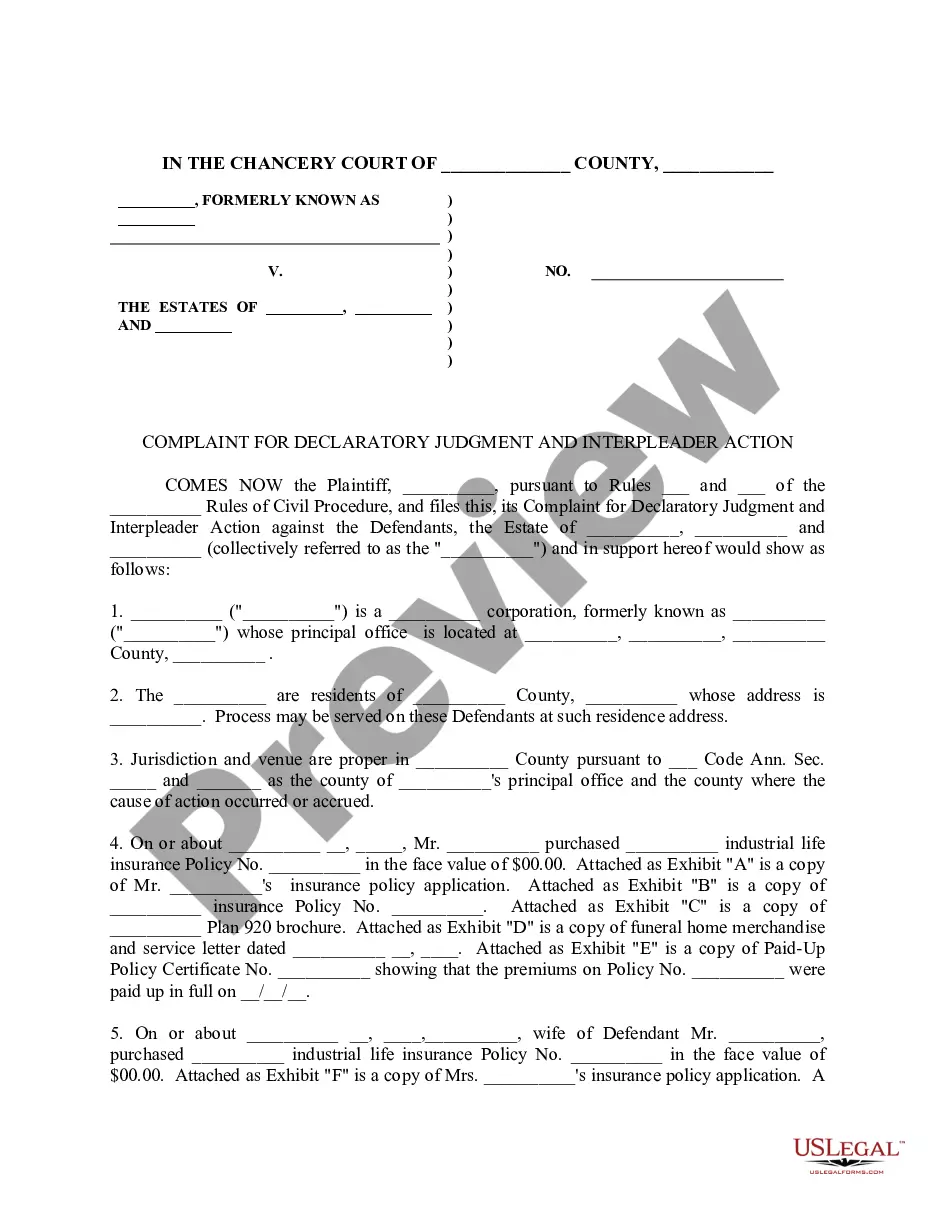
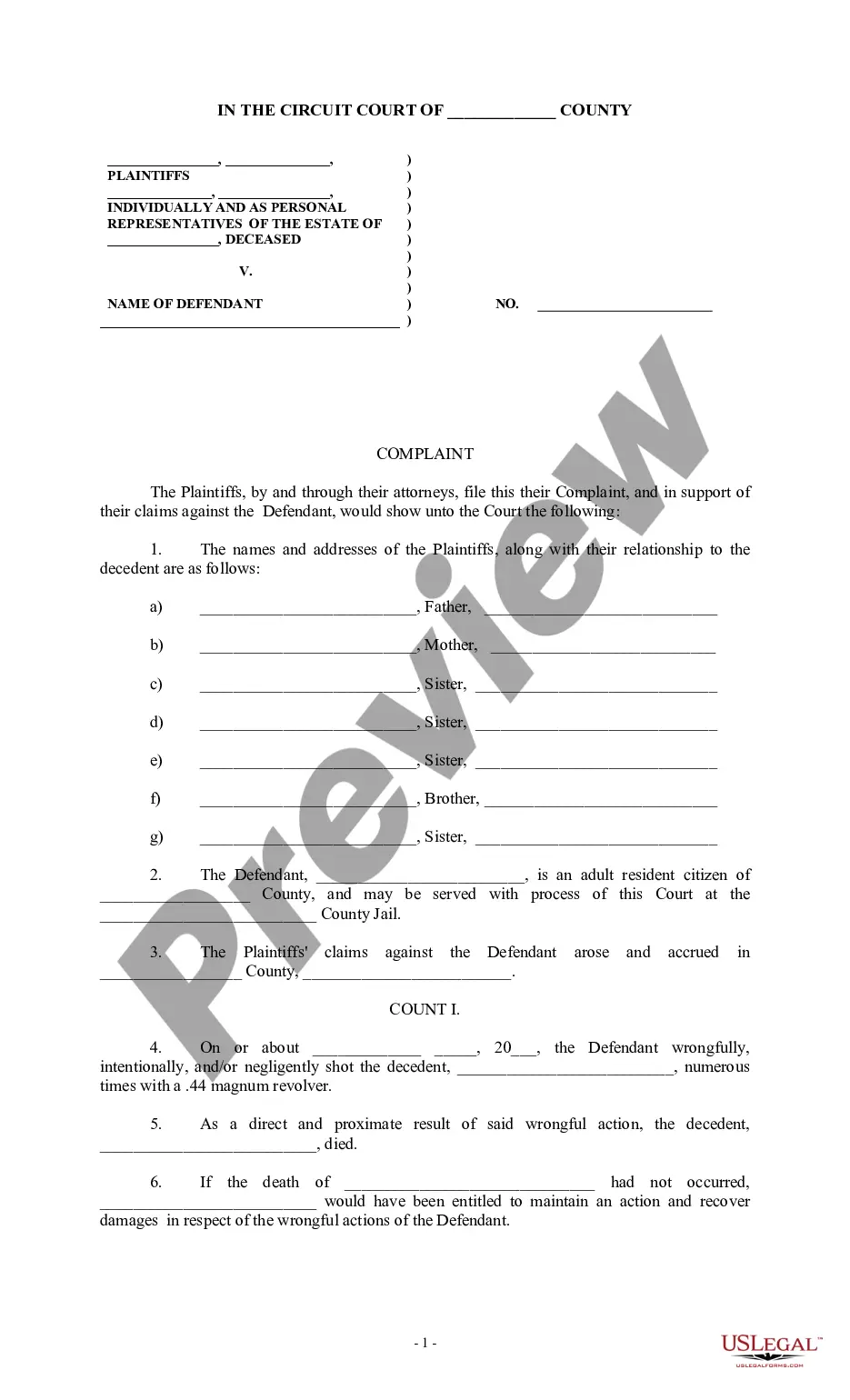
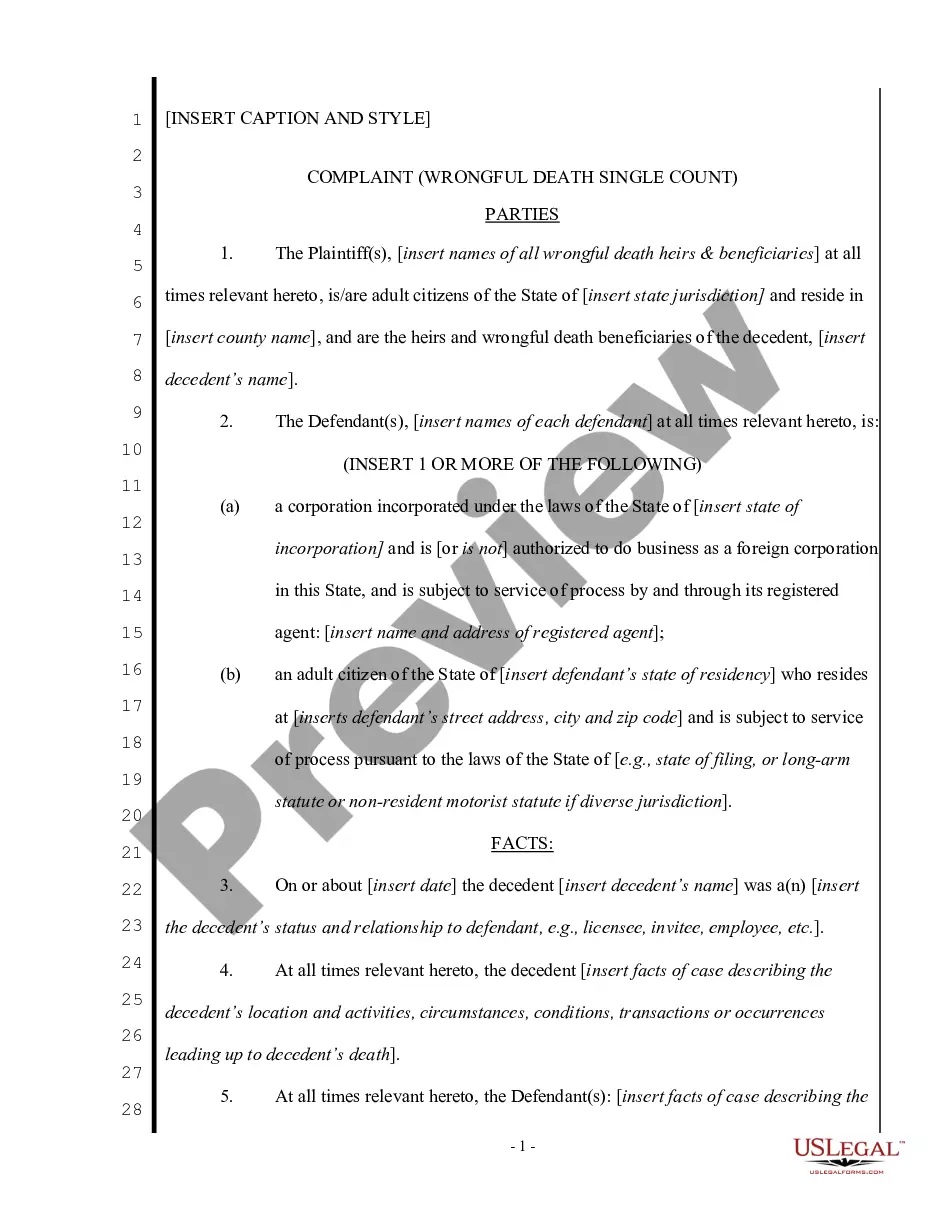
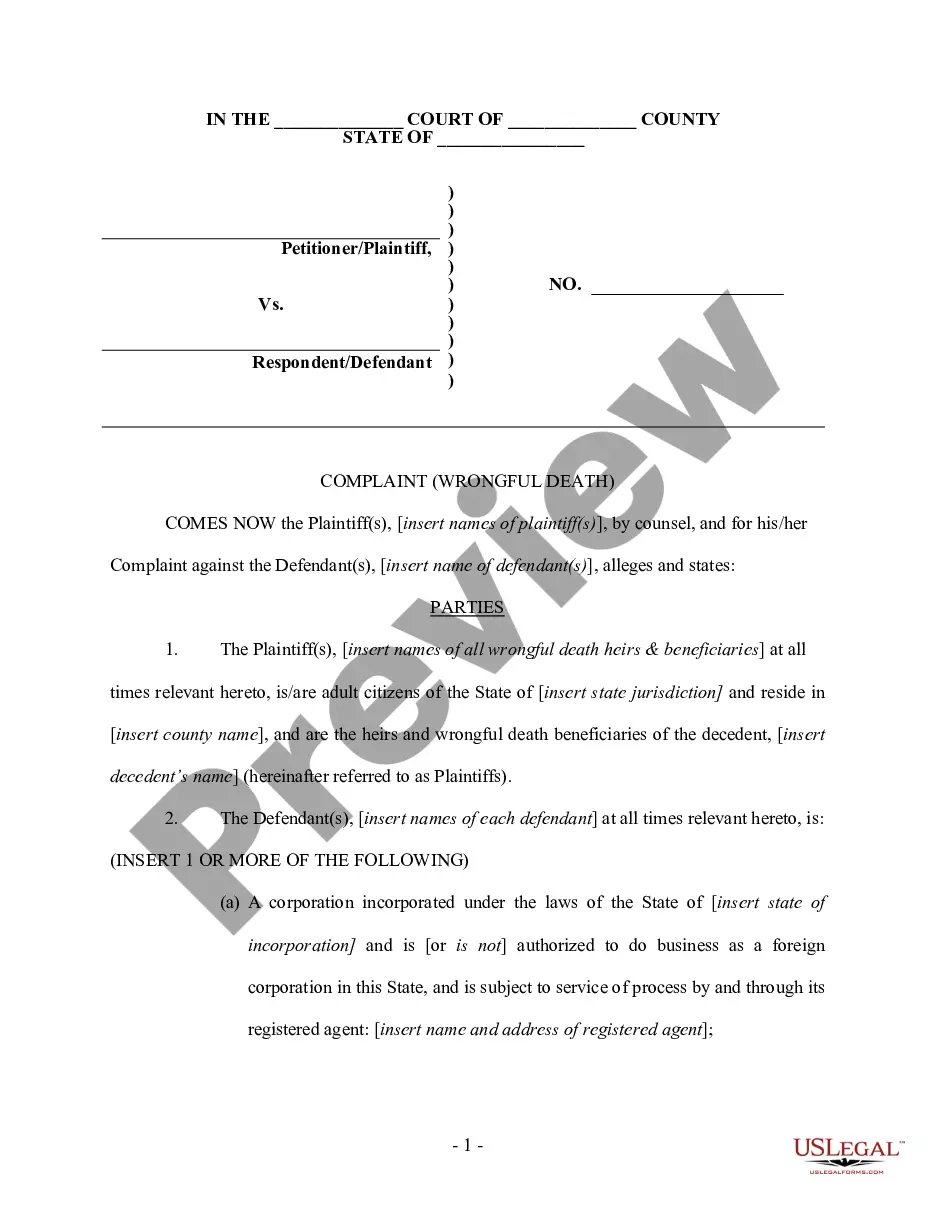
Get your form ready online
Our built-in tools help you complete, sign, share, and store your documents in one place.
Make edits, fill in missing information, and update formatting in US Legal Forms—just like you would in MS Word.
Download a copy, print it, send it by email, or mail it via USPS—whatever works best for your next step.
Sign and collect signatures with our SignNow integration. Send to multiple recipients, set reminders, and more. Go Premium to unlock E-Sign.
If this form requires notarization, complete it online through a secure video call—no need to meet a notary in person or wait for an appointment.
We protect your documents and personal data by following strict security and privacy standards.

Make edits, fill in missing information, and update formatting in US Legal Forms—just like you would in MS Word.

Download a copy, print it, send it by email, or mail it via USPS—whatever works best for your next step.

Sign and collect signatures with our SignNow integration. Send to multiple recipients, set reminders, and more. Go Premium to unlock E-Sign.

If this form requires notarization, complete it online through a secure video call—no need to meet a notary in person or wait for an appointment.

We protect your documents and personal data by following strict security and privacy standards.
Looking for another form?






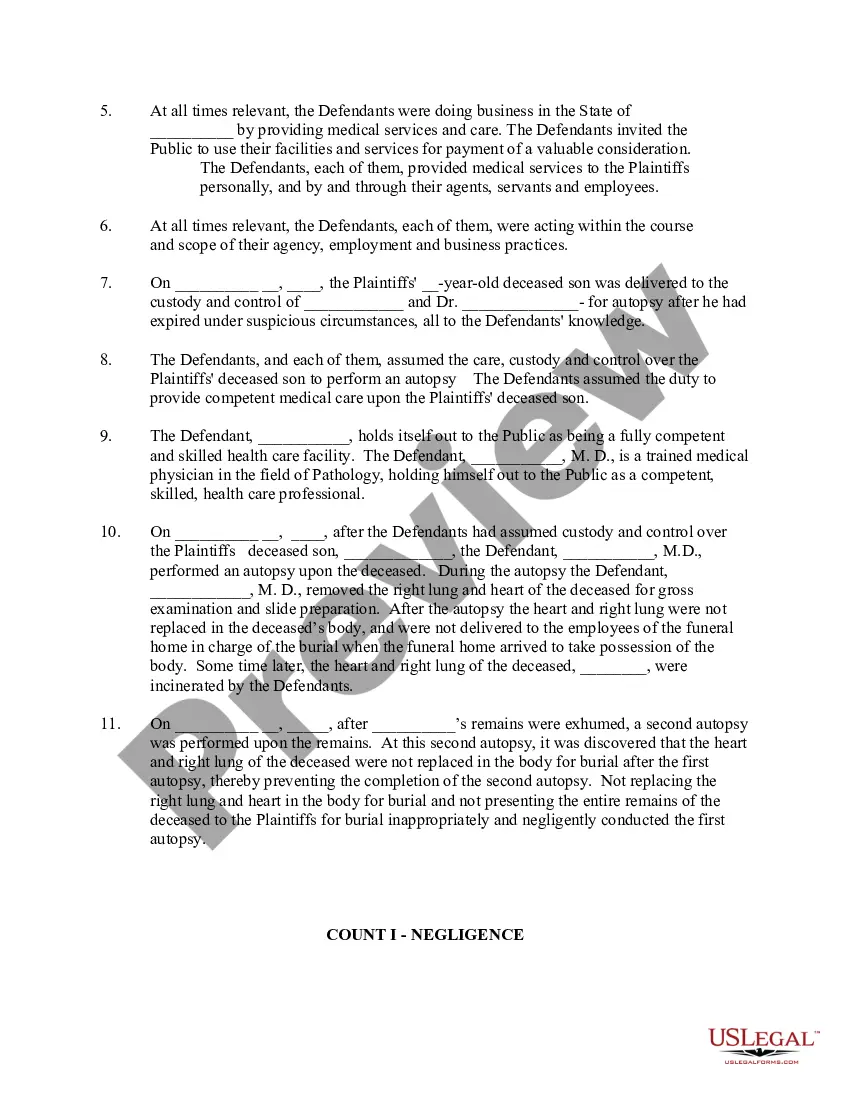
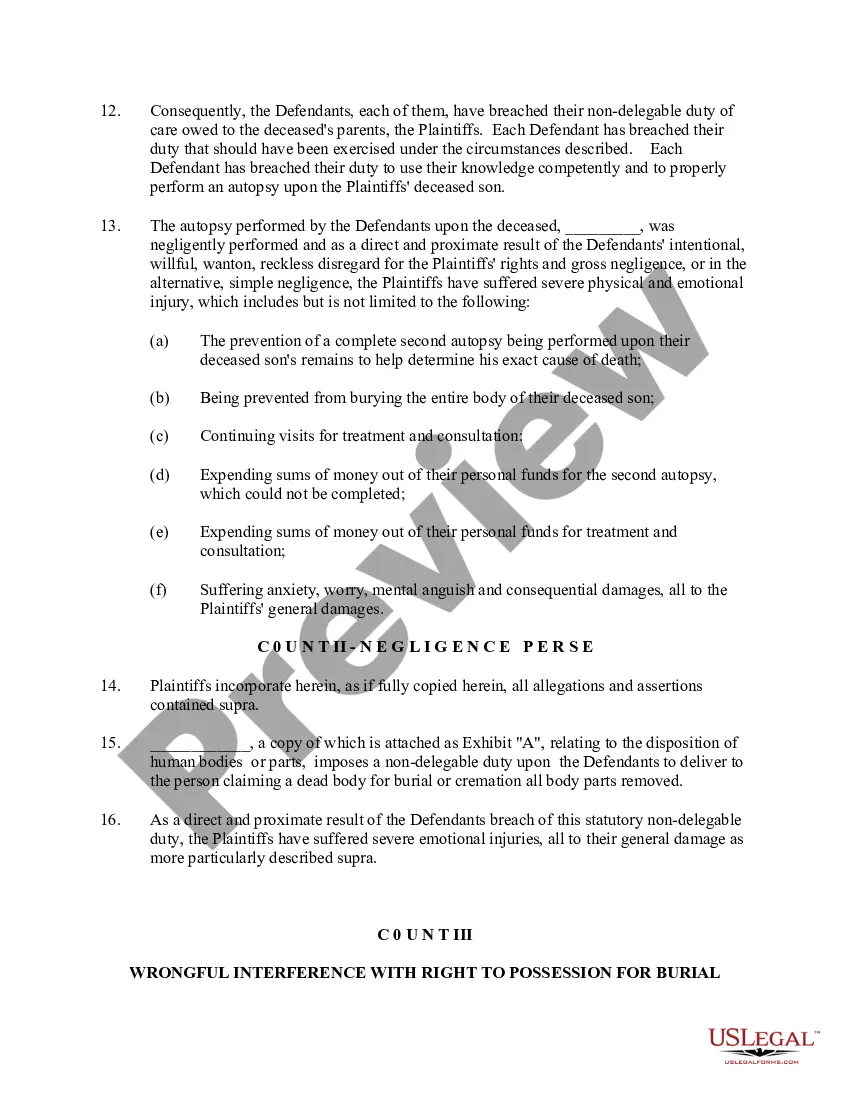
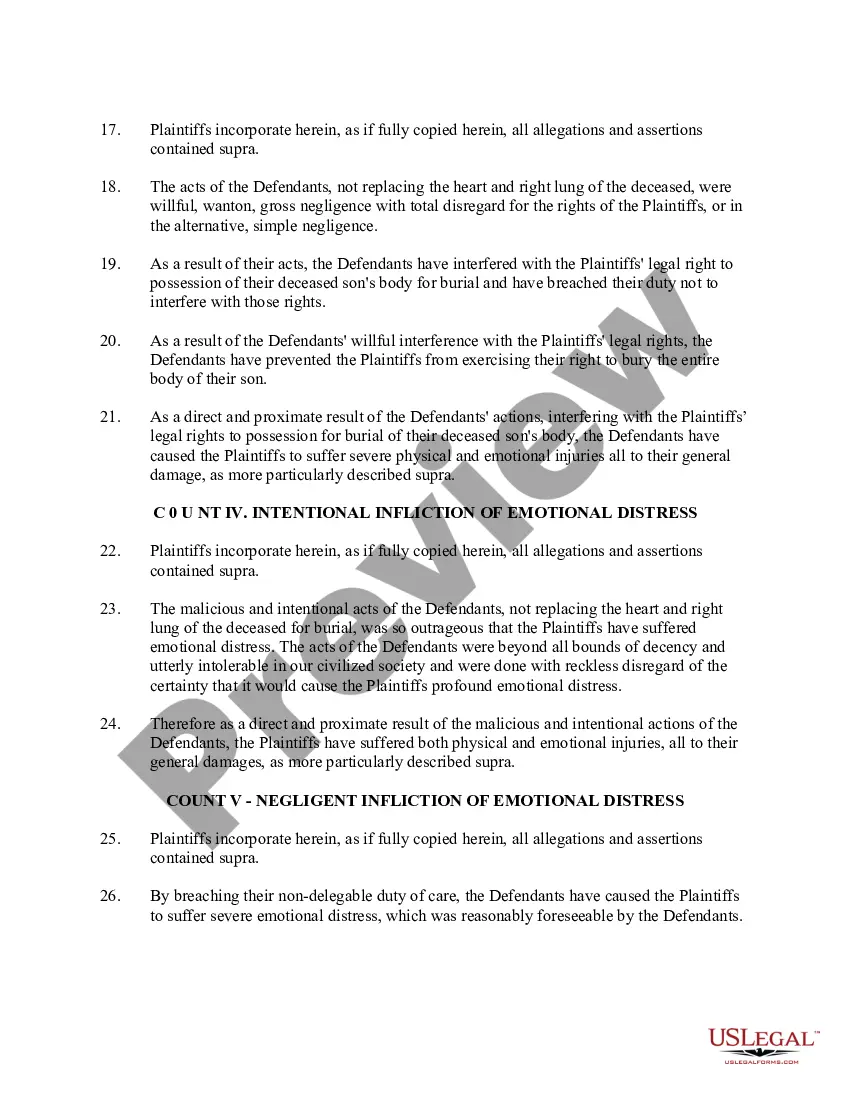
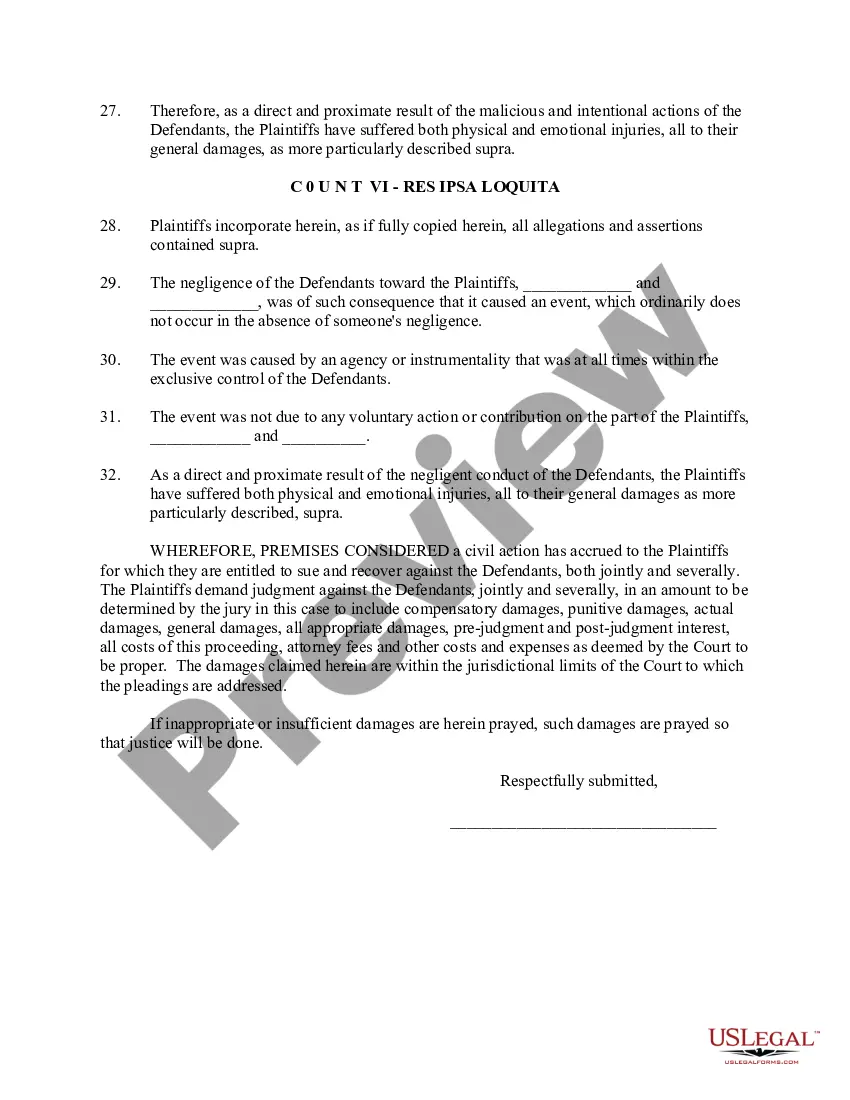
How to fill out Complaint For Wrongful Interference With Right To Possession For Burial?
Legal documentation management can be daunting, even for the most seasoned professionals.
When you seek a Wrongful Interference In A Contractual Relationship and can't afford to invest time in locating the appropriate and up-to-date version, the process may be taxing.
Gain entry to a valuable repository of articles, guides, manuals, and resources related to your circumstances and needs.
Save energy and time in finding the documents you require while utilizing US Legal Forms’ advanced search and Review feature to locate Wrongful Interference In A Contractual Relationship and obtain it.
Enjoy the US Legal Forms online library, backed by 25 years of experience and reliability. Streamline your daily document management into a seamless and user-friendly experience today.
- If you have a subscription, Log In to your US Legal Forms profile, search for the form, and obtain it.
- Check the My documents section to review the documents you have previously downloaded and manage your files as you see fit.
- If this is your first experience with US Legal Forms, create a free account to gain unlimited access to all the benefits of the library.
- After downloading the desired form, verify that it is the correct one by previewing it and reviewing its details.
- Make sure that the template is authorized in your state or county.
- Select Buy Now when you are ready.
- Choose a monthly subscription option, select your preferred file format, and Download, complete, eSign, print, and submit your document.
- Access state- or region-specific legal and business documents.
- US Legal Forms accommodates any requirements you might have, from personal to commercial papers, all in one location.
- Leverage innovative tools to complete and manage your Wrongful Interference In A Contractual Relationship.
Form popularity
FAQ
To prove tortious interference with a contract, a plaintiff must establish several elements: The plaintiff had a contract with a third party; The defendant knew about the contract at the time of the alleged interference; The defendant interfered intentionally; The interference was improper;
The requisite elements of tortious interference with contract claim are: (1) the existence of a valid and enforceable contract between plaintiff and another; (2) defendant's awareness of the contractual relationship; (3) defendant's intentional and unjustified inducement of a breach of the contract; (4) a subsequent ...
The plaintiff must show that a valid contract or reasonable economic expectation existed between the plaintiff and a third party. Many tortious interference cases involve a breach of contract by a third party with whom the plaintiff had an existing agreement.
Tortious interference, also known as intentional interference with contractual relations, in the common law of torts, occurs when one person intentionally damages someone else's contractual or business relationships with a third party, causing economic harm.
The requisite elements of tortious interference with contract claim are: (1) the existence of a valid and enforceable contract between plaintiff and another; (2) defendant's awareness of the contractual relationship; (3) defendant's intentional and unjustified inducement of a breach of the contract; (4) a subsequent ...