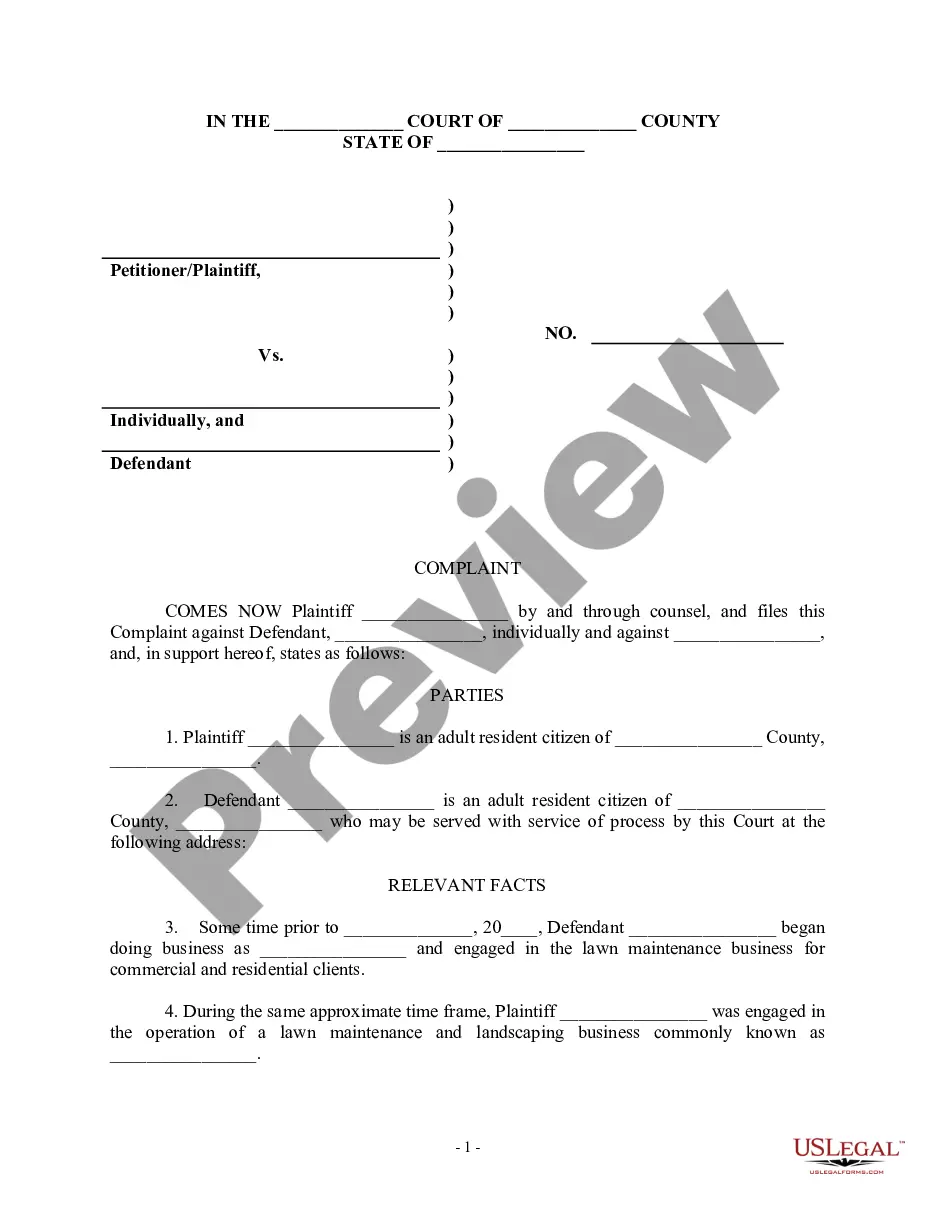
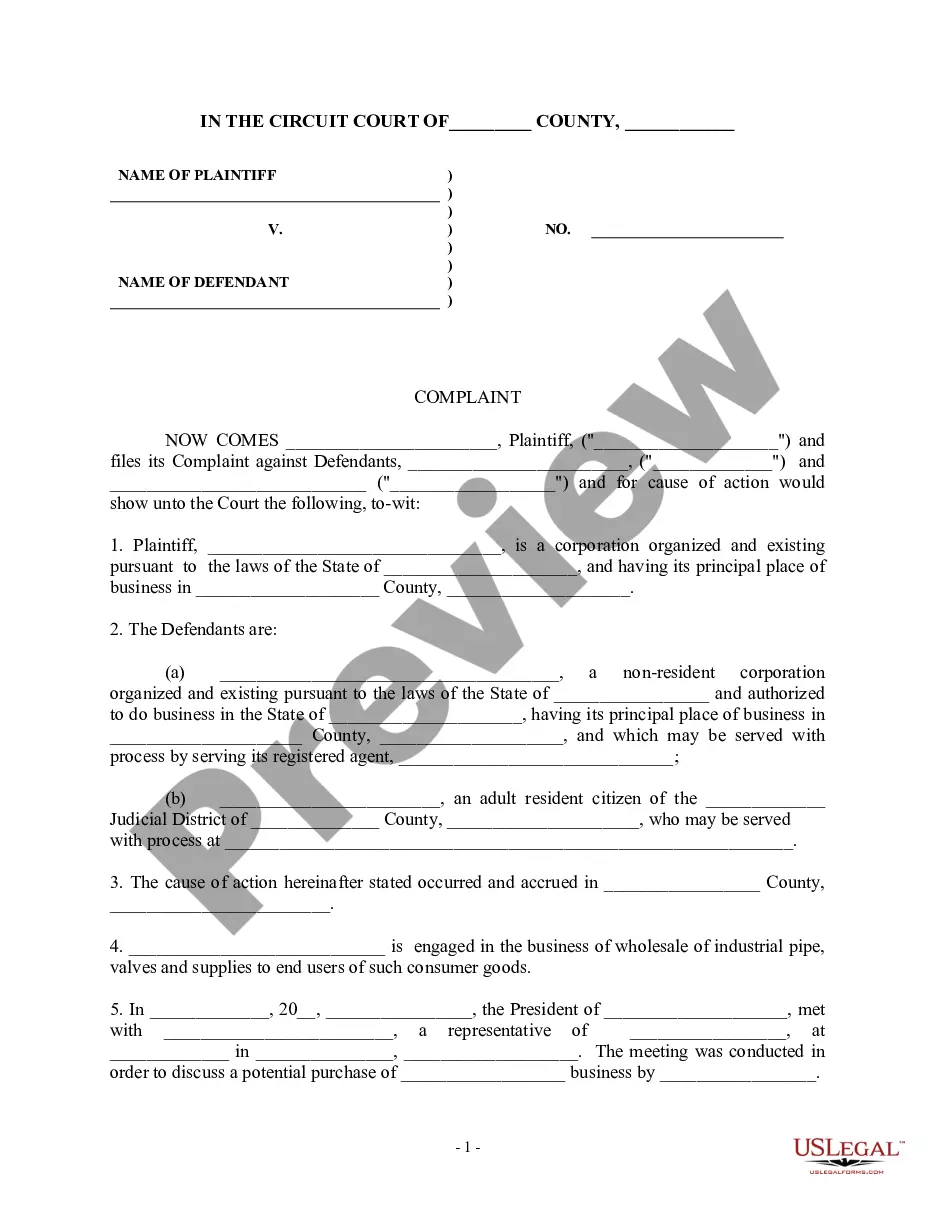
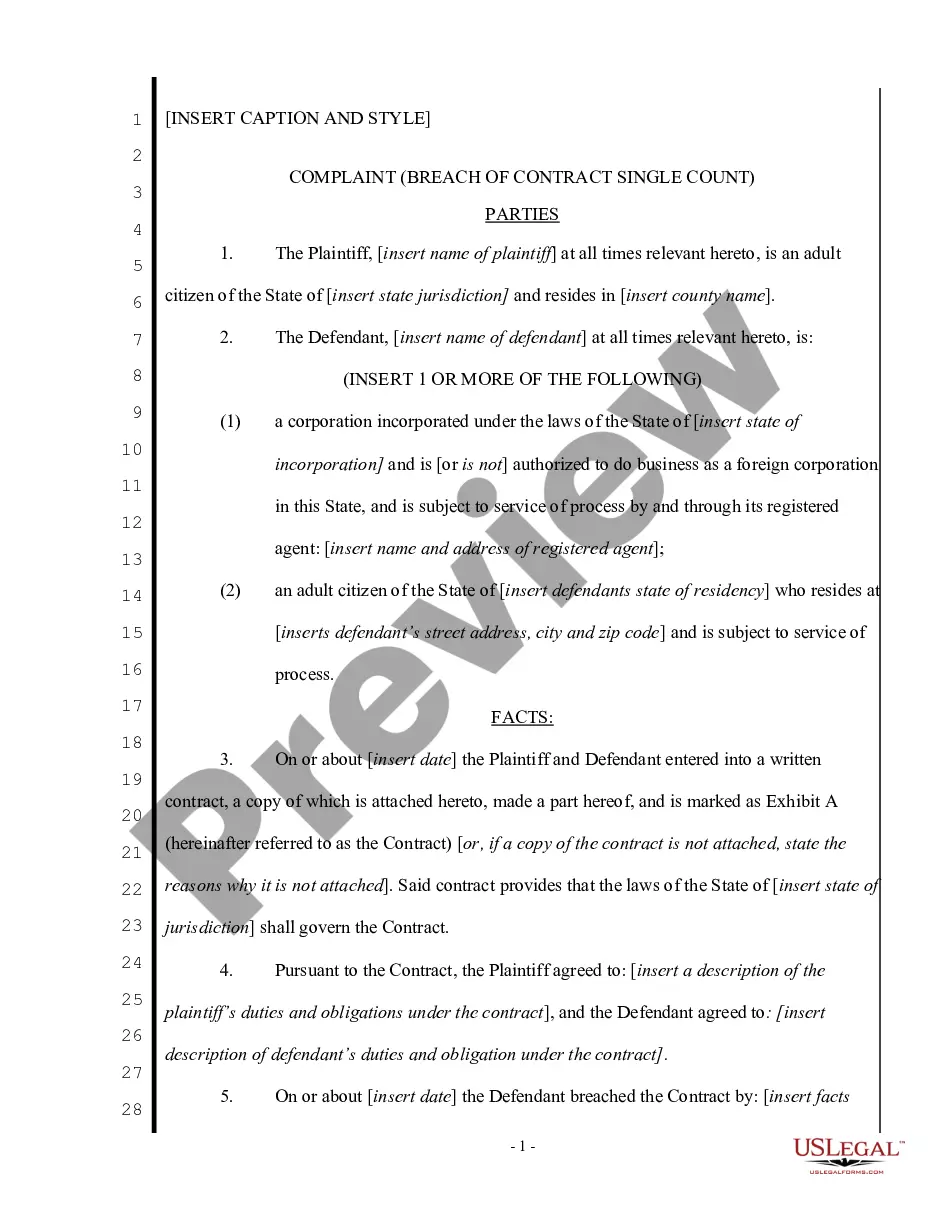
Complaint Prayer For Relief Example In Minnesota
Description


Get your form ready online
Our built-in tools help you complete, sign, share, and store your documents in one place.
Make edits, fill in missing information, and update formatting in US Legal Forms—just like you would in MS Word.
Download a copy, print it, send it by email, or mail it via USPS—whatever works best for your next step.
Sign and collect signatures with our SignNow integration. Send to multiple recipients, set reminders, and more. Go Premium to unlock E-Sign.
If this form requires notarization, complete it online through a secure video call—no need to meet a notary in person or wait for an appointment.
We protect your documents and personal data by following strict security and privacy standards.

Make edits, fill in missing information, and update formatting in US Legal Forms—just like you would in MS Word.

Download a copy, print it, send it by email, or mail it via USPS—whatever works best for your next step.

Sign and collect signatures with our SignNow integration. Send to multiple recipients, set reminders, and more. Go Premium to unlock E-Sign.

If this form requires notarization, complete it online through a secure video call—no need to meet a notary in person or wait for an appointment.

We protect your documents and personal data by following strict security and privacy standards.
Looking for another form?








Form popularity
FAQ
A prayer for relief, in the law of civil procedure, is a portion of a complaint in which the plaintiff describes the remedies that the plaintiff seeks from the court.
A prayer for relief, in the law of civil procedure, is a portion of a complaint in which the plaintiff describes the remedies that the plaintiff seeks from the court.
For each paragraph in the complaint, state whether: the defendant admits the allegations in that paragraph; denies the allegations; lacks sufficient knowledge to admit or deny the allegations; or admits certain allegations but denies, or lacks sufficient knowledge to admit or deny, the rest.
Five Reasons God May Not Be Answering Your Prayers 1. You are not right with God. 2. Something in you needs to change. 3. Your prayers do not align with God's will. 4. Your prayer circumvents God's processes. 5. He delays his answer until his return.
Prayer. n. the specific request for judgment, relief and/or damages at the conclusion of a complaint or petition.
It isn't always a bad thing to complain to God, to bring your concerns to God, to bring your questions to God, or to bring your pain and sadness to God. Even Jesus, as He hung on the cross, cried out, “My God, My God, why have You forsaken Me?” (Matthew NKJV).
You must give or mail to the person who signed this summons a written response called an Answer within 20 days of the date on which you received this Summons. You must send a copy of your Answer to the person who signed this summons located at: _____________________ .
State what you feel should be done about the problem and how long you are willing to wait to get the problem resolved. Make sure that you are reasonable in requesting a specific action. Include copies of any documents regarding your problem, such as receipts, warranties, repair orders, contracts and so forth.
A complaint letter format will typically begin with the sender's details, followed by stating who it's addressed to, the date, and then the letter itself. The opening paragraph should state your reason for writing, and the meat of the text will go into detail about the matter.
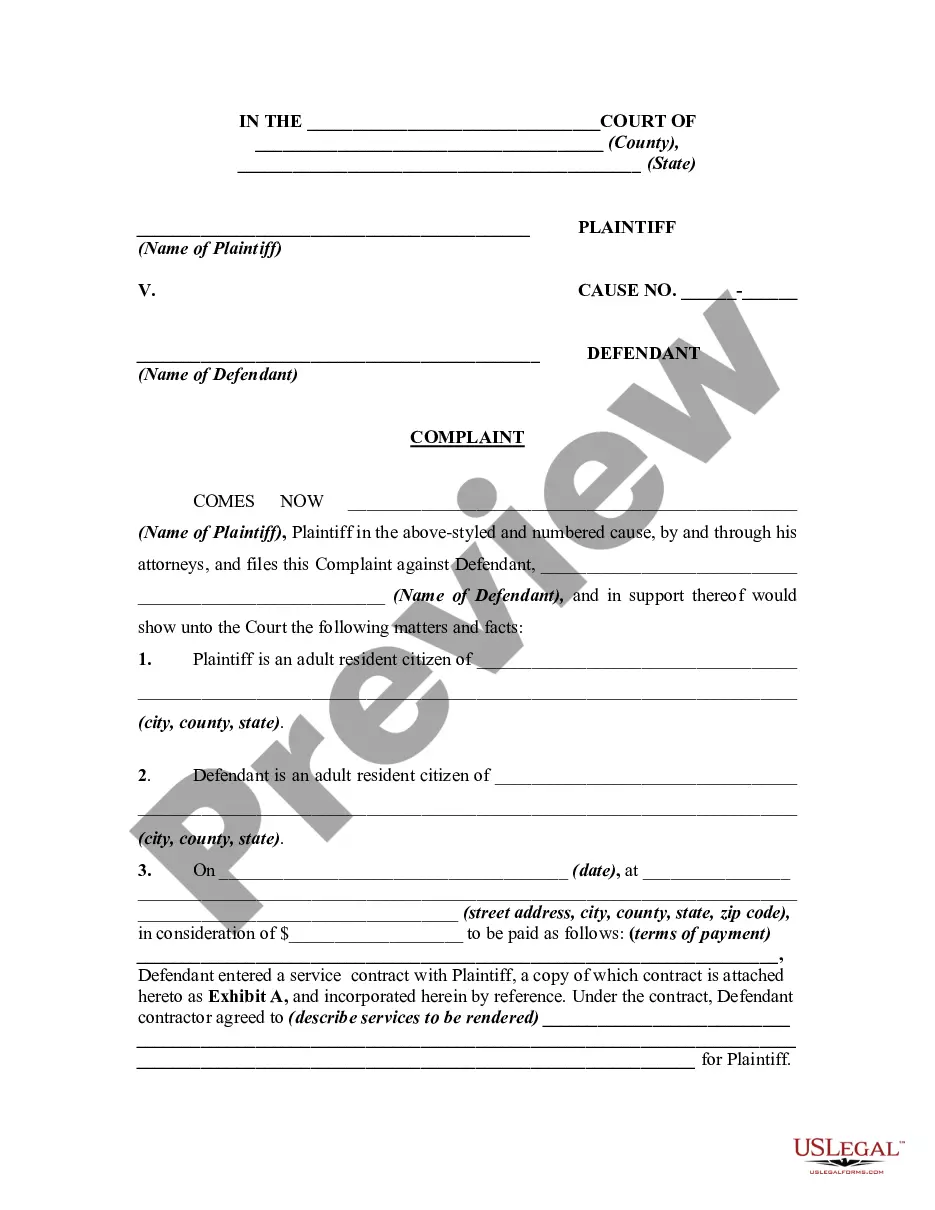
A brief description of the parties (e.g., their name and address). Allegations demonstrating that the court has subject matter jurisdiction, personal jurisdiction, and venue to adjudicate the claims in the complaint. A concise yet thorough statement of the factual allegations that form the basis of your complaint.
