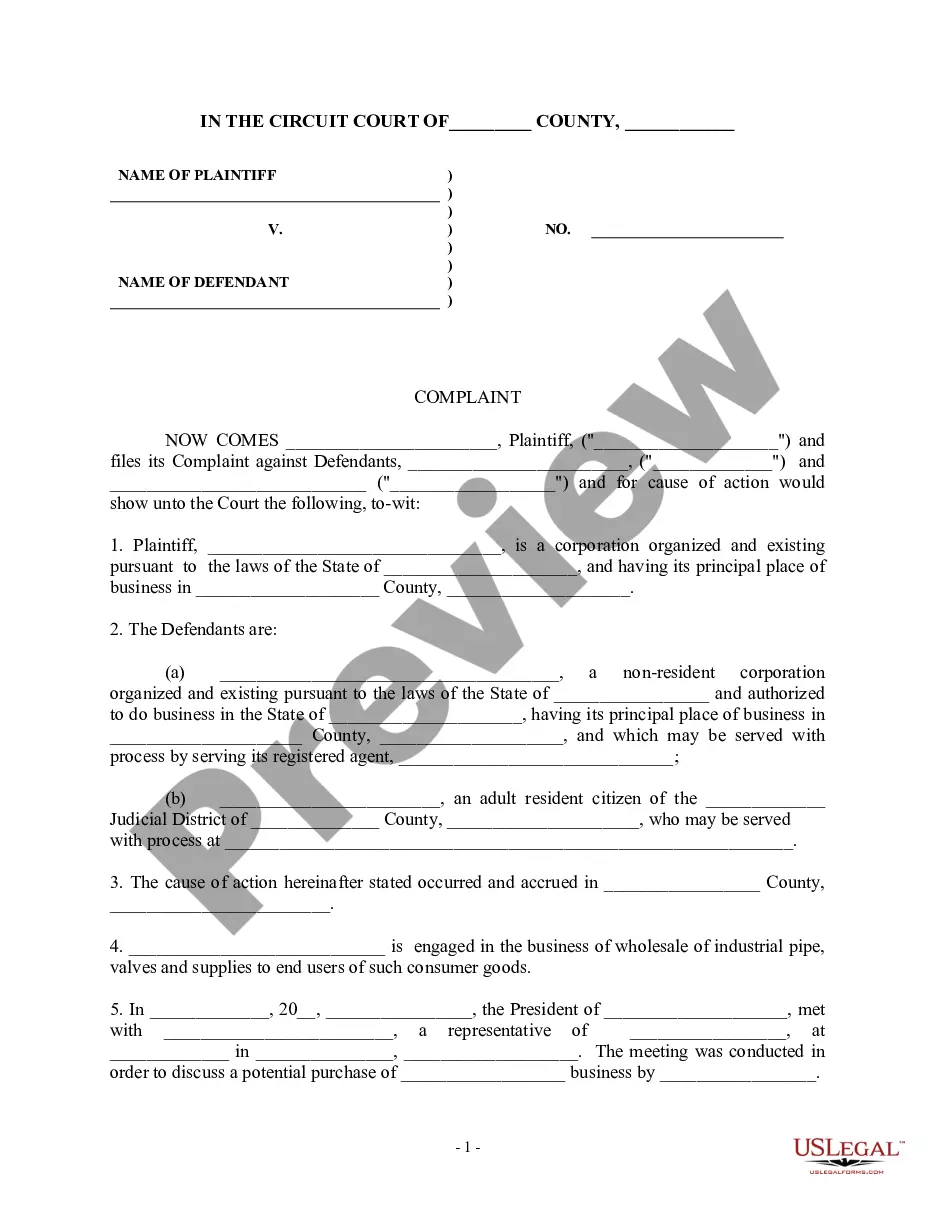
Complaint Injunctive Form With Two Points In Florida
Description












Get your form ready online
Our built-in tools help you complete, sign, share, and store your documents in one place.
Make edits, fill in missing information, and update formatting in US Legal Forms—just like you would in MS Word.
Download a copy, print it, send it by email, or mail it via USPS—whatever works best for your next step.
Sign and collect signatures with our SignNow integration. Send to multiple recipients, set reminders, and more. Go Premium to unlock E-Sign.
If this form requires notarization, complete it online through a secure video call—no need to meet a notary in person or wait for an appointment.
We protect your documents and personal data by following strict security and privacy standards.

Make edits, fill in missing information, and update formatting in US Legal Forms—just like you would in MS Word.

Download a copy, print it, send it by email, or mail it via USPS—whatever works best for your next step.

Sign and collect signatures with our SignNow integration. Send to multiple recipients, set reminders, and more. Go Premium to unlock E-Sign.

If this form requires notarization, complete it online through a secure video call—no need to meet a notary in person or wait for an appointment.

We protect your documents and personal data by following strict security and privacy standards.
Looking for another form?










Form popularity
FAQ
The Defendant's Answer Under federal rules, defendants generally have 21 days to file an answer after they are served with a complaint; the U.S. government has 60 or 90 days, depending on whether it has waived service.
A party seeking an injunction under general Florida case law must demonstrate: 1) irreparable harm; 2) a clear legal right; 3) an inadequate remedy at law; 4) consideration of the public interest.
Personal injury lawsuits such as those stemming from car accidents, medical malpractice, or slip and fall incidents are a one type of civil suit. Other common civil lawsuits include breach of contract, product liability, divorce and family law, property disputes, and housing disputes.
Failure to Respond: If a defendant fails to answer the complaint or file a motion to dismiss within the time limit set forth in the summons, the defendant is in default. The plaintiff can ask the court clerk to make a note of that fact in the file, a procedure called entry of default.
Florida Rule of Civil Procedure 1.070 (j) states that a complaint must be served upon the defendant within 120 days after the complaint is filed. If it is not served within this time frame, a motion to dismiss is appropriate and the case is dismissed without prejudice.
If the defendant does not properly respond to the summons and complaint, either by ignoring it or by procrastinating on a response, then the plaintiff may get a complete and valid judgment against him/her.
(1) Unless a different time is prescribed in a statute of Florida, a defendant must serve an answer within 20 days after service of original process and the initial pleading on the defendant, or not later than the date fixed in a notice by publication.
You need to answer each paragraph in the Complaint. Use the Line next to "comments" under each paragraph for additional information you want the Judge to know. The Answer is your side of the story, in response to what the Petitioner or Plaintiff has said in each paragraph of the Complaint or Petition.
A party seeking an injunction under general Florida case law must demonstrate: 1) irreparable harm; 2) a clear legal right; 3) an inadequate remedy at law; 4) consideration of the public interest.
Temporary Injunction Plaintiff will suffer irreparable harm; Plaintiff has no adequate remedy at law; Plaintiff has a substantial likelihood of success on the merits; and. A temporary injunction will serve the public interest.
