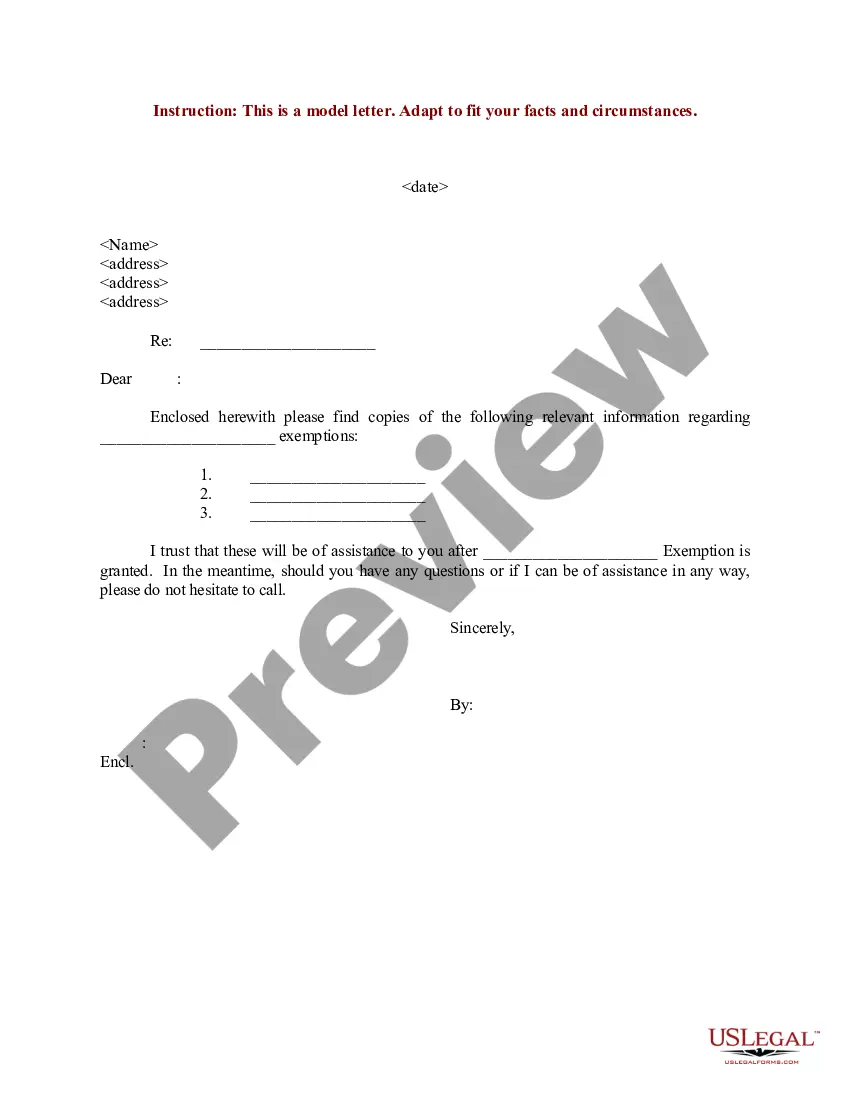
Sample Letter For Exemption In Salt Lake
Description
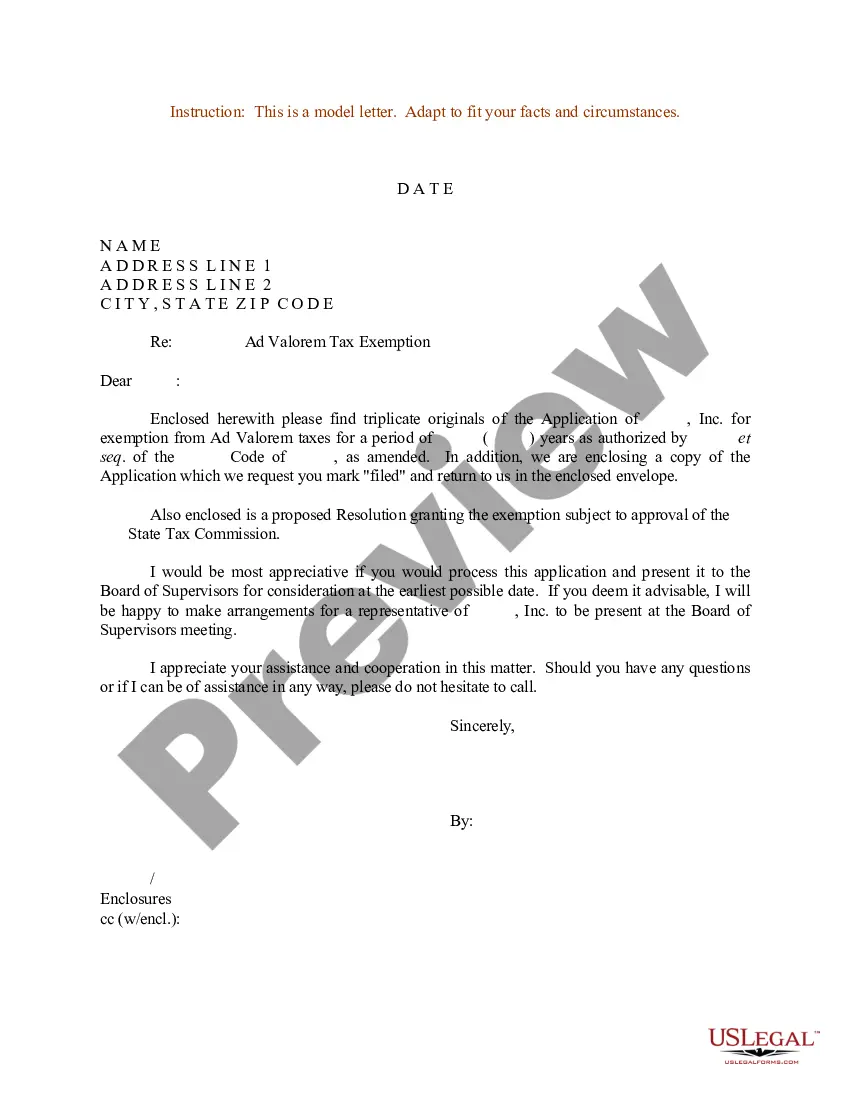
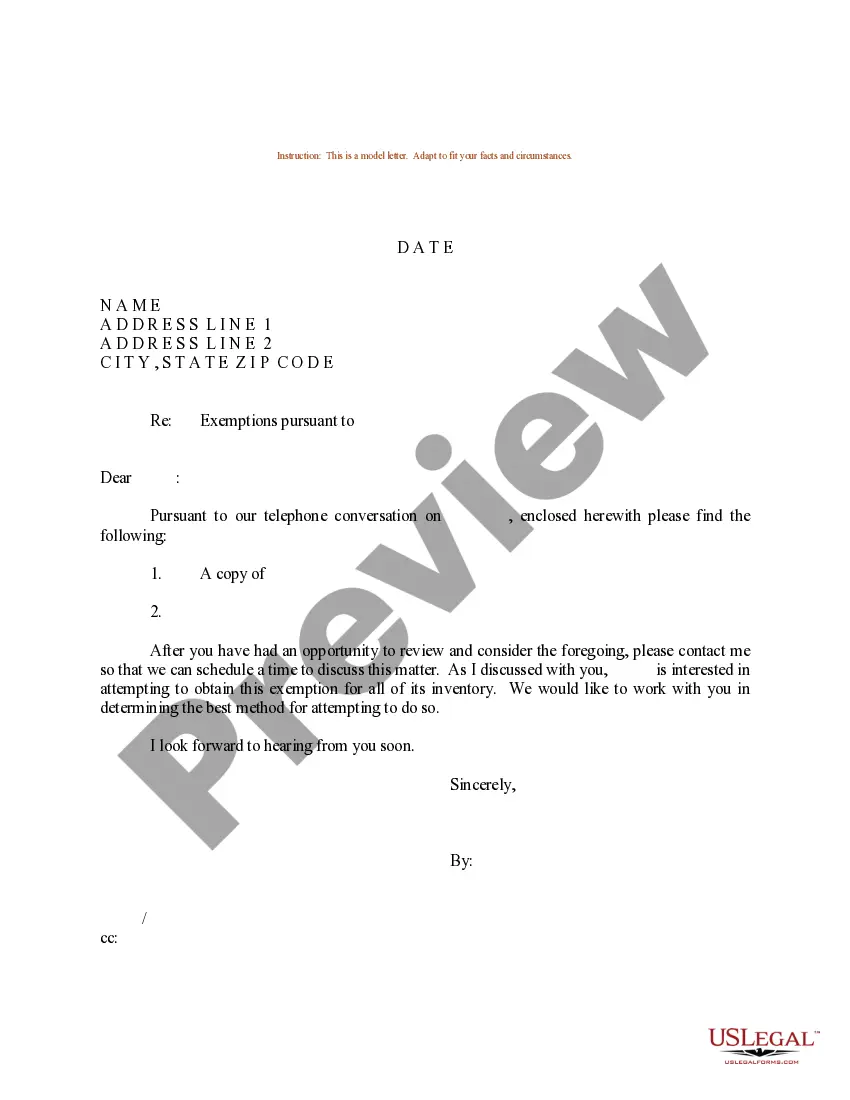
Get your form ready online
Our built-in tools help you complete, sign, share, and store your documents in one place.
Make edits, fill in missing information, and update formatting in US Legal Forms—just like you would in MS Word.
Download a copy, print it, send it by email, or mail it via USPS—whatever works best for your next step.
Sign and collect signatures with our SignNow integration. Send to multiple recipients, set reminders, and more. Go Premium to unlock E-Sign.
If this form requires notarization, complete it online through a secure video call—no need to meet a notary in person or wait for an appointment.
We protect your documents and personal data by following strict security and privacy standards.

Make edits, fill in missing information, and update formatting in US Legal Forms—just like you would in MS Word.

Download a copy, print it, send it by email, or mail it via USPS—whatever works best for your next step.

Sign and collect signatures with our SignNow integration. Send to multiple recipients, set reminders, and more. Go Premium to unlock E-Sign.

If this form requires notarization, complete it online through a secure video call—no need to meet a notary in person or wait for an appointment.

We protect your documents and personal data by following strict security and privacy standards.
Looking for another form?
Form popularity
FAQ
You must notify the county when you have a primary residential property on which you have claimed the homeowner's exemption and to which you are no longer entitled. You must also report on your Utah income tax return that you no longer qualify for the homeowner's exemption on your primary residence.
If your federal adjusted gross income is less than or equal to your federal standard deduction, you are exempt from Utah income tax.
The Utah State Constitution, Article XIII, § 3, allows County Assessors to exempt from taxation 45% of the fair market value of residential property and up to one acre of land. Statute defines residential property, for purposes of the exemption, to be a primary residence.
Utah nonprofit corporations can obtain an exemption on state sales tax if they have been granted 501c3 status by the federal government. To apply for the state exemption, nonprofits need to complete and submit Form TC-160 and a copy of the IRS' Letter of Determination to the Utah State Tax Commission.
How Much Is the Homestead Exemption in a Utah Bankruptcy? Utah Homestead Exemption Homestead exemption amount $45,100; $5,400 if not primary residence Can spouses who file a joint bankruptcy double the exemption? No. Homestead exemption law Utah Code Ann. §§ 78B-5-503; 78B-5-5042 more rows
General Information. The Utah State Constitution, Article XIII, § 3, allows County Assessors to exempt from taxation 45% of the fair market value of residential property and up to one acre of land. Statute defines residential property, for purposes of the exemption, to be a primary residence.
The Primary Residence Exemption is an exemption for people living in their property full time or that have rented their property to a single tenant year round. A property that is granted a primary residence exemption is only taxed at 55% of the market value of the home and up to one acre of land.