Sample Bonus Template For Executives In Virginia
Description
Get your form ready online
Our built-in tools help you complete, sign, share, and store your documents in one place.
Make edits, fill in missing information, and update formatting in US Legal Forms—just like you would in MS Word.
Download a copy, print it, send it by email, or mail it via USPS—whatever works best for your next step.
Sign and collect signatures with our SignNow integration. Send to multiple recipients, set reminders, and more. Go Premium to unlock E-Sign.
If this form requires notarization, complete it online through a secure video call—no need to meet a notary in person or wait for an appointment.
We protect your documents and personal data by following strict security and privacy standards.

Make edits, fill in missing information, and update formatting in US Legal Forms—just like you would in MS Word.

Download a copy, print it, send it by email, or mail it via USPS—whatever works best for your next step.

Sign and collect signatures with our SignNow integration. Send to multiple recipients, set reminders, and more. Go Premium to unlock E-Sign.

If this form requires notarization, complete it online through a secure video call—no need to meet a notary in person or wait for an appointment.

We protect your documents and personal data by following strict security and privacy standards.
Looking for another form?
Form popularity
FAQ
An executive bonus plan (Section 162) is a way for business owners or companies to provide additional supplemental benefits to key employees or executives of their choice.
The typical bonus amount can range from 1% to 15% of an employee's salary, usually depending on a number of factors such as industry, company performance, and individual or team accomplishments. The average bonus for employees continues to rise over time. In 2020, the average employee bonus was only 8.1%.
To devise an effective scheme you need to understand the employee's activities and what is involved. You then need to agree with them how their performance is going to be measured. Consider also what timescale you want to have for you staff to earn the bonus. It can be a monthly, quarterly, or annual bonus.
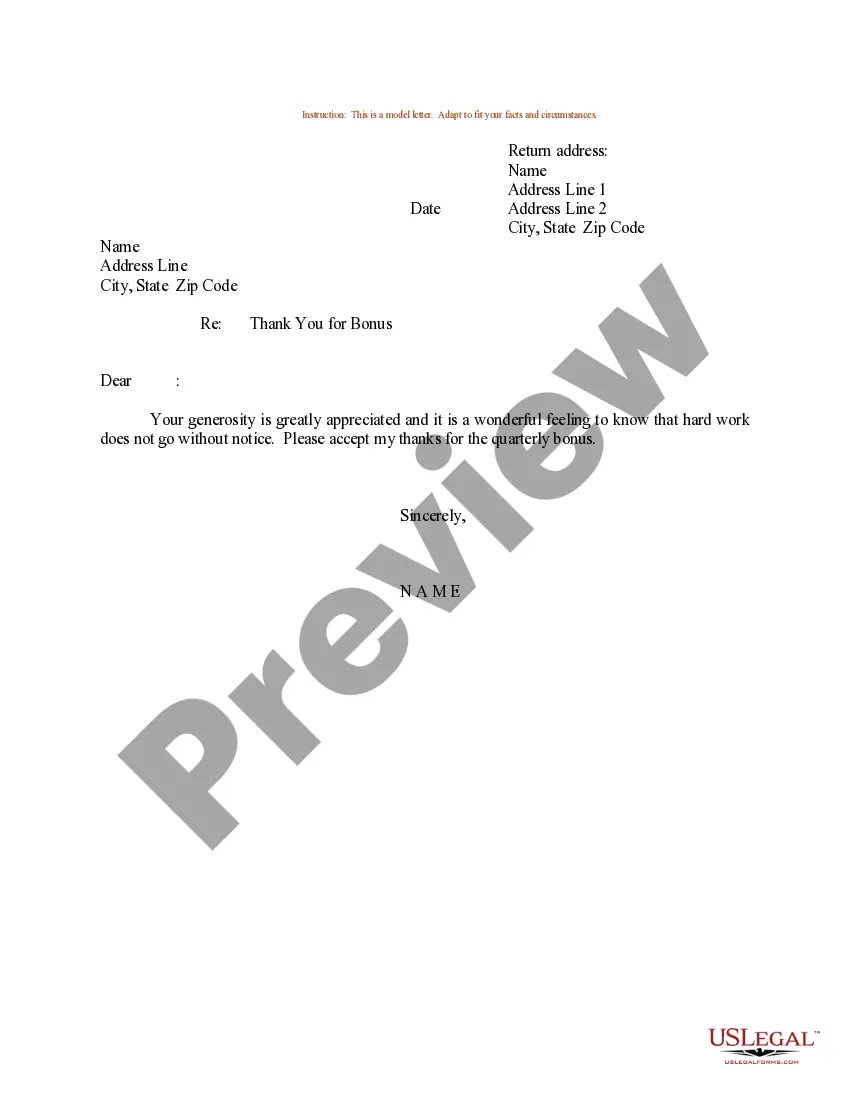
Consider saying ``Thank you for the bonus. I am so appreciative of it. I will continue giving my best every day''. Adding that second and third line makes all the difference.
Details to Include: Bonus Amount: Clearly state the amount of the bonus being awarded. Performance Period: Define the time frame for which the bonus is applicable. Performance Metrics or Criteria: Include any performance benchmarks or company-wide metrics that influenced the bonus calculation.
Allocate bonuses to each division or work group. Give each employee in a certain group -- for example, the administration division -- the same bonus. This method rewards and encourages cohesive group performance, but rewards non-performing team members at the same level as the hardest workers.
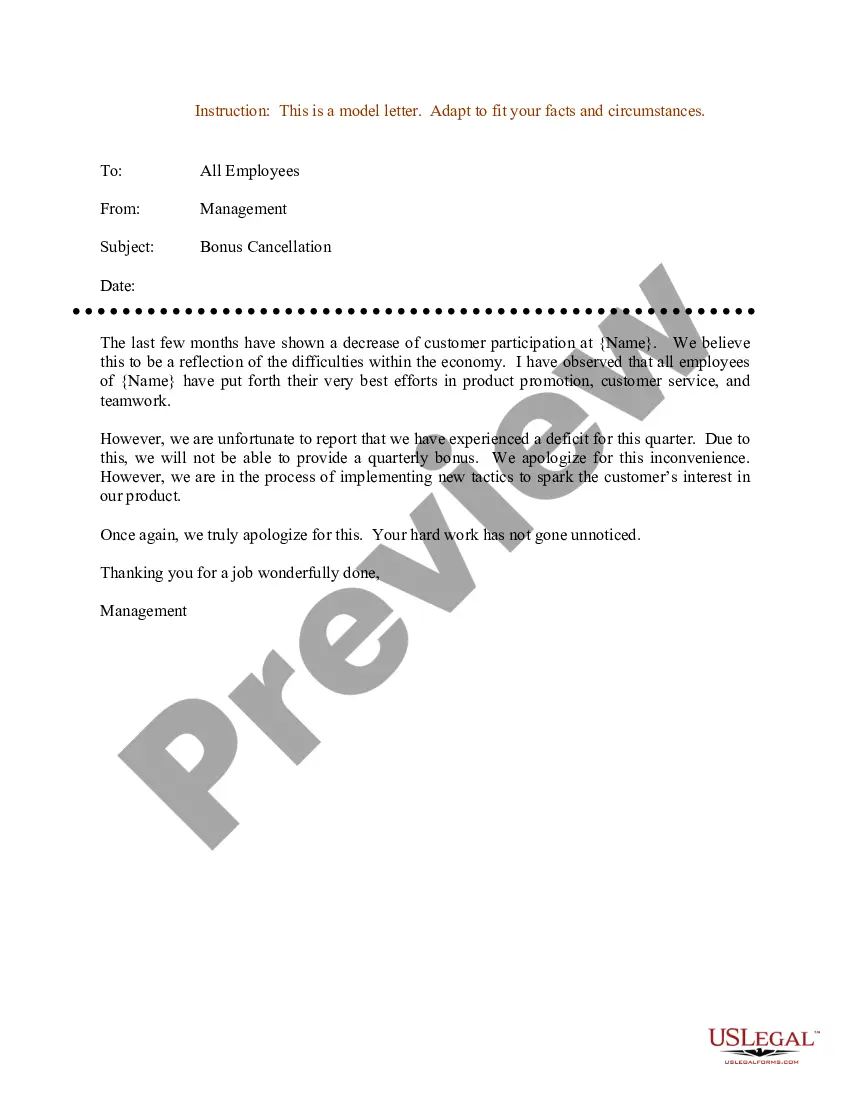
To: All Employees or Dear Name of Employee: I am pleased to announce that the numbers are now in for year, and we have not only met all our goals but exceeded them for sales and customer service! All of you have my congratulations and personal appreciation for this achievement!
The Incentive Bonus Policy compensates for performance above the acceptable standard. It is not intended to make up for or add to an employee's regular hourly wage or compensation for meeting the minimum standards of your job position.
A management bonus clause outlines the conditions under which a company's managers are eligible to receive additional compensation beyond their regular salary. It typically specifies performance metrics, financial targets, or other criteria that must be met for the bonus to be awarded.
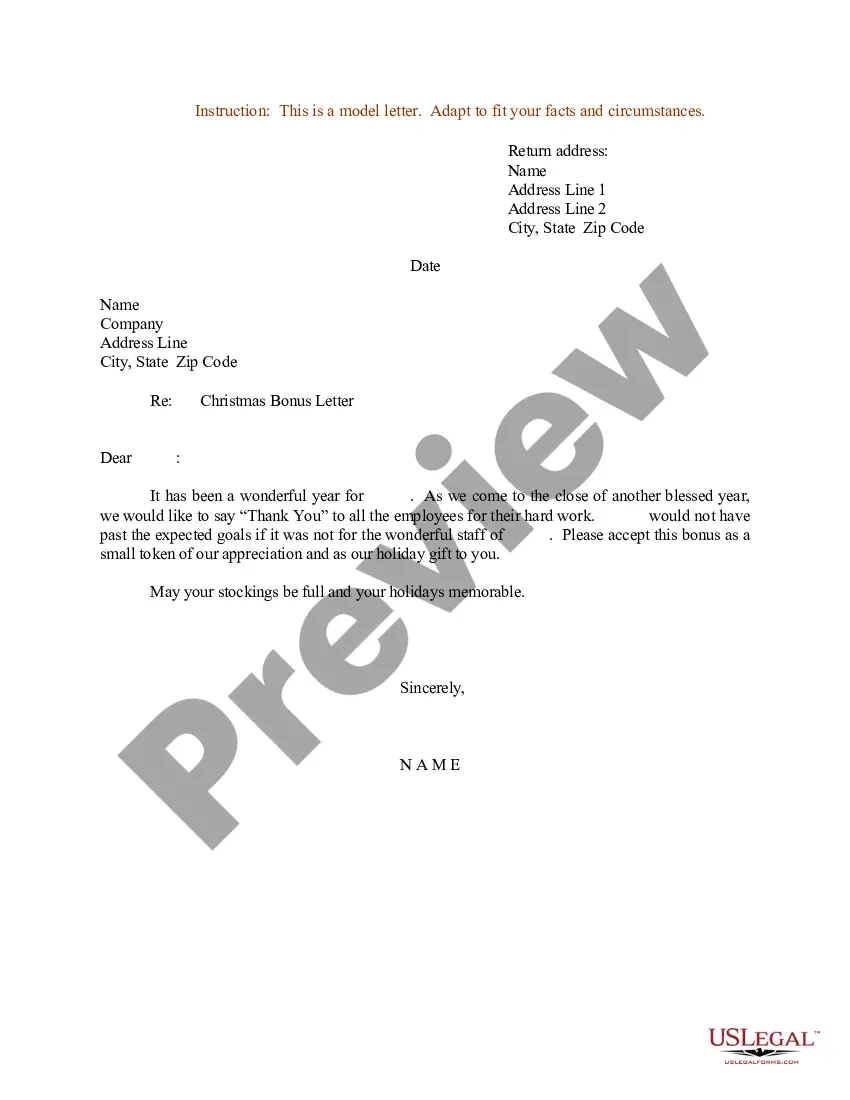
How to write a bonus letter Address the letter. In the beginning of the letter, label and address it like you start any correspondence with your team. Announce the bonus. Give details. Congratulate them. End the letter. Use a simple tone. Keep it brief. Consider a template.

