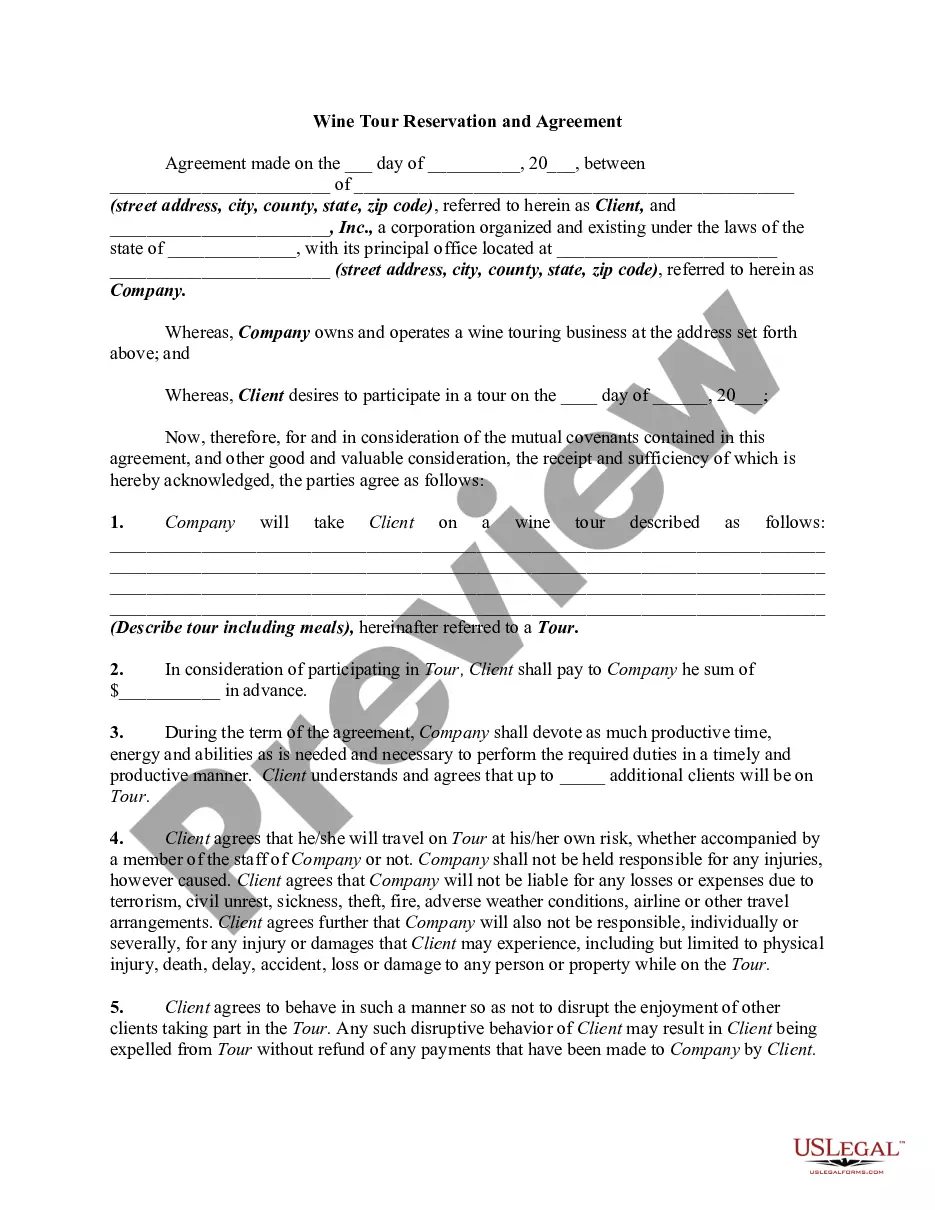
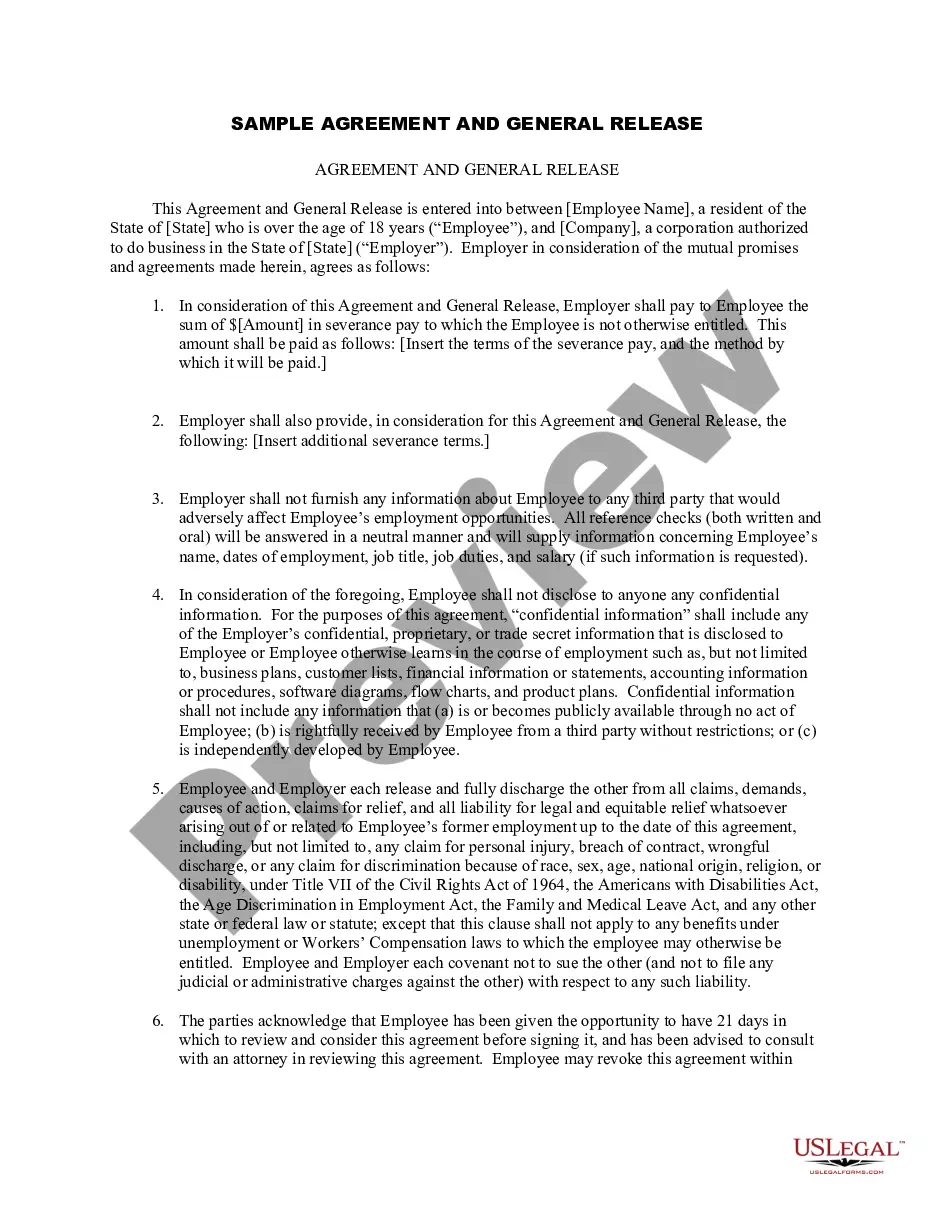
Sample Bonus Template With 30 Days In Utah
Description
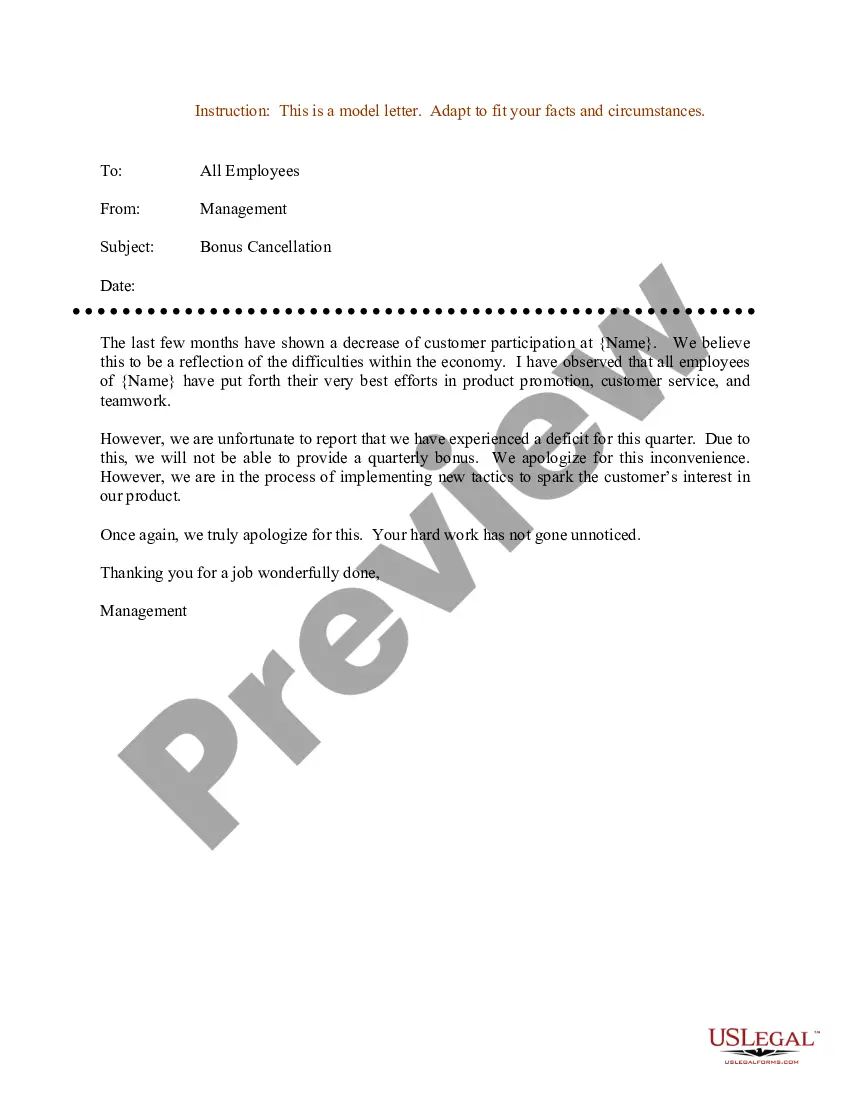
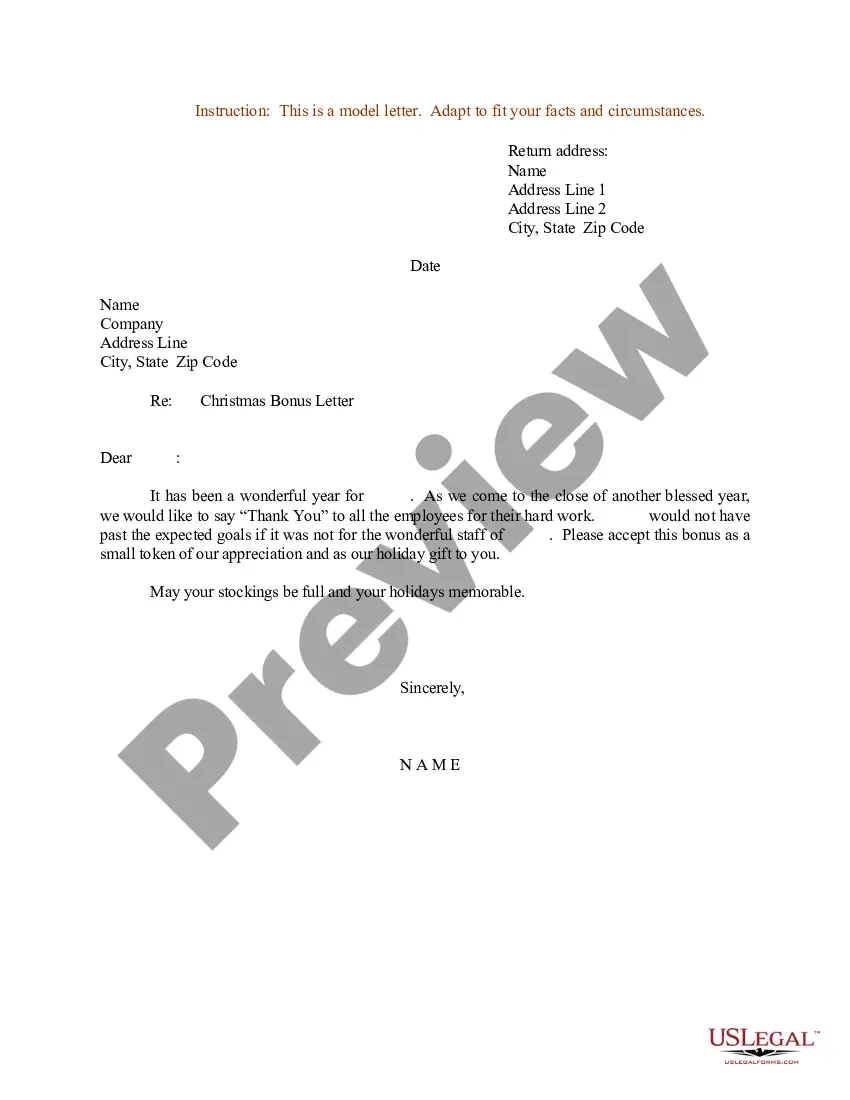
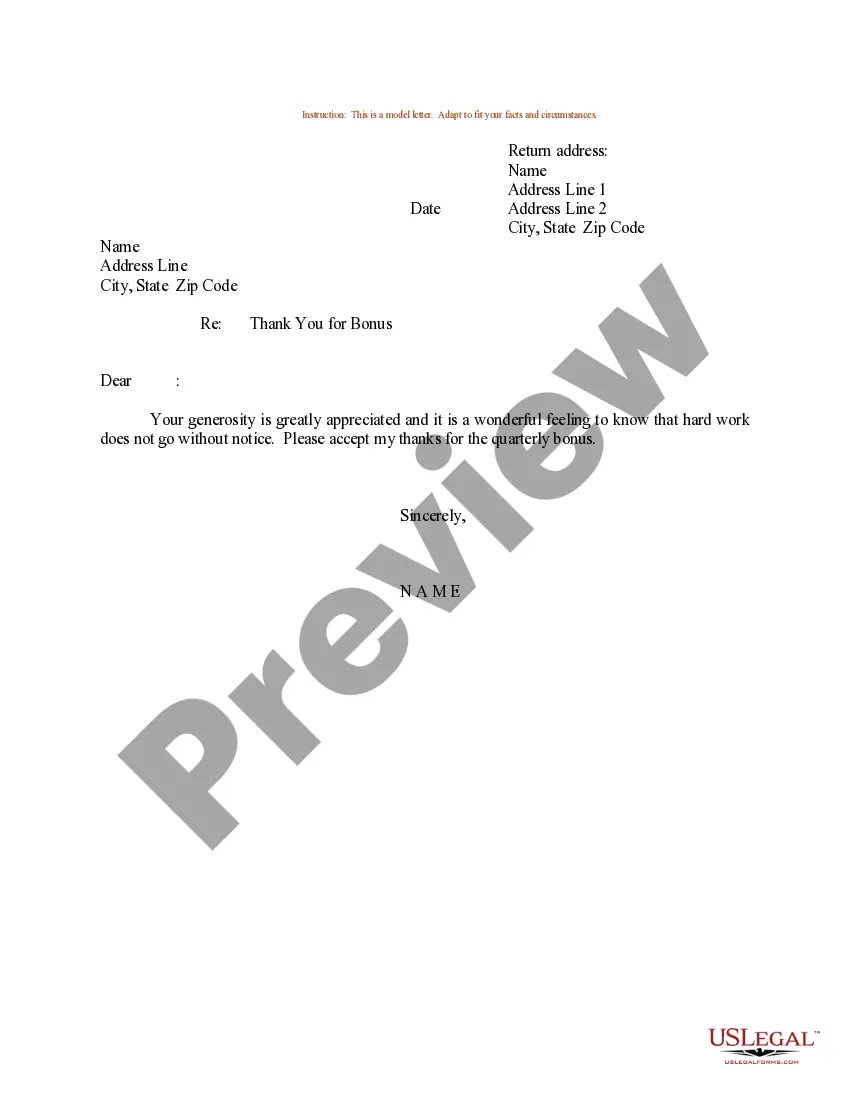
Get your form ready online
Our built-in tools help you complete, sign, share, and store your documents in one place.
Make edits, fill in missing information, and update formatting in US Legal Forms—just like you would in MS Word.
Download a copy, print it, send it by email, or mail it via USPS—whatever works best for your next step.
Sign and collect signatures with our SignNow integration. Send to multiple recipients, set reminders, and more. Go Premium to unlock E-Sign.
If this form requires notarization, complete it online through a secure video call—no need to meet a notary in person or wait for an appointment.
We protect your documents and personal data by following strict security and privacy standards.

Make edits, fill in missing information, and update formatting in US Legal Forms—just like you would in MS Word.

Download a copy, print it, send it by email, or mail it via USPS—whatever works best for your next step.

Sign and collect signatures with our SignNow integration. Send to multiple recipients, set reminders, and more. Go Premium to unlock E-Sign.

If this form requires notarization, complete it online through a secure video call—no need to meet a notary in person or wait for an appointment.

We protect your documents and personal data by following strict security and privacy standards.
Looking for another form?







Form popularity
FAQ
Dear Employee Name, We are pleased to present you with your year award in the amount of $__. This bonus award reflects your excellent performance, the contributions you made and the goals achieved on behalf of Company Name during the past year.
Create a written document outlining the employee bonus plan's details. Give all employees this information so they understand how and why bonuses are given. Provide details on the bonus types in your plan, why they exist and how employees can earn these bonuses, especially if a bonus is tied to a specific outcome.
4 tips for how to structure sign-on bonuses Paying a portion upfront and the rest after a probationary period. Paying in installments, with later payments due only if the employee remains for a set period, such as six months or a year.
Details to Include: Performance Criteria: Clearly outline the specific performance metrics or goals that the employee met or exceeded. Bonus Amount: State the exact amount of the bonus being awarded. Rationale for Award: Provide a brief explanation of why the bonus is being awarded.
The typical bonus amount can range from 1% to 15% of an employee's salary, usually depending on a number of factors such as industry, company performance, and individual or team accomplishments. The average bonus for employees continues to rise over time. In 2020, the average employee bonus was only 8.1%.
How to write a bonus request letter Draft the structure of your letter. State why you're requesting the bonus. Provide evidence for why you're requesting the bonus. Invite the supervisor to discuss the bonus with you further. Proofread your letter before you deliver it.
The federal bonus flat tax rate is 22%. In California, bonuses are taxed currently at a rate of 10.23%. For example, if you earned a bonus for $5,000, you would owe $511.50 in taxes on that bonus to the state of California.
The flat withholding rate for bonuses is 22% — except when those bonuses are above $1 million. If your employee's bonus exceeds $1 million, congratulations to both of you on your success! These large bonuses are taxed at a flat rate of 37%.
The federal bonus tax withholding rate is typically 22%. However, employers could instead combine a bonus with your regular wages as though it's one of your usual paychecks—with your usual tax amount withheld. There are ways to reduce the tax impact of your bonus.

