Bonus Letter Sample For Business Proposal In Tarrant
Description
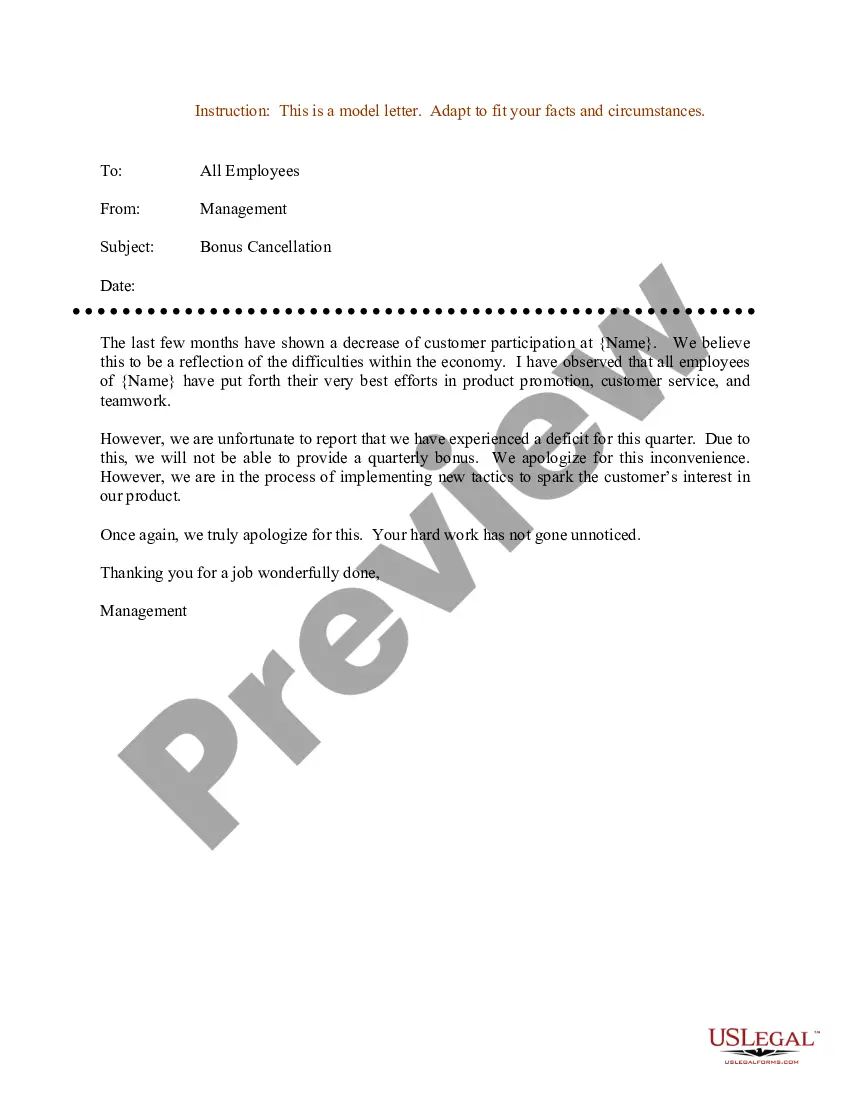
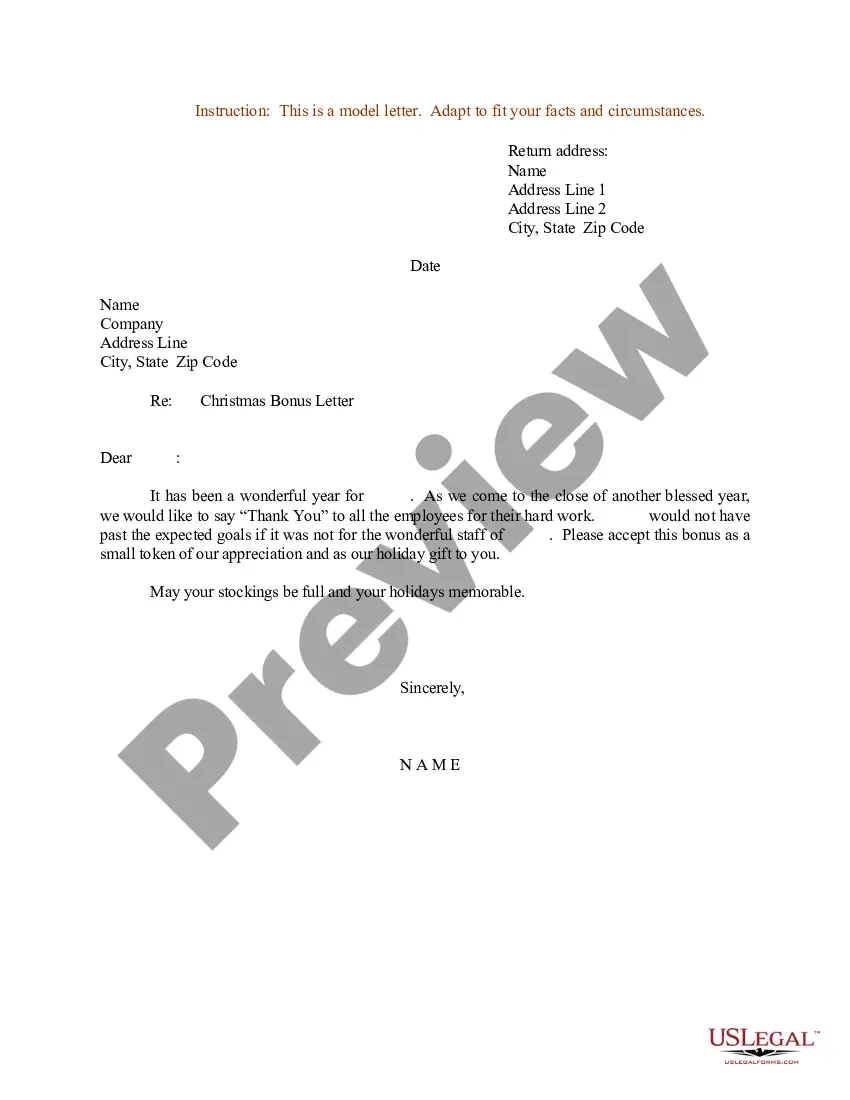
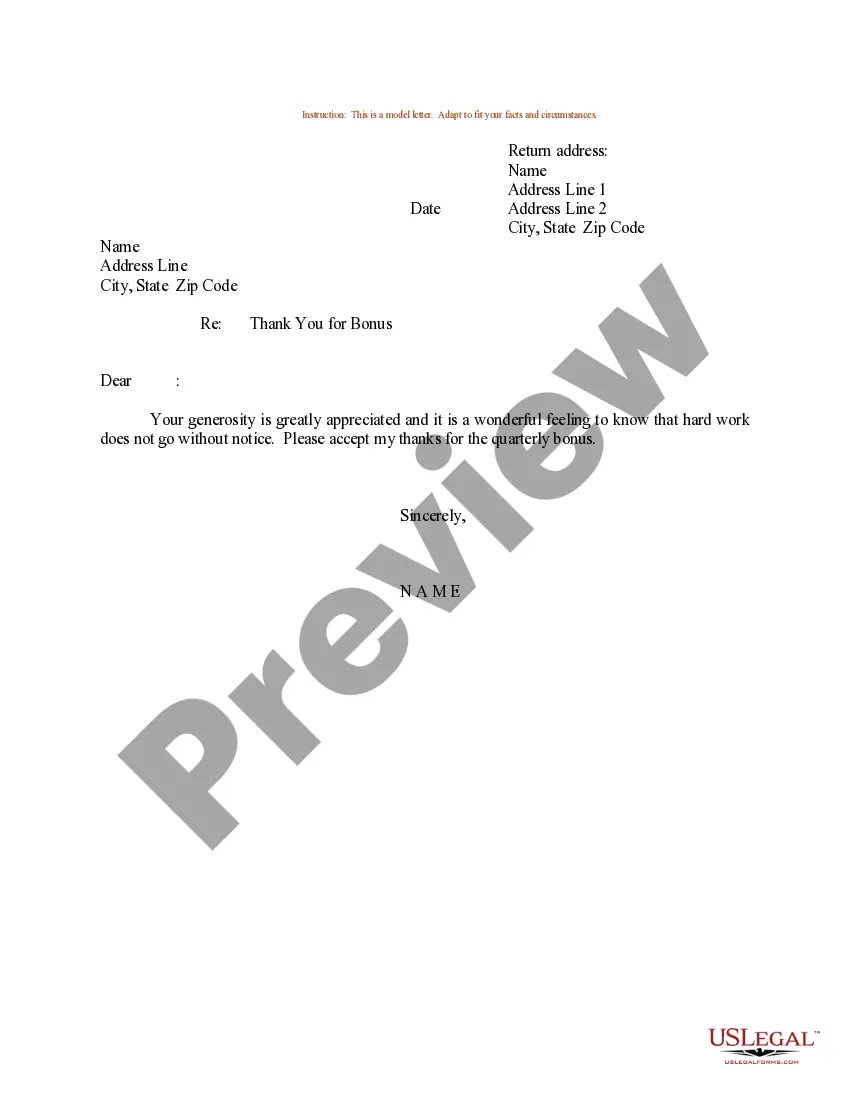
Get your form ready online
Our built-in tools help you complete, sign, share, and store your documents in one place.
Make edits, fill in missing information, and update formatting in US Legal Forms—just like you would in MS Word.
Download a copy, print it, send it by email, or mail it via USPS—whatever works best for your next step.
Sign and collect signatures with our SignNow integration. Send to multiple recipients, set reminders, and more. Go Premium to unlock E-Sign.
If this form requires notarization, complete it online through a secure video call—no need to meet a notary in person or wait for an appointment.
We protect your documents and personal data by following strict security and privacy standards.

Make edits, fill in missing information, and update formatting in US Legal Forms—just like you would in MS Word.

Download a copy, print it, send it by email, or mail it via USPS—whatever works best for your next step.

Sign and collect signatures with our SignNow integration. Send to multiple recipients, set reminders, and more. Go Premium to unlock E-Sign.

If this form requires notarization, complete it online through a secure video call—no need to meet a notary in person or wait for an appointment.

We protect your documents and personal data by following strict security and privacy standards.
Looking for another form?



Form popularity
FAQ
How to write a bonus letter Address the letter. In the beginning of the letter, label and address it like you start any correspondence with your team. Announce the bonus. Give details. Congratulate them. End the letter. Use a simple tone. Keep it brief. Consider a template.
How to write a bonus request letter Draft the structure of your letter. State why you're requesting the bonus. Provide evidence for why you're requesting the bonus. Invite the supervisor to discuss the bonus with you further. Proofread your letter before you deliver it.
What Should a Bonus Letter Include? Personalized Greeting. Use the employee's name and a friendly introduction. Recognition of Contributions. Highlight the employee's achievements over the past year. Bonus Formula and Attainment. Clearly explain how the bonus was calculated. Bonus Amount. Thank You and Encouragement.
Dear employee name, Thank you for all the hard work you've put in during this year. As always, your dedication and work ethic has not gone unnoticed. We would like to reward you with a bonus of amount to show our gratitude and appreciation during this festive period.
Rule 2. At the end of one-syllable words that have a vowel (a, e, i, o, u) IMMEDIATELY followed by either an f, l, or s or sometimes z, you MUST double the consonant. Examples: hill miss whiff buzz. fill puff pass fizz. off fell chess fuzz. lass mass toss jazz. Rule 3. Examples: ball tall mall call fall.
A bonus is a payment an employer gives to staff in addition to their basic wages. This usually relates to: company performance. individual performance.
An example of a discretionary bonus clause may look like the following. 'The Company's Board of Directors has the authority to grant the Executive a discretionary bonus each year. This bonus can amount to up to 33% of the Executive's Base Salary, depending on their performance for the Company in the previous year. '
Here are some steps to follow when negotiating your sign-on bonus: Understand your skill set and the value you can offer a company. Provide logical reasons for a higher sign-on bonus. Understand the long-term effects of a sign-on bonus. Understand the amount for which you're willing to settle.
Here are some seven steps to follow when composing a proposal letter: Introduce yourself and provide background information. State your purpose for the proposal. Define your goals and objectives. Highlight what sets you apart. Briefly discuss the budget and how funds will be used.

