Sample Bonus Template For Retention In Santa Clara
Description
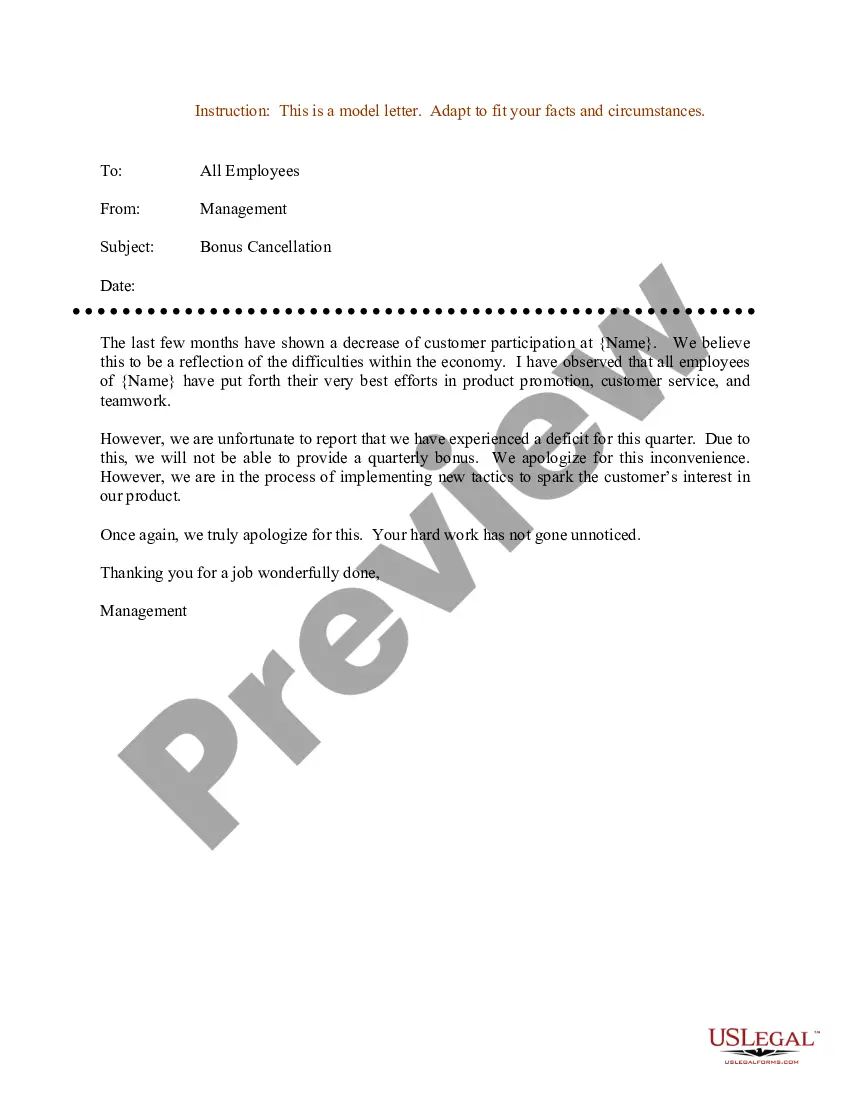
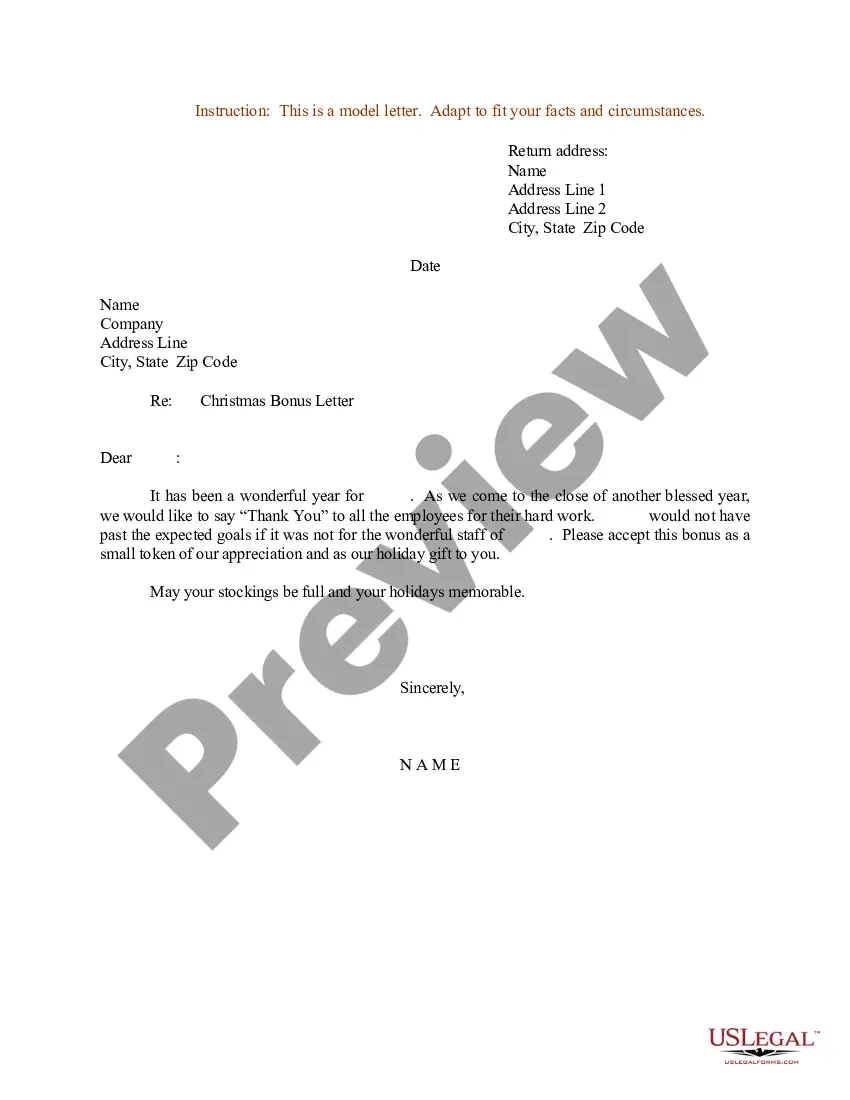
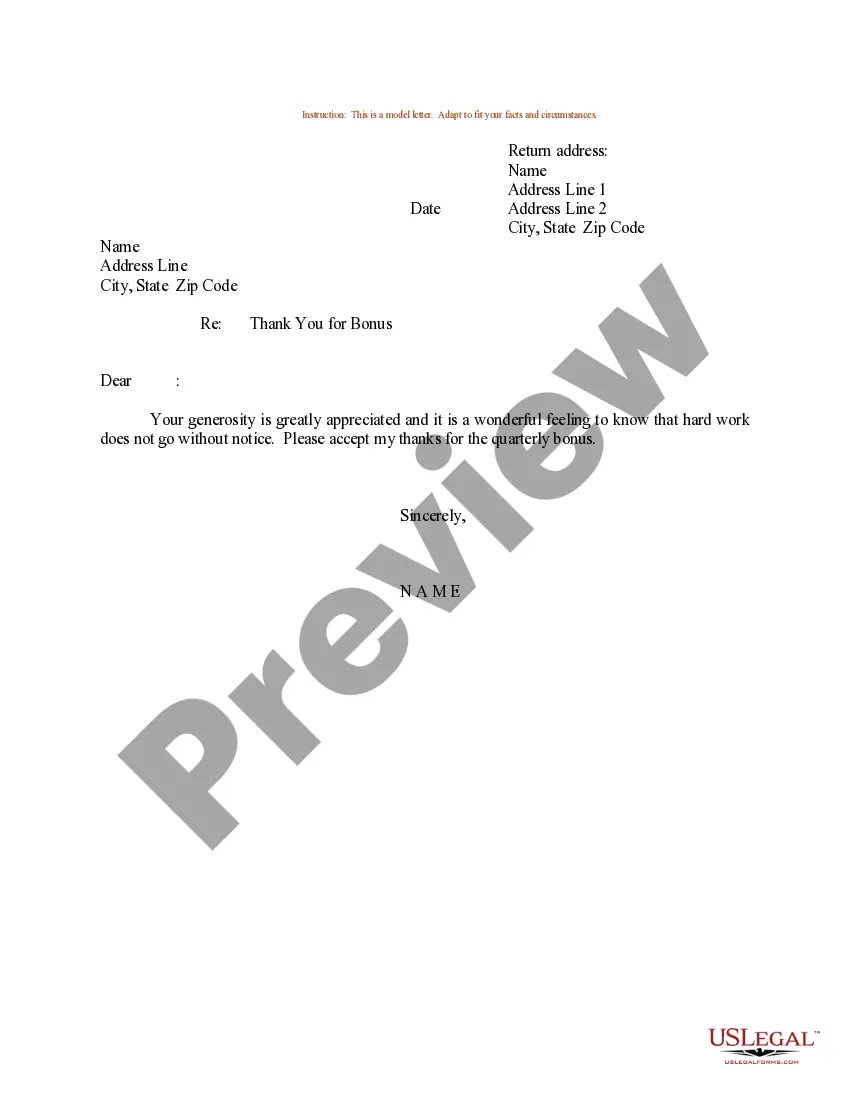
Get your form ready online
Our built-in tools help you complete, sign, share, and store your documents in one place.
Make edits, fill in missing information, and update formatting in US Legal Forms—just like you would in MS Word.
Download a copy, print it, send it by email, or mail it via USPS—whatever works best for your next step.
Sign and collect signatures with our SignNow integration. Send to multiple recipients, set reminders, and more. Go Premium to unlock E-Sign.
If this form requires notarization, complete it online through a secure video call—no need to meet a notary in person or wait for an appointment.
We protect your documents and personal data by following strict security and privacy standards.

Make edits, fill in missing information, and update formatting in US Legal Forms—just like you would in MS Word.

Download a copy, print it, send it by email, or mail it via USPS—whatever works best for your next step.

Sign and collect signatures with our SignNow integration. Send to multiple recipients, set reminders, and more. Go Premium to unlock E-Sign.

If this form requires notarization, complete it online through a secure video call—no need to meet a notary in person or wait for an appointment.

We protect your documents and personal data by following strict security and privacy standards.
Looking for another form?








Form popularity
FAQ
This requires clear communication in writing about the following: The retention period the employee is agreeing to by staying with the company. The value of the retention bonus that is being provided, and how the calculation was made and based on what factors.
Any employee is eligible for a retention bonus. Most often, companies only give retention bonuses to highly skilled employees that may be difficult to replace. Similarly, employees with specific company or project knowledge are more likely to receive a retention bonus.
Retention bonuses typically range from 10-25% of the employee's salary and are negotiated separately from the employment contract. A retention bonus example: If your CMO makes $352,000 a year, their yearly executive retention bonus at 10% would be $35,200.
⭐ Leadership and staff alike should know that employees can always ask for a retention bonus — they don't have to wait for their employer to offer one. If an individual requests a retention bonus, schedule a one-on-one meeting to discuss their proposal and explore their options.
The lesson is this: In proposing a retention bonus or agreement to your employer, you should first emphasize (a) why it would be in the interests of the employer, and, then (b) what benefit will come about to the employer if it offers the retention bonus.
Examples of retention bonuses in this category include bonuses tied to sales targets or project milestones. Project-Specific Retention Bonus: In cases where an employee's contribution is vital to the completion of a critical project, a project-specific retention bonus may be offered.
When writing a retention bonus letter, make sure you keep it short and simple. Start by showing that you value the employee, before moving into the details of what the retention bonus is. Offer a way for the employee to express interest in the offer, so that you can move forward with them signing the agreement.
The lesson is this: In proposing a retention bonus or agreement to your employer, you should first emphasize (a) why it would be in the interests of the employer, and, then (b) what benefit will come about to the employer if it offers the retention bonus.
Another common “red flag” in a retention agreement is the stipulation that the employee's receipt of the bonus will be determined in the employer's “sole discretion.” You do not want to put this type of power in your employer's hands.
How to Craft an Effective Employee Retention Letter Step 1: Start with a Professional Introduction. Step 2: Establish the Employee's Value. Step 3: Detail the Retention Bonus Terms. Step 4: Address Resignation and Termination Scenarios. Step 5: Include Legal and Administrative Clauses.

