Template For Bonus Structure In Pima
Description
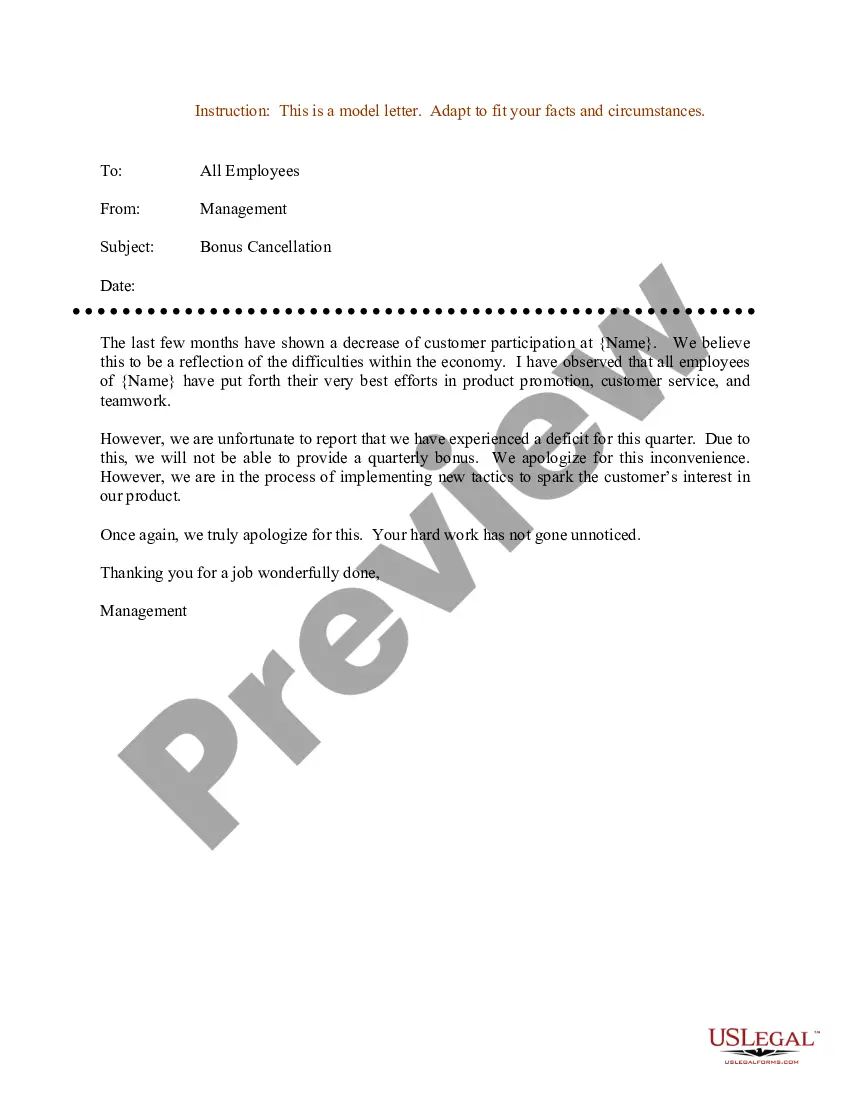
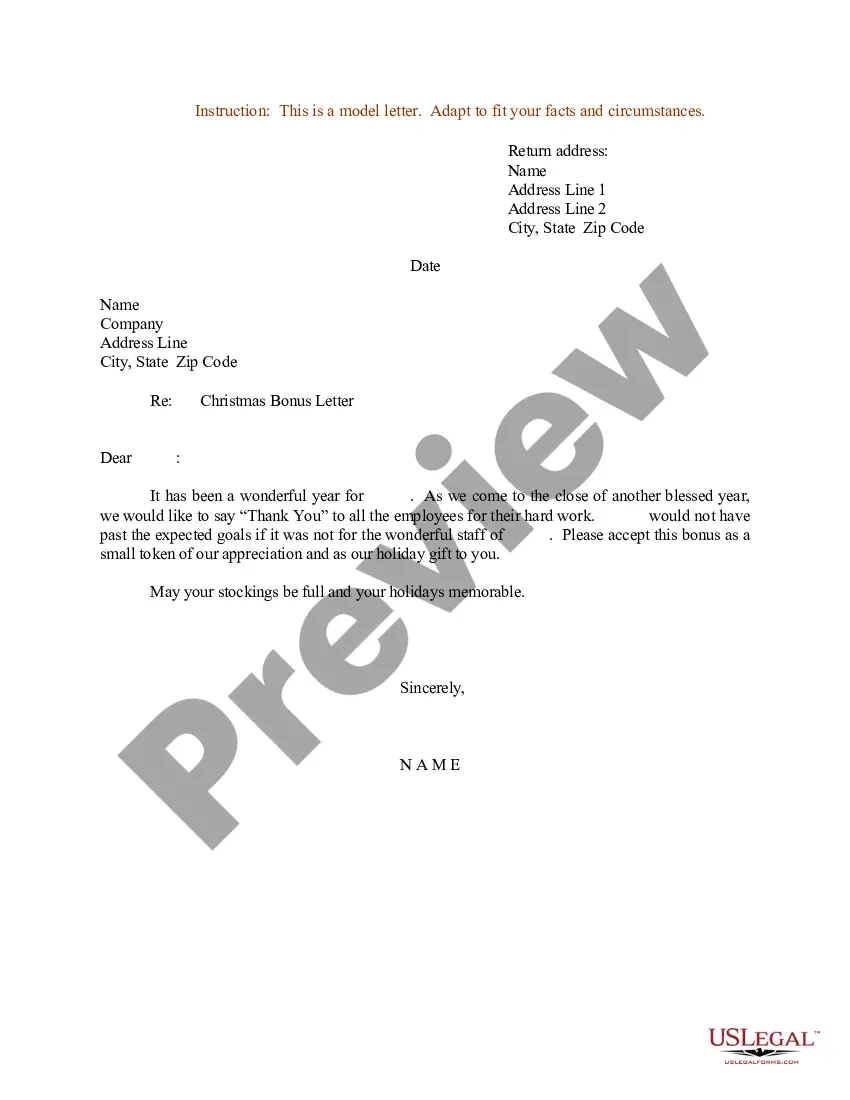
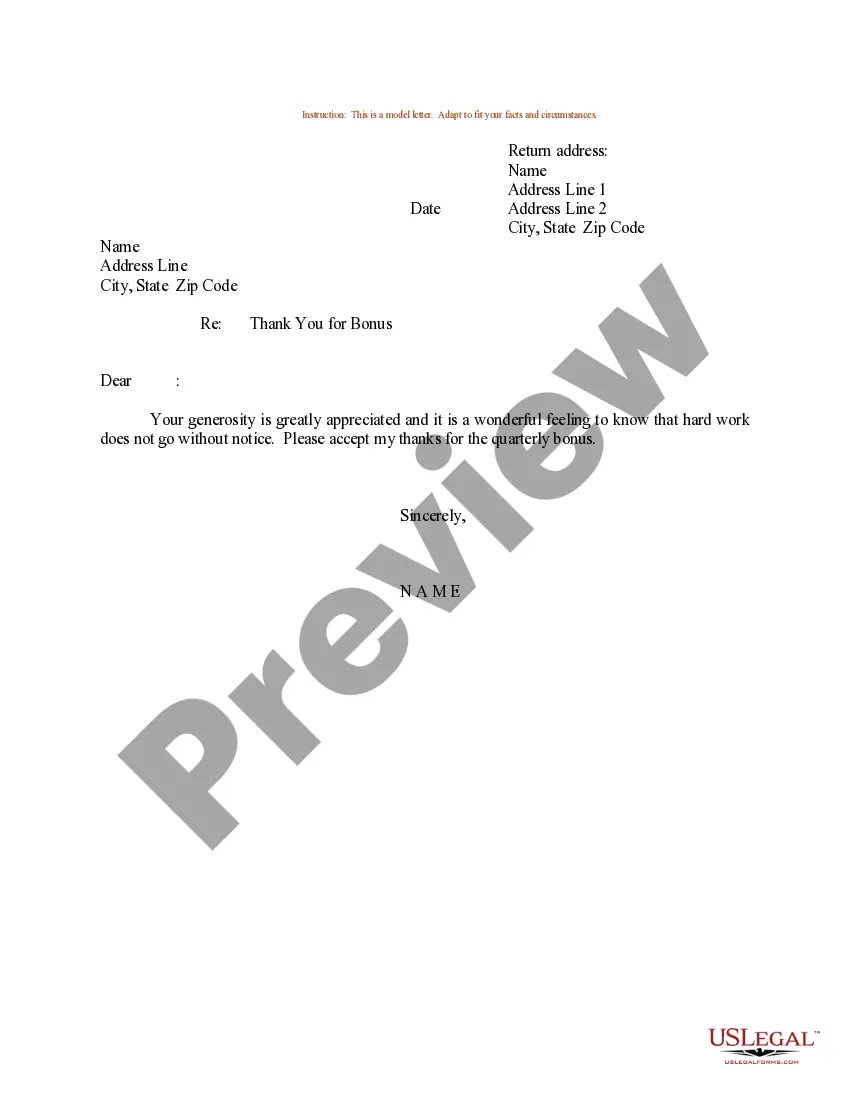
Get your form ready online
Our built-in tools help you complete, sign, share, and store your documents in one place.
Make edits, fill in missing information, and update formatting in US Legal Forms—just like you would in MS Word.
Download a copy, print it, send it by email, or mail it via USPS—whatever works best for your next step.
Sign and collect signatures with our SignNow integration. Send to multiple recipients, set reminders, and more. Go Premium to unlock E-Sign.
If this form requires notarization, complete it online through a secure video call—no need to meet a notary in person or wait for an appointment.
We protect your documents and personal data by following strict security and privacy standards.

Make edits, fill in missing information, and update formatting in US Legal Forms—just like you would in MS Word.

Download a copy, print it, send it by email, or mail it via USPS—whatever works best for your next step.

Sign and collect signatures with our SignNow integration. Send to multiple recipients, set reminders, and more. Go Premium to unlock E-Sign.

If this form requires notarization, complete it online through a secure video call—no need to meet a notary in person or wait for an appointment.

We protect your documents and personal data by following strict security and privacy standards.
Looking for another form?


Form popularity
FAQ
A stock bonus plan is a defined-contribution profit sharing plan, to which employers contribute company stock. These are considered to be qualified retirement plans, and as such, they're governed by the Employee Retirement Income Security Act (ERISA).
A common structure is tiered bonuses. Here, employees can achieve different "levels" of bonuses based on their performance metrics. For instance, reaching 80% of a target might secure a smaller bonus, while achieving 120% may earn a significantly larger one.
Be straightforward, be sincere and don't be afraid to ``toot your own horn''. Be respectful and let them know how much you love your job and what you do. Then, simply ask for your bonus (or raise). You can either leave out the amount, or if you do state an amount, be ready to negotiate.
A bonus plan is a compensation strategy used by organizations to reward employees for their performance, contributions, or achievement of specific goals. Bonus plans are designed to motivate employees, enhance performance, and align individual goals with organizational objectives.
Examples of performance bonus metrics typically include project milestones, sales targets, service quality, skill development, and customer satisfaction ratings. Straightforward metrics allow employees to adjust their performance and approaches ingly and track their progress for attaining bonuses.
Anything close to the nationwide average of 8% or above might be considered a good bonus percentage. If 8% isn't possible, employers could go down to around 5% for it to still be seen as worthwhile. Around 20% of an annual salary is usually considered generous but this could still depend on the industry.
HR leaders can incorporate these steps to create a dynamic performance bonus system: Define criteria. Train managers to coach their teams. Invite teams to take part in target-setting. Offer performance bonuses consistently. Align performance bonus goals with company goals.
You may get a bonus one year but nothing the next, so be sure you understand how your employer selects people to receive a year-end bonus. Executives receive higher bonuses that can multiply based on performance, while most employees earn bonuses equal to 1% to 5% of their overall salary.
Incentive-Based Compensation is a strategic approach to employee remuneration that links compensation directly to performance outcomes. Unlike traditional salary models, incentive-based systems reward employees for meeting or exceeding specific performance benchmarks.
The average bonus for employees in the US is 9.6% of salary, ing to reliable data from BLS and Gusto. The typical bonus amount can range from 1% to 15% of an employee's salary, usually depending on a number of factors such as industry, company performance, and individual or team accomplishments.

