Bonus Letter Sample For Authorization In Oakland
Description
Get your form ready online
Our built-in tools help you complete, sign, share, and store your documents in one place.
Make edits, fill in missing information, and update formatting in US Legal Forms—just like you would in MS Word.
Download a copy, print it, send it by email, or mail it via USPS—whatever works best for your next step.
Sign and collect signatures with our SignNow integration. Send to multiple recipients, set reminders, and more. Go Premium to unlock E-Sign.
If this form requires notarization, complete it online through a secure video call—no need to meet a notary in person or wait for an appointment.
We protect your documents and personal data by following strict security and privacy standards.

Make edits, fill in missing information, and update formatting in US Legal Forms—just like you would in MS Word.

Download a copy, print it, send it by email, or mail it via USPS—whatever works best for your next step.

Sign and collect signatures with our SignNow integration. Send to multiple recipients, set reminders, and more. Go Premium to unlock E-Sign.

If this form requires notarization, complete it online through a secure video call—no need to meet a notary in person or wait for an appointment.

We protect your documents and personal data by following strict security and privacy standards.
Looking for another form?
Form popularity
FAQ
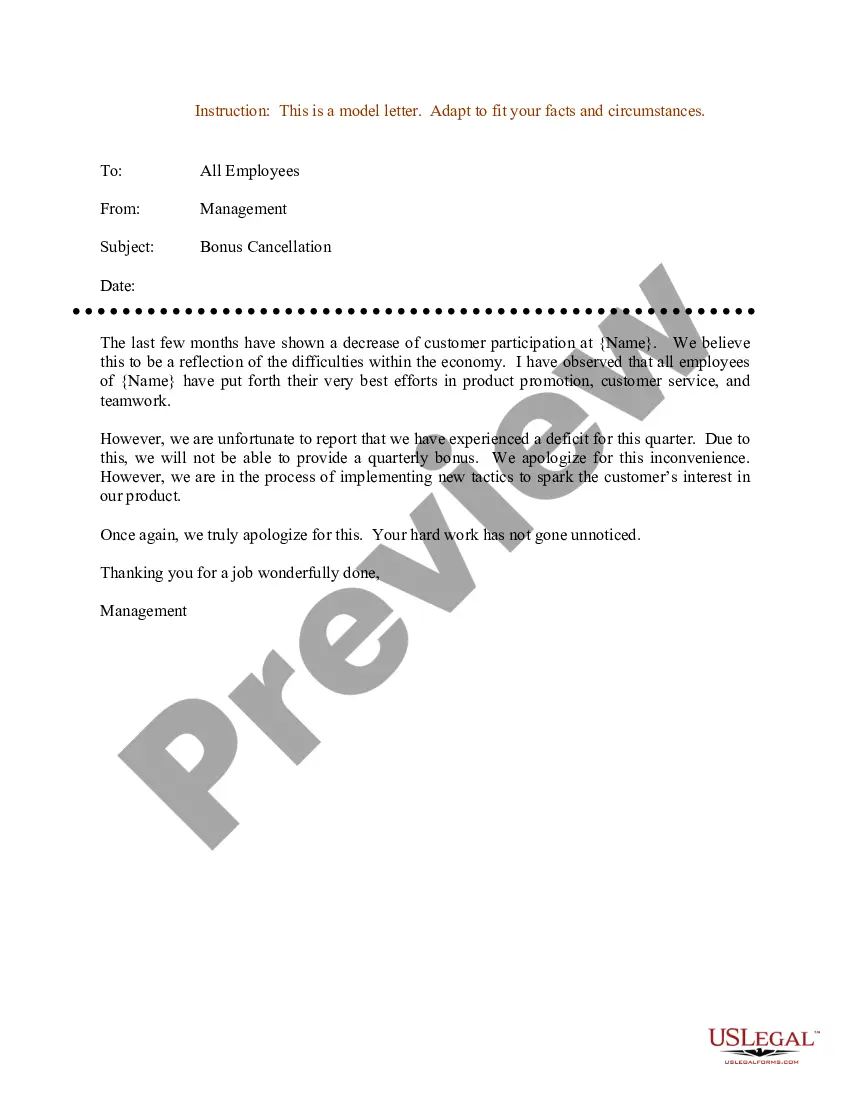
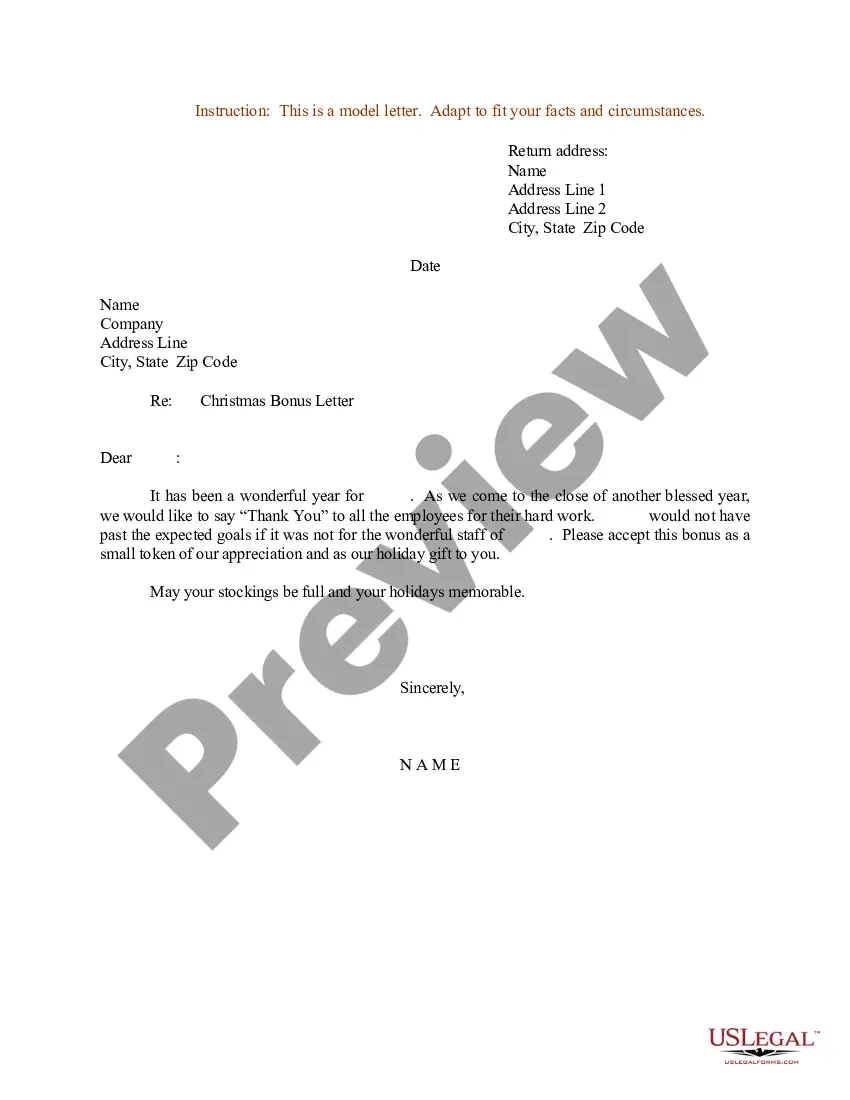
Dear employee name, Congratulations on your outstanding performance regarding project. Your dedication and excellence have not gone unnoticed, and therefore, you have been awarded a well-deserved bonus of amount. This amount will be transferred into your bank account on date.
How to write a bonus letter Address the letter. In the beginning of the letter, label and address it like you start any correspondence with your team. Announce the bonus. Give details. Congratulate them. End the letter. Use a simple tone. Keep it brief. Consider a template.
How to write a bonus request letter Draft the structure of your letter. State why you're requesting the bonus. Provide evidence for why you're requesting the bonus. Invite the supervisor to discuss the bonus with you further. Proofread your letter before you deliver it.
Rationale for Award: Provide a brief explanation of why the bonus is being awarded. This could include a summary of the employee's achievements and their impact on the organization. For example, “Your leadership in the XYZ project was instrumental in achieving our year-end goals.”
Keep the email clear and concise and tell them exactly what you are looking for and do not hesitate to share additional context on why you think your proposal is reasonable. Maintain a professional tone throughout the email and be very specific about why you are asking for the bonus without sounds prudish or arrogant.
In your letter, be concise and professional, outlining your accomplishments, the value you bring to the company, and your salary expectations. Use specific examples and data to support your request, and express your enthusiasm for continuing to contribute to the company's success.
Be straightforward, be sincere and don't be afraid to ``toot your own horn''. Be respectful and let them know how much you love your job and what you do. Then, simply ask for your bonus (or raise). You can either leave out the amount, or if you do state an amount, be ready to negotiate.
Reward good performance: Bonuses can be given to recognize and reward employees for exceptional performance or for meeting certain performance targets. Show appreciation/Boost morale: Bonuses can be given as a way for companies to show appreciation to their employees and boost morale.
Consider saying ``Thank you for the bonus. I am so appreciative of it. I will continue giving my best every day''. Adding that second and third line makes all the difference.
To inform employees about their bonus, you can send a bonus letter. The bonus letter should include details such as the bonus amount, the reason for the bonus, and any performance criteria used to determine it. Sending a personalized bonus letter to employees adds a professional touch.

