Sample Bonus Policy In Nassau
Description
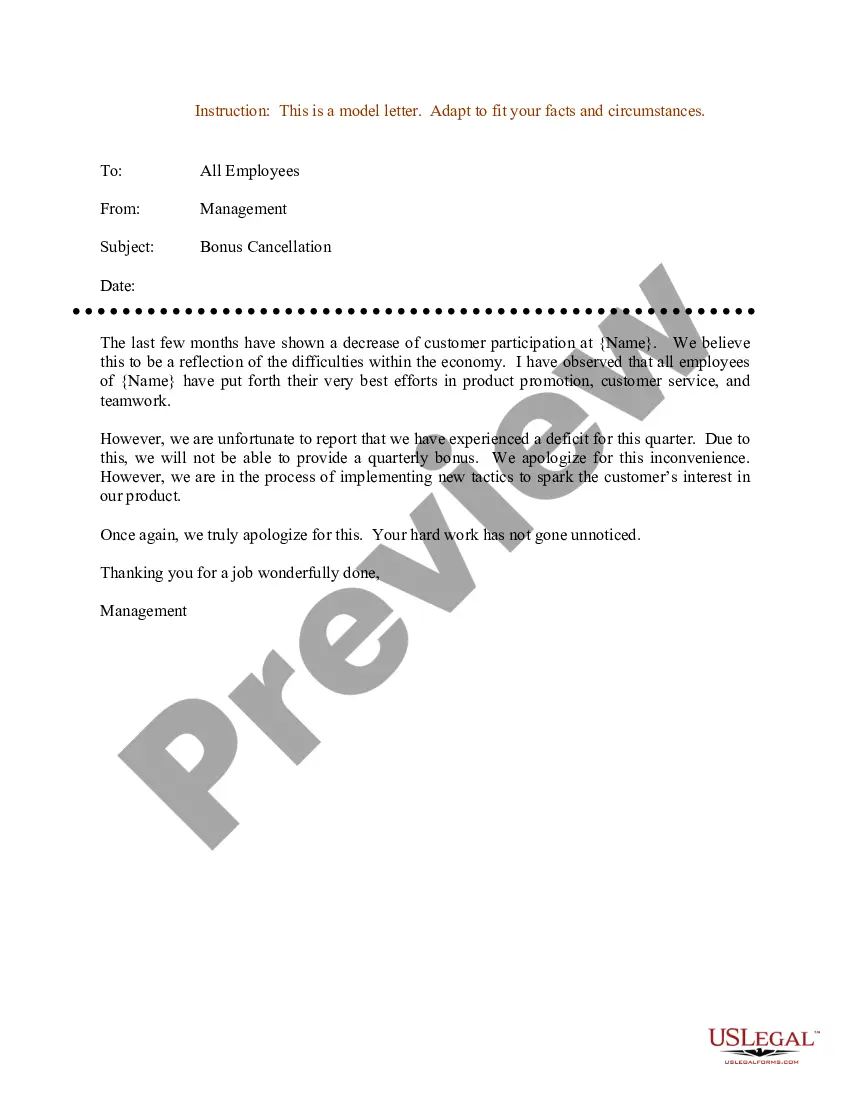
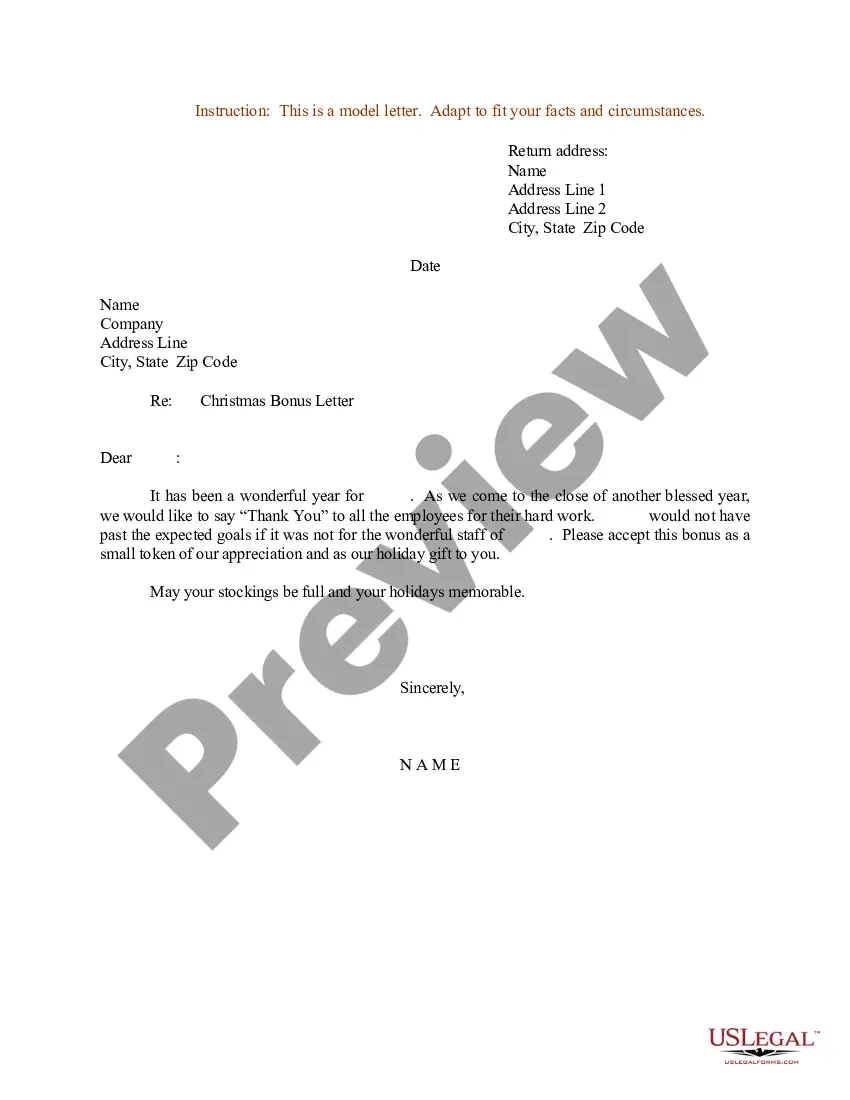
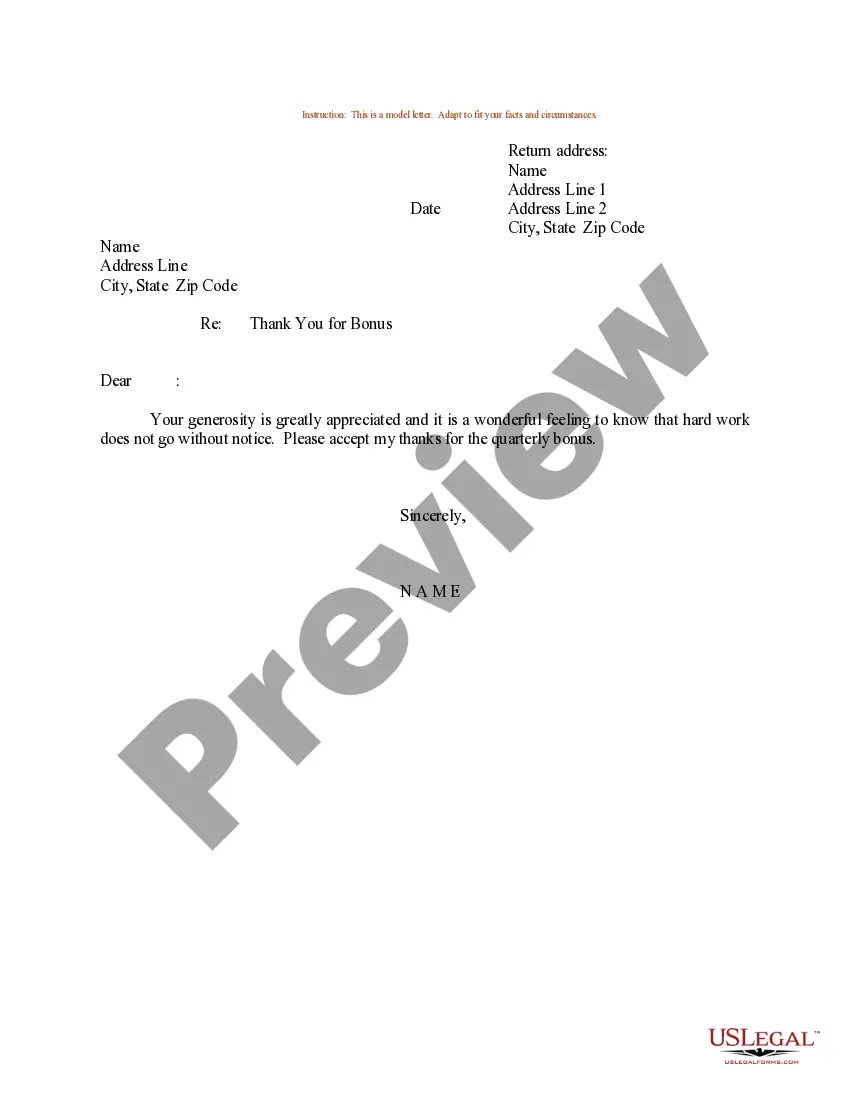
Get your form ready online
Our built-in tools help you complete, sign, share, and store your documents in one place.
Make edits, fill in missing information, and update formatting in US Legal Forms—just like you would in MS Word.
Download a copy, print it, send it by email, or mail it via USPS—whatever works best for your next step.
Sign and collect signatures with our SignNow integration. Send to multiple recipients, set reminders, and more. Go Premium to unlock E-Sign.
If this form requires notarization, complete it online through a secure video call—no need to meet a notary in person or wait for an appointment.
We protect your documents and personal data by following strict security and privacy standards.

Make edits, fill in missing information, and update formatting in US Legal Forms—just like you would in MS Word.

Download a copy, print it, send it by email, or mail it via USPS—whatever works best for your next step.

Sign and collect signatures with our SignNow integration. Send to multiple recipients, set reminders, and more. Go Premium to unlock E-Sign.

If this form requires notarization, complete it online through a secure video call—no need to meet a notary in person or wait for an appointment.

We protect your documents and personal data by following strict security and privacy standards.
Looking for another form?





Form popularity
FAQ
An annual bonus of 5-10% of your yearly salary is standard in a lot of industries, just as a 5-10% annual raise is considered standard. However, if you work on commission, you may see a significantly higher percentage. Your industry, company revenue, location, and level also heavily inform what's expected.
An employee bonus policy provides guidelines on how a company rewards its employees with additional financial incentives. It details eligibility, types of bonuses, and the procedures for granting them, ensuring fairness and transparency.
Bonuses are additional incentives offered to employees on top of their regular salary, often aimed at increasing productivity and enhancing employee retention. Most bonuses can be categorized as either discretionary (not guaranteed) or nondiscretionary (guaranteed, as shown in your employment contract).
A simple rule of thumb is to devote one-third of your bonus to savings, one-third to investments (including retirement), and one-third to fun. A simple rule of thumb is to devote one-third of your bonus to paying off debt, one-third to saving and one-third to fun.
The Bonus allocation service involves the fair and equitable distribution of bonus payments within an organization. It includes establishing transparent criteria, evaluating individual performance, and implementing a systematic process to allocate bonuses.
The Best Bonus Annuities Athene Performance Elite PLUS 15: Bonus: Up to 20% Term: 15 years. North American Secure Horizon Plus: Bonus: Up to 22% Term: 10 years. Midland IndexBuilder 14: Bonus: Up to 21% Term: 14 years.

