Template For Bonus Payout In Massachusetts
Description
Get your form ready online
Our built-in tools help you complete, sign, share, and store your documents in one place.
Make edits, fill in missing information, and update formatting in US Legal Forms—just like you would in MS Word.
Download a copy, print it, send it by email, or mail it via USPS—whatever works best for your next step.
Sign and collect signatures with our SignNow integration. Send to multiple recipients, set reminders, and more. Go Premium to unlock E-Sign.
If this form requires notarization, complete it online through a secure video call—no need to meet a notary in person or wait for an appointment.
We protect your documents and personal data by following strict security and privacy standards.

Make edits, fill in missing information, and update formatting in US Legal Forms—just like you would in MS Word.

Download a copy, print it, send it by email, or mail it via USPS—whatever works best for your next step.

Sign and collect signatures with our SignNow integration. Send to multiple recipients, set reminders, and more. Go Premium to unlock E-Sign.

If this form requires notarization, complete it online through a secure video call—no need to meet a notary in person or wait for an appointment.

We protect your documents and personal data by following strict security and privacy standards.
Looking for another form?







Form popularity
FAQ
Another common “red flag” in a retention agreement is the stipulation that the employee's receipt of the bonus will be determined in the employer's “sole discretion.” You do not want to put this type of power in your employer's hands.
When writing a retention bonus letter, make sure you keep it short and simple. Start by showing that you value the employee, before moving into the details of what the retention bonus is. Offer a way for the employee to express interest in the offer, so that you can move forward with them signing the agreement.
Massachusetts Court Finds Retention Bonuses Are Not Wages. A Massachusetts state appellate court recently ruled a retention bonus is a form of “contingent compensation” not subject to Massachusetts's wage laws.
A 20% bonus often falls within the standard range for directors, making it a less-than-exceptional reward. Average bonus amounts: The average bonus in the US is currently 9.6% of salary, with a range of 1% to 15% being typical.
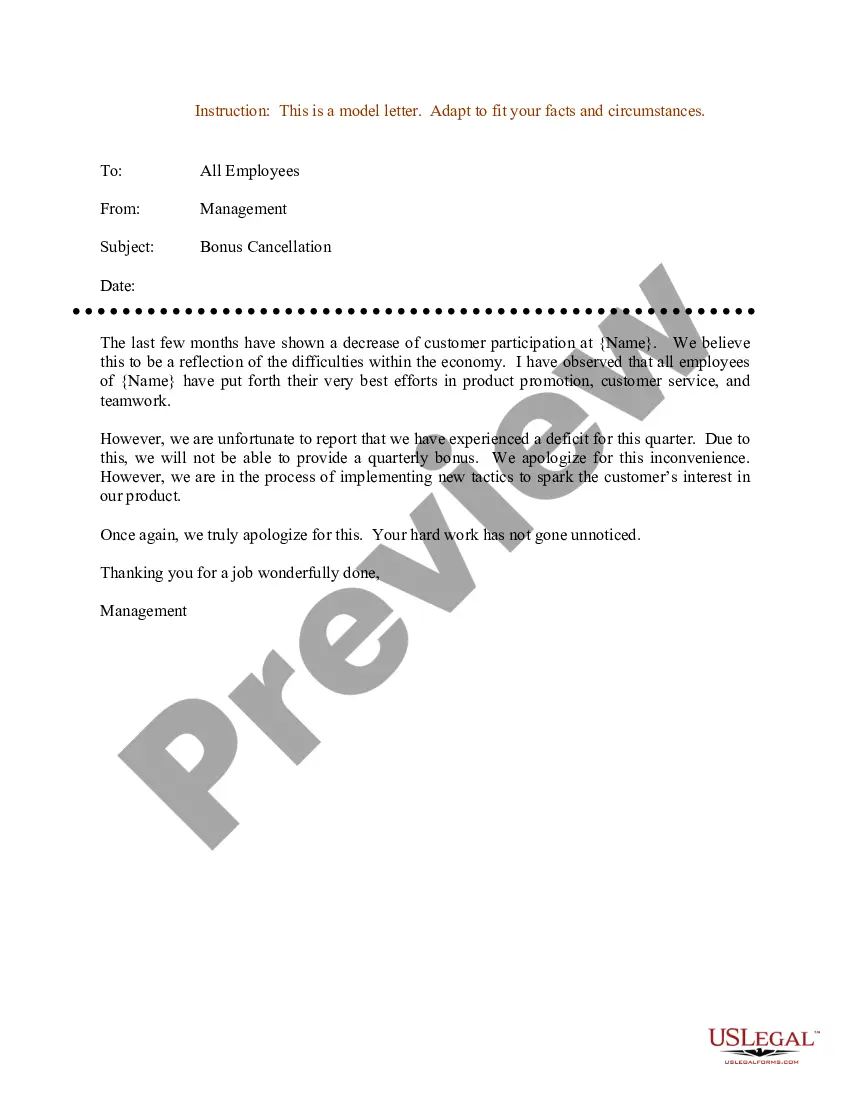
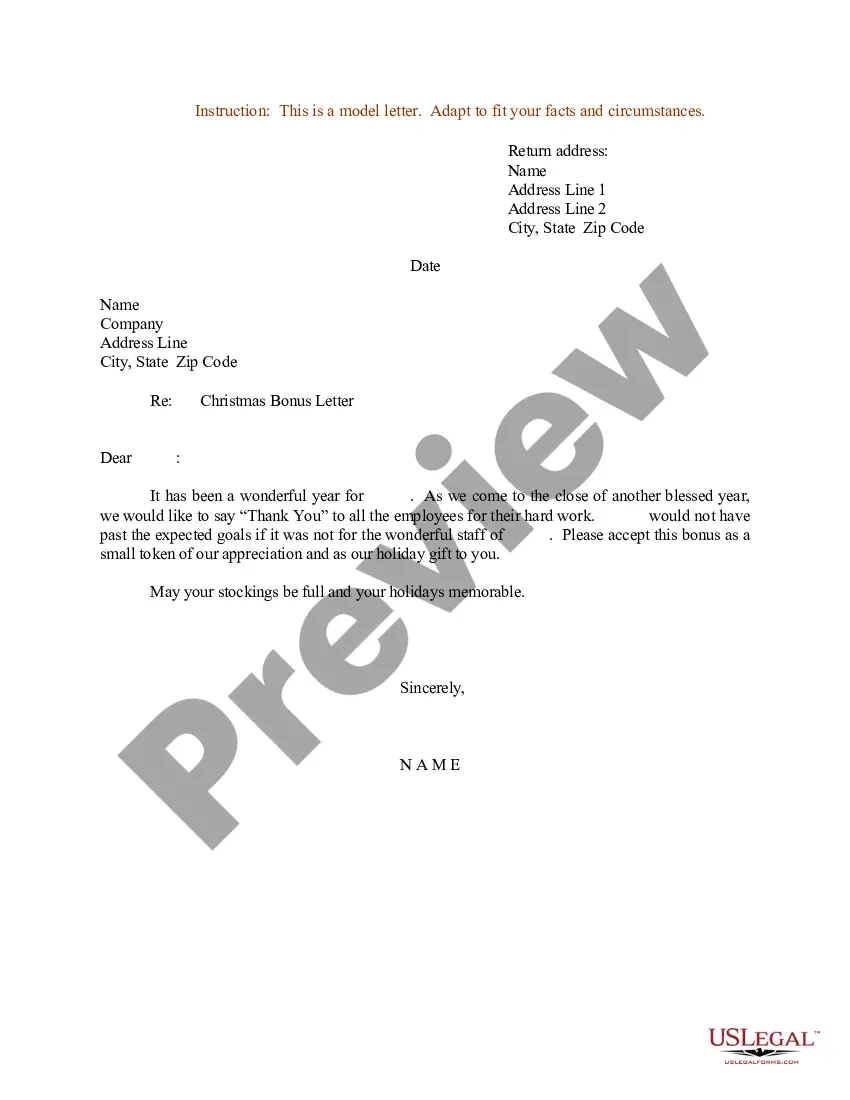
Subject: Bonus Award Notification Dear Employee's Name, We are pleased to inform you that you have been awarded a bonus in recognition of your exceptional performance over the past period. This bonus is a testament to your dedication, hard work, and significant contributions to our team.
An annual bonus of 5-10% of your yearly salary is standard in a lot of industries, just as a 5-10% annual raise is considered standard. However, if you work on commission, you may see a significantly higher percentage. Your industry, company revenue, location, and level also heavily inform what's expected.
If you're asking for a bonus for a specific project, provide facts and figures about the outcome of the project and how it exceeded the stakeholders' requirements. If you're asking for a bonus for more general reasons, offer details about why you deserve it.
The 9.6% average is a good bonus percentage benchmark, but it isn't one-size-fits-all. You should shift this percentage based on industry factors and what's feasible for your company.

