Template For Bonus Structure In Maryland
Description
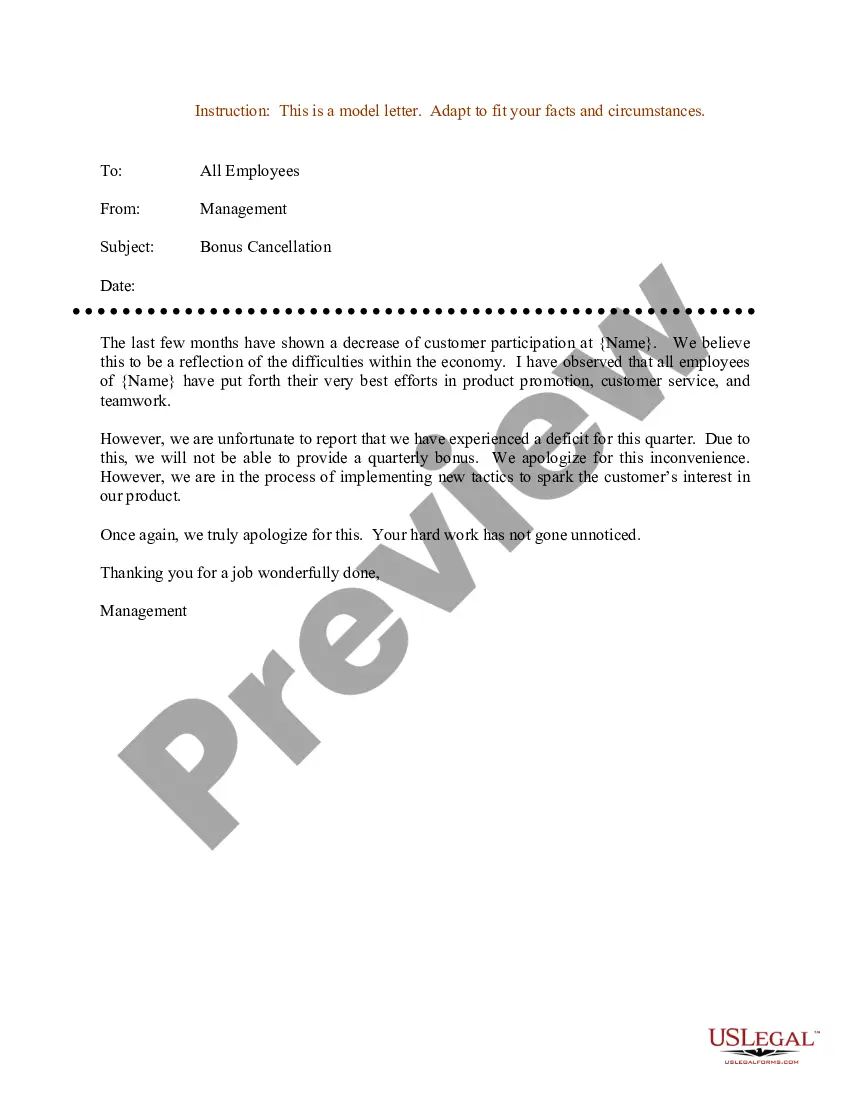
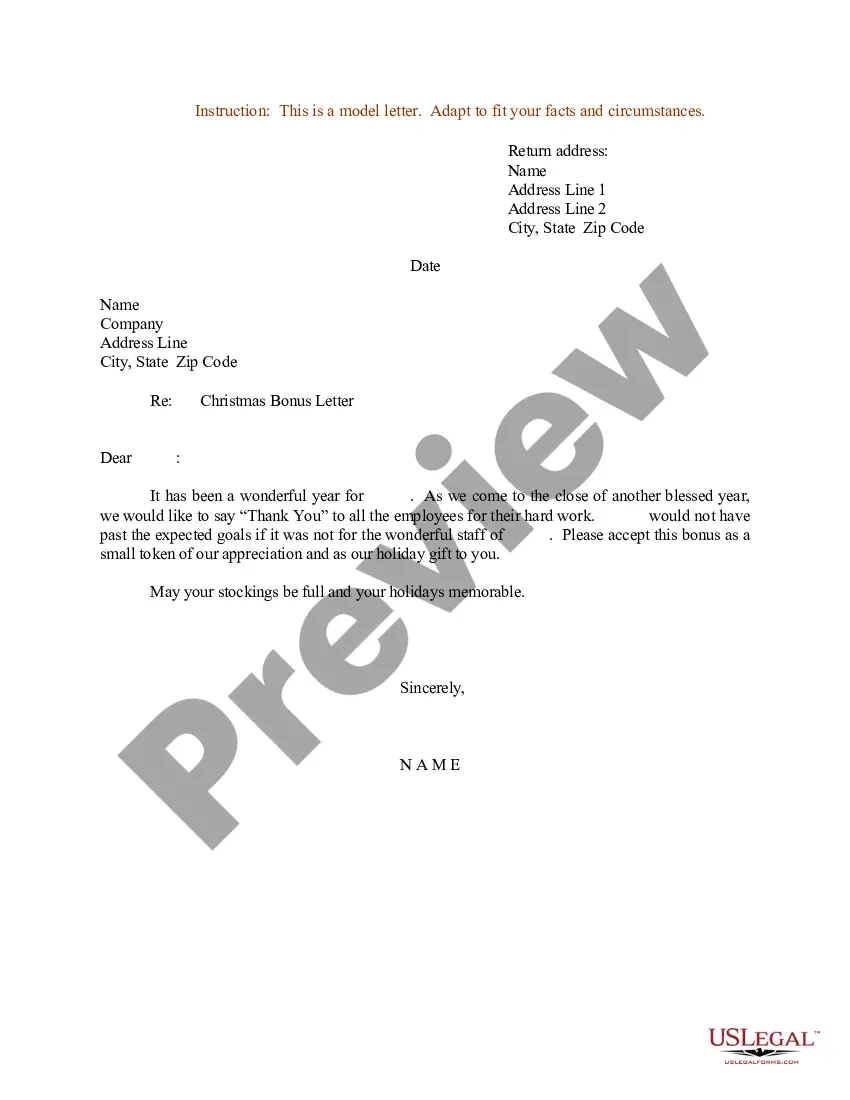
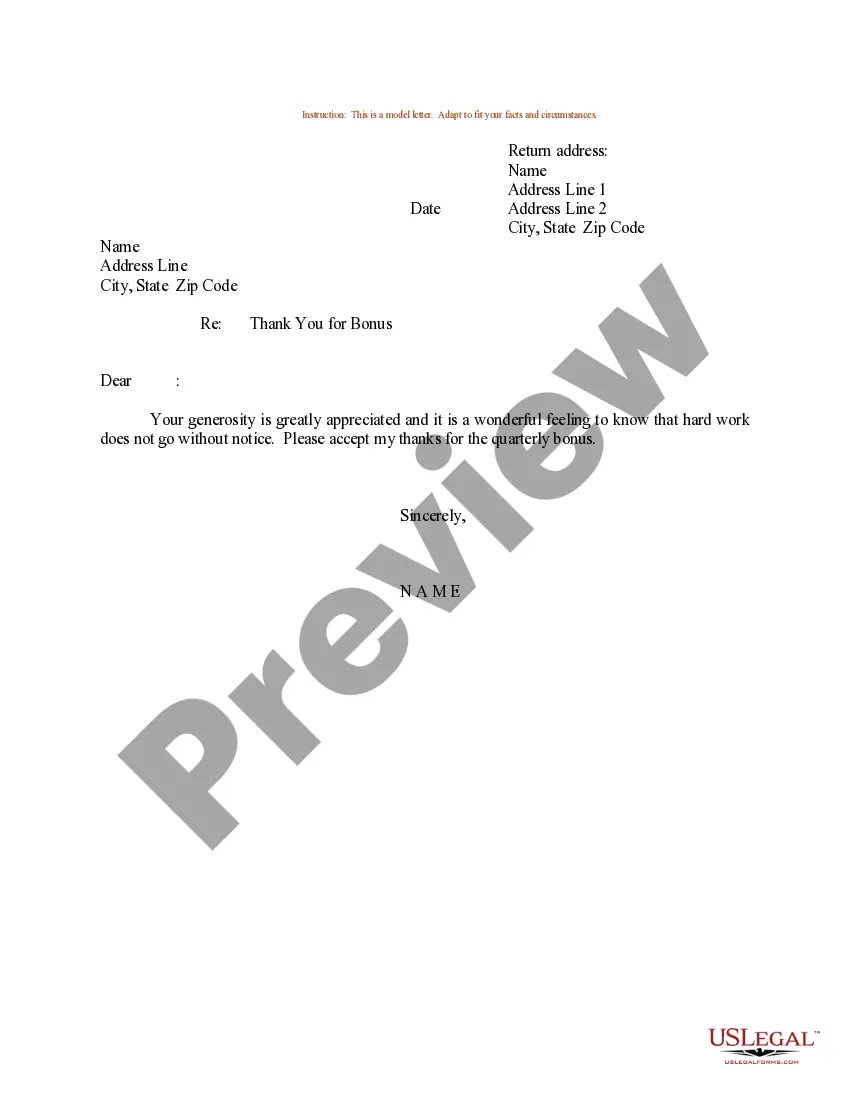
Get your form ready online
Our built-in tools help you complete, sign, share, and store your documents in one place.
Make edits, fill in missing information, and update formatting in US Legal Forms—just like you would in MS Word.
Download a copy, print it, send it by email, or mail it via USPS—whatever works best for your next step.
Sign and collect signatures with our SignNow integration. Send to multiple recipients, set reminders, and more. Go Premium to unlock E-Sign.
If this form requires notarization, complete it online through a secure video call—no need to meet a notary in person or wait for an appointment.
We protect your documents and personal data by following strict security and privacy standards.

Make edits, fill in missing information, and update formatting in US Legal Forms—just like you would in MS Word.

Download a copy, print it, send it by email, or mail it via USPS—whatever works best for your next step.

Sign and collect signatures with our SignNow integration. Send to multiple recipients, set reminders, and more. Go Premium to unlock E-Sign.

If this form requires notarization, complete it online through a secure video call—no need to meet a notary in person or wait for an appointment.

We protect your documents and personal data by following strict security and privacy standards.
Looking for another form?








Form popularity
FAQ
The typical bonus amount can range from 1% to 15% of an employee's salary, usually depending on a number of factors such as industry, company performance, and individual or team accomplishments. The average bonus for employees continues to rise over time. In 2020, the average employee bonus was only 8.1%.
Bonuses are additional incentives offered to employees on top of their regular salary, often aimed at increasing productivity and enhancing employee retention. Most bonuses can be categorized as either discretionary (not guaranteed) or nondiscretionary (guaranteed, as shown in your employment contract).
Allocate bonuses to each division or work group. Give each employee in a certain group -- for example, the administration division -- the same bonus. This method rewards and encourages cohesive group performance, but rewards non-performing team members at the same level as the hardest workers.
The bonus is calculated as follows: If the salary of an employee is less than or equal to Rs. 7000, the bonus calculation is calculated using the formula: Bonus = Salary x 8.33/100.
A simple rule of thumb is to devote one-third of your bonus to savings, one-third to investments (including retirement), and one-third to fun. A simple rule of thumb is to devote one-third of your bonus to paying off debt, one-third to saving and one-third to fun.
Once you have both performance percentage and salary percentage for each individual, you can multiply them together by an individual. Add up all individuals to get a total ratio. Divide each individual's share by the full rate, and that's the portion of the bonus pool that an individual receives.
In Maryland, a full-time employee is defined, ing to the Affordable Care Act (ACA), as someone who works an average of 30 hours per week, or 130 hours per month. Therefore, working 32 hours per week exceeds the state's full-time employment threshold per the ACA guidelines.
Maryland joins a growing list of U.S. states that require employers to provide salary ranges on job postings. California, Colorado, Hawaii, New York, Washington state, and Washington D.C. all currently require salary ranges on job postings.
As a salaried exempt employee, you must make at least double the yearly amount that a minimum wage hourly worker would make working a 40-hour work week each week. Beginning in 2023, California established that the minimum wage in the state is $15.50 an hour; however, depending on where you're located, it might be more.
Whether a bonus is discretionary or based on specific criteria, both are considered “wages” under California Labor Code.

